

Published April 6, 2026 04:20PM
The federal government wants to open fragile landscape surrounding the 1,100-year-old Chaco Canyon historical site in New Mexico to oil and gas drilling. Experts warn the proposal could irreversibly damage one of North America’s most culturally significant sites and the environment that has sustained them for more than a millennium.
On March 31, the Bureau of Land Management (BLM) announced a plan to strip environmental protections from land surrounding Chaco Culture National Historical Park, a UNESCO World Heritage Site in New Mexico. The National Park Service (NPS) manages the site.
In 2023, after years of tribal advocacy, the federal government established the zone around the protected area. The buffer encompasses roughly 336,425 acres and halts all new federal oil and gas leasing for 20 years. If officials accept the latest rule change, oil and gas developers will be able to operate within Chaco Canyon’s protection boundaries.
“This proposal suggests that no place, no matter how culturally or historically significant, is off limits to oil and gas drilling,” Maude Dinan, National Parks Conservation Association’s New Mexico program director, told Outside.
The rule is open for public comment through April 7—a short timeframe that critics argue is inadequate. Federal comment periods are typically open between 30 and 60 days.
In an email to Outside, a BLM spokesperson said that the agency is reviewing the order in accordance with the Trump administration’s energy independence initiative. The spokesperson did not comment on whether the seven-day comment period is standard.
“The Secretary of the Interior has the authority to make, modify, extend, or revoke withdrawals of public lands under the Federal Land Policy and Management Act,” the spokesperson said.
Local Leaders Consider Chaco Canyon a Sacred, Ancient Site
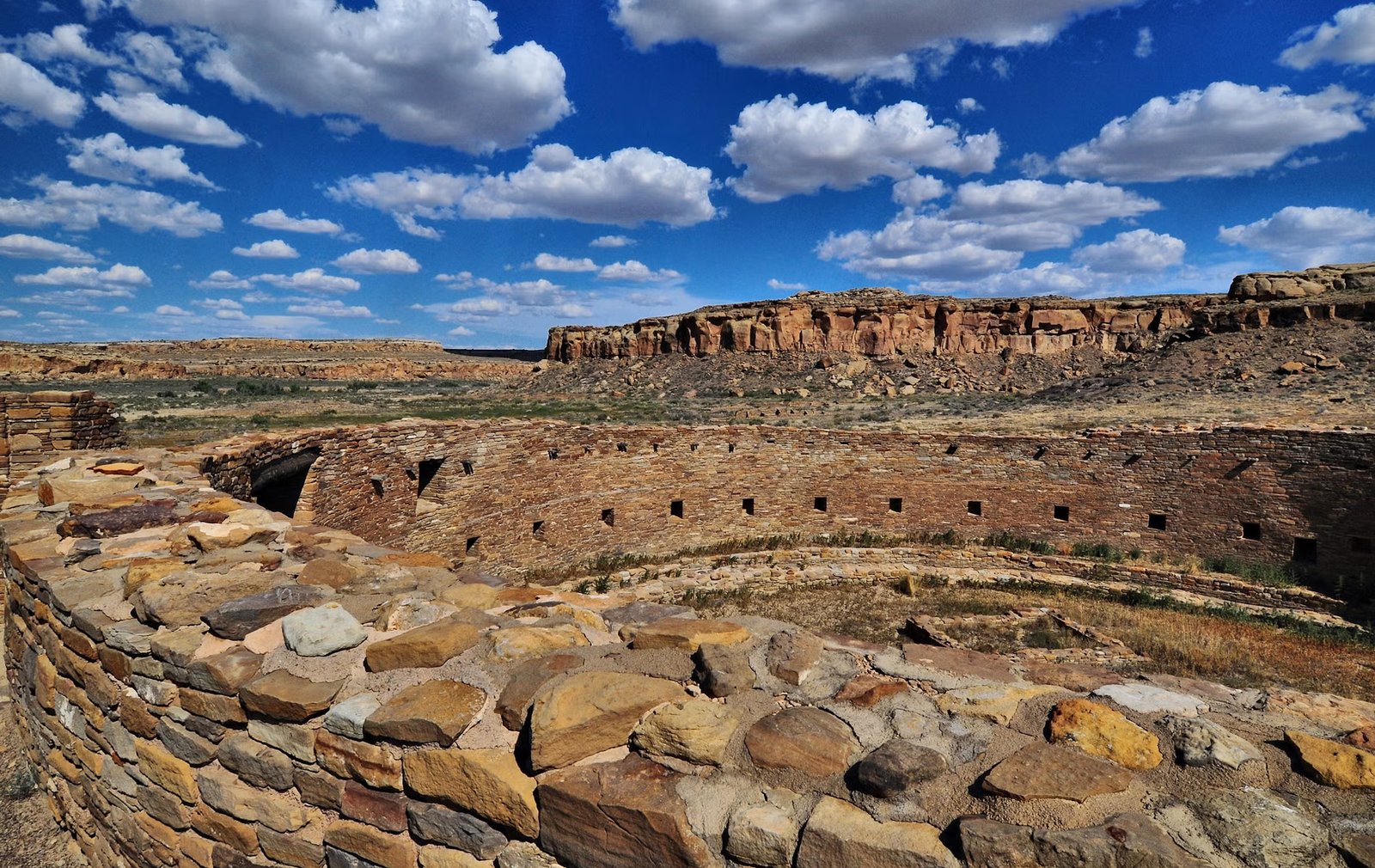
Chaco Canyon, the epicenter of the Ancestral Puebloans, features massive, multi-story stone houses that ancient groups meticulously engineered to align with solar and lunar cycles. The park is one of the largest and most significant archaeological sites in the nation, containing sites dating back to 850 CE.
Diné tribesman Daniel Tso has served three terms as a delegate to the Navajo Nation Council. A veteran local activist and guide, Tso takes visitors to oil and gas development sites in the Greater Chaco landscape. He was also instrumental in the fight to establish the ten-mile buffer in 2023 and said the zone’s removal would be catastrophic.
“We hold this place sacred,” Tso told Outside. “It’s my birthplace. It’s our home. Our job as a people is to not let the fire burn out. The homefires, the teachings, the history, the language, the customs, the culture. This land is part of that heritage.”
Tso said oil and gas drilling operations already jam the area around Chaco Canyon outside the buffer zone. “We’ve seen the harm that’s come to the lands outside that buffer zone,” he said. “We don’t want that type of destruction to be occurring within that buffer zone.”
Mike Eisenfeld is the energy and climate program director for San Juan Citizens Alliance, a local environmental watchdog. He’s lived and worked in the region for more than three decades, and said the buffer zone around the park is a crucial protection.
“What makes Chaco Canyon so special is how remote it is,” Eisenfeld told Outside. “It’s incredible to be out there. So the vibrations, the noise, the lights, the industrialization that would come if this land were opened to drilling, it’d be like putting up a compressor station in the Sistine Chapel, or building a power plant next to Denali.”
Experts Say a One-Week Window Is Inadequate
Rose Rushing, an attorney with the Western Environmental Law Center, told Outside that the public comment window was inadequate.
“The Trump administration is trying to undo years of collaborative work in a matter of days,” she told Outside, noting that the process that formally established the ten-mile buffer zone in 2023 took two and a half years and included a 120-day public comment period. “Now the administration wants to reverse all of that through a seven-day online only scoping window,” Rushing said.
She called the plan “less of a meaningful public comment process than a procedural formality designed to foreclose real public participation.” Rushing added that the expedited nature of the process could violate portions of federal law, including the Federal Land Policy and Management Act and the National Environmental Policy Act.
“We know that the public will be prepared to challenge the administration’s process and enforce our right to meaningful participation.”
The short comment period is particularly challenging for many of the Diné living in the area. The remote New Mexican landscape has limited Internet access and connection to the electrical grid. Mario Atencio, a Diné activist, told Outside many of the local inhabitants are older, and some don’t speak English—only the Diné language—making it harder for them to comment on the proposal.
“This whole process is frankly the worst type of action we’ve ever seen,” Atencio said. “This is not a left or right issue. These are some of the few places in the world that shouldn’t be drilled. This is a UNESCO World Heritage Site. You can’t step all over that for oil.”
Atencio said the decision extends beyond historical, cultural, or ecological issues.
“These are public lands, so the people who actually recreate and use these lands have a powerful voice to weigh in,” he said. “Call your representatives.”
What’s Next for Chaco Canyon?
After the comment period, the BLM will complete an environmental assessment analyzing the rollback plan and possible alternatives. When the results of this assessment are published, the BLM will open another public comment period before moving forward.
