

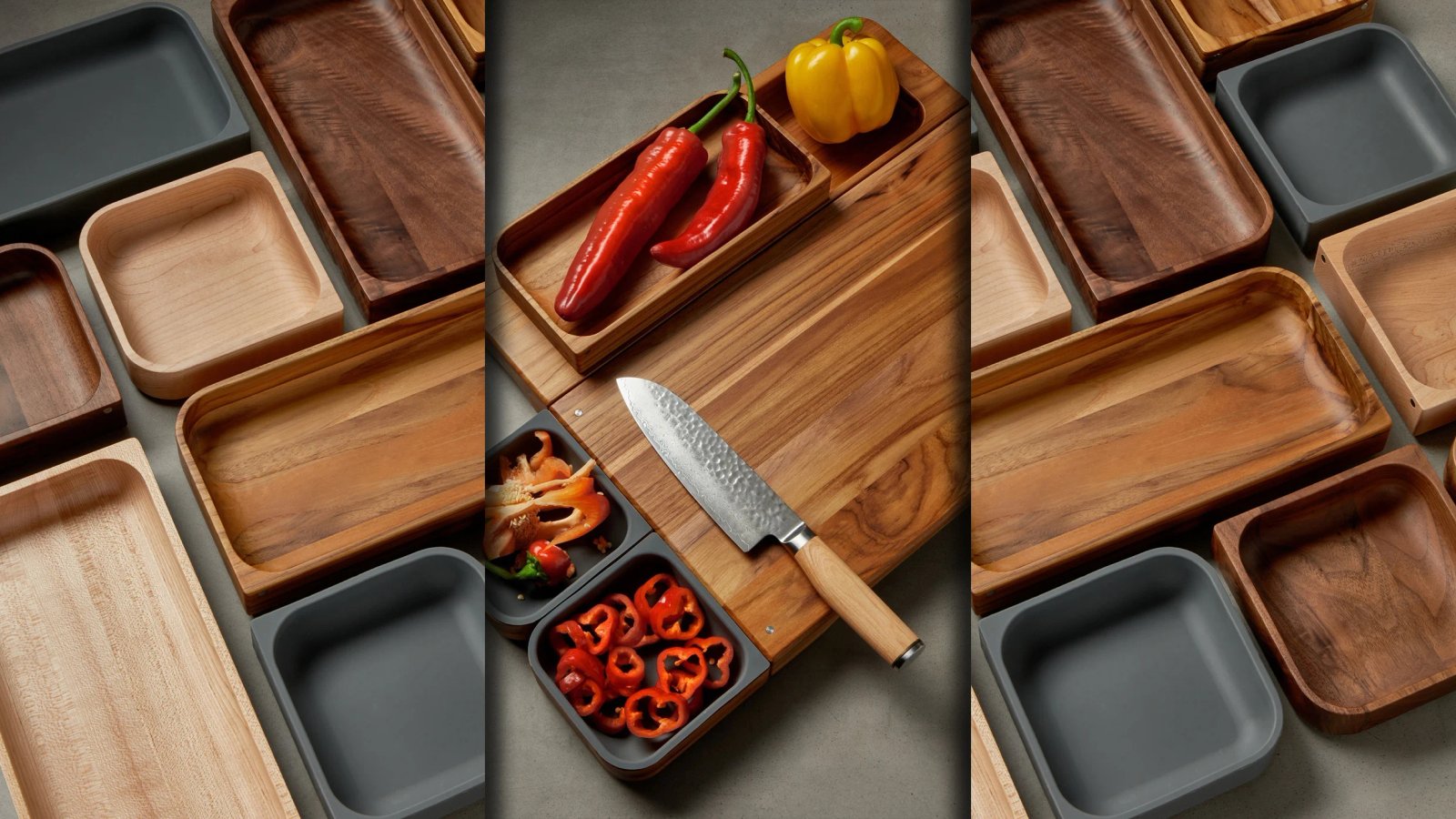
The cutting board has to do a lot of work: It needs to absorb knife marks, soak up onion juice, and be big enough to hold vegetables and scraps. On a daily basis, home cooks are forced to confront the logistical problem of where to put the parsley they just chopped when they move on to the carrots. By the end of meal prep, the kitchen counter is littered with food waste and crowded with mismatched bowls of ingredients.
It seems like a minor inconvenience, one that most of us manage every day. But Tom Palmer believed the humble cutting board could be improved. Palmer had spent eight years as an automotive engineer at GM who led a team of 54 employees working on the Cadillac Escalade. But on the side, he was an obsessive woodworker. “As soon as I bought my house I wanted to make furniture for it,” he says. “And one of the first things you start making are cutting boards.”
He made one for his parents and added a little waste tray to the top that connected through magnets. They kept telling him how useful it was. So Palmer continued to tinker with the design, adding bowls on the side and rethinking the materials.
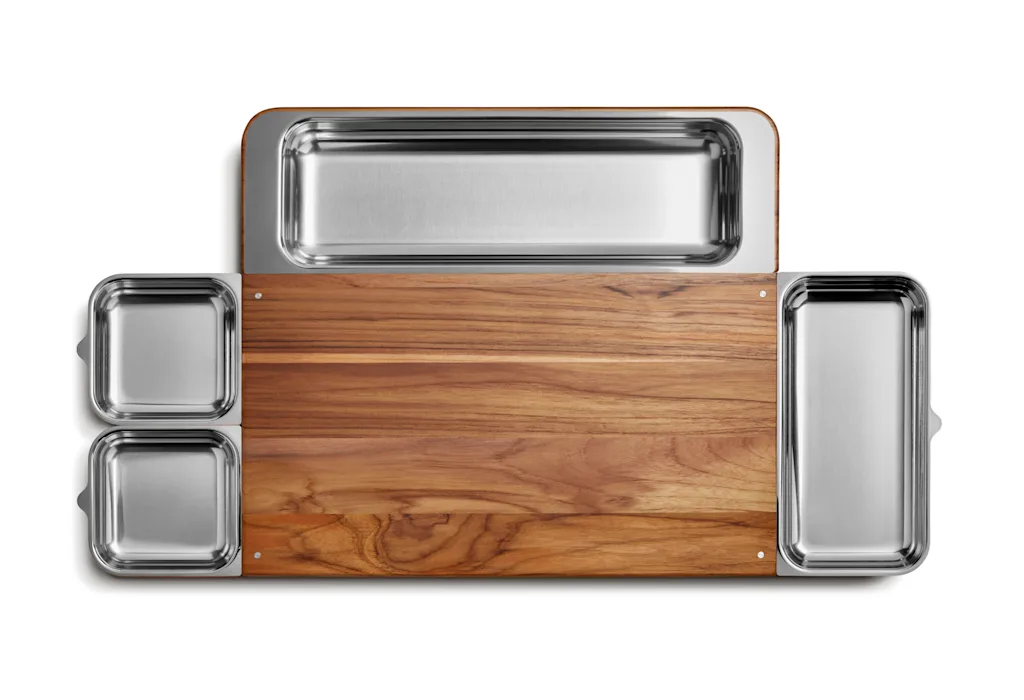
Two years of development later, he’s launching Prepwell. It’s a modular cutting board system called the Chef Station that has four different trays that can be attached to three sides of the solid wood board with magnets to hold ingredients and scraps. The set comes with silicone liners for the trays that can be thrown in the dishwasher, as well as stainless steel liners that are oven-safe for cooking.
You can also buy a supplemental board that clips to the top to separate vegetables and meat. “If we could create a system that was good for cooking, serving, and storing, we could have something that people would want,” Palmer says of his thinking for the design.
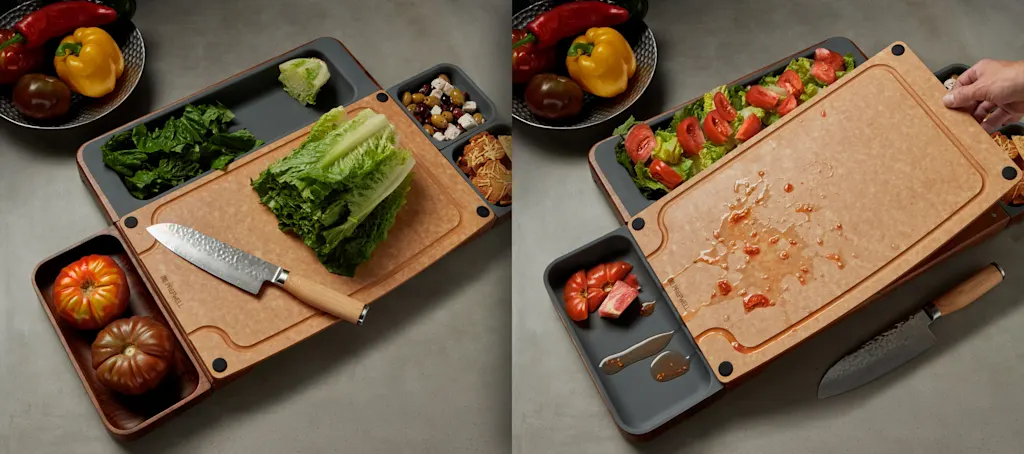
There’s a catch, though. The full Prepwell system costs $545, and if you want the supplemental board or lids, that’ll cost you another $75 and $35, respectively. This makes Palmer’s product roughly 10 times more expensive than the average cutting board on the market—and significantly more than even high-end cutting boards like Boos Blocks, whose most expensive boards cost roughly $300.
