

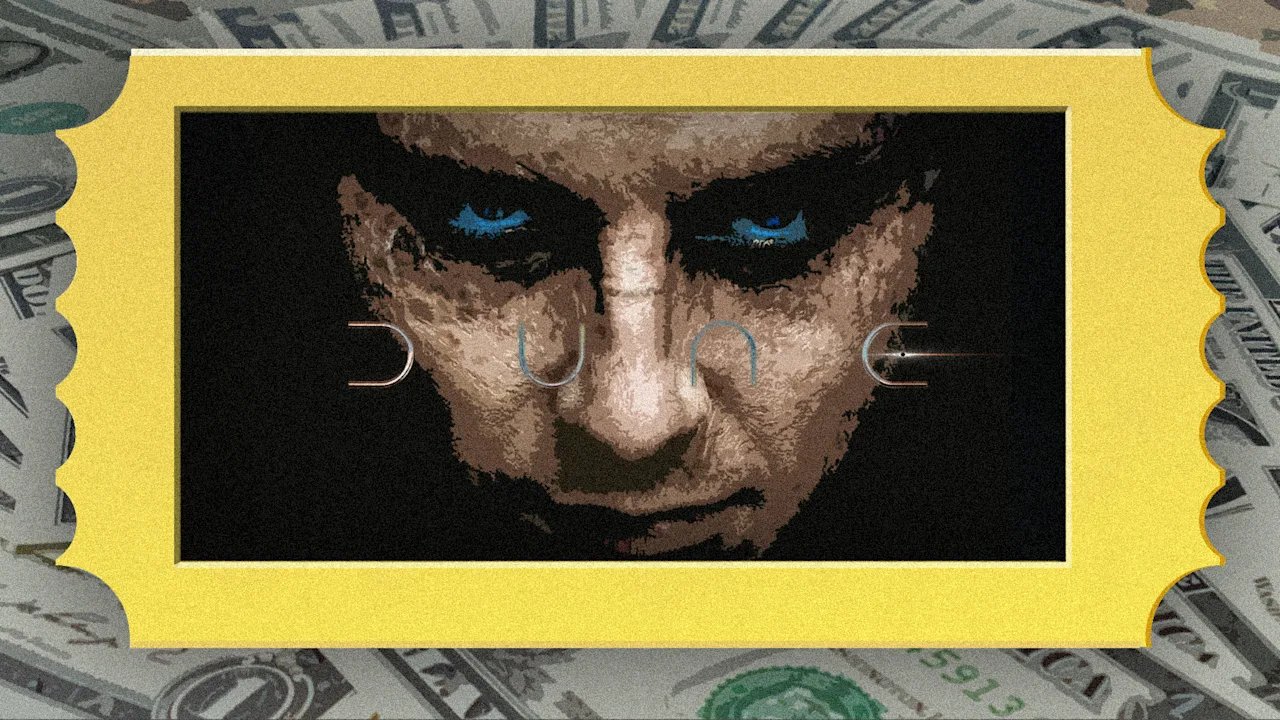
According to director Denis Villeneuve, Dune: Part Three is meant to be watched on a 70-millimeter IMAX screen.
“The movie is really meant to be an IMAX experience and to be seen on the biggest screen as possible,” Villeneuve said when the sci-fi epic’s trailer was released last month, also sharing that he and new cinematographer Linus Sandgren shot much of the movie on 65mm film. “That’s the way we dreamed the movie,” he said.
But if you live in the United States, that means the intended Dune: Part Three experience is only available in 15 cinemas across the country. The 70mm IMAX screenings are few and far between, meaning the demand was sky-high when Warner Bros. surprise-dropped the tickets on April 6, eight months ahead of the movie’s December release date.
Unsurprisingly, tickets sold out in minutes. Soon after, a resale market emerged. It would seem that ticket scalping isn’t just for concerts anymore: On secondhand markets like eBay, Dune: Part Three tickets are being offered for hundreds and even thousands of dollars.
Resale is the wallet-killer
A cursory eBay search turns up dozens of Dune: Part Three IMAX tickets for resale at theaters all across America. Some are for single seats, with asking prices like $350, $400, and $500. Other listings offer groups of seats together: You can get two tickets to New York City’s Lincoln Square AMC theater for $1,050 or four tickets to a Cinemark movie house in Dallas for $2,500.
One seller apparently snagged 12 tickets to a showing at Universal Cinema AMC and is reselling them individually for $1,495 each. At least four of those tickets have already been bought.
While those prices may seem absurd to a casual moviegoer, some tickets have already been snapped up at comparable rates. A single opening night ticket for a 70mm IMAX screening in Dallas sold for $999.99, with the high price point for a single ticket catching attention on social media.
Some commenters critiqued the resellers (“People scalping movie tickets should be hunted for sport,” wrote one X user), while others questioned the buyers (“For $999, I’d better get teleported to Arrakis myself,” quipped another). The discourse boils down to a central question: How could a run-of-the-mill movie ticket possibly be worth a thousand dollars?
Worth the price of admission?
Exorbitant resale prices are nothing new, but they’re typically associated with live events, not cinema screenings. What sets Dune: Part Three apart?
First, there’s the massive hype around the film itself. The first two Dune movies have been hailed as masterpieces, both earning Oscar nominations for best picture and regarded as some of the best sci-fi flicks of all time. The final film of the trilogy is expected to continue the pattern, meaning die-hard fans are desperate to see the movie as Villeneuve intended.
Then, there’s what’s lost by not catching the movie in IMAX. Dune: Part Two was also released on IMAX’s signature 59-by-79-foot screens, but it’s now only available on digital with a cropped aspect ratio. Side-by-side comparisons of the two releases of the movie highlight the massive difference, with the non-IMAX version cropping out large chunks of the top and bottom of every scene. Fans fear the same will happen with Dune: Part Three, and clearly, they’re willing to pay top dollar to ensure they don’t miss out on the full scope of the film.
For anyone who wants to see the movie in 70mm IMAX but doesn’t want to shell out hundreds of dollars, Warner Bros. has teased that more tickets are coming soon. Fans can sign up for the waitlist and get notified when more tickets drop on IMAX’s website.
