

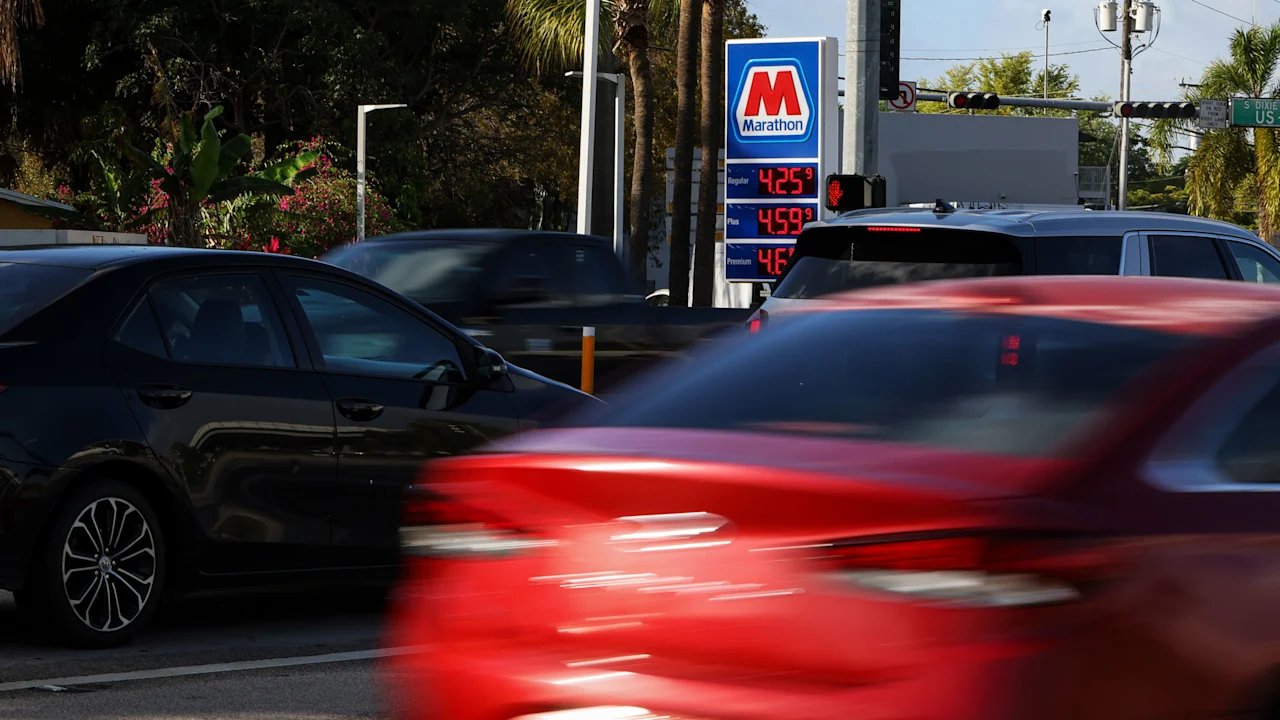
Filling up your gas tank didn’t always require a second mortgage. But since the onset of the war in Iran, global oil prices have soared–and we’re the ones paying for it at the gas station. And nobody knows this better than hypermilers, drivers obsessed with squeezing every last possible mile out of each gallon of fuel.
While the April 7 ceasefire caused an immediate 16% drop in crude oil prices, as of April 8, the American Automobile Association (AAA) reports that the national average for a gallon of regular gasoline is $4.164, with prices approaching $6 per gallon in California.
But even if crude oil prices continue to sink, fitting these elevated gas prices into our budgets will hurt until costs normalize. Although there is little that the average American can do about the global oil market, there is plenty we can do about our personal fuel economy.
If you’d like to stretch out the time between fill-ups, here are some tried-and-true strategies that can help save you fuel, money, and even wear-and-tear on your car.
Know your fuel consumption
A whopping 96% of American drivers claim that fuel economy is at least somewhat important to them when purchasing a vehicle, according to a 2025 Consumer Reports survey. But despite this overwhelming preference, most Americans tend to consider fuel economy to be the responsibility of the manufacturer rather than something within the driver’s purview.
For instance, a recent survey found that Americans are willing to drive 5 miles for cheaper gas, despite the fact that the extra fuel burned likely costs more than the savings. Focusing on the dollar amount spent, rather than the amount of fuel consumed, actually hurts your fuel economy.
It may feel odd to shift your focus to fuel consumption when gas prices are through the roof, but making this pivot will save you money in the long run. Because when you improve your fuel economy, you will make fewer trips to the gas station.
If you’ve never paid attention to your fuel consumption, start by figuring out your current miles per gallon before you can work on improving your fuel economy. The government fuel economy website provides an easy-to-follow guide for how to calculate MPG here.
Introduction to hypermiling
Maximizing fuel efficiency goes in and out of vogue as gas prices rise and fall, but hypermilers have been laser-focused on fuel economy and impossibly high MPG for the last quarter century.
Hypermiling is the practice of making deliberate driving, maintenance, and vehicle modification decisions to ensure maximum fuel efficiency. While the majority of hypermiling strategies are reasonable and safe practices, there are some more extreme driving habits and modifications that can be downright dangerous.
The central tenet of hypermiling, however, is quite simple: Make intentional fuel-conserving changes to your driving habits and vehicle in order to reduce your consumption and costs.
Polite driving = fuel efficiency
Slowing down on the road is often listed as one of the most effective methods of reducing fuel consumption, and it is certainly an excellent way to waste less gas. As the U.S. Department of Energy (DOE) points out, every 5 miles per hour you drive over 50 mph is equivalent to paying an additional $0.27 per gallon of gas.
However, speed is not the only factor that can affect your fuel consumption. Aggressive driving of any kind, including rapid acceleration and hard braking, seriously hurts your fuel economy. Driving aggressively can be equivalent to paying an additional $0.38 to $1.53 per gallon of gasoline because of how badly it wastes fuel.
This is why hypermilers are among the politest drivers on the road. Paying careful attention on the road allows them to engage in smooth acceleration and braking, anticipate traffic to minimize braking, and maintain steady speeds.
Driving like a hypermiler is about reducing the fuel-wasting behavior behind the wheel, which includes excessive braking, hard braking, rapid acceleration, weaving and turning suddenly, and changing speeds.
Vehicle maintenance
A well-maintained car is a more efficient car. Your fuel consumption will improve if you are changing the oil according to the manufacturer recommended schedule, replacing your air filters when they are dirty, replacing your spark plugs per the manufacturer’s suggested replacement interval, and keeping your tires properly inflated.
In particular, underinflated tires can seriously hurt your fuel economy. Driving on tires that are 20% underinflated can reduce your fuel economy by up to 10%. The good news is that inflating your tires is a quick and easy process that you can do at nearly any gas station for free.
Reduce your vehicle’s weight
Carrying unnecessary weight in your car is a waste of fuel, since you’re burning gasoline to transport something you don’t need. The DOE reports that every excess 100 pounds in your car could reduce your MPG by about 2%.
And the placement of that weight matters, as well. A loaded roof rack can lower your fuel efficiency by about 5% because of the drag in addition to the weight.
But what if you already keep a clean car with no extra junk in the trunk? Steve Lang, auto auctioneer and founder of Mileage Impossible, a Facebook group highlighting cars with super-high odometer readings, offers this unorthodox suggestion:
“If you don’t need to carry passengers, consider removing the rear seats or front passenger seat,” he says. Seats can be quite heavy and the weight savings can go a long way to improve your fuel efficiency.
Becoming more intentional behind the wheel
Whether current gas prices are a momentary blip or a long-term trend, adopting strategies that will improve your fuel economy will benefit your wallet, your car, and the environment over time.
It starts with shifting your focus to fuel consumption, rather than the amount you pay at the pump. Calculating your current miles per gallon will give you a baseline fuel consumption level.
From there, embrace driving like a hypermiler. That means smooth acceleration and braking, anticipating traffic, maintaining steady speeds, and being polite and intentional on the road.
Hypermiling also means taking good care of your car by following the manufacturer’s recommended maintenance schedule for oil changes and spark plug replacements and replacing dirty air filters. Keeping your tires properly inflated is one of the most effective maintenance tasks that can improve your fuel efficiency and it’s an easy process that anyone can do.
Finally, reducing your car’s weight, and especially any weight on the roof rack, can help reduce your fuel consumption. If you don’t often have passengers (or want to permanently get out of carpooling with Carl), consider removing your rear seats and front passenger seat for a major weight reduction and fuel savings.
No matter how many of these strategies you implement, putting these practices in place can help us all be safer on the road, in addition to reducing our collective fuel consumption. That’s a pretty good silver lining to an otherwise lousy situation.
