

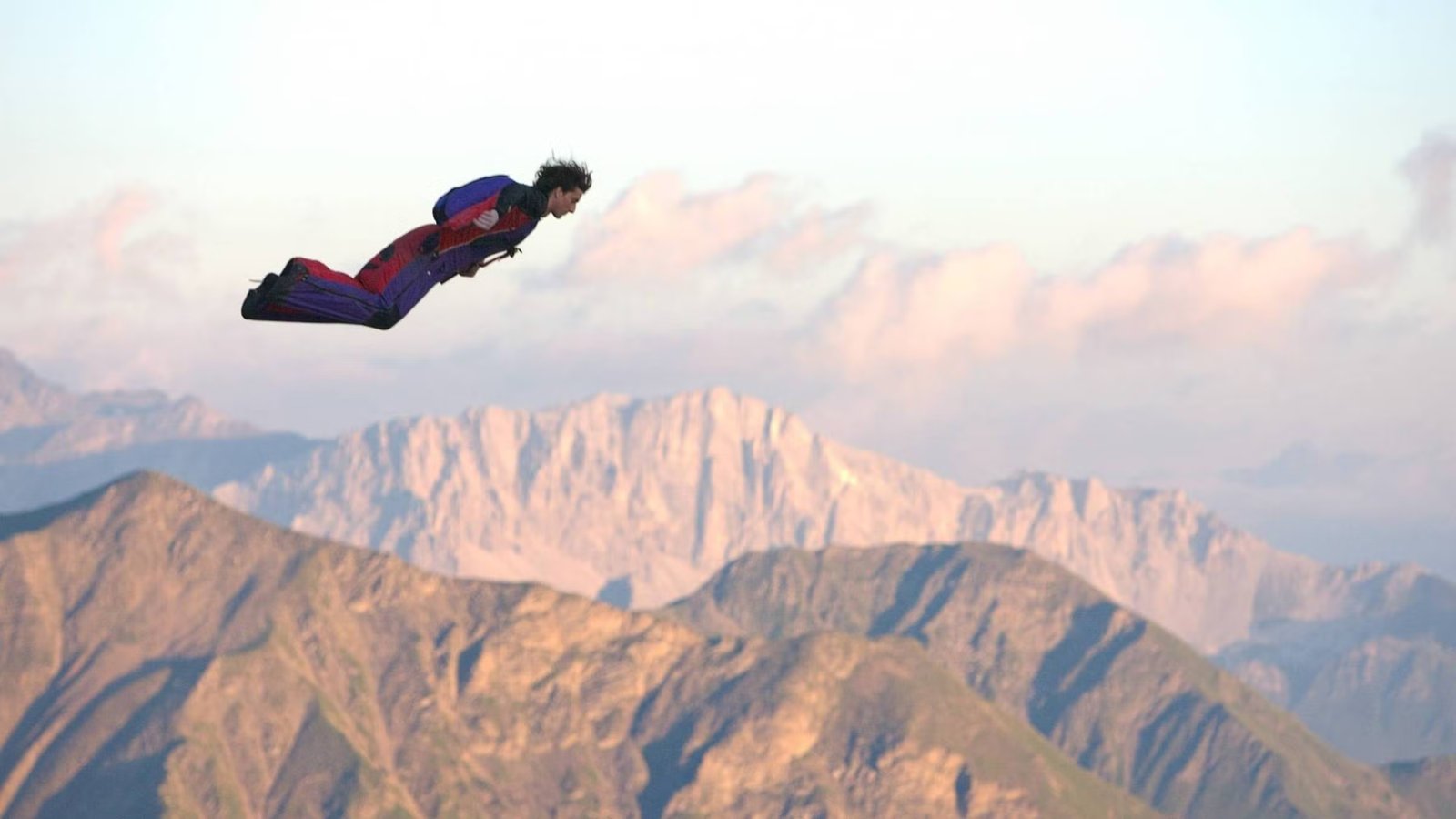
Published April 13, 2026 03:00AM
“It’s over,” my wife says. “You can come back now.”
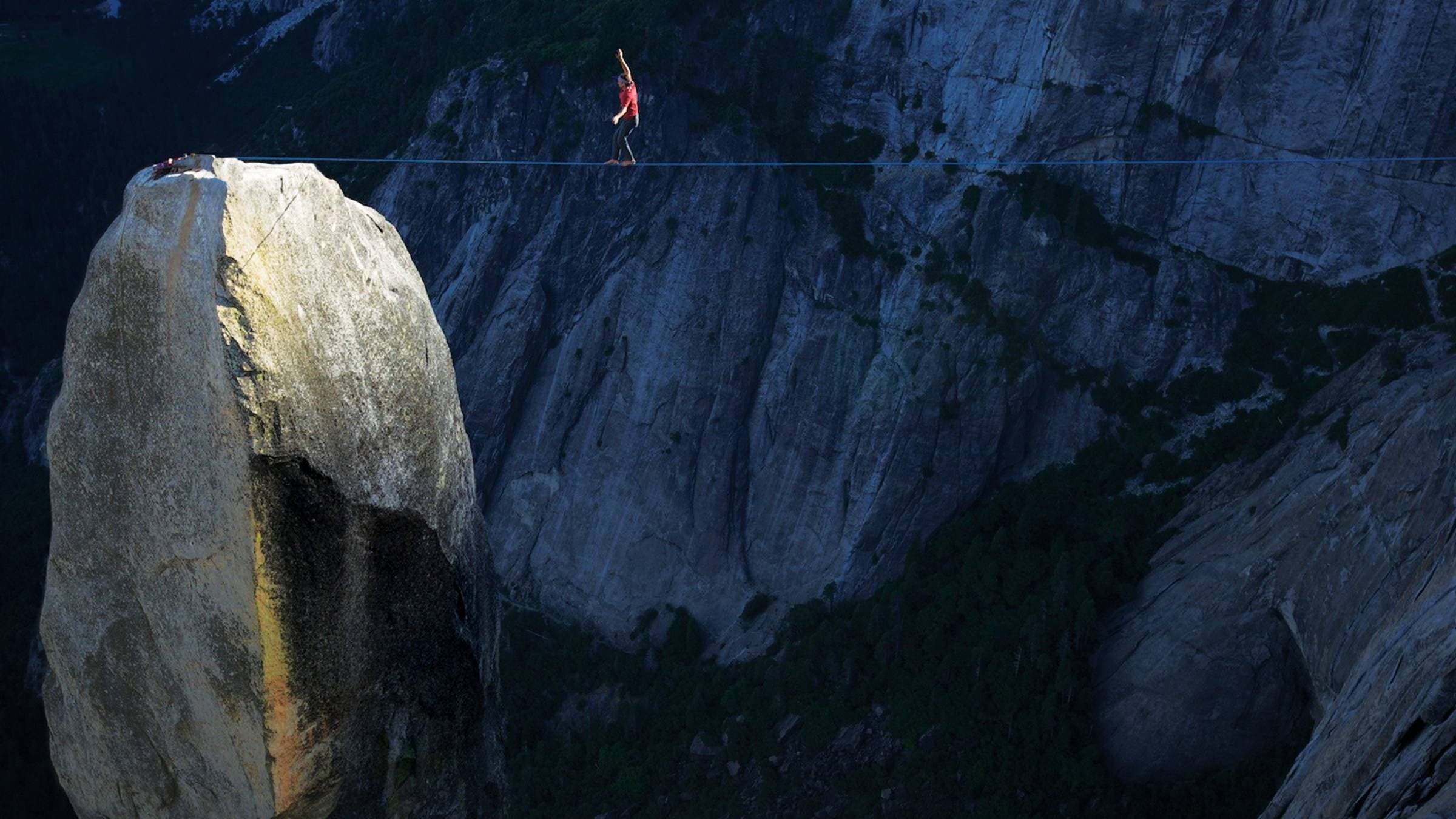
She’s on the couch. I’m standing behind her, looking away. We’re watching POV footage of Dean Potter walking a slackline in Yosemite National Park, untethered, thousands of feet off the ground. He falls. He catches himself and stands back up on the line mid-chasm. To see it like this is so dizzying, so stomach-churning, I can’t look. Being uncomfortable is kind of the point of the film.
On April 14, 2026, you’ll see what I mean when HBO airs what my wife and I are already watching, a four-part docuseries called The Dark Wizard. It offers an “unflinching” account of Potter’s life, the big wall climber, slackliner, and late BASE jumper who was as brilliant and gifted as he was troubled and controversial. The filmmakers, Peter Mortimer and Nick Rosen, the Sender Films duo behind The Alpinist, have given me a sneak peek of the series. After all, Outside played a big role in Potter’s story.
The Dark Wizard is highly binge-able, breathtaking, and heartbreaking, as it takes us deeper into one of climbing’s most iconic figures than any other work has done before. What emerges isn’t a portrait of a steely athlete immune to fear but one of a deeply flawed human tormented by mental demons who needs extreme danger to find focus and peace. It’s the depth of that torment that the series makes so visceral. And like any story where you know exactly how things will end—spoiler alert, he dies—it’s the tension that comes from everything that happens in between that carries the narrative. It’s a painful one. Potter’s obsession to transcend human limitations pushed climbing into new paradigms, but it also destroyed friendships, a marriage, his livelihood, and ultimately his life. For every success he enjoys we witness the extreme lows, poor choices, and desperation of a man fighting himself that make his story so tragic. In other words, it’s excellent TV.
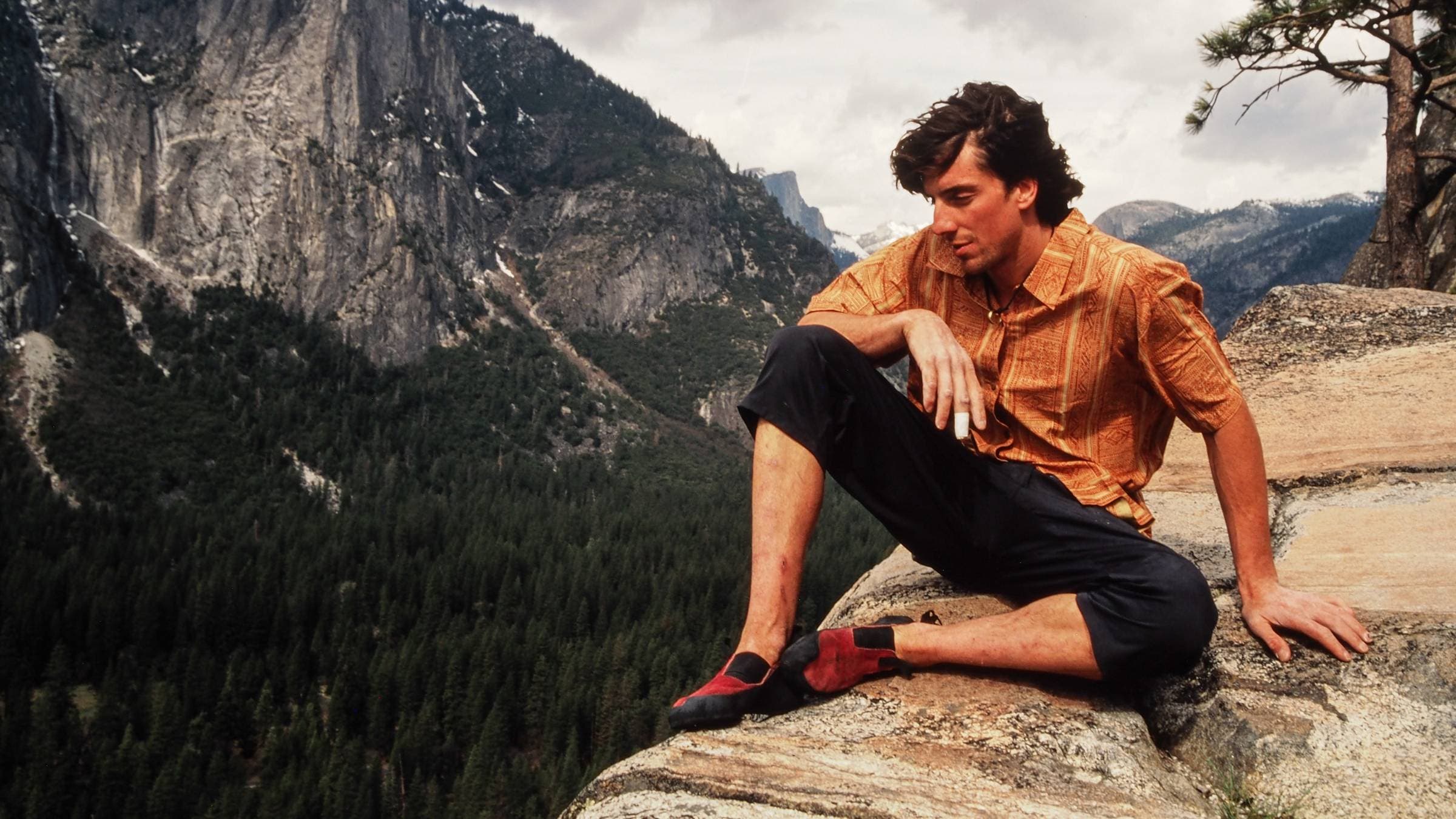
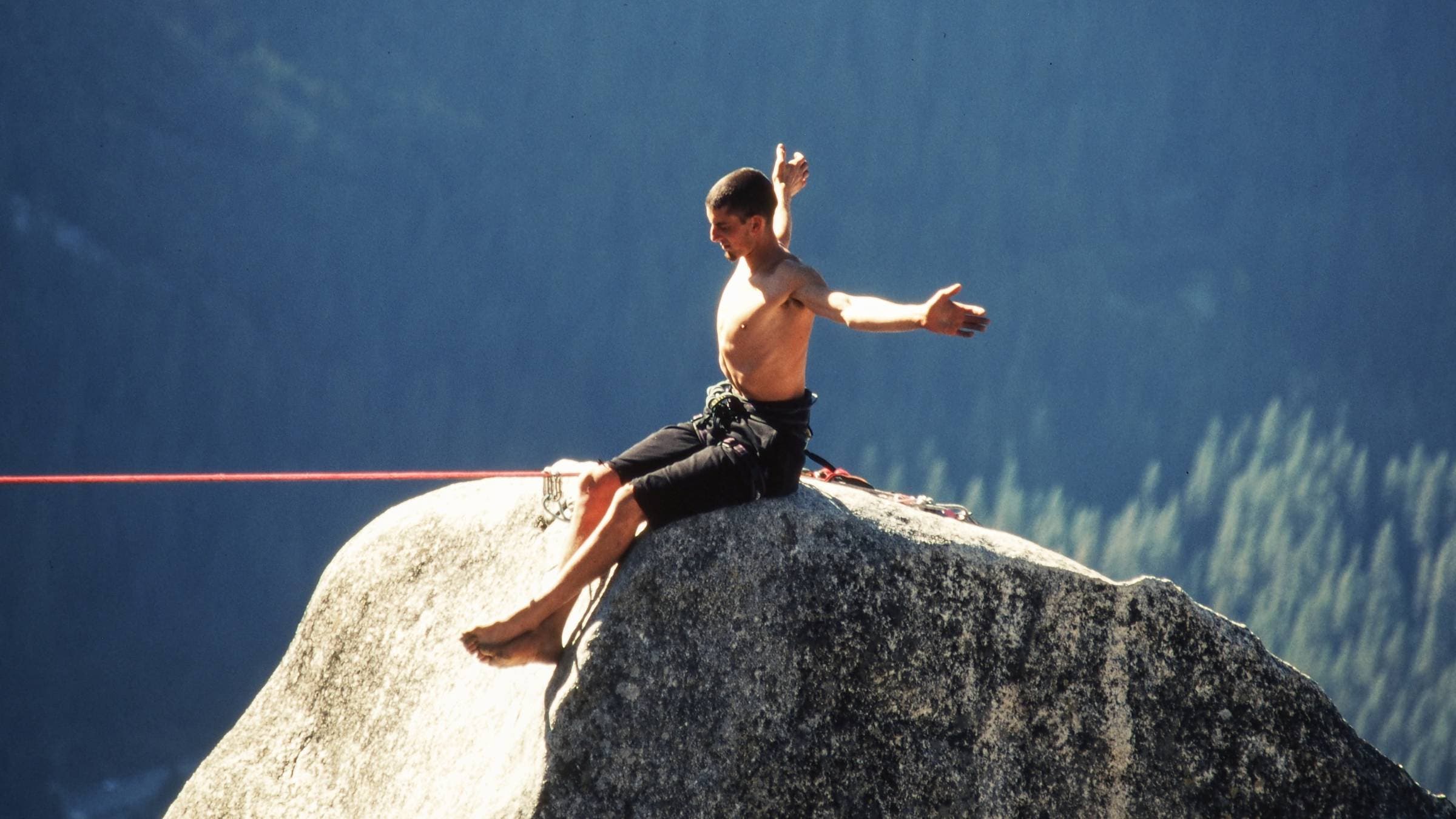
It’s been nearly 11 years since Dean Potter and his friend-turned-rival Graham Hunt died in a wingsuit BASE accident on May 16, 2015, but Potter, who was 43 at the time, remains hard to shake. For me, like many climbers of the late 20th century, Potter exploded out of our VCRs after a 4:17 solo of Half Dome’s northwest face in 1999, a time that was nearly 16 hours faster than anyone had ever completed the 2,200-foot ascent before. A year later, he soloed Half Dome and El Capitan in a day. Then in 2001, he joined Timmy O’Neill to send The Nose on El Capitan in under four hours, igniting a spectacular space race with fellow speed climbers Hans Florine and Yuji Hirayama. But Potter increasingly saw himself less as a climber than an “aerialist” who channeled a spiritual connection to nature and darker impulses into performance art. The “dark wizard” was born.
The fame Potter encountered was exquisite and addictive for a man who openly struggled with his own ego. Magazine covers, sponsorships, and segments in climbing flicks like Masters of Stone V made him one of the most famous names in the sport. Potter was a media dream, too, a 6’5“ statuesque wild-child who coupled jaw-dropping feats with F-the-man drama that created rivalries, law troubles, and mystique. “He was so intense and so driven,” says Cedar Wright, who set speed records with Potter, in the series. “Sometimes that would kind of spill over into being a bit of a dickhead.”
Mortimer and Rosen, co-creators of the Reel Rock climbing film series and who directed and wrote (with Josh Lowell) the Emmy award–winning Valley Uprising, had years reams of archival footage to draw from their years of working with Potter. They spent about four years piecing together The Dark Wizard with more than 50 new interviews, including with some of Potter’s closest friends, handlers, climbers, and confidants.
One voice missing from the story is pro-climber Steph Davis, Dean Potter’s first wife. “She made it clear she did not want to be involved and we respected that,” Rosen told me. That’s understandable. Potter and Davis’s time together was tumultuous, and in 2006 it collided with controversy when Potter’s actions—and Davis’s decision to stand by him—led sponsors to drop them both. Outside played a role in that.
To be clear, I played a role in that, and the series reveals new details.
Potter’s Delicate Arch debacle blew up in the spring of 2006, when he and filmmakers Brad Lynch and Eric Perlman slipped into Arches National Park on a “covert mission” so Potter could free solo the iconic Delicate Arch formation that was largely considered off-limits to climbing. “We were poking the bear,” Lynch says in the series. Potter cast the climb as a spiritual communion with the rock and pushed the footage to the media. But the climb wasn’t some pure, one-shot expression. Potter had set up a top rope to rehearse the climb several times. The whole thing had been filmed with promotion in mind. “That made it bullshit,” says Rick Ridgeway, a vice president at apparel brand Patagonia at the time, in the series. The climbing world, facing new scrutiny, went ape-shit.
Outside’s editorial director at the time, Alex Heard, picked up on the hubbub and tasked me with investigating it. Outside’s managing editor at the time, Katie Arnold, had been visiting with Davis at the time of the climb but knew nothing of the stunt ahead of time. A photographer was sent by Outside to the arch to look for damage. (The series erroneously suggests I sent the photographer, which I had no authority to do.) The photographer did find rope grooves in the soft sandstone along the likely route, but Potter denied they were his and it was clear he hadn’t been the first to climb it, all of which the story made clear. When it broke three weeks after the climb, Park officials cracked down, climbers unloaded, and sponsors bailed, including Patagonia, which dropped Davis, too.
As difficult as that moment was, the film reveals that it was just a blip in a long list of troubles for Potter. The filmmakers began unpacking them by first asking Potter’s surviving sister, Elizabeth Potter, how she’d feel about them doing a deep dive into her brother’s life. She eventually agreed. With that permission came extraordinary access to nearly 20 years’ worth of highly personal diaries and voice memos that Potter kept. The entries include to-do lists that range from the mundane (“change out snow tires”) to the absurd (“free solo Half Dome”). Mostly, the filmmakers bring the journals to life with animated sequences that let Potter posthumously tell us just how tormented he was: about his fraught relationship with his parents (“they’re dead to me”); about his mental struggles (“questioning my ability, my dreams, my soul”); and his fate (“do or die”).
“There’s a lot in there that we felt was just too personal to put in the film,” Rosen told me. “No, I’m not going to share that with you.”
Keeping secrets was surely done out of respect for Potter and those in his orbit, but I’m not sure the audience could stomach much more either. So much of the series bombards us with such intense scenes that The Dark Wizard can be truly uncomfortable to watch. We see entries where he draws himself blowing out his brains. We see footage of him falling from a slackline with no tether, repeatedly, only to barely catch himself, repeatedly, thereby saving himself from a trip into the abyss, barely. At one point, the filmmakers included footage they didn’t even know they had at first of Potter panicking during a free solo attempt gone wrong in Switzerland. Potter botches a crucial sequence, can’t reverse it, and his cameraman struggles to lower him a tangled rope as a storm rolls in. They even have footage of Potter’s final flight.
By episode 3, Potter sinks to his lowest. We watch in excruciating detail as he breaks down and sobs after slacklining a harrowing chasm in China on live TV with no tether or net. By then he has ruthlessly sabotaged so many relationships with friends and loved ones. The cinematic pile-on is emotionally exhausting, which was no doubt the point. “It was certainly our intention to tell a really, really honest, emotional story about who Dean Potter really was,” Rosen told me.
Salvation for Potter comes, briefly, in episode 4, when Potter marries a former Patagonia PR director, Jen Rapp, and adopts her family as his own. Before long, though, his insatiable competitive nature takes over once again—an aspect of his personality he truly loathed—but this time it’s with one of the most dangerous pursuits of all: wingsuit flying, a flaw that proves fatal.
In light of all of that, Potter’s rivalry with then up-and-coming phenom Alex Honnold feels almost quaint, even if it fuels an explosive narrative. Here was Potter, the longtime king of Yosemite, a pot-smoking, free-wheeling, competitive, rabble-rouser obsessed with being the best, who was now being threatened by a younger, arguably more talented, supremely calculated Honnold. If Potter’s approach to greatness was powered by demons, spirit, and woo, Honnold tackled his projects like a tech entrepreneur with spreadsheets and action items. We see just how diametrically opposed the two were.
To goose that tension, the series leans into showing Honnold as a frosty dismantler of Potter’s ambitions, particularly during their duel to become the first to free solo a route up El Capitan. Potter had been eyeing a wandering route to the top that combined a shorter, less steep route up the monolith’s West Face with a traverse into a main headwall route called Easy Rider for the finish. Honnold preemptively free soloed the 5.11c West Face portion of the route in May 2012 to force the first, true free-solo conversation to remain open until Honnold eventually settled it himself five years later with his harrowing free solo up Free Rider on El Cap’s more daunting central face, a feat famously documented in the Oscar-winning film Free Solo.
“He’s a competitive twerp,” Potter says about Honnold in the series.
For his part, Honnold feels the rivalry portrayed in The Dark Wizard is a bit overblown. “It makes it seem like I was like his main rival, like an ultra-competitor,” Honnold told me in March. “But I’m like, that’s fine, whatever makes for good television.”
Ultimately, Honnold says he’s stoked to see a series come out about someone so “groundbreaking” who played such an influential role in his own career. “The thing that I really liked about watching the film is that many climbers don’t know who Dean is anymore, just because they’ve started climbing since he died,” he told me. “The film is a nice way to remember him and his legacy.”
Potter eventually appears to come to terms with Honnold at a dinner party in Yosemite, where the two talked. Potter later called Honnold “one of my all-time climbing inspirations” and a “down-to-earth cool guy,” while Honnold said that moment was the first time he could have seen himself climbing with Potter as a partner.
Many of Potter’s other broken relationships, however, were left unresolved when he and Hunt died attempting to fly through a notch off Yosemite’s Taft Point. The series takes us through the crash almost frame by frame, and the aftermath of that loss, from Rapp’s frantic search for them to the pain that Potter’s estranged friends, like O’Neill, Lynch, and Potter’s confidant Dean “Bullwinkle” Fidelman, will never be able to reconcile. Therein lies a message for us all. “One of the biggest challenges from the creative level is just how emotionally charged this is for everyone,” Mortimer told me. “So many people had so much unresolved stuff with Dean.”
In the end, The Dark Wizard isn’t just a magnificent work of emotional storytelling but also a cautionary tale of what happens when supreme talent, hubris, and poor mental health are left unchecked. Potter did seek help at one point for his illness, but the stigma he felt was so acute that he threatened anyone who knew about his treatment with death. As Rapp says in the series, Potter also worried that taking away his dark side might also diminish the mana of his magic. “You take the darkness away and you’re just a creepy wizard, not the dark wizard,” she says in the series.
Ultimately what we’re left with are all the what-ifs that follow any death. What if Potter had sought help earlier? What if we, as a society and extreme athletes, didn’t see our heroes getting help for mental illness as a flaw? What, if anything, can we learn from it all?
“My brother would say the key to happiness is following beauty and not the urge to be the best,” Elizabeth Potter says in The Dark Wizard. “Was he able to always do that? No. Right up to the end, that was something he really battled. But in his most centered moments, he knew it was about listening to your heart and following that.”
Contributing Editor Tim Neville dedicated years of his life to the vertical world and has appeared (briefly) in two Sender Films, including The Dark Wizard. He profiled the late Ueli Steck for Outside in 2012, followed Alex Honnold on his record-breaking Triple Crown ascents for the New York Times, and went deep into the exclusive mountain-guiding world of the Compagnie des Guides de Chamonix for Outside.
