

STONE RIDGE, VIRGINIA – JULY 17: In an aerial view, an Amazon Web Services data center is shown situated near single-family homes on July 17, 2024 in Stone Ridge, Virginia. Northern Virginia is the largest data center market in the world, according to a report this year cited in published accounts, but is facing headwinds from availability of land and electric power. (Photo by Nathan Howard/Getty Images)
Getty Images
Data centers continue to spread across the U.S. landscape as demand for artificial intelligence, social media, and digital services surge. Their impact on energy and water supply is well documented, but a series of new studies have revealed another potential impact of data centers. They may be creating enough heat to affect temperatures around them and produce data center heat islands or DCHIs.
What Is A Heat Island?
Most of you reading this are likely familiar with the concept of urban heat islands. I have studied the impacts of cities on weather processes throughout my career, so this impact caught my scientific eye. Cities typically have darker paved or rooftop surfaces, less vegetation and human activities like automotive engines or HVAC systems that produce waste heat. For that reason, they are typically warmer than surrounding suburban or rural areas and produce urban heat islands.
Forward looking infrared capera illustrates temperature of different surfaces on a hot day.
Marshall Shepherd
How Data Centers Warm Air Temperatures
A new study focuses on that waste heat component. If you recall standing on a sidewalk as a bus goes by, you may have experienced waste heat too. David Sailor is one of the top urban climate experts in the world. He is also the director of the School of Geographical Sciences and Urban Planning at Arizona State University. Along with a group of colleagues, he just published a study in the Journal of Engineering for Sustainable Buildings and Cities entitled, “Data Center Waste Heat as an Emerging Urban Thermal Hazard: First Field Measurements of Neighborhood-Scale Air Temperature Impacts.
Sailor is a colleague and collaborator of mine, so I reached out to him for more information. I was particularly intrigued by this work because earlier this year, a study still navigating the review cycle made similar claims but was viewed with some skepticism in the research community.
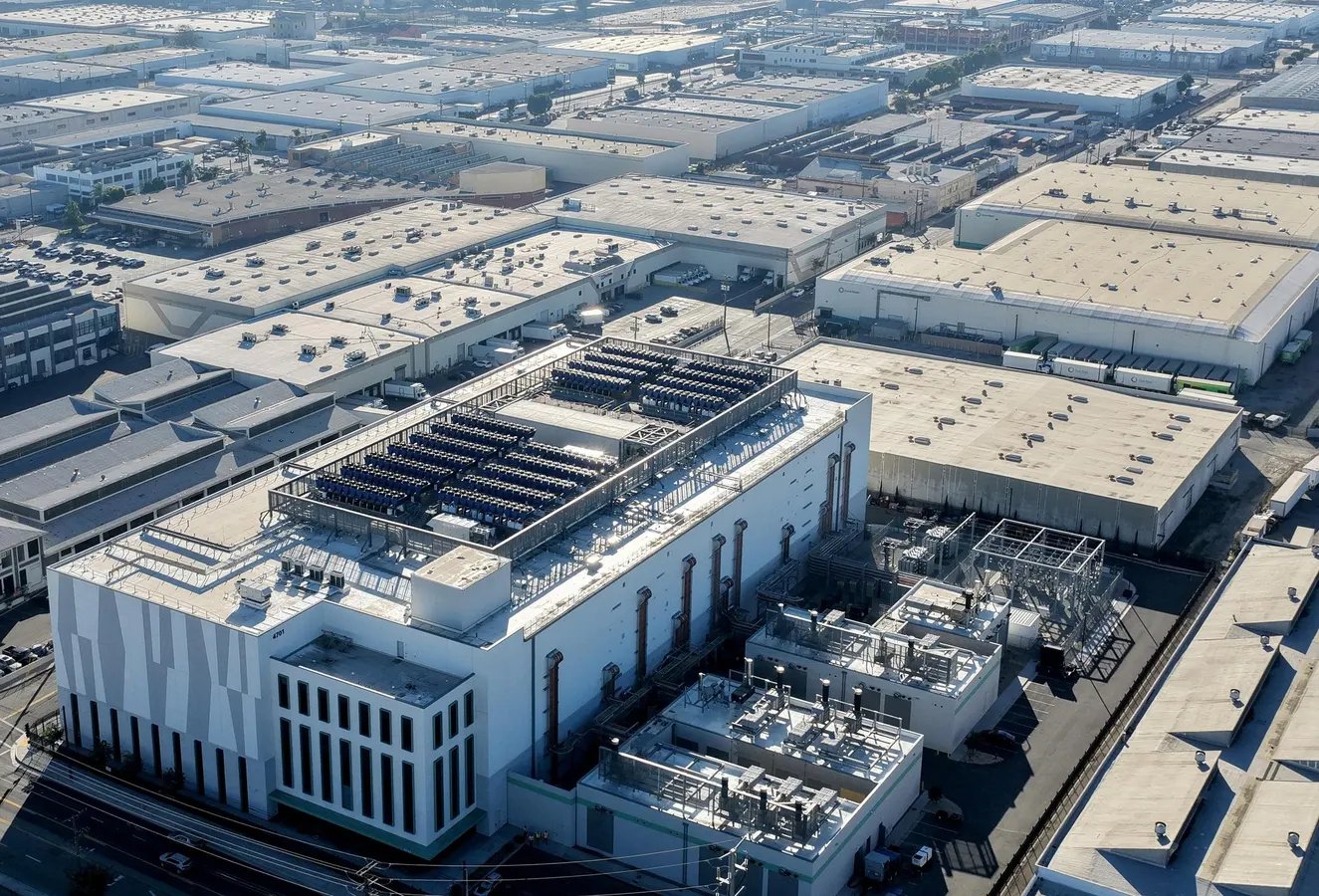
VERNON, CA – DECEMBER 25: Prime Data Center in Vernon, CA on Thursday, Dec. 25, 2025. (Myung J. Chun / Los Angeles Times via Getty Images)
Los Angeles Times via Getty Images
“Data centers consume massive amounts of energy, and hence emit massive amounts of waste heat, but their direct thermal impact on nearby neighborhoods has remained largely unmeasured—until now,” wrote Sailor in a LinkedIn post. “A single 169 MW data center campus rejects waste heat equivalent to that emitted by nearly 200,000 households, concentrated in an area equivalent to less than a few hundred residential parcels,” he went on to say. Their research found substantial warming downwind from four data centers in the Phoenix area. Sailor’s team found downwind warming ranging from 1.5 to 4 degrees Fahrenheit as much as 500 meters from the facilities.
Sailor told me he was aware of the previous unpublished study claiming elevated land surface temperatures in the vicinity of data centers. “That study drew equal amounts of attention and criticism,” wrote Sailor. I was also skeptical of the initial findings and held off on sharing information about it until a more rigorous, published analysis emerged. The impact on land surface temperature didn’t make physical sense to me, but the waste heat connection is compelling.
Like most things in weather and climate, it comes down to physics. Data centers must reject massive amounts of heat associated with the energy they consume. “This is just the first law of thermodynamics,” said Sailor. “A single, relatively modest 36-megawatt data center rejects heat equivalent to the electricity consumption of roughly 40,000 homes,” he added. So, what’s going on?”
A photo shows cold water pipes, part of the cooling system at a data centre in Noyal-sur-Vilaine, a suburb of Rennes, western France, on October 31, 2025. (Photo by Damien MEYER / AFP) (Photo by DAMIEN MEYER/AFP via Getty Images)
AFP via Getty Images
Modern data centers primarily use air-based cooling systems that emit “sensible heat,” primarily from a collection of air-cooled rooftop chillers. “The sheer density of this heat rejection is 2 to 6 times the magnitude of peak afternoon solar irradiance,” Sailor continued in his email to me. What’s solar irradiance? It is basically the amount of energy striking the surface for a given area.
I-95 urban corridor at night.
NASA
Sailor said that this is just the beginning of a series of studies on data centers and thermal impact. It is certainly an important consideration. Over the years, my research has illustrated how urban heat, buildings, and pollution can cause heat-related health outcomes, affect rainstorms, modify infrastructure and have disproportionate effects on communities. Our 2013 analysis argued that “archipelagoes” of heat islands like the I-95 corridor in the Washington – Philadelphia – New York Boston corridor can have a compounding effect on weather and climate. Sailor and I actually collaborated on a 2016 paper suggesting policy levers to mitigate these types of scenarios.
Are clusters of data centers becoming significant weather modifiers like cities themselves? Time (and peer-reviewed research) will tell.
Data center workforce concentration in 2023.
U.S. Census Bureau
