

Published May 22, 2026 02:34PM
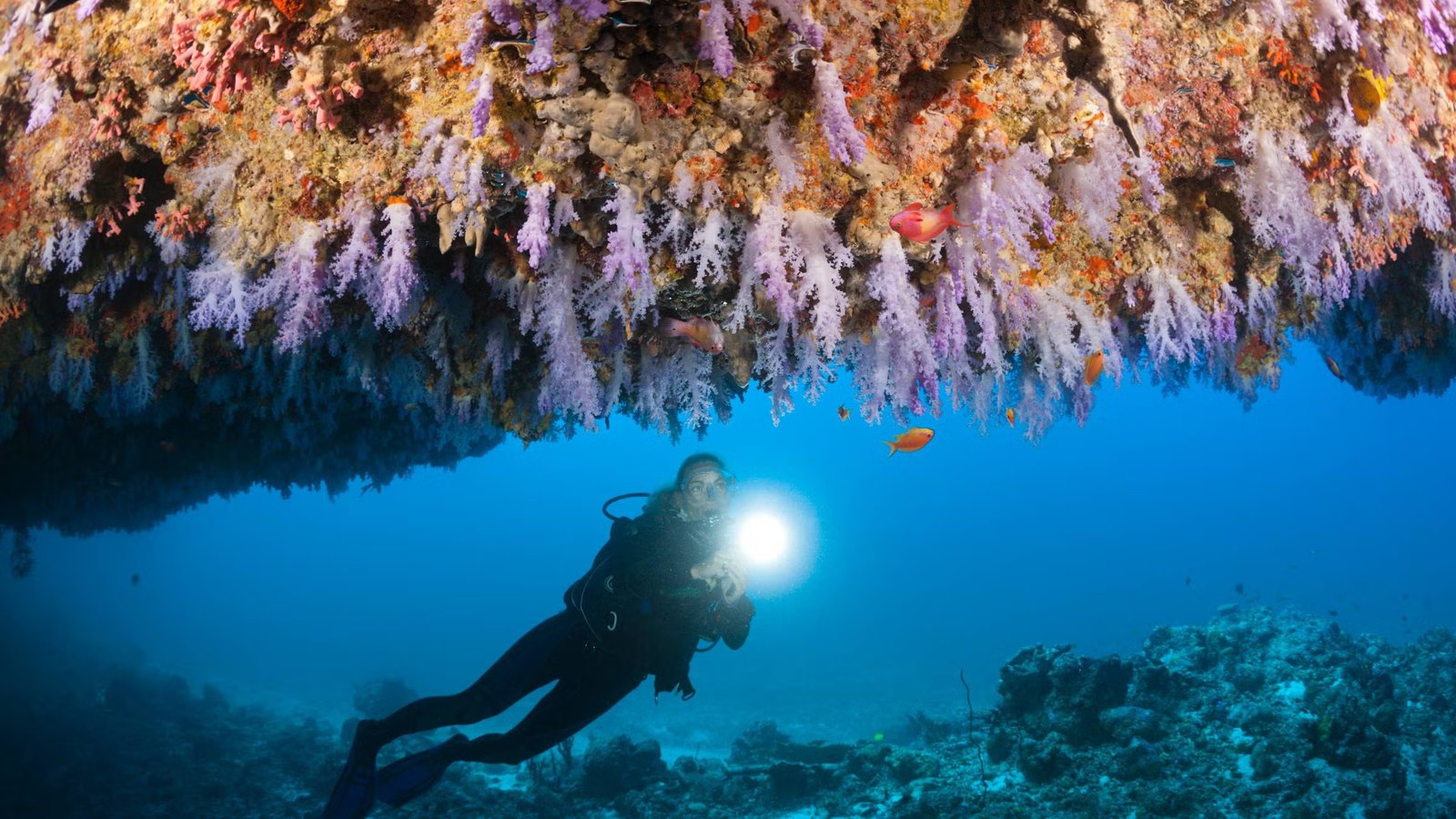
A group of five Italian divers slipped beneath the surface in the Vaavu Atoll in the Maldives on Thursday, May 14. Scuba diving is one of the main reasons why 2 million tourists each year flock to the beautiful island nation, which is located 470 miles off the southern coast of India.
By all appearances, the group that departed on May 14 consisted of expert divers and marine researchers, who were exploring the Maldives’ largest barrier reef on a recreational dive.
Instead, the trip became the worst diving accident in Maldivian history.
The dive instructor’s body was found near the entrance of the Dhekunu Kandu cave later that day. The discovery kicked off a major search and rescue mission, which also had a fatal end. One of the Maldivian National Defense Force’s most senior divers, who was called in for the rescue mission, died of decompression sickness on May 16 after attempting to enter the cave.
Finnish cave divers carrying specialized equipment then flew in from the U.K. and Australia. This team eventually located the missing bodies in the cave on May 18, and recovered the remains on May 20.
Since the tragedy occurred, officials have been trying to understand why the divers entered the cave. Maldivian law caps recreational diving at 98 feet. The cave’s entrance sits at nearly 164 feet. Its deepest point drops to 230 feet, and the entire cave system runs some 656 feet into the reef through three chambers connected by narrow passages.
It’s reported that each diver descended with a single tank of nitrox air, not the multiple tanks of specialized gases and other niche equipment required to explore a cave at that depth.
What caused their deaths has yet to be determined. An investigation into the tragedy is ongoing. Narcosis, equipment failure, oxygen toxicity, and panic have all been raised as possibilities.
And until the inquiry concludes, this tragedy exists without a definite explanation—which is precisely what makes it so unsettling to the dive community.
What diving experts believe, however, is that the rules governing safe diving exist for reasons that the community learned the hardest way possible. The regulations overseeing diving are not bureaucratic formalities. They are the accumulated cost of other people’s lives.
In my nearly 200 scuba dives, I have experienced how tempting it can be to push the limits. It can be hard to come up for air when you’ve flown halfway across the world to view manta rays, or when playful dolphins show up just as you’re hitting your reserve gas. But there’s nothing so incredible underwater that seeing it is worth your life.
While no set of precautions makes diving risk-free, knowing the crucial rules of scuba safety—and following them—is the most powerful thing any diver can do to make sure they come back up.
Here’s what dive experts have to say about how to mitigate your risks underwater so you can dive again another day.
Fatal Consequences of Pushing Past Depth Limits
Any dive that goes deeper than the 130-foot recreational limit—such as the 164-foot Maldivian cave—is called technical diving. Within this category of diving, trips can exceed 300 feet in depth.
The deeper you go, the more nitrogen from the air you breathe is absorbed by your tissues. If you ascend to the surface too fast, you risk decompression sickness (DCS) like the Maldivian rescue diver succumbed to. Greater depths demand slower ascents and specialized gas mixes.
“There’s a difference between having dives to 40 feet and then making a dive to 50 feet and having only dived to 40 feet and then going to 120 feet,” Karl Shreeves, who oversees the instructional design and development of scuba courses at PADI, the world’s largest scuba diving certification organization, told Outside.
At any depth, there needs to be a detailed plan before getting in the water: What is the turnaround point? At what gas level do you begin your ascent? This aligns the team and keeps the dive within everyone’s limits.
And those limits should not be defined by a diver’s most advanced certification standards. They are a skills ceiling subject to revision on any given day based on how you slept, how you feel, and the clarity of the water. The diver’s job is to monitor these factors honestly before every dive. Even if you’re trained to dive deep, that doesn’t mean you’re up to it every day.
The Dangers of Cave Diving
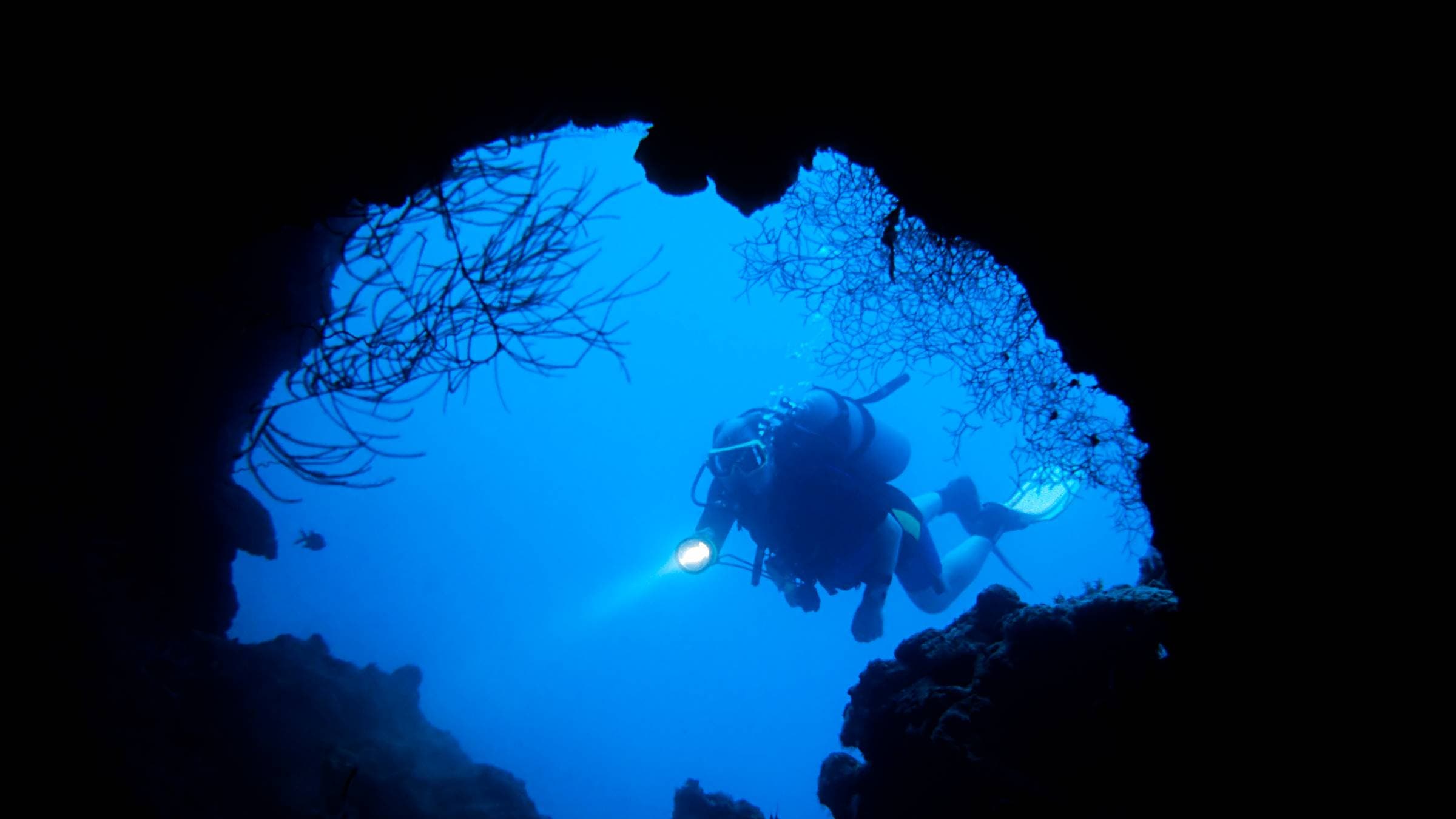
Jill Heinerth, Canadian inductee into the International Scuba Diving Hall of Fame, and author of Into the Planet: My Life as a Cave Diver, knows about the dangers of cave diving. In a cave, you can’t surface whenever you want. Kicking with your fins, called “finning,” can stir up silt that blocks your vision. Deep cave diving, like the Maldives team was doing, requires custom gas blends, to keep a diver from experiencing narcosis or oxygen toxicity. A deep cave dive often requires ample time, and additional gas supplies, for a long decompression period.
This is an unforgiving environment where small errors can quickly become life‑threatening.
“Caves are quite amazing, but they require respect,” Heinerth told Outside. “Some people don’t really realize when they are coming into danger, because it looks clear, it looks beautiful on the way in, but then, because they don’t realize how important their fin kicking technique is, they might turn around and see that they’ve obliterated visibility. If they haven’t laid a guideline with a tactical tactile reference, then they’re not going to be able to find their way out.”
Training in caverns establishes a cave diver’s fundamental skills; a full cave certification takes hundreds of dives, typically over years, and greatly reduces fatalities. The vast majority of cave diving deaths involve people without cave training, says PADI’s Shreeves.
While the Italian divers were experienced recreational and scientific divers, they did not have cave diving training. They reportedly descended with standard recreational scuba gear (single tanks with regular breathing air) rather than the specialized technical equipment—such as closed-circuit rebreathers, multiple redundant gas tanks, and trimix gas blends—required for deep overhead dives.
Knowing When to Call a Dive
According to PADI guidelines, any diver can call off a dive at any time, and for any reason. This rule began in the cave diving community, but is now standard across recreational diving as well, says Shreeves.
It means what it says: any diver, on any dive, for any reason—or no stated reason at all—may choose not to enter the water, or may surface from a dive already underway. The reason does not have to be explained, justified, or defended.
Reports indicate that one one of the divers who had geared up with the Vaavu Atoll group called off their dive before getting in the water. Their reason for doing so is not yet public.
Heinerth asks herself two questions before she starts any dive: Am I capable of self-rescue today with this gear, in these conditions, with these people? And am I capable and willing to execute a buddy rescue if someone else needs it?
If she answers no to either question, for whatever reason, she cancels the dive. With roughly 8,000 dives logged, Heinerth makes a point of sitting out dives publicly on trips to show that even someone operating at her level calls a dive.
“I really believe that people need to speak up,” she says. “It’s not a matter of being polite when safety is involved.”
Shreeves says he once voiced his concerns over a seemingly dangerous plan, only to have four or five people approach him later to say they had felt the same way. “My question is always, why don’t you speak up?” he says. “Because it’s very rare you’re going to get shouted down or something like that. What’s going to happen is a safe, reasonable dive plan is going to result.”
And that plan is a structure, not a script. Conditions change, and good divers adapt—but only in the more conservative direction. Diving at 40 feet when the plan was 60 because visibility is worse than expected? Peachy. Adding another wreck site mid-dive that’s 30 feet deeper than you planned because the water’s extra warm that day? That’s a no go.
A Dive Incident Doesn’t Need to Become a Dive Disaster
The gap between a seemingly dangerous situation and a fatal one is often narrowed by preparation that happens long before anyone enters the water. The Divers Alert Network (DAN), the global leader in scuba diving safety, research, and medical emergency support, offers a free e-learning course, no membership required, that walks any diver through building an emergency plan.
The company also offer the infrastructure most recreational divers hope they never need: a 24/7 emergency hotline staffed by dive medicine specialists, a global network of referral physicians, and membership and insurance products designed to cover the gaps in standard health insurance, like a stay in a hyperbaric chamber. DAN Europe, a close partner of DAN, is involved in the ongoing Maldives operation.
If something goes away and medical support is necessary, DAN’s emergency hotline—available around the clock, to any diver, member or not—is the first call to make once out of the water.
Alexandra Gillespie is the former digital editor of Scuba Diving magazine and has covered scuba diving and marine sustainability for Outside, National Geographic, U.S. News and World, NPR, and other major publications. She’s gone diving everywhere from California’s kelp forests to Bahamian reefs to Sudan’s Red Sea.
