

Updated June 1, 2026 10:36AM
The standard climb up Mount Everest from Nepal ascends more than 11,000 vertical feet and crosses 5.5 miles in total distance. Along that journey, climbers trudge through the Khumbu Icefall, along the Western Cwm, up the Lhotse Face, across the South Col, on to the Balcony, Hilary Step, and finally, the summit.
It’s the same approximate route that thousands of Mount Everest climbers have taken over the decades, including Tenzing Norgay and Edmund Hillary, who first climbed the peak in 1953.
So, what is the best single spot along the Everest route? How about the worst? We recently posed this question to legendary Nepali climber Kami Rita Sherpa, who has climbed it 32 times. He politely declined to name a favorite, saying, “In the mountains, we don’t have favorites or least favorites. Every hour, the route changes as it collapses and avalanches come. The route we take to the summit is often different from the route we take down. That’s how mountains are.”
Fair enough.
We asked a handful of other experts to give us highly subjective, opinionated answers to our questions.
British guide Kenton Cool recently completed his 20th ascent of Everest, which is the most by any non-Nepali climber. Garrett Madison just finished his 16th Everest climb, the most of any American. We also asked Nepali climber Purnima Shrestha, who recently completed her sixth ascent of the peak. Here’s what they told us:
What’s the Best Part of the Everest Route?
Kenton Cool: Coming over the South Summit at 28,000 feet, when you see the beautiful ridge up to the summit past the Hillary Slope is brilliant. By the time you’re up that high, you know everything is coming together for you to reach the top. Usually, the first sliver of sunlight is poking up from the Tibetan horizon. It’s just magical. I think a lot of people forget just how cool summit day is on Everest. If you dropped the top of Everest into the Rockies or the Alps, it would absolutely be a sought-after climb. You’re climbing a snowy coloiur, passing over mixed ground, and traversing this beautiful ridge with truly amazing views.
Garrett Madison: I love getting to Camp III at 23,300 feet. You spend the evening up there and get to watch the sun set over Cho Oyu and the Western Cwm. It’s magical up there.
Purnima Shrestha: My favorite place is Camp IV on the South Col at 26,000 feet. It’s my favorite because I know that my summit push is about to begin, that in only one more night, I’ll have reached my goal. That night at Camp IV feels really special to me. I feel like once I’m at Camp IV, I’m almost guaranteed the summit. That’s why I’m so happy there. It’s also the first time we can really see Mount Everest and the summit, and my mind and body feel full. It’s like I’m totally consumed by the mountain and its beauty.
And the Worst?
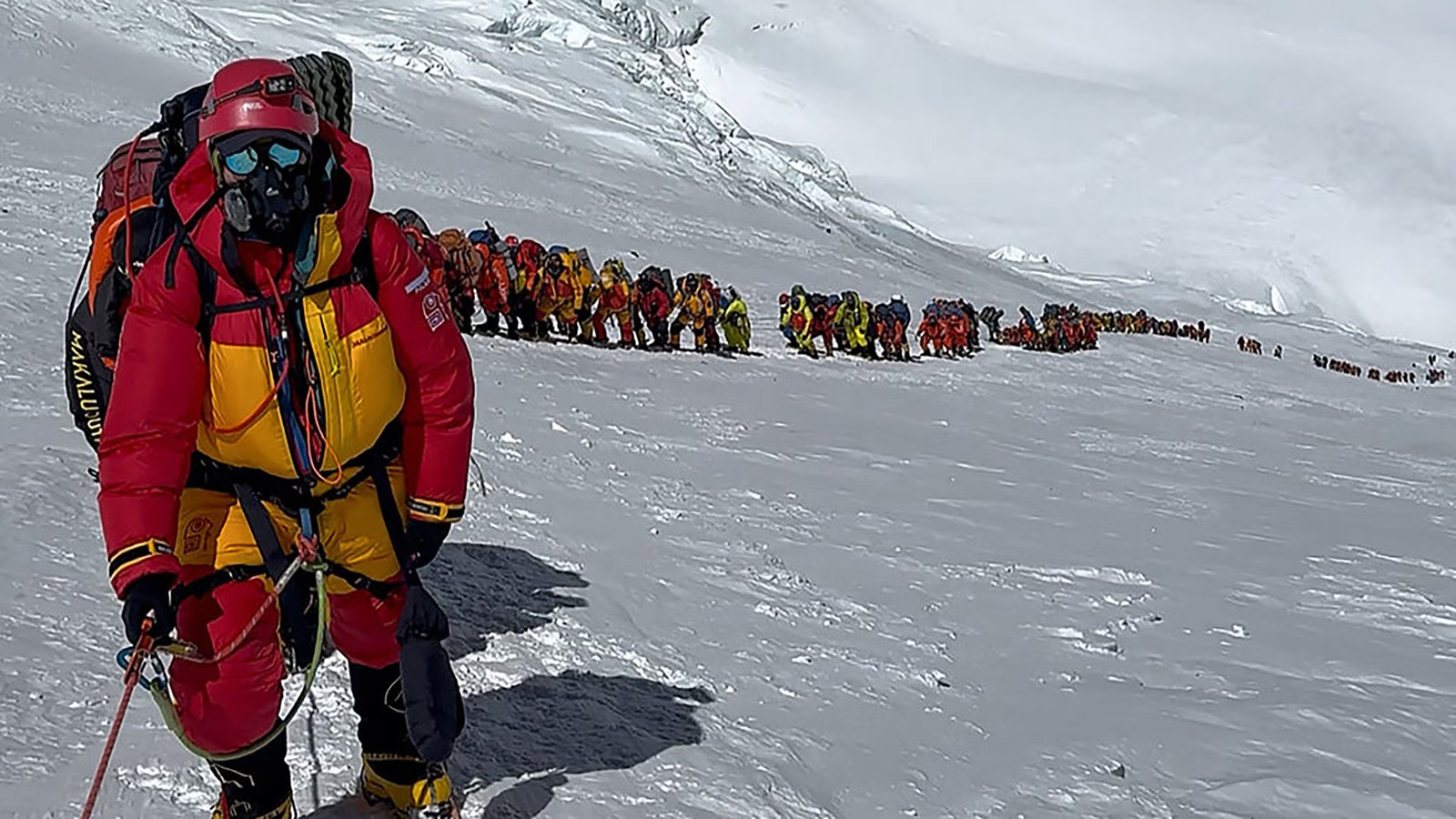
Cool: The climb between Camp III at 23,300 feet and Camp V at 26,000 feet really sucks. You have to wear your down suit for the first time. You’re wearing oxygen for the first time. The setup is cumbersome. You’re usually climbing under an unbearable sun, and it’s hot. The actual climbing is monotonous. Plus, you know a really big day is coming tomorrow, so you’re worrying about crowds and your energy.
Madison: Exiting the Khumbu Icefall on your way down, right where it flattens out. You go from walking on ice to walking on dirt and rocks and you’re still wearing your crampons. It’s a schlep to Base Camp from there, and it’s really monotonous. Your body is tired, and you’re just kind of floating through a daze as you stumble forward.
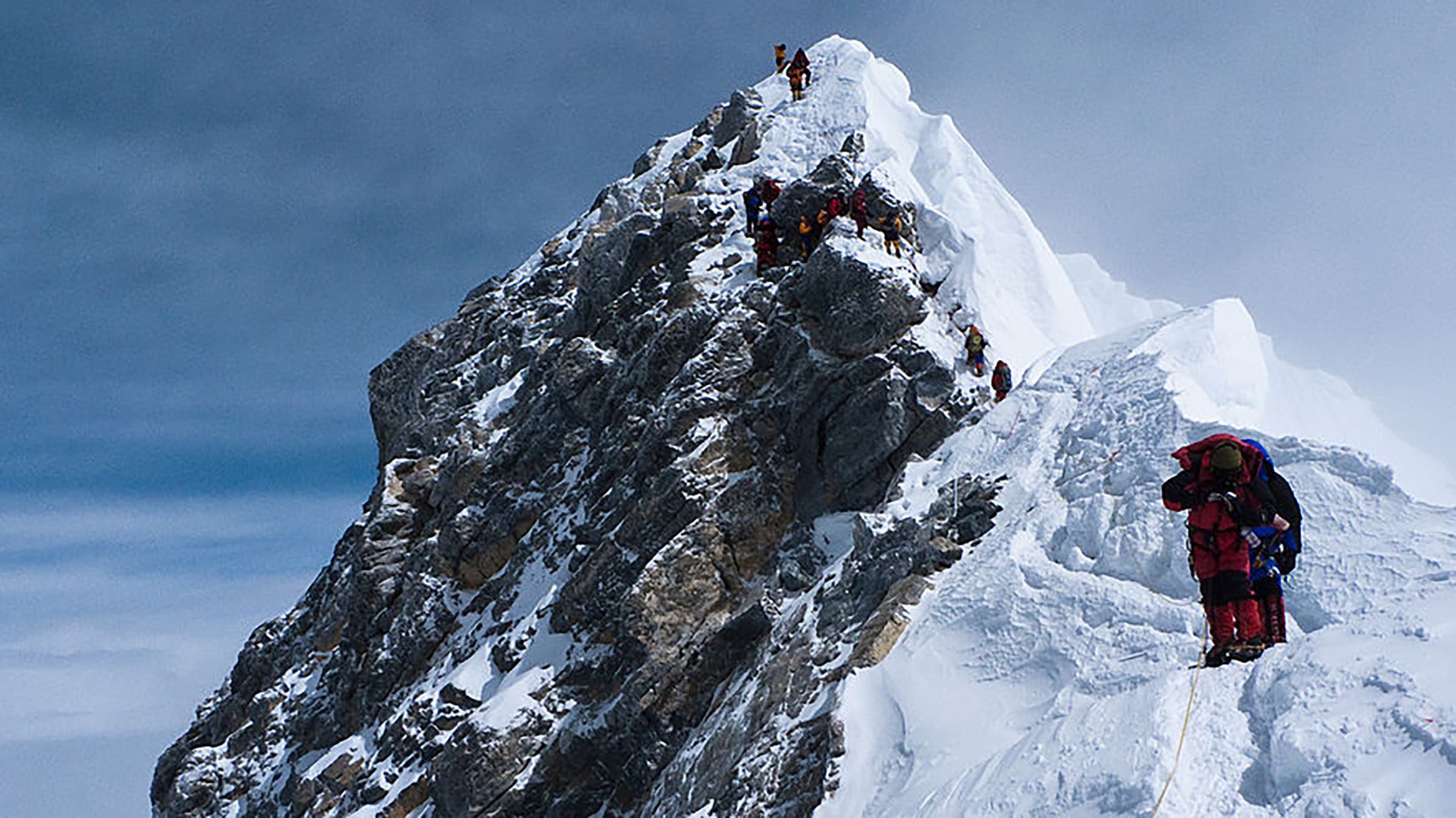
Shrestha: The part I dislike the most is the Khumbu Icefall. We walk through it at night, and it’s dangerous. I’m also often scared on the Hillary Step, and I just hope that I cross it as quickly as possible. Those two parts are what I focus on before I climb, as I know they are the biggest obstacles.
What Section of the Route to Climbers Underestimate?
Cool: People say climbing Mount Everest is a glorified walk. But there are technical sections you find on summit day that are really difficult. There are tricky steps between the balcony and the south summit. Depending on how much snow is on the south summit, the steps you take can be really intricate. You’re stepping over rock and ice and snow, and you walk across these big cornices looming over Tibet. You have to be extremely careful. It’s definitely something that people underestimate.

Madison: Climbing from Camp III at 23,300 feet to Camp IV at 26,000 feet is really hard. It’s a lot of elevation gain, it’s steep terrain, and it’s just a huge day for people to take on. You get into Camp IV and you’re really tired, and some groups try to then go for the summit that night. We try to take a full day’s rest in Camp IV and then go the following night.
Shrestha: The most difficult parts are the Khumbu Icefall and the Hillary Step. In the icefall, the crevasses, hanging seracs, and the ice are scary. They require a level of technical knowledge and skill that other sections of the climb don’t.
What Section of the Climb Is Easier Than People Think?
Cool: The Western Cwm (pronounced “coom”) is truly a beautiful hike. You’re surrounded by majestic scenery. It’s a relatively easy slope. The crevasses are usually marked. But you have to do it before it gets hot, otherwise it becomes the world’s biggest solar reflector.
Madison: The Hillary Step. Everyone is worried about it, and it’s really not difficult anymore. It’s no harder than going up the Yellow Band. The entire summit ridge looks a lot more intimidating in photographs than in real life. When you get up there, it’s more straightforward than you think, especially if you’re moving forward and trying to knock out that final section before the top.
Shrestha: The ladders in the Khumbu icefall scare a lot of people. Many people are shaking from fear and some give up before they even try.
Ben Ayers contributed to this report.
