

Published June 3, 2026 05:19AM
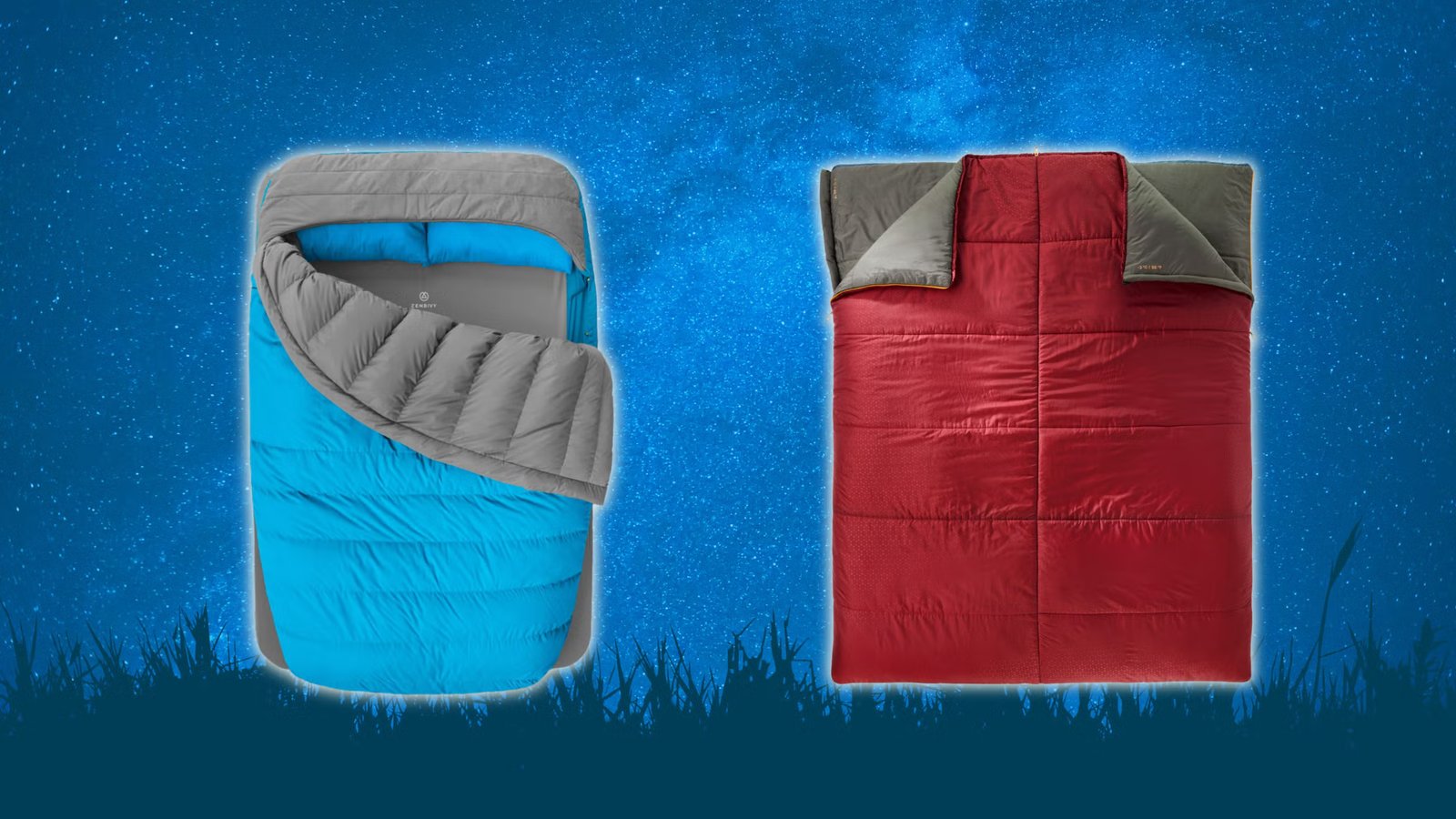
Key Takeaway: Our top overall pick for the best car camping sleeping bag is the Rumpl Wrap Sack 20 for its hybrid design and wide temperature range. This year, we added two new stellar options for couples, including the versatile Exped MegaSleep Duo and ultra-comfy Zenbivy Overland Double. We also updated pricing and testing notes on sleeping bags we previously included and still highly recommend.
Save the paper-thin foam pads and highly compressible sleeping bags for the backcountry. Car camping is your chance to bring the comforts of home with you—like a warm, feature-packed, luxurious sleep setup.
In 2026, there’s a sleeping bag for every kind of camper. The downside? It can be hard to parse all the models and features to find what you really want. Our testers—a mix of men, women, and children with different sleeping preferences—put 36 sleeping bags and blankets to the test on cold, windy, shoulder-season trips, and balmy summer nights. These nine sleeping bags and quilts for car camping came out on top.
Best Sleeping Bags for Car Camping: At a Glance
Best Overall
Rumpl Wrap Sack 20 Sleeping Bag
Dimensions: 82″ x 35″
Comfort rating: 20-30F
Pros and Cons
+ Wide temperature range
+ Roomy
+ Smart design
– Too cold below 30F
– Clips could be uncomfortable to roll on
The best way to describe the Wrap Sack is a hybrid between a sleeping bag and an adult swaddle. Two wings on either side of the bag offer two different amounts of Rumpl’s proprietary recycled synthetic insulation. Depending on how mild or chilly it is at night, you can wrap one or both of these sides around yourself and secure them via four easy-to-close clips; when it’s cold out, zip the outer layer of the Wrap Sack like a traditional sleeping bag.
This layering design made the Wrap Sack versatile enough to accommodate big temperature swings at night. It proved ideal for summer nights that start out in the 80s and drop down into the 40s, which is common in the parts of far Northern California where we tested. That said, one tester cautioned that the Wrap Sack does not have enough insulation to live up to its stated 20-degree comfort rating. Even with the bag fully cinched, he woke up cold on a 28-degree night on the Scott River in California.
While it’s not a bag for nights that dip below freezing, the Wrap Sack’s ability to handle big temperature swings above 32 degrees and its roominess made it a tester favorite.The rectangular shaped bag allowed active sleepers enough space to toss and turn, and our 6’2” tester had enough room to stretch out even with the Wrap Sack’s hood stuffed with a camp pillow.
Even after over 20 days in the field and two machine washes, the robust, fully-recycled nylon exterior showed no visible wear. The Wrap Sack packs down to the size of a watermelon—not exactly small, but smaller than the Big Agnes Echo Park, the other extra-roomy option on this list.
Most Versatile Two-Person Bag
Exped MegaSleep Duo 25/40 Sleeping Bag
Dimensions: 77″ length, 134″ shoulder girth
Comfort rating: 25/40F
Pros and Cons
+ Versatile, simple design
+ Works across a range of temperatures
+ Affordable
– Odd pocket placement
– Not ideal for extreme cold
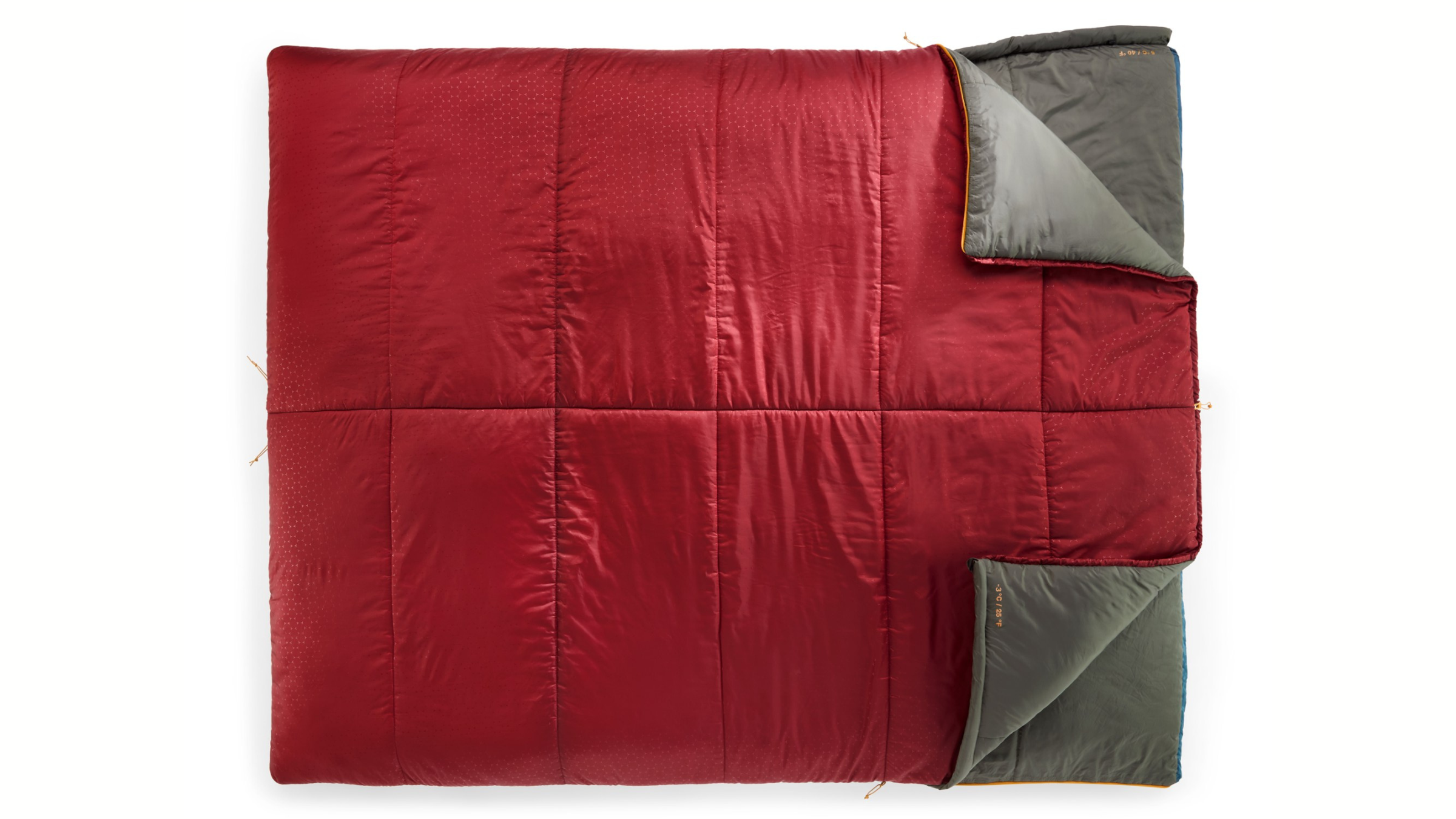
The synthetic-stuffed MegaSleep Duo is a cleverly designed double sleeping bag for couples and families. While some sleep systems overcomplicate things, Exped keeps it simple with two space-maximizing rectangular blankets that zip together. There’s a thicker, heavier red side rated down to 25 degrees, and a lighter blue one rated to 40 degrees. If you’re camping in warmer weather, you flip the bag so the blue side is facing up, and vice versa if the mercury plummets. As a bonus, both blankets can be zipped into one-person sleeping bags for solo trips or couples who sleep at different temperatures (or need a break from each other).
“My girlfriend had her legs uncovered most of the night since she runs hot, while I stayed zipped in and fully insulated,” said one tester. The MegaSleep also earned kudos for a soft, blanket-like interior, and a 40-denier ripstop exterior that multiple testers with canine companions reported was easy-to-clean and hardwearing.
Our Tahoe testers who snuggled up in the two-person Duo stayed warm when temperatures dipped below 30 degrees, while a camper who tested the solo MegaSleep in the Ozarks reported feeling chilly below 40 degrees. Factoring in that mixed feedback—and the fact that both open-mouthed bags forgo a hood—we recommend the MegaSleep Duo down to just below freezing. Campers who frequent chillier climes should gravitate toward the toastier Nemo Jazz 30 or Zenbivvy Overland Double.
Our one complaint? Because both interior pockets are located on the same side of each blanket, one often ends up beneath a sleeper, making it less comfortable to stash a phone or headlamp.
Best Sleep System
Zenbivy Overland Double
Dimensions: 80″ x 92″ quilt; 50″, 60″, or 70″ sheet
Comfort rating: 25F
Pros and Cons
+ As warm and comfortable as your home duvet
+ Well-designed hood and footbox
+ Variety of sheet sizes for different mattresses
– Expensive
– Some overheating
– First setup is a little overwhelming
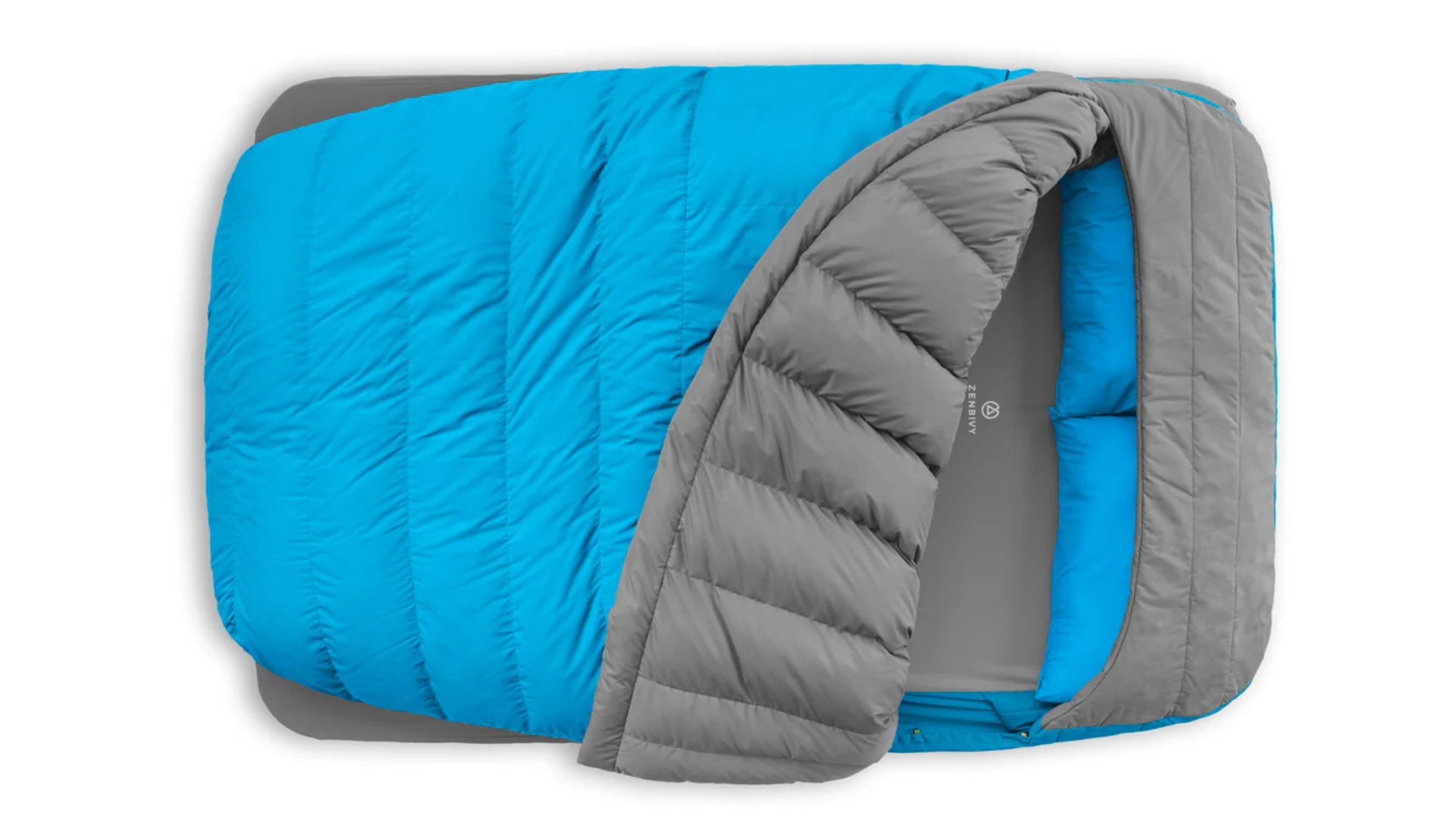
Zenbivy is best known for its alternative all-in-one backcountry sleep systems. But now the Bellingham, Washington outfitter is in the car camping game with its Overland series, a two-part sleep system that proved relatively affordable, innovative, and comfortable compared to traditional sleeping bag designs.
The two-piece sleep system features a fitted sheet with an insulated, draft-defending hood. A separate, billowing, comforter-style quilt with an integrated footbox offers three-season warmth without the constricting feel of a sleeping bag.
A skeptical, finicky Colorado tester was completely sold after his first night and immediately became a card-carrying member of the Zenbivy cult. “Honestly, it’s revolutionary for folks like me,” he reported. He loved that he could clip the quilt to the sheet and still had freedom to squirm without disturbing his snoring partner: “I could kick like a newborn puppy without feeling constrained or pulling the quilt off,” he raved. Zenbivy nailed the details, too: The hood kept his pillows in place and head warm, and a small integrated pocket stashed a headlamp for midnight bathroom runs.
We tested the 25-degree down option, but there’s also a 30-degree synthetic version that’s 14 ounces heavier and 180 bucks cheaper. All components are crafted from a silky 50-denier Pongee fabric that brings high-brow hotel plushiness to the high country.
Gripes were few and far between. Testers said the system can be overwhelming to set up, but color-coded attachment points on the sheet and quilt helped orient them. This is the perfect setup for sleepers and co-sleepers who need a big boost of comfort to get through the night.
Best Value
The North Face Wawona 20 Sleeping Bag
Dimensions: 78″ x 32″ (regular)
Comfort rating: 20F and 35F
Pros and Cons
+ Good value
+ Soft liner fabric
+ Incorporates recycled materials
– Large pack down size for a single
– Comfort rating is off
– No hood
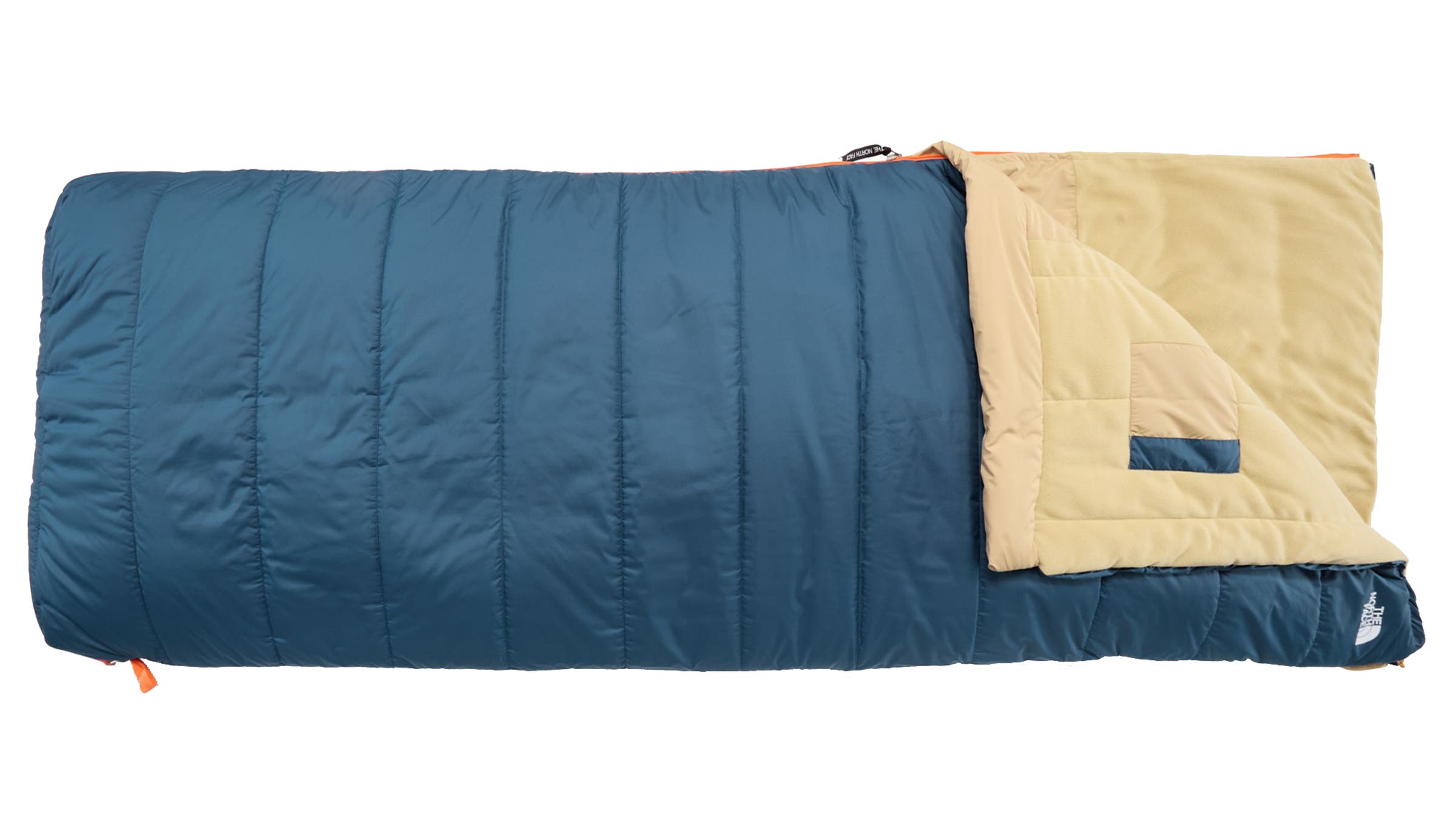
The Wawona is reasonably priced yet doesn’t feel like a budget bag. Testers gave it top marks for its next-to-skin comfort thanks to a cozy, brushed high-pile fleece that comprised the top interior of the bag. At 78 inches by 32 inches (regular), this rectangular bag is also comfortably roomy.
With only a $10 price difference between the 20-degree and 35-degree versions, we opted to test the Wawona 20 to see how well it performed in lower temps. While the recycled polyester fill proved sufficient in 40-degree temps, testers noted that it didn’t live up to its stated 20-degree comfort rating. The lack of a hood left one tester wishing he had worn a beanie and needing to layer up in a down jacket to make it comfortable during a 28-degree night on the Scott River in Northern California. We would have expected a bag that packs down to no smaller than a five-gallon cooler to have more insulation power.
Still, testers had plenty of good things to say about this more affordable sleeping bag. The 50-denier polyester ripstop outer proved surprisingly durable—it was no worse for wear after we used the Wawona as a blanket on bare, rocky ground for some stargazing. And the hearty YKK zipper (usually the first thing to go on a budget bag) worked just as well after a season of camping as it did at the start. One tester especially appreciated the storage pocket built into the bag’s lining at chest height, where he stashed his essential ear plugs when not in use.
And perhaps the Wawona’s biggest flex: At such a reasonable price, campers could buy two Wawona bags and zip them together to enjoy an affordable double bag.
Roomiest
Big Agnes Echo Park 20 Sleeping Bag
Dimensions: 80″ x 30″
Comfort rating: 0F and 20F
Pros and Cons
+ Good value
+ Roomy design
+ Integrated pad and pillow sleeves
– Heavy and bulky
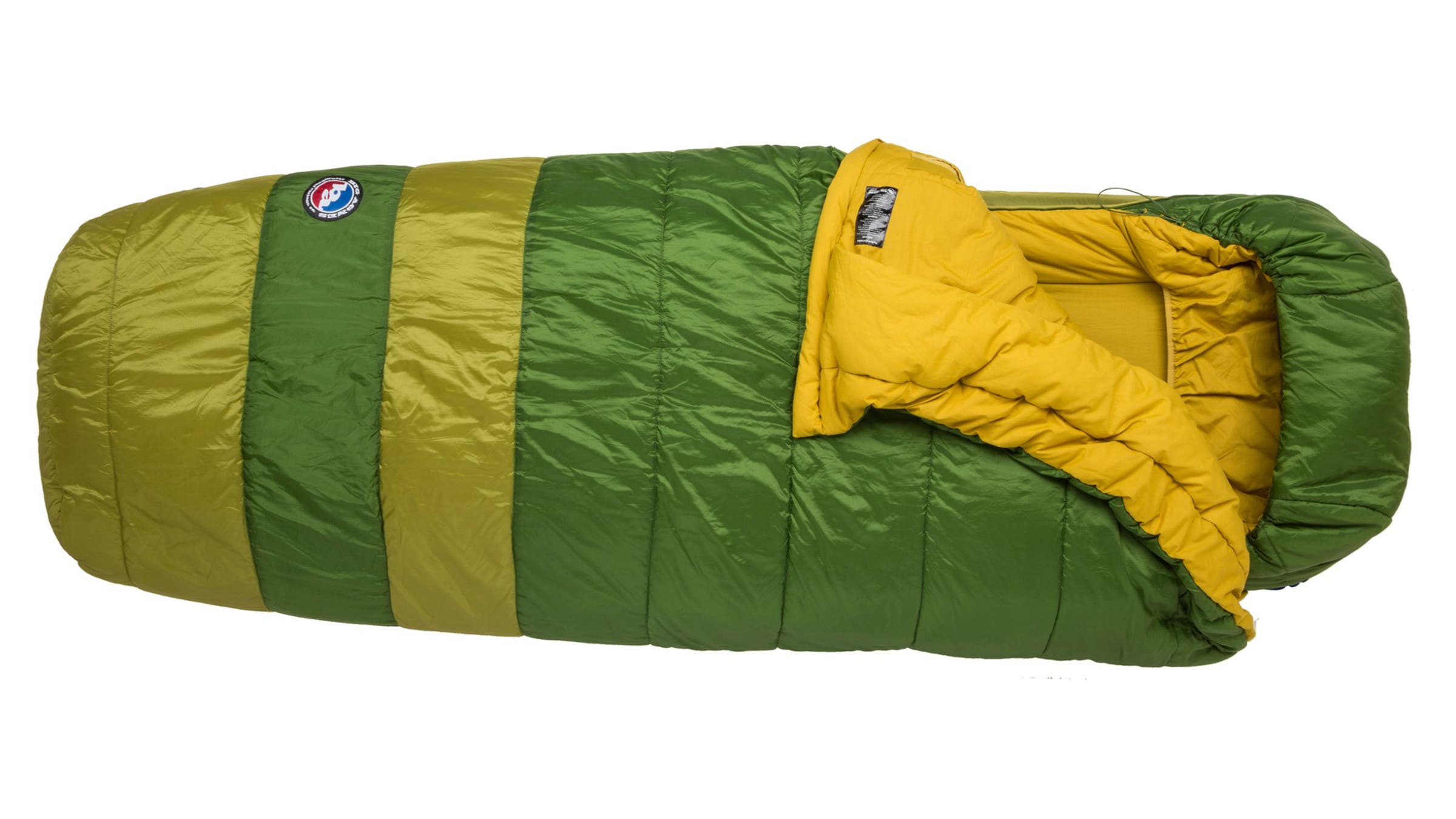
While technically a little bit smaller than Rumpl Wrap Sack, the Big Agnes Echo Park is the roomiest traditional bag we tested with a higher temperature rating, making this our top pick for larger campers who want a comfortable, spacious bag that can hack it in lower temps.
The Echo Park comes in 0-, 20-, and 35-degree temperature ratings and uses Big Agnes’ proprietary FireLine Max Eco synthetic insulation. We tested the 20-degree version ($200) to see how it stacked up to the other bags in the same price range (at 0 degrees, the Echo Park bumps up to $230). It proved toasty on a 28-degree night in Northern California, yet testers were also able to dump enough heat via full-length zippers on the either side to stay comfortable on nights that didn’t dip below 60 Fahrenheit. The cotton-polyester blend on the interior felt supple next to skin and as comfortable as our bedding at home.
Big Agnes lists max user height for the Echo Park as 6’6”, which we found to be accurate; a 6’5” tester commented that this was the first bag he’d tested where his feet had room to spare. It is wide without being as boxy as the Rumpl and North Face sleeping bags on this list, with a 74-inch hip girth and a 64-inch foot girth, which feels snug but not constricting like a mummy bag. This lightly tapered design enhances space and comfort while still keeping the bag close enough to the body to help insulate.
On top of being incredibly roomy and high on the creature comfort scale, the Echo Park is packed with features we would expect to see on higher priced bags, making it a great value. The integrated sleeping pad sleeve accommodates pads as wide as 30 inches and successfully kept our pads from moving around at night; the pad sleeve also features a separate pillow pocket to keep your camp pillow in place. While incredibly comfortable, the Echo Park also proved plenty durable—the 40-denier ripstop exterior showed little wear and tear after two months of use.
The large footprint and quantity of synthetic insulation did make this bag a beast to pack down. It doesn’t get much smaller than the size of a carry-on bag, so you won’t fit the Echo Park into a backpack. But if packability isn’t a priority, this comfy, extra-roomy bag is a good buy.
Comfiest
Kelty Wayback 20 Sleeping Bag
Dimensions: 84″ x 36″
Comfort rating: 20F
Pros and Cons
+ Comfy, soft organic cotton liner
+ Roomy
+ Warm
+ Affordable
+ Built-in blanket for versatility and coziness
– No hood for colder nights
– Cotton is slow to dry
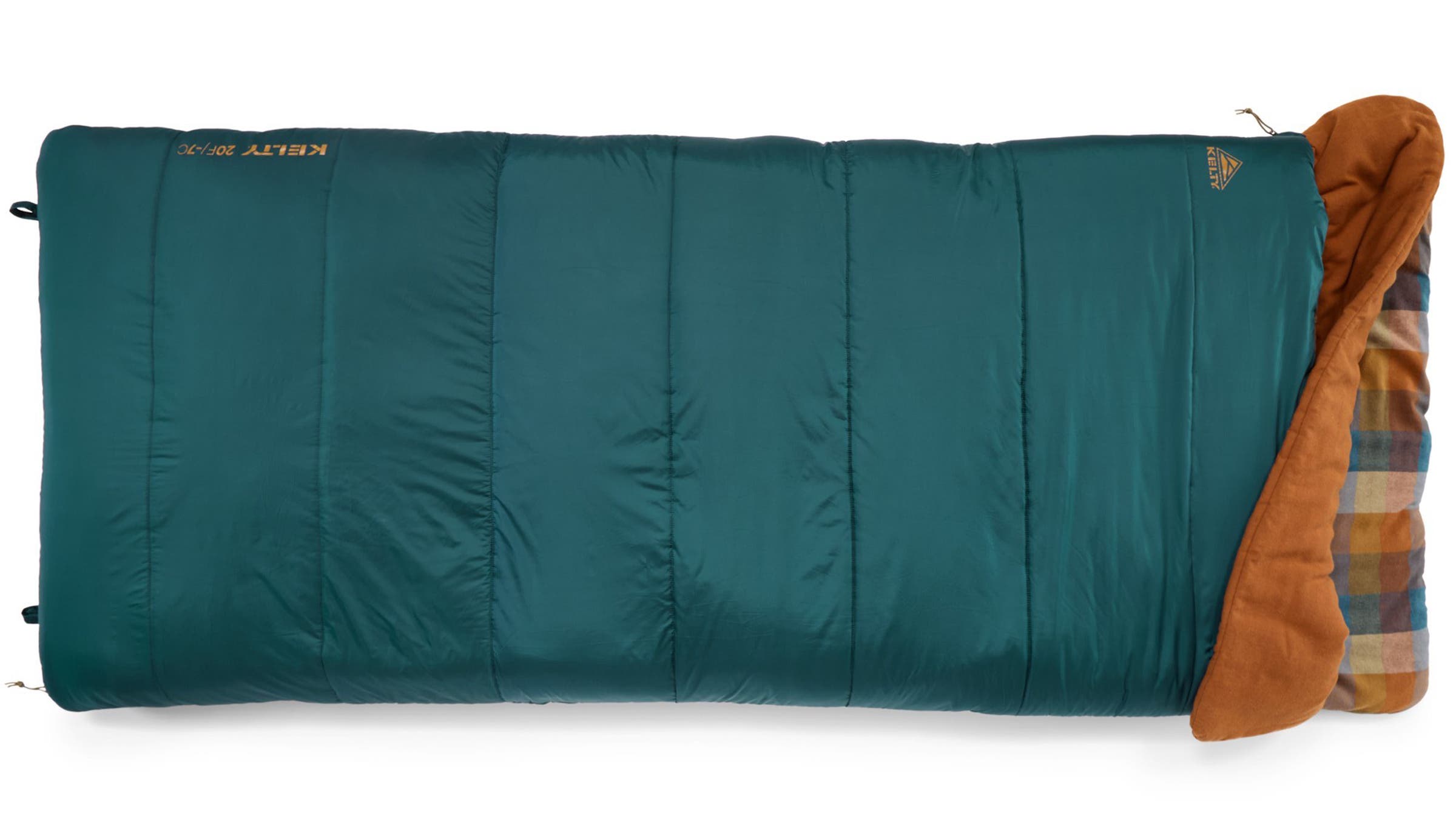
Unlike sleeping bags stitched from slippery synthetics, the Wayback 20 is lined with a plush, organic cotton flannel fabric that’s soft to the touch, which stood out to our car camping testers for its unmatched comfort. While cotton doesn’t exude durability, testers found it surprisingly hard-wearing after unzipping the bag to use it as a campfire blanket in the Sierra. The exterior shell is a recycled 40-denier nylon ripstop that held up to further campground abuse. “Not only did it keep us warm, but all the dirt and dust just shook right off,” reported a Tahoe tester.
The generous, rectangular cut is spacious—almost starfish-friendly. “I toss and turn in my sleep, and no matter which way I ended up in the Wayback, it was comfortable,” they said. The lofty recycled insulation is thick and pillowy, too, providing warmth at temps just below freezing.
We loved the Wayback’s removable blanket, also made out of soft organic cotton, that snaps into the interior of the bag to increase warmth on frigid nights. “The double-layer design makes it feel like I’m using a comforter at home,” said our Tahoe tester. The smart, “butter-smooth” zipper configuration—a full zip on one side and half zip on the other—allowed him to manage heat on warm nights, too.
Tester gripes were minimal, but two points are worth noting. The bag is rated down to 20 degrees, and while we comfortably tested this into the low thirties, our team noted there’s no hood or cinchability, requiring the deployment of a beanie on chillier nights. Additionally, a downfall of cotton is that it’s slow to dry, which can be a nuisance if you’re dealing with tent condensation or unrelenting precipitation.
Most Versatile
Kelty Supernova 20 Sleeping Bag
Dimensions: 75″ (regular)
Comfort rating: 20F
Pros and Cons
+ Versatile
+ Good temperature regulation
– No hood
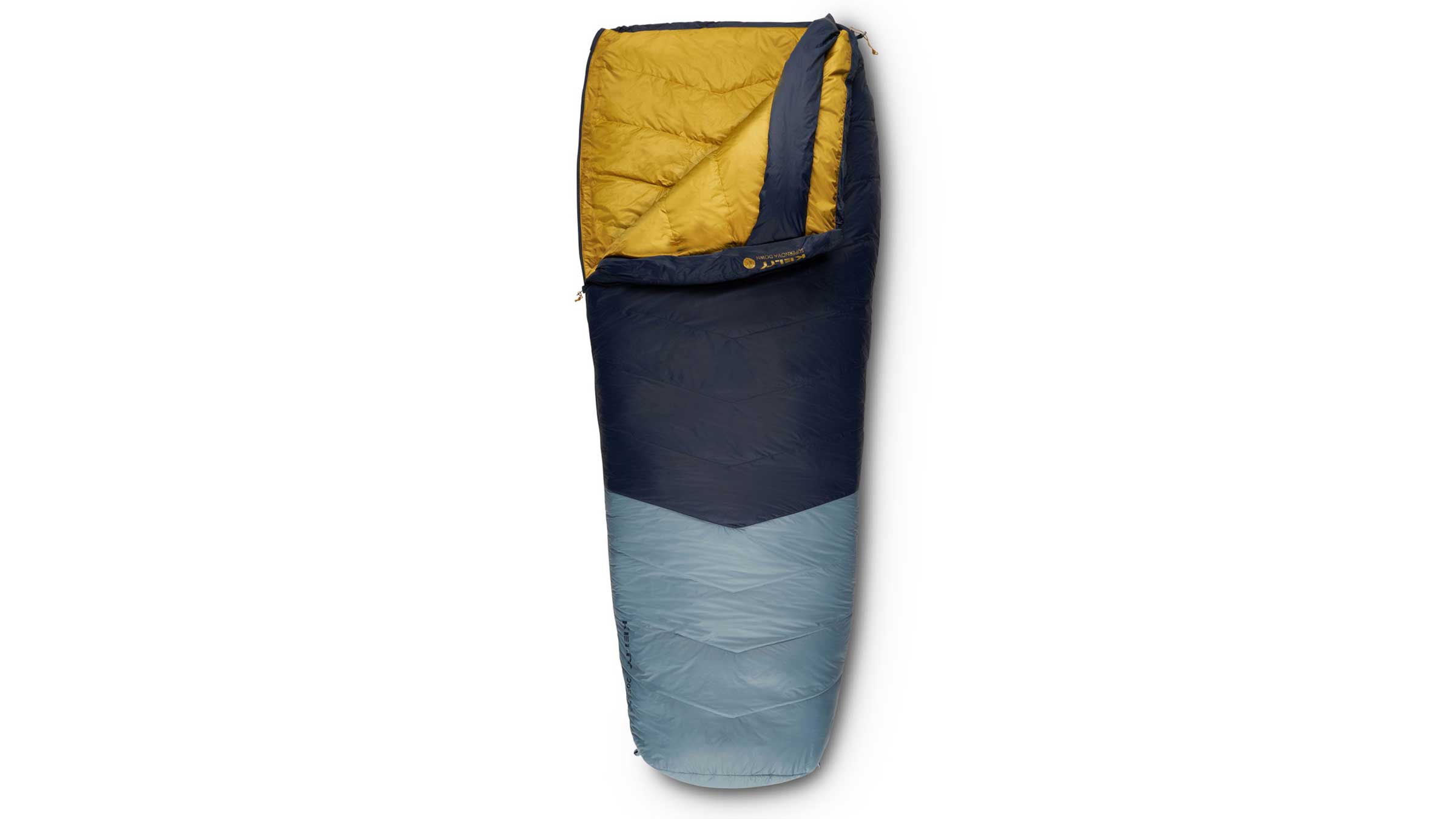
No single sleeping bag will be optimally comfortable and functional for every body type, sleep style, and trip destination, but for the frontcountry camper, the Kelty Supernova Down comes pretty darn close.
One tester brought it on a very loosely planned summer road trip that she knew at the outset might include sea kayaking; backpacking in the alpine; and car camping in the mountains, desert, and beach. At each disparate location she stopped for the night, the Supernova worked beautifully—it fit comfortably in a backpacking pack, and felt light and unrestricting even when fully zipped up. The 550-fill down offered ample warmth for high elevation overnights with temps around freezing, opened up flat like a quilt for mild seaside nights with 55-degree lows, and the zipper allowed for plenty of venting for everywhere in between.
The roomy mummy-ish shape (with some extra space around the knees and hips, in addition to the shoulders, before tapering around the feet and lower legs) is particularly comfortable for side sleepers and anyone with wider hips, without sacrificing all the insulating benefits that a form-fitting cut provides.
The recycled 50-denier recycled polyester taffeta liner fabric felt buttery soft next to skin, and 20-denier recycled nylon taffeta exterior held up well over three weeks of constant use. The Supernova isn’t quite ultralight, nor does it pack down as tiny as some dedicated backpacking sleeping bags, but it still tilts the scales at a perfectly respectable 3 pounds and fits in a stuff sack about as big as a family-sized bag of potato chips.
“Most bedding that’s as luxurious as I want on a comfortable car camping trip is too bulky or too delicate for more rugged adventures, like short backpacking or sea kayaking trips” said our tester. “But the Supernova was great for all of the above—if it replaced all the other three-season quilts and bags in my gear closet, I wouldn’t miss them.”
Best for Families
NEMO Jazz 30 Double Sleeping Bag
Dimensions: 78″ x 129″
Comfort rating: 32F
Pros and Cons
+ As comfortable as home bedding
+ Integrated, removable bed sheet
+ Passed its comfort rating with flying colors
– Bulky packed size
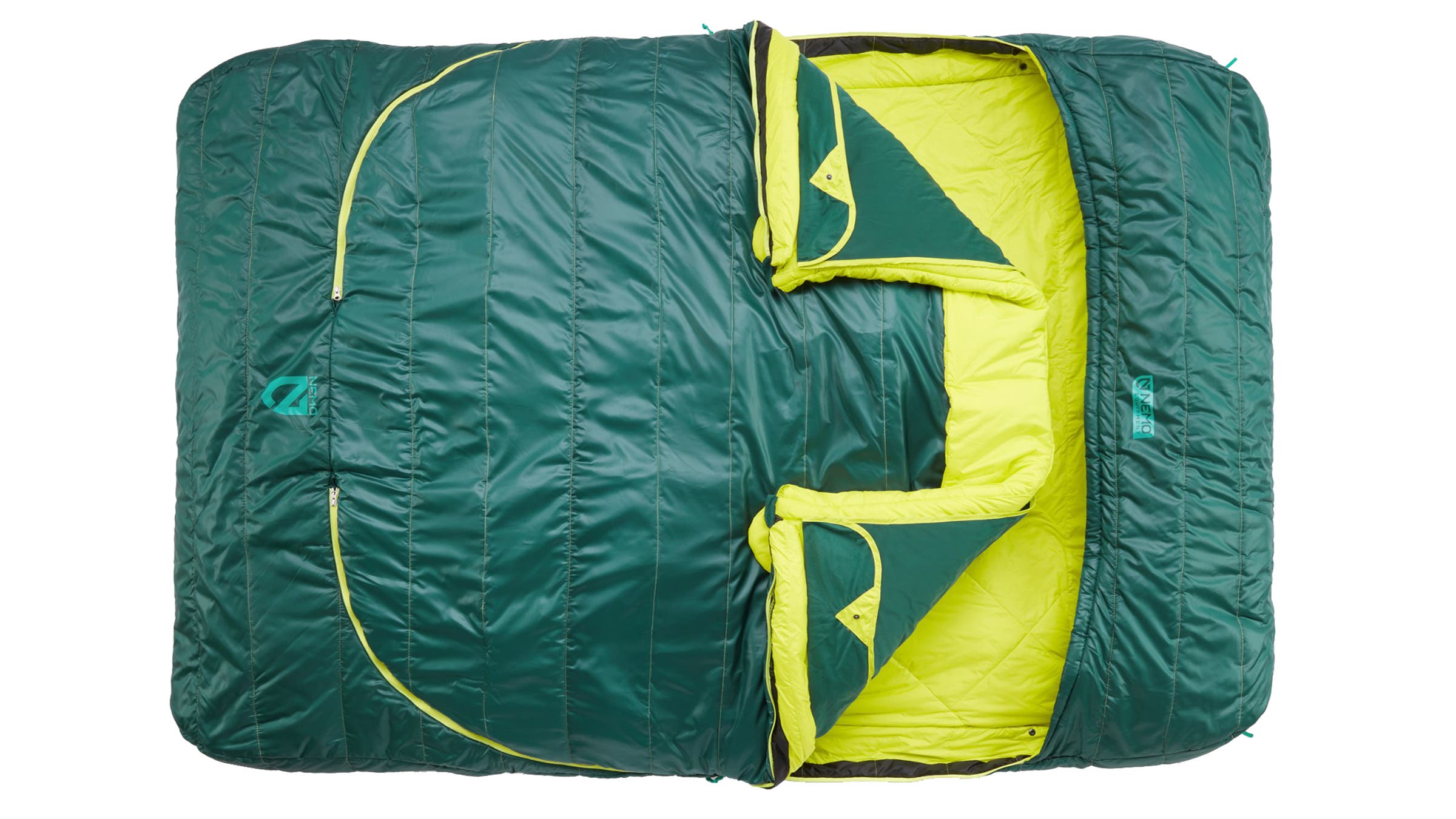
Thanks to its versatility, the NEMO Jazz Double became test director Joe Jackson’s go-to family sleeper for his crew of three last summer. The 78-inch-long double bag has a shoulder girth of 129 inches, and was subsequently roomy enough to comfortably sleep two adults (5’9” and 5’11”) plus a six-year-old kid.
Most impressively, this 30-degree bag—made with a supple, recycled taffeta interior, and featuring Nemo’s proprietary synthetic recycled Stratofiber insulation—worked for all three of their different heat preferences.
The double zipper pulls on either side of the bag are a smart design feature that let campers dump heat from their upper body or from their feet if they get too toasty. The Jazz Double’s incredibly soft, integrated polyester-stretch bedsheet offers an in-between layering option and proved warm enough on its own on milder nights in the 50s. Bonus: The sheet is removable for easy washing.
For a bag this plush, the Jazz Double also impressed us with its hardiness. One tester used the Jazz Double coupled with the NEMO Roamer Double sleeping pad—slipped into the bag’s integrated pad sleeve—on a night on the Scott River that was below 30 degrees and reported that it really did live up to its 32-degree comfort rating. Credit the insulated quilted layer added to the top of the pad sleeve for adding extra comfort and warmth. The bag’s 50-denier recycled polyester outer also survived more than two dozen nights of camping and two washes and dries without breaking down in any visible way.
Our biggest gripe is that this almost-nine-pound bag is extremely bulky. Packed down into its stuff sack, the bag still measures 33-by-16-inches, which took up the entire driver’s side seat of one tester’s Toyota Tacoma during transport.
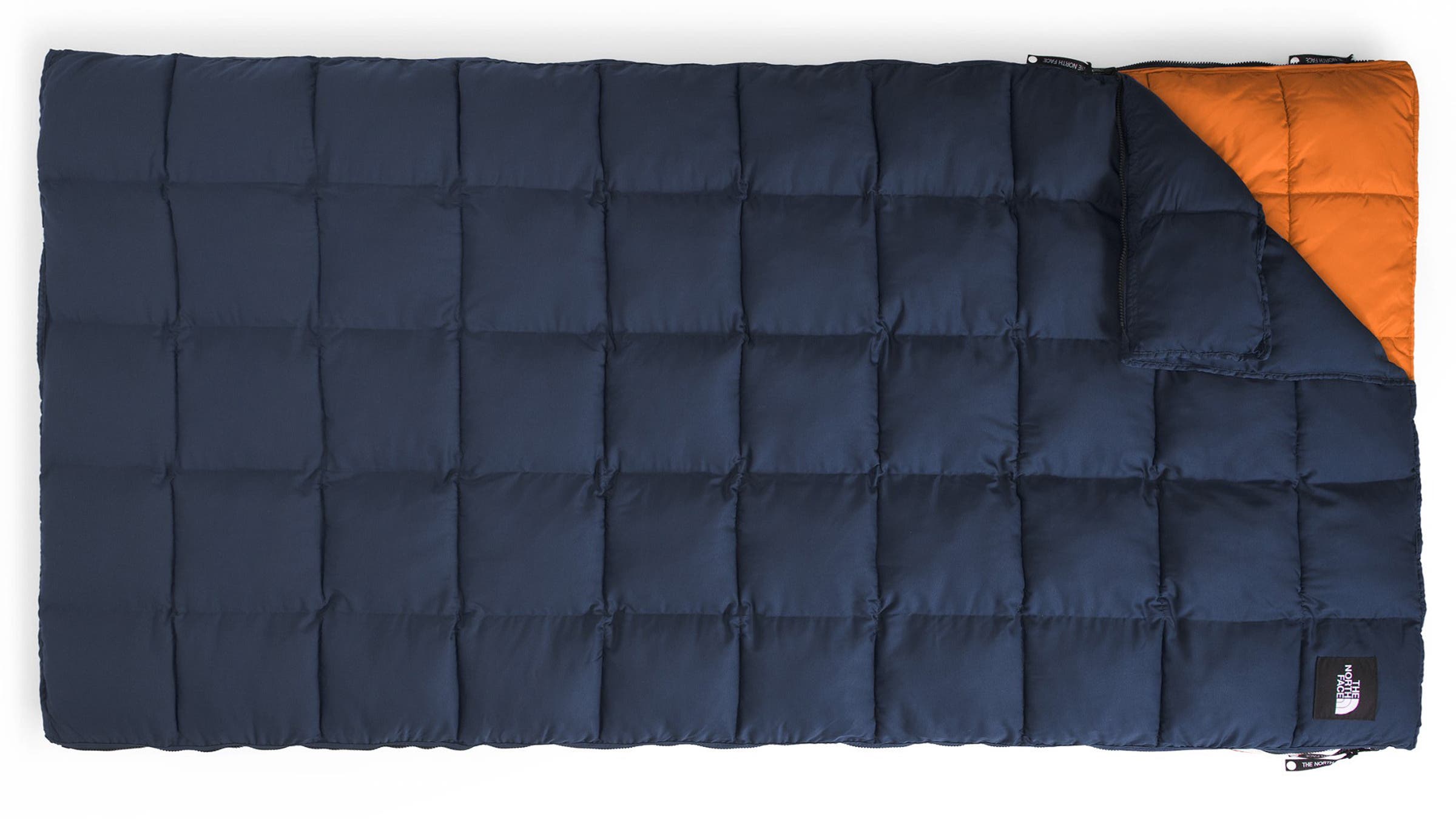
Widest Temperature Range
The North Face Cozy One Rectangular Sleeping Bag
Dimensions: 72″ x 39″
Comfort rating: 15F
Pros and Cons
+ Versatile triple-layer design
+ Cozy, quiet liner
+ Excellent ventilation and adaptability for warm nights
– Not our go-to pick for sub-freezing temperatures
Calling the Cozy One a “sleeping bag” is almost a disservice—it’s more of a camp chameleon that adapts to different temperatures. The system consists of three layers: a flat base (akin to a fitted sheet), a boxy middle layer (blanket), and an outer layer (a durable duvet). The duvet and the bottom of the base are made out of a tough 75-denier recycled polyester shell fabric for direct ground contact. The middle blanket and top half of the base—what touches your skin—are lined with a soft polyester fabric.
“The liner is very comfy, but perhaps the biggest benefit is that the material isn’t super loud—no more waking your partner or friends up in the middle of the night,” commented an impressed tester from the Pacific Northwest. She also gave The North Face props for the large, smooth-pulling zippers, which make it easy to stack or separate the blankets as needed.
Each of those three layers is stuffed with The North Face’s synthetic, efficient, recycled ThermoBall synthetic insulation. While The North Face rates this bag down to 15 degrees, our PNW-based tester was hesitant to rely on it in sub-freezing temperatures; the roomy, hood-less, rectangular design doesn’t retain heat as well as the mummy bags. However, the Cozy One’s ventilation prowess was a plus for our tester in warmer temps, providing “sweet, sweet airflow for hot summer nights.” Its ultra-wide and spacious size allowed testers to sprawl out on their stomachs with one leg jutted out.
Finally, our testers gave The North Face bag high praise for its overall utility as a camp accessory. Even though it weighs more than 10 pounds, it’s more versatile than bringing your sheet and comforter from home. The bottom of the sheet doubles as a picnic blanket and triples as a beach mat thanks to its durability and waterproofing, while the top layer is a consummate campfire companion on chilly nights. Even on winter trips, our testers plan to have the Cozy One on hand for extra insulation.
Other Sleeping Bags We Tested
- Exped Megasleep Duo ($250): We tested the Exped Megasleep head-to-head with the Nemo Jazz Double. We preferred the Jazz for its supple, integrated sheet.
- Therm-a-Rest Boost 650 (from $300): The Boost features brilliant arm holes (which doubled as vents) and a great heat-dumping center zipper, but felt like a better fit as a backpacking sleeping bag than a car camping option.
Sleeping Bags Comparison Chart
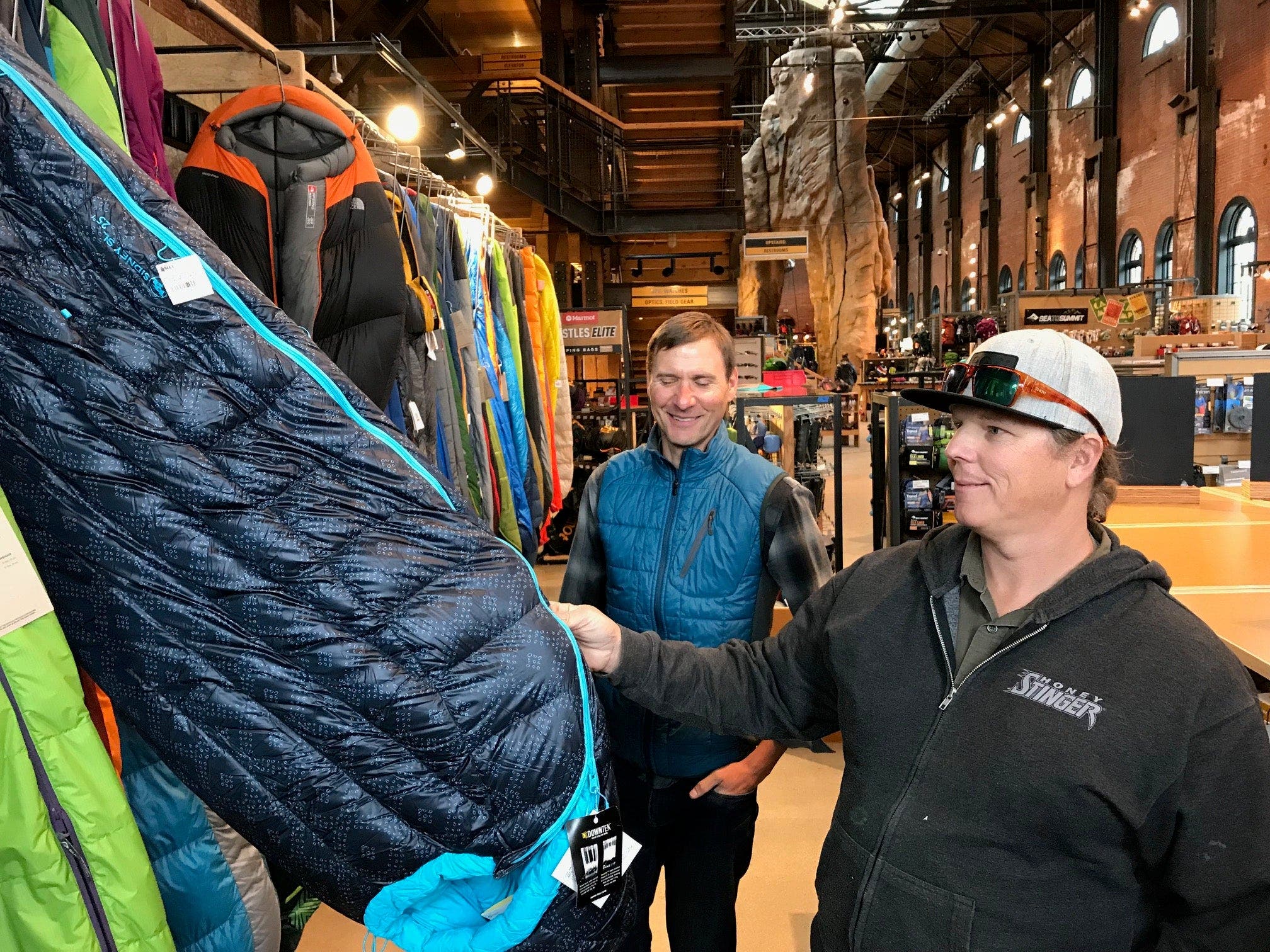
How to Choose a Sleeping Bag
Seasons and Temperature Rating
Bags generally fall into three temperature categories: Summer (rated 30 degrees F and warmer); three-season (rated between 15 and 20 degrees); and winter (rated 15 degrees and lower—some expedition bags are rated as low as -40 degrees). These temperature ratings are based on “average” sleepers and don’t consider external factors like the thickness and rating of your sleeping pad; climatic factors like wind or humidity; or how quickly your body regulates heat loss or gain. Even if you tend to prefer cold sleeping environments, we recommend erring on the side of buying a higher temperature bag—you can always open zippers, but making a bag warmer requires extra layers.
Camping vs. Backpacking Sleeping Bags
Car camping, or camping at a campground or near your vehicle, is about comfort: look to prioritize roominess, fabric feel, and features, like pillow pockets and multiple zippers, rather than weight and packability. Cotton, fleece, or flannel-like interior linings will make sleeping that much more cozy than the usual polyester stickiness you experience with backpacking bags. Pockets help corral slippery pillows right where you want them; an additional pocket to keep a headlamp, phone, or watch close at hand is a nice bonus feature. And extra zippers provide options for customizing warmth and lounging in camp.
What Type of Insulation Is Best in a Sleeping Bag?
Down bags are generally warmer for their weight and more compressible than bags with synthetic insulation. But if down bags get wet, they lose insulating capacity and take longer to dry out than synthetic bags. Many manufacturers use down processed with a hydrophobic chemical that prevents it from absorbing as much water. Others keep the insulation dry with a water-repellant finish or fabric.
Pay attention to fill power. That number measures the volume taken up by the amount of down in your sleeping bag; the more loft your sleeping bag has, the more efficiently it will trap warm air. It will also weigh less and pack down smaller than bags with a lower fill power rated to the same temperature. Synthetic bags are more affordable, and therefore an excellent choice for new campers who are unsure how often they want to sleep outside, or backpackers who are headed to wet environments.
How Roomy Should a Sleeping Bag Be?
Bags come in many shapes and sizes—rectangles, mummies, modified mummies, and double bags. Mummies are warmer and lighter-weight than rectangular bags, but can also be claustrophobic. Rectangular bags are excellent for restless sleepers who need to move and don’t have space or weight constraints. Some quilts can be opened up to act as comforters, although they require a warm sleeping pad and don’t come with hoods. Women-specific bags often come in modified mummy shapes to accommodate the curvier parts of a woman’s body. Doubles are simply sleeping bags built for two, although many solo bags can be zipped together to create a double bag.
How to Wash a Sleeping Bag
Yes, you can and should wash your sleeping bag regularly, especially before you put it away after the summer camping season, since any trapped moisture will fester in storage. You can get it professionally laundered—tech cleaners like Rainy Pass Repair in Seattle, Washington, or Technical Equipment Cleaners in Truckee, California, will do that for you, either in person or by mail. But it’s also easy to do it yourself.
Your best bet is to head to a laundromat to use their bigger, burlier machines to wash your sleeping bag. Be sure to use a front-loading washer and never use a top-loading washing machine with an agitator column—your sleeping bag could get twisted around it and rip.
Never dry-clean your sleeping bag, and never wash it with regular laundry detergent. Follow the care instructions on the tag on your bag to know which kind of detergent and what water temperature to use. If it’s a down sleeping bag, you’ll want to wash it with a down cleaner formulated for down feathers and fibers, like Nikwax Down Wash or Gear Aid’s Revivex Down Cleaner. If it’s a synthetic bag, use Nikwax Tech Wash or Gear Aid’s Revivex Pro Cleaner.
If an industrial washing machine isn’t available, you can, in a pinch, hand wash your sleeping bag in a large basin or tub filled with soapy water. Pour a small amount of cleaner into warm water, and use your hands to wash and rinse the bag. Air drying works if that’s your only option, but know that it’ll take quite a long time to get the bag completely dry. Read more here.
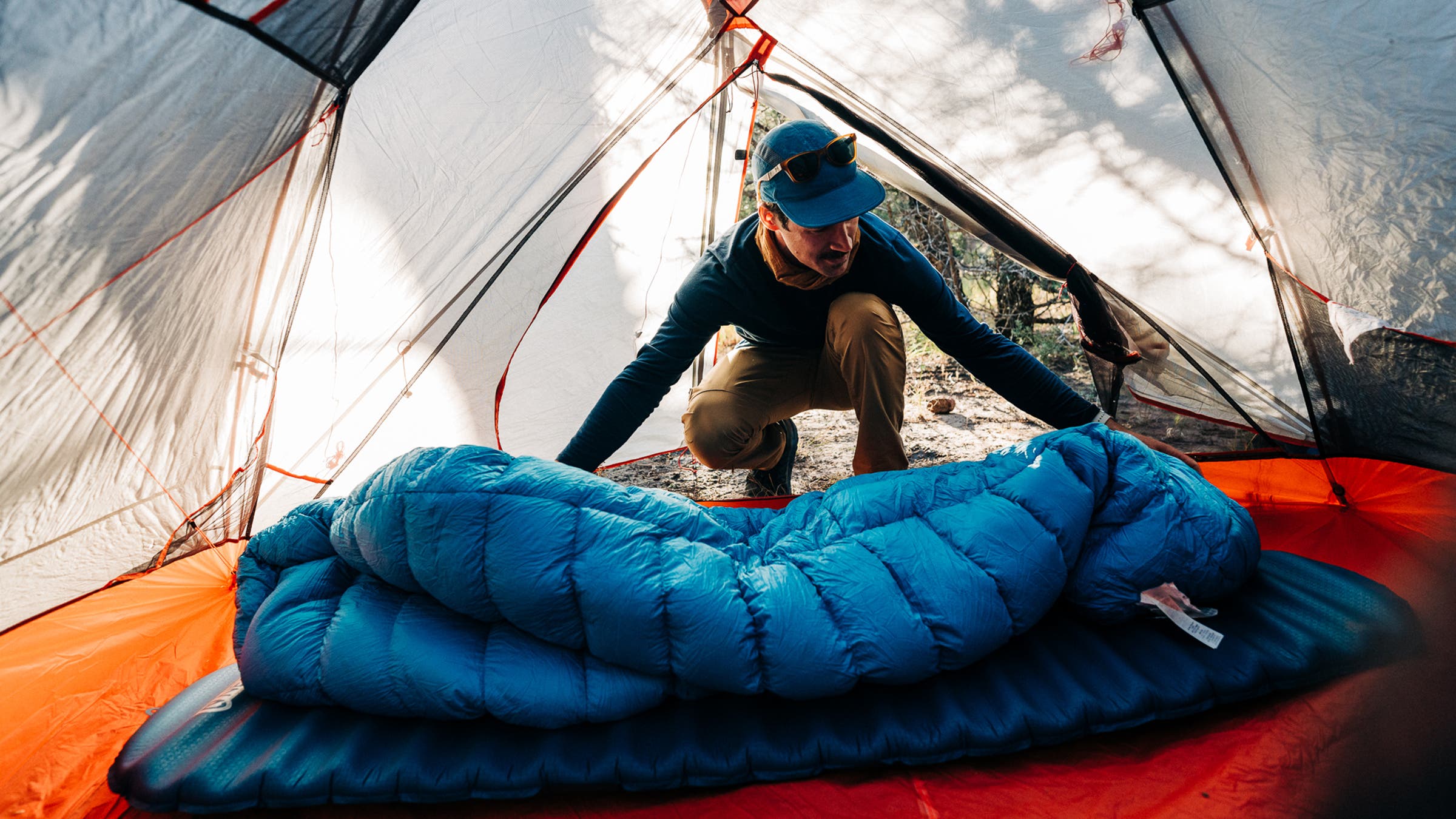
How We Test Sleeping Bags
-
- Number of Sleeping Bags Tested: 36
- Highest Elevation Camped: 12,000 feet
- Warmest Temperature Tested In: 80F
- Lowest Temperature Tested In: 20F
- Number of Nights Camped: 100+
- Number of Testers: 32
In this category, we primarily considered sleeping bags designed for car campers versus backpackers, focusing on more affordable options with comfort-forward features and weeding out the highly technical, lightweight, and expensive bags we gravitate toward on the trail.
In total, we’ve tested 36 sleeping bags over the last few years, mostly in the Sierra, Cascades, Wasatch, Rockies, Tetons, and Ozarks. Our crew of testers includes young adventurous families, outdoor photographers and journalists who call the road home, and professional mountain guides. After months of road trips, family camping trips, and car camping missions to hike, bike, climb, and ski destinations, testers filled out detailed review forms, diving deep on pros and cons and scoring aspects like next-to-skin comfort, warmth, features, and durability.
This guide is a living and breathing document, as we constantly compare new bags that hit the market to our tried-and-tested favorites from years past. At the end of each testing cycle, we sift through new reviews, compare them head-to-head with those old favorites, then add our top picks to this ever-evolving guide. In the same vein, we slice discontinued or outperformed options as needed.
All told, the bags that made this list were rated as the best picks for casual campers who care more about comfort and affordability than packability and performance in cold climates.
Meet Our Lead Tester
Drew Zieff
Zieff is a Tahoe-based freelance writer and globe-trotting powderhound who directs Outside’s snowboard and splitboard coverage in the winters. Before he put roots down in Tahoe, he was a full-time vanlifer, and he currently manages Outside’s testing on rain jackets and car camping gear in the summers.
