

Published June 4, 2026 10:45AM
The guiding community on Mount Everest has become transfixed by the incredible story of Hillary Dawa Sherpa, the Nepali guide who went missing on May 29 at 25,000 feet, only to reappear alive near Base Camp six days later.
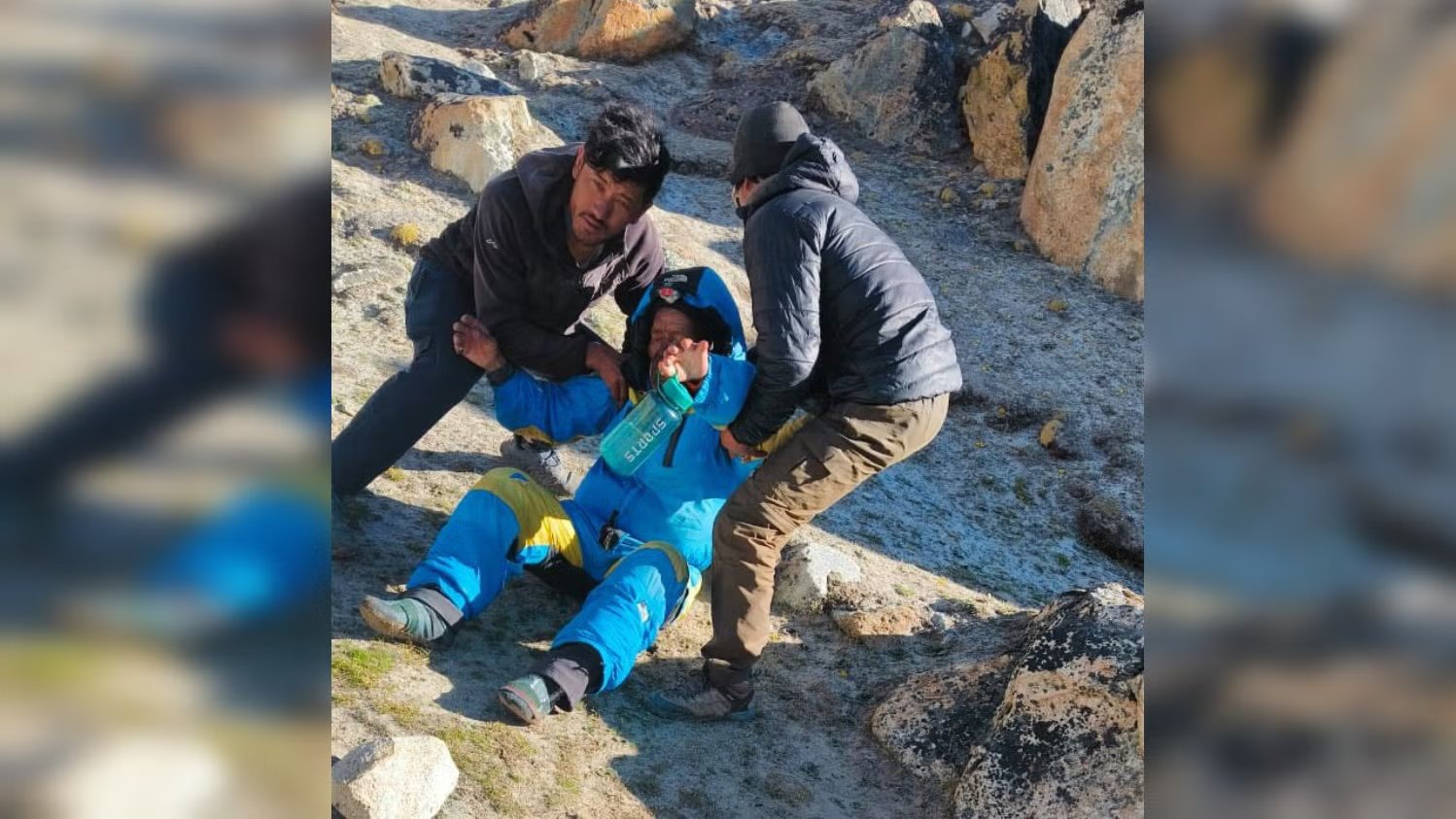
Hillary Dawa had no access to food or water, and he had to descend from 25,000 feet to 17,500 feet by himself. When rescuers located him at the foot of the Khumbu Icefall on June 4, he was reportedly suffering from extreme frostbite and exhaustion, and was crawling along rocks and ice.
“Dawa’s ability to self-rescue and get to safety is one of the most incredible things we’ve ever seen on Mount Everest,” said Lakpa Sherpa, the director of Nepali guiding company 8K Expeditions.
His discovery sent shockwaves through the community of high-altitude climbers and guides.
“It’s fantastic news,” Norwegian climber Kristin Harila, who holds the record for ascending the world’s 14 peaks above 8,000 meters, told Outside. “It shows that we should never give up when we try to go for the rescues, and it shows that as long as there is hope, people manage to stay alive.”
Billi Bierling, the director of The Himalayan Database, a website that chronicles ascents in Nepal’s Himalayas, called the outcome a “miracle.”
“The fact that Hillary Dawa came down from wherever he was left is an absolute miracle,” Bierling told Outside. “He had no drink, no oxygen, and was probably completely out of steam.”
A Miracle at 25,000 Feet
On June 3, Outside reported on Hillary Dawa’s disappearance during his descent from Mount Everest. The 52-year-old Sherpa from the town of Okhaldhunga was hiking down from Camp IV alongside British adventure Chris Thrall on May 29 when he stopped to rest on a rock.
Hillary Dawa was working as a guide with the Nepali outfitter Himalayan Traverse Adventures. He had initially ascended the peak alongside a Polish client, but both turned back short of the summit.
Thrall, a client of Himalayan Traverse, said Hillary Dawa told him to continue his descent after he sat down.
“He sat down for a rest with his backpack. As you know, these guys carry huge loads,” Thrall said. “I turned to him and said, ‘Hillary, are you OK, brother?’ He said, ‘Yes, yes, I’m fine, Chris. Please go.”
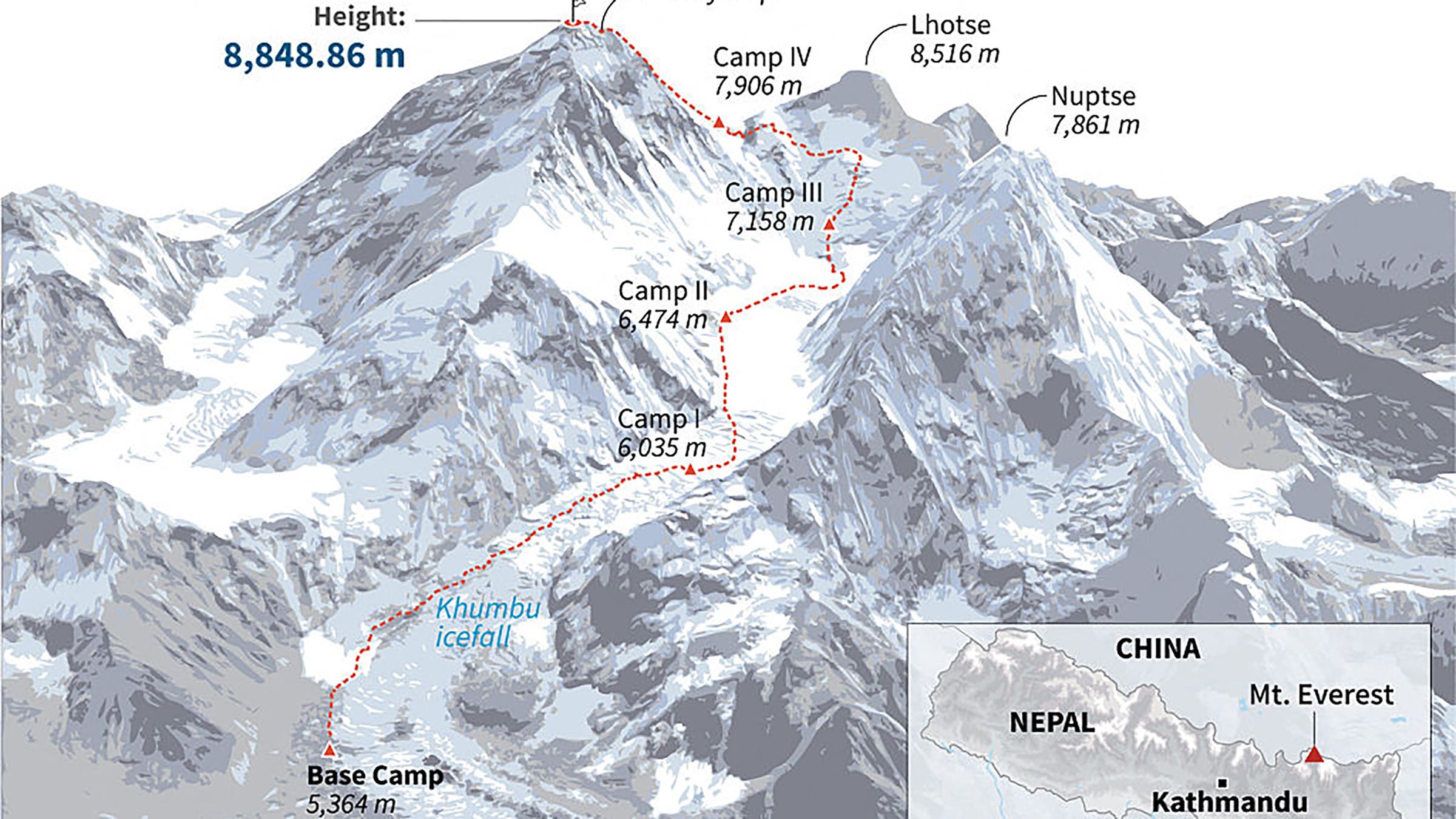
Thrall eventually linked up with the Polish climber. Thrall looked back up the peak and saw Hillary Dawa still resting on a rock. That was the last anyone saw of him.
The two clients descended to Camp III at 23,300 feet and then Camp II at 21,000 feet with limited oxygen. The Polish climber was also struggling with severe frostbite on his hands. Once they reached Camp II, the clients informed Himalayan Traverse employees about Dawa’s condition.
On June 2, 8K Expeditions organized a helicopter flight to search for the stricken Sherpa, but they returned empty-handed.
Then, on the morning of June 4, SPCC workers saw Hillary Dawa crawling out of the Khumbu Icefall at the foot of Everest. According to Everst Chronicle, he was given food and water. Photos and videos of him then appeared online, showing him still clad in the blue and yellow summit suit he was wearing at the time of his disappearance.
According to Everest Chronicle, officials helped Hillary Dawa to the nearby village of Gorak Shep, where a helicopter took him to the HAMS Hospital in Kathmandu.
A Camp Cook Is Thrust into the Spotlight
While the Everest world is elated by Hillary Dawa’s survival, guides and experts are also asking questions about why he was place in such a dangerous situation. Bierling and other climbers told Outside they are unclear as to why Hillary Dawa was even on the peak’s upper flanks to begin with.
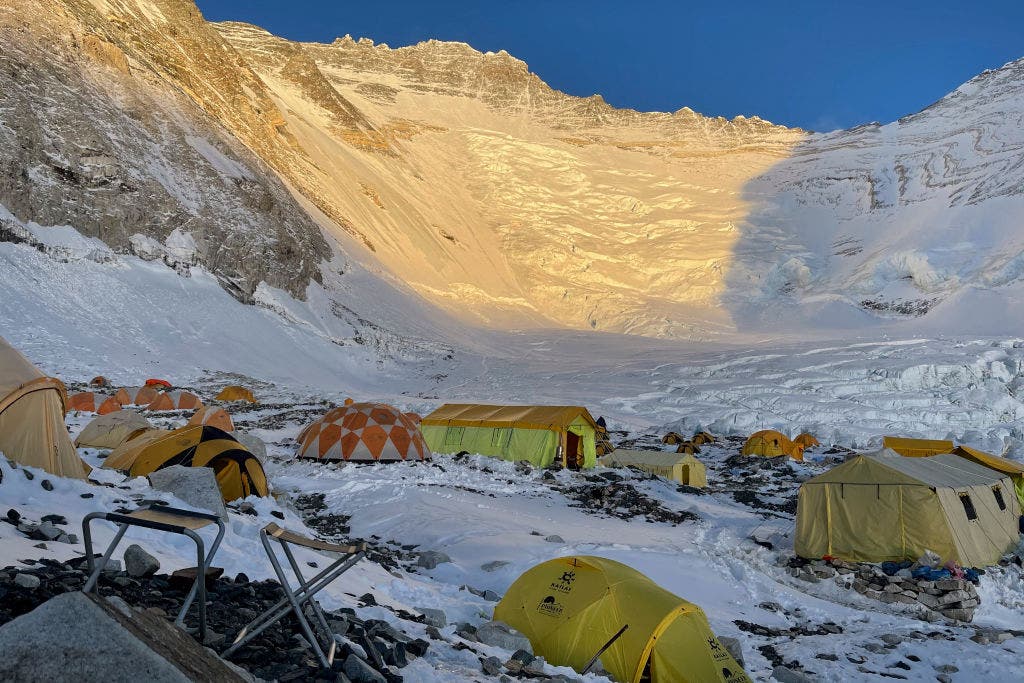
On June 4, website Everest Chronicle reported that Hillary Dawa was originally employed as the cook at Camp II at 21,000 feet. Outside confirmed this with Hillary Dawa’s family members and also with 8K Expeditions.
“Sherpas are strong, but this man was not supposed to be a climbing Sherpa; he was the Camp II cook,” Bierling told Outside.
Hillary Dawa’s employer, Himalayan Traverse Adventures, is one of the smaller outfitters on the peak. Himalayan Travers had contracted with Nepali guiding company 8K Expeditions to obtain its climbing licenses and insurance for the 2026 Everest season.
How Hillary Dawa went from camp cook at 21,000 feet to working as a guide on the upper slopes of Mount Everest is not yet known. Outside has made repeated attempts to contact Himalayan Traverse Adventures, but the company has not responded to our requests.
Bierling pointed out that at the time of his disappearance, Hillary Dawa was in charge of Thrall and the Polish climber—neither of whom had much experience on Himalayan peaks.
“He had to look after two pretty inexperienced climbers,” Bierling said. “I think that was a lot to ask from Hillary Dawa to do that.”
Feelings of Joy but Also Concern
In the wake of Hillary Dawa’s rescue, officials within the Mount Everest guiding industry are also asking questions about why it took so long for officials to try to mount a rescue.
Hillary Dawa vanished on May 29, and Thrall called Base Camp on May 30. But Lakpa Sherpa’s helicopter recovery mission didn’t take flight until June 2. Lakpa Sherpa told Outside that 8K Expeditions organized the rescue flight after Hillary Dawa’s family reached out to the company.
“We took the lead on the rescue efforts because it was the right thing to do, and we never gave up hope,” he said.
Lakpa Sherpa alleges hat nobody from Himalayan Traverse ever contacted his company to tell them that one of its employees was missing.
Multiple Nepali sources wondered if the delay would have happened had the missing climber been an American or European.
“The companies I work for are checking in with the entire team constantly on the radio, and keeping track of everyone,” Mingmar Dhondup Sherpa, one of Everest’s elite rope-fixers, told Outside. “They only searched for him after five days. If it was a Western climber, they would have mobilized immediately.”
Austrian guide Lukas Furtenbach, founder of Furtenbach Adventures and an outspoken figure in Himalayan guiding, echoed the sentiment. Furtenbach wonders if Hillary Dawa’s place as a worker, and not a paying client, impacted the urgency of the search.
“Nobody—client, guide, or Sherpa—should ever be left behind on a mountain,” he told Outside. “Sherpas are not superhuman. They deserve the same camaraderie, responsibility, and loyalty as anyone else on the mountain. Their lives are worth no less than those of any paying client.”
Bierling pointed toward the need for possible reforms in how Sherpa guides are trained and assigned jobs on Mount Everest. The presence of inexperienced climbers on Everest is not new, of course. But Hillary Dawa’s survival story shows the risk that this places on the Sherpa workforce.
“A lot of clients expect the Sherpas to look after them, and when something goes wrong with the Sherpa, often the clients are not able to help,” she said. “More experienced climbers really make a difference.”
