

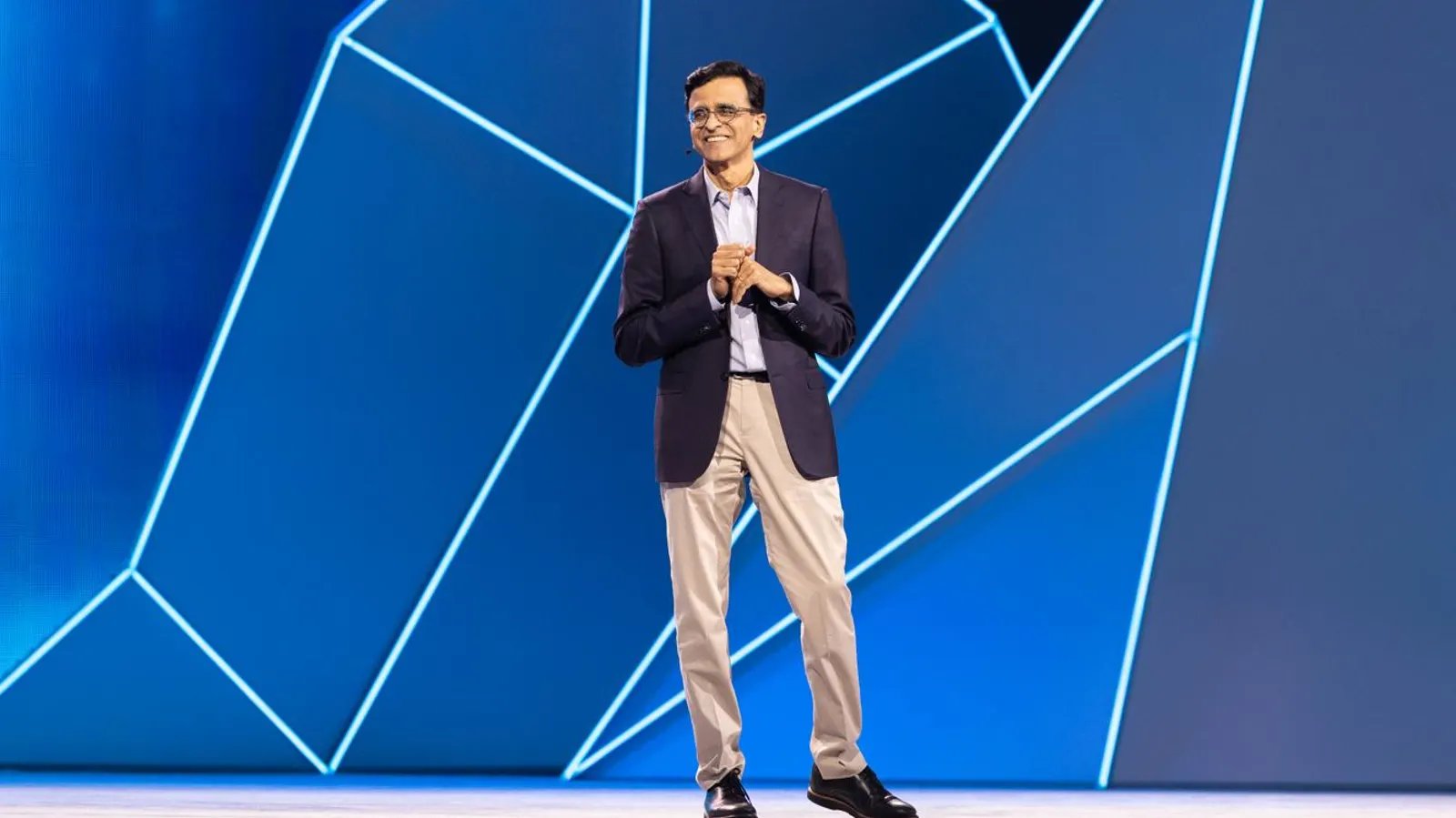
Snowflake CEO Sridhar Ramaswamy warns SaaSpocalypse might not be over yet, as agentic AI keeps lowering the bar and cost of enterprise software development.
Snowflake
Microsoft owns a piece of Anthropic. According to accounts that surfaced this month, it pulled back on the Claude-powered coding agents running across much of its workforce once the bill began to outrun what humans cost. But Snowflake CEO Sridhar Ramaswamy looked at the numbers that spooked everyone else and sped up. His company runs on Anthropic too — a $200 million partnership it deepened last week. Same model. Two companies reading the same cost curve and reaching opposite conclusions about whether agentic AI is worth paying for.
The enterprise AI cost crisis went public this quarter. Uber’s CTO Praveen Neppalli Naga disclosed in April that the company had already exhausted its entire 2026 budget for AI coding tools. Some of its roughly 5,000 engineers were running monthly token bills between $500 and $2,000. Uber then capped its agentic AI spending at $1,500 per month per engineer, admitting that higher token consumption was not translating into a proportional increase in useful consumer-facing features.
Ramaswamy, who has never bought into the ‘tokenmaxxing’ impulse to turn agents loose and see what sticks, says the recent blowups were a pricing problem, a governance problem, and, underneath both, a discipline problem.
“We spend a lot of time thinking about what durable value is,” he told me in an exclusive conversation at Snowflake Summit 26 in San Francisco. “Every company needs to internalize that creating software (due to the agentic AI boom) is just easier now. So what is the value they bring to the table? That’s a profound question, and we shouldn’t assume it can be answered quickly.”
The company’s first quarter of fiscal 2027 brought in $1.39 billion in revenue, up 33% year-over-year. Snowflake now counts 779 customers generating more than $1 million in trailing 12-month product revenue, up 29%, and 813 Forbes Global 2000 names on its books. Remaining performance obligations reached $9.21 billion, up 38%. It also committed $6 billion to AWS over five years for Graviton compute and AI, its largest infrastructure commitment to date. While rivals trimmed, Snowflake signed a bigger check.
The company also recently rebranded its two flagship products — CoWork, the always-on agent for knowledge workers, formerly Snowflake Intelligence, and CoCo, the coding agent for builders, formerly Cortex Code — and pushed both deeper into the tools enterprises already run, with extensions for Microsoft Excel, VS Code and Claude Code. It also rolled out Cortex Training, the Kafka-compatible Datastream. Customers, including Synopsys, Whoop, Under Armour, Fanatics, and Thomson Reuters, are already utilizing the innovations.
“CoWork is a great product with early traction, but we have to drive adoption at scale, and that’s still an open story,” he says. “We now have to reach buyers who aren’t traditional Snowflake buyers — CFOs, CROs, CHROs. It’s a new motion.”
According to Liz Miller, vice president and principal analyst at Constellation Research, the company’s discipline has been the actual differentiator — not its recent agentic AI innovations. “What Ramaswamy has done is make AI intentional,” she says. “The whole point of AI is not to have more AI. It’s to close the greatest gap in modern business: human capacity. Organizations that focused on how many tokens they could burn to prove how much AI they were testing lacked the focused approach Ramaswamy has empowered.”
SaaSpocalypse Not Over Yet?
While other CEOs have shrugged off the SaaSpocalypse or SaaS disruption due to agentic AI lowering the cost and bar of building software and confidently insisted their companies will adapt no matter what happens, Ramaswamy has a far less fashionable take.
“I think it is better to be paranoid,” he says. “Anyone who thinks this (the lowering cost of software development) is a small change and they’ll simply work their way through it — that’s a bad mentality, even if it turns out to be true. I’m going to think hard about durable value, network effects, what sustains Snowflake in an era where anyone can crank out software.” No advantage holds, he says, in a market where a 20% or 30% improvement somewhere else can erase yesterday’s lead overnight. “No one, including Snowflake, should sit here assuming future success is guaranteed.”
Ask Ramaswamy whether the feared SaaSpocalypse is over, and he refuses to answer yes or no. SaaS is too big a label, he says — subscription and consumption are different animals living under the same roof. “There’s only so much our brains can do in terms of prediction,” he says. The resorting of winners and losers in software, by his read, will take years.
Ramaswamy asserts that, as subscription SaaS companies have to convince a large set of users to pay for functionality, that’s a harder model right now than a consumption-oriented one. “You can even set a per-user limit on how much they can spend, because people worry some individual user is going to go spend $100,000 on it. No, you can say $20 per month per user. We don’t have subscription fees, which makes us very aligned with what customers want. Customers pay when their users get value from the software.”
Data Scientists and Analyst Jobs In Jeopardy?
Snowflake’s products now do in seconds what once took analysts hours, even as the company insists AI will elevate data teams rather than thin them. CoWork now lets any employee query governed data in plain language, and its Deep Research mode runs multi-step analysis across structured and unstructured data. WHOOP’s analytics VP, Matt Luizzi, shared during Summit 2026 that what once required specialized analysts and manual requests is now open to hundreds of employees in real time.
I asked Ramaswamy whether “empowerment” is just the transitional story we tell before the jobs disappear.
“I might be a CEO, but at my core I’m a reading, writing, talking machine,” he says. “A lot of what I do can and will be automated.” His own data team, he says, came to him three months ago to report they’d finish a multi-year roadmap in a few months — and asked what came next. The company redirected them toward customers. “The jobs about creation, or interfacing with the external world — those continue to deliver value. Pure information jobs get automated in a pretty big way.” Judgment survives, pushing one more record through a pipeline does not.
The Anthropic Partnership Everyone Else Has
Anthropic is now embedded nearly everywhere in enterprise software, ServiceNow included. So how does a $200 million partnership differentiate anything when every rival claims the same model at its core? Ramaswamy’s answer is depth, not exclusivity.
Snowflake and Anthropic trade information on how the models perform inside CoWork and the company’s coding agent, collaborate on cybersecurity, and run joint go-to-market. “Clearly they’re a large and influential company at this point, and they’re going to have tons of partners,” he says. “I look at it in terms of are we being as effective as we can be, less in terms of what they should not be doing”. His company’s deeper bet is neutrality. Snowflake runs on three clouds and routes work across model providers — frontier models for hard planning, smaller models for simple jobs, and open-source, where it’s good enough. The company announced access to SpaceXAI’s models at Summit, alongside the OpenAI, Google, Meta, Mistral, and DeepSeek models already in Cortex.
Miller reads the neutrality as real, but warns against mistaking the company’s claims of being the “Switzerland of AI” for the absence of a bet. “Just like Switzerland, there’s a cost and a reward for neutrality. The check he’s writing isn’t a symbol of neutrality — it’s an investment in Snowflake, which is 100% not a neutral decision,” she noted. “And there’s truth to the skepticism that no platform is truly delivering a total, all-encompassing multi-model platform.”
The Governance Layer Land Grab
Snowflake has also made Agent Identity generally available — giving every agent a verified identity and a complete audit trail before it touches enterprise data. The company also moved to acquire Natoma to govern agent connections through a verified library of MCP servers. Both arrived after thousands of CoWork deployments were already running inside law firms, finance teams and operations groups. Which raises the obvious question of what those agents were doing before the receipts existed, and whether customers knew the tracking layer was still on the roadmap.
In a McKinsey survey of roughly 500 organizations conducted late last year, nearly two-thirds named security as the top barrier to scaling AI. The governance layer is being built after the agents are already loose. Snowflake and ServiceNow seem to be fighting over the same ground from different angles — ServiceNow governing across platforms from above, Snowflake governing from where the data lives. Strip away the vocabulary, and it’s a fight over who collects the toll on enterprise AI, and it’s worth billions.
“I don’t see a winner-take-all battleground here, but [Snowflake is] well positioned to be on that leader podium,” she says. “They’re ahead in becoming the center of gravity for data, but the idea of an AI control plane is still forming. The hyperscalers and the security giants are going to battle this out for a while, giving room for a company like Snowflake to take the lead on establishing a true context layer that agentic AI flows have to rely on.”
Ramaswamy rejects the idea that enterprise AI will be controlled by a single platform. “People can already today call our agents from Claude Code or Codex. We support A2A, we support MCP, and we’ve always operated in a world where customers could access Snowflake however they wanted,” he says. “The people with the best products are going to win.” He dismissed the race for control layers and governance monopolies, saying, “A lot of people can aspire. The proof of the pudding is in the taste.”
Ramaswamy and Snowflake is betting that the winners of the agentic AI era won’t be the companies that promised the most automation. They’ll be the ones who assumed everything could break, priced for the chaos, and built enough governance, context, and trust to survive when the AI bill finally arrives.
