

Published June 10, 2026 04:00AM
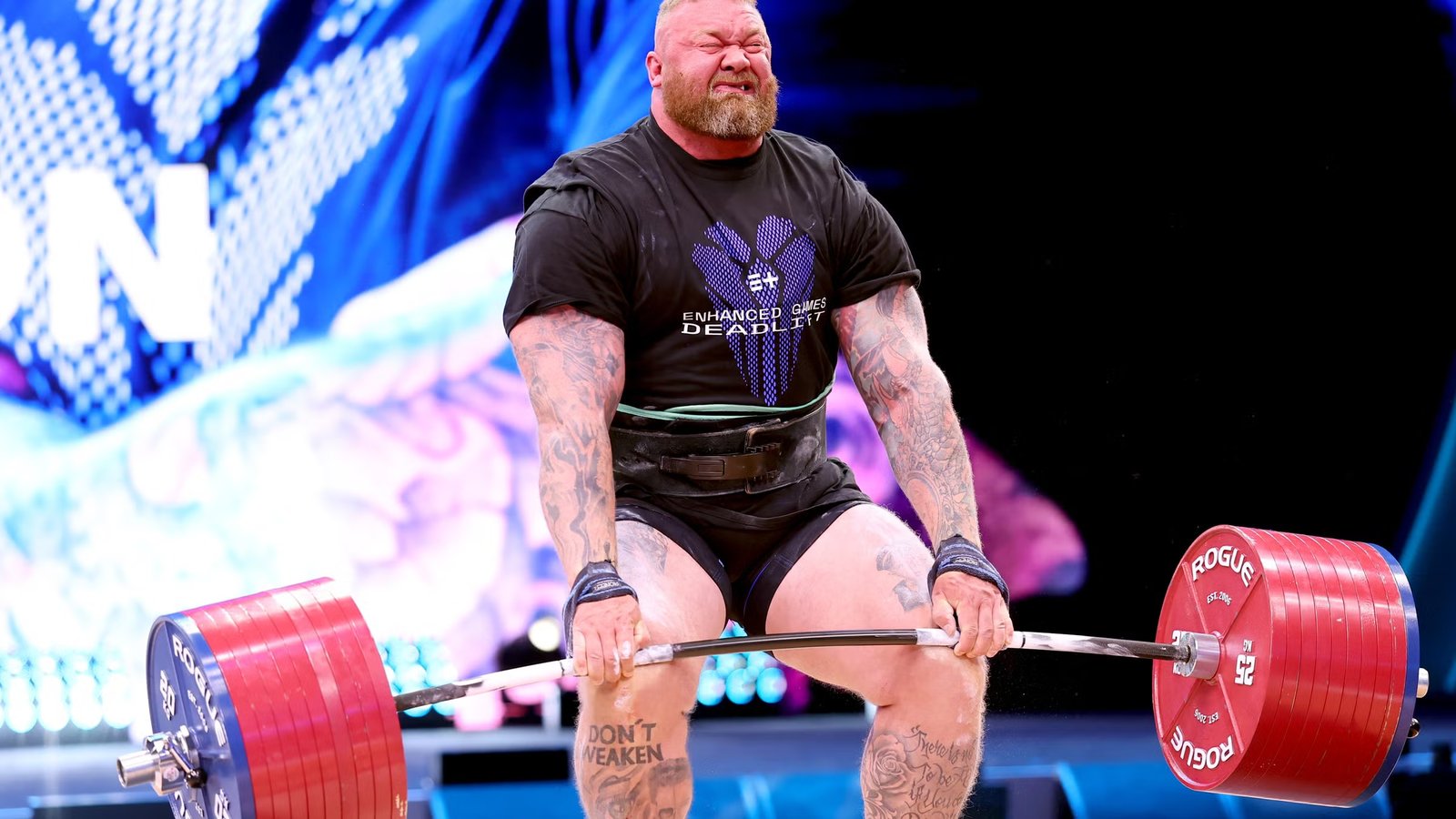
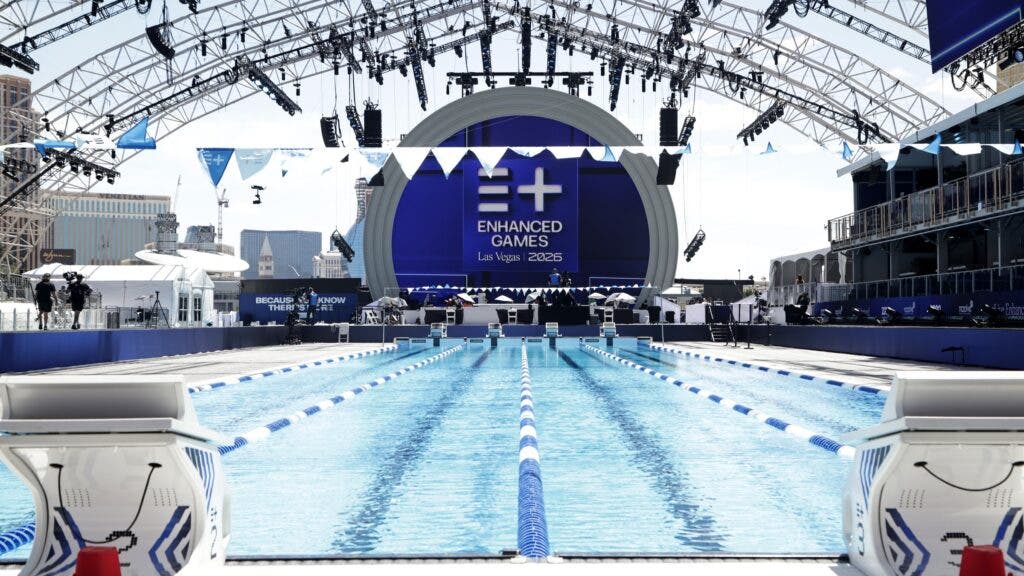
After much ballyhoo, the Enhanced Games wrapped very early on the morning of May 25. By midday, cherry pickers and semis were breaking down the elaborate arena built in the parking lot of the Resorts World Casino on the Las Vegas strip. The eight-lane track; the six-lane pool, the deadlifting platform where “Thor” Björnsson, aka The Mountain, attempted a world record, all in various stages of decomposition. The struts and rafters were being moved into storage for potential future use. Rented as they were, the bright lights that had shone on the 42 athletes and 2,285 invited sponsors, investors, family, friends, and content creators were being returned to their vendors. The load out would be a two-week process. That’s long enough for the dust to settle.
In the history of sport, probably no more ink has been spilled preemptively or with as much moral panic on a competition than there has been for the Enhanced Games. On one hand, the competition was a standard, almost modest, sporting event. Forty-two athletes competed in three disciplines — swimming, track, and weightlifting — over fifteen events. But as the name suggests, the schtick was that the athletes competing could “enhance” themselves using performance-enhancing drugs (PEDs) banned by all major sporting organizations. We’re talking testosterone and anabolic agents (such as anabolic steroids); stimulants such as Adderall and modafinil; Human Growth Hormones and other peptides; metabolic modulators like Anastrozole and endurance-enhancing ESA’s (Erythropoiesis-Stimulating Agents) such as Erythropoietin. The drugs aren’t illegal, per se, but they are illegal in sports. The entire premise drove normie sportspeople to madness. “A dangerous clown show,” said Travis Tygert, head of the U.S. Anti-Doping Agency, in a release. On the other hand, hadn’t the original gladiatorial games begun as panem et circensis for Roman citizens? That is to say, haven’t sports always been a circus, just with nominally cleaner clowns?
But, as the Enhanced Game CEO and co-founder, a manically affable German named Maximillian Martin, tells me, the clowns were never that clean to begin with. “Even if you go back to ancient Greece, people have been taking: They’ve been drinking blood before events. They’ve been eating bull testicles to pump themselves up and get enhanced in competition.” In their own lore, the Enhanced Games is simply telling truth to power. (The truth being everybody dopes; power being the anti-doping agencies.) According to Dr. Aron D’souza—the founder of Enhanced Games and the man perhaps best known for representing Hulk Hogan in his Peter Thiel-backed case to take down Gawker—“We’re building something revolutionary—sports without hypocrisy, where the best can actually be the best.”
Since its founding in 2023 by D’Souza, Enhanced Group Ltd., the parent company of the Games, has raised over $1 billion by men like Peter Thiel, the founder of PayPal and surveillance company Palantir. Other backers, like Donald Trump Jr., have embraced the Enhanced cause as part of a broader win-at-all-costs populism. “For over 100 years, elites in charge of global sports have stifled innovation, crushed individual greatness, and refused to let athletes push the limits of what’s possible. That ends now,” Trump Jr. said in a statement announcing his firm 1789 Capital was investing millions in the company, “The Enhanced Games represent the future—real competition, real freedom, and real records being smashed. This is about excellence, innovation, and American dominance on the world stage—something the MAGA movement is all about.”
In important ways, the heated conversation about performance-enhancing drugs in sports is simply a more concentrated version of a larger conflict between transhumanists on one side and what you might call naturalists on the other. Men like Thiel and Martin (and for that matter, eugenicists like Francis Galton and Adolf Hitler) see man’s natural state as a stepping stone, one that can, and indeed should, be perfected by harnessing technology to improve it. Perhaps unsurprisingly, this obsession with living longer and better (maybe forever and the best) is popular among tech billionaires. As Mark O’Connell wrote in the New York Times, quite simply, “The rich and powerful want to live forever.”
Though the Enhanced Games themselves had drawn enormous attention, much of it negative, the true goal of the company was much broader in scope. “The biggest metric for me,” Martin told me, “is we want to change millions of people’s lives. We believe that fundamentally that through precision medicine and enhancements, we can impact anyone’s life from a 25-year-old woman that’s training for a marathon to a 65-year-old guy that’s looking to have a little bit more energy to take their grandkids to the playground and play with them.”
The goal was to use the Games as a launching pad for Enhanced’s range of consumer products. Martin is banking on a public—athletic or not—availing themselves of a range of pharmaceutical supplements. To that end, Enhanced offers a range of supplements from injectable testosterone ($169/month) to anti-aging supplements like NAD+ ($143/month) to microdosed GLP-1 ($159/month.) According to Martin, Enhanced will offer three “stacks” of supplements: “One is focused exclusively on longevity, that is called the Live Longer Stack. One is focused on strength and recovery, that’s the Live Strongest Stack, and then we have the Live Enhanced Stack, which is personalized to you as an individual.” In Martin’s view, the whole world should be supplemented. “We know that enhancements are relevant for everyone,” he said.
Everything was riding, therefore, on those five hours—and not just five hours but fractions of seconds therein. For if the selling point was that these supplements could make you perform better, enhanced athletes—and not all the athletes had decided to take supplements—would have to run faster, swim faster, and lift heavier than they had before. World records needed to fall, in other words, or the allure of Enhanced’s product might be dimmed. In a way, it was all in. The company, valued at $1.2 billion, had just gone public a few weeks before, on May 8, and this was its first test.
Ahead of the games, 36 of the athletes ensconced themselves in Abu Dhabi—“the best longevity medicine in the world,” Chris Jones, the head of Enhanced communications, told me—for a three-month-long clinical trial. They were poked and prodded and underwent a battery of MRIs, brain, liver and kidney scans, and musculoskeletal, cardiovascular, and mental health assessments at the Sheik Shakmout Medical Center. Meanwhile, most of them balanced training with the administration of PED’s.(Two athletes competed naturally; another four did not participate in the study at all.) Though the company is keeping the individual protocols of each athlete confidential, on aggregate 91 percent used testosterone or testosterone esters, 79 percent used human growth hormone; 62 percent used stimulants, 50 percent used metabolic modulators, 41 percent used EPOs 29 percent used anabolic steroid agents, and 5 percent used hormonal support therapies, such as hCG.
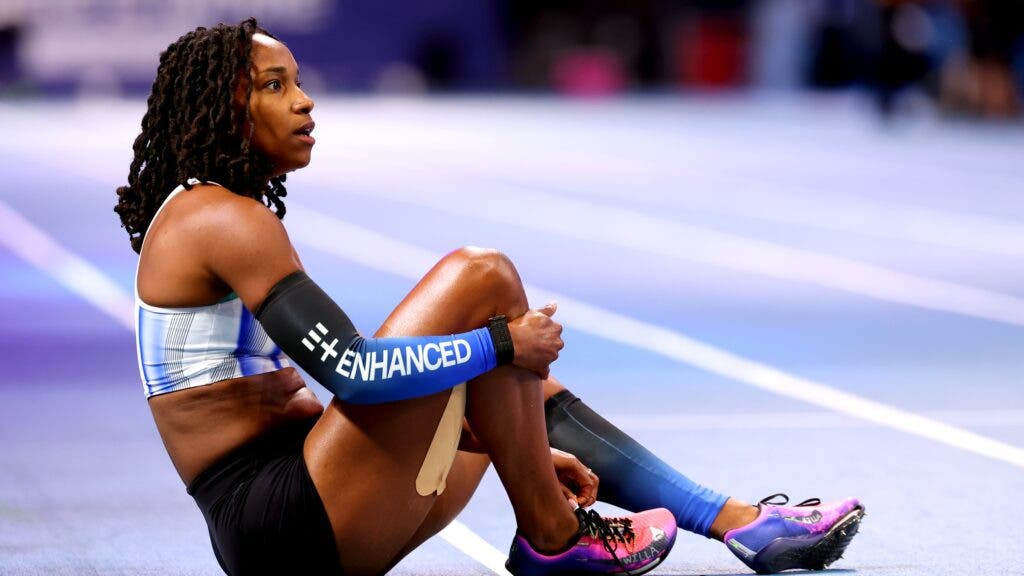
That’s where I finally reached Taylor Anderson, a 31-year-old track-and-field athlete who competed in the Games. Andreson was a standout sprinter at the University of Connecticut, where she won titles in the 100m and 4X100m relay. As a professional, Anderson competed in the U.S. Olympic trials but retired in 2024 after failing to make the team.
“We are being treated like kings and queens,” said Anderson, smiling, “I have never experienced anything like this in my career.” It was a little after 9 A.M. in Abu Dhabi and Anderson was enjoying her time. She was staying in a luxury hotel, eating at the same buffet as the Crown Prince. Anderson, who answered questions in the company and under the watchful eye of Enhanced’s Jones, was as disciplined in her messaging as she is on the track. “It is the coolest thing ever to be athletes taking our bodies, which we’re already primed and prepped, to enhance our abilities not only for track and field, but after our longevity and our wellness of our bodies and to be able to enhance that and not only for us,” she said. “But just for regular people as well and just showing them that you don’t have to be scared or afraid to want to be better for yourself, to enhance yourself, to live a better life.”
There were two classes of athletes competing in the game, Martin told me. “A certain category of athletes is going to break world records. We’re going to break five to six word records, is my guess,” but, he continued, “we also want to see a lot of personal bests from athletes that have never been healthier before and never been performing better.”
Swimmers like Greek Kristian Gkolomeev and American sprinter Fred Kerley were potential world record breakers; Taylor, along with other retired athletes, belongs to the latter camp. “She’s not going to [break a record],” said Martin, “but that’s fine, but she can become the best that she’s ever been, right?”
Whether it be a world record or a personal best, Anderson, like the rest of the athletes, was looking at a substantial payday. Organizers had promised $1 million for every world record broken and $250,000 for every personal record broken. For Anderson, that was a lifeline. “To keep it 100 percent with you, it’s very hard. I was living paycheck to paycheck, working multiple jobs, putting myself through,” she told me. Anderson wasn’t alone in running for pennies. A 2012 study from the Track and Field Athletes Association (TFAA) found that “Approximately 50 percent of their athletes who rank in the top 10 in the USA in their event make less than $15,000 annually from the sport.”
Little has changed. A tiny fraction of athletes, said Anderson, receive the sort of brand deals and sponsorships that put their faces on billboards and cereal boxes and their balances in the red. The rest of them make do. Anderson, for instance, is a high school coach and a personal trainer. She sells seamoss and cobbles together a living through minor sponsorships for local businesses in her hometown of Brooklyn Park, Minnesota.
According to Enhanced Games’ head Jones, “Track athletes, swimmers, and Olympic weightlifters are among the worst paid international athletes in the world. It’s actually in every country; this is not an American problem.” Anderson was paid, Jones told me, a “salary that is typically three to five times more than what a national federation stipend would pay her.” For them, like many of us, a million-dollar payday would be a game-changer.
To earn a quarter million dollars, all Anderson had to do was run 100 meters faster than she had ever run before, that is, in less than 11.20 seconds. To earn $1 million, though far-fetched, she’d need to shave that down to 10.49, the record set by legendary track star Florence “Flo-Jo” Griffith-Joyner in 1988.
Anderson lined up in lane two of the custom-built track in Las Vegas. Earlier in the night, viewers had watched Björnsson attempt a world record, deadlifting 515 kilograms. The bar bent; the Mountain grimaced, but the attempt failed. They had witnessed another athlete, Beatriz Piron of the Dominican Republic, attempt a 100-kilogram snatch and fail. They had watched both the men’s 50-meter swimming races and a performance by Norwegian DJ Alan Walker. What they had not seen, however, was a world record broken. In fact, the night could not have gone more poorly for the evangelists of Enhanced. Finally there were only four events left. Anderson’s among them.
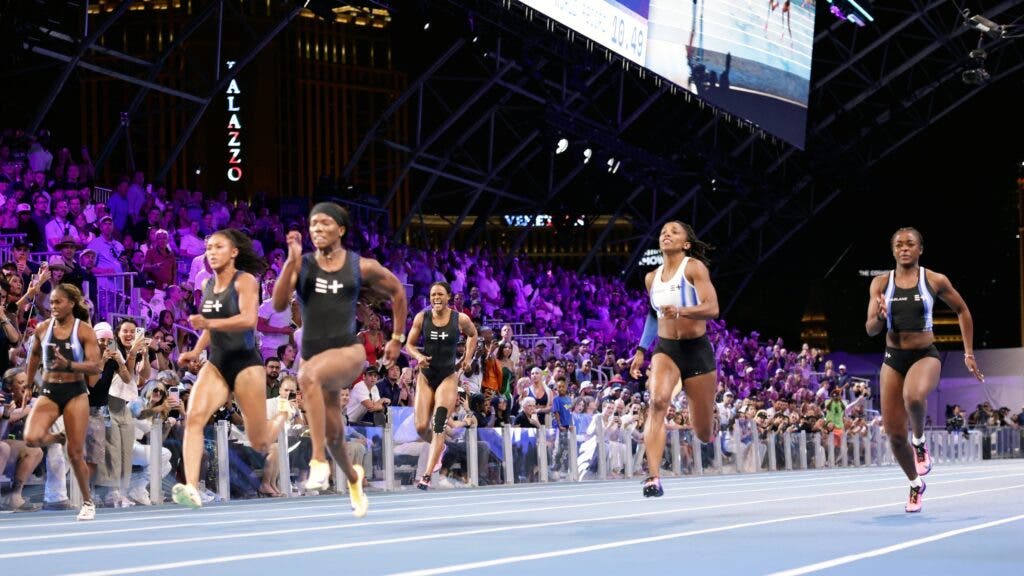
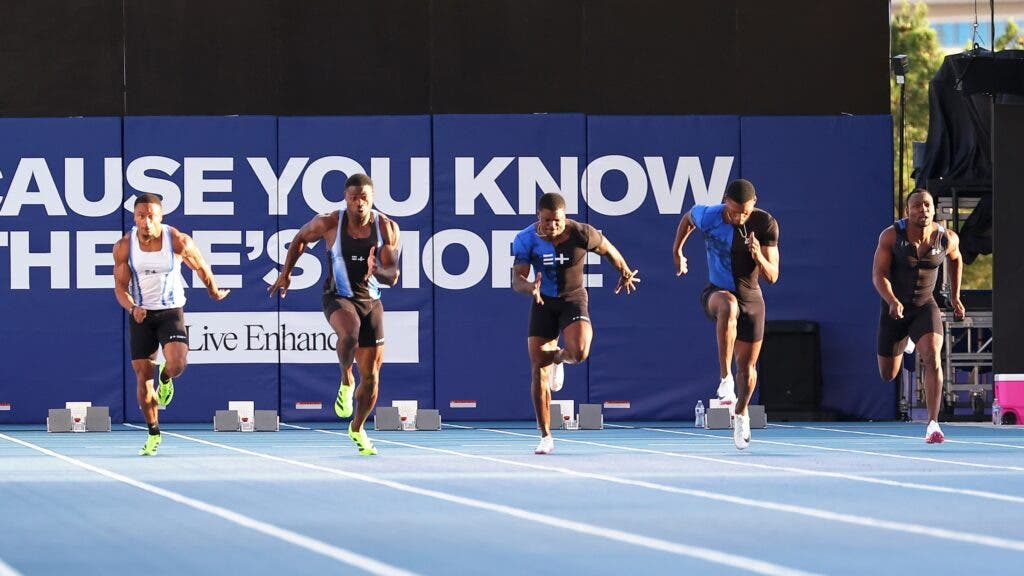
The stadium was quiet. “Set,” said the announcer. At the sound of the starting gun, the athletes took off. Ten minutes and 49 seconds, Flo-Jo’s record, was still the one to beat. Anderson got a sluggish start, but when the front runner, the Jamaican sprinter Shockoria Lilly Wallace, pulled up short with what looked like a foot injury, it seemed Anderson had her chance. In the back 25 meters, it was a three-woman race: Shania Collins, who, like Anderson, had been on a regimen of supplements; Anderson herself; and the Barbadian sprinter Tristan Evelyn, who had declined supplements. At 11.25 seconds, Evelyn crossed the finish line. 0.18 of a second later, Collins did. Coming in third, at 11:48, Anderson finally had run her race. After the finish line, Anderson and the rest of the sprinters broke their momentum with a huge ad for Enhanced at the end of the track that read “Because You Know There’s More.” The camera cut to the winner, Evelyn, who said in her victory speech that winning was “more than just chemistry.”
As for Anderson, who barely figured into the broadcast, her performance wasn’t a world record. It wasn’t even a personal best. But it was good enough for third place and a $75,000 paycheck, more than she’d made at any other single track-and-field event.
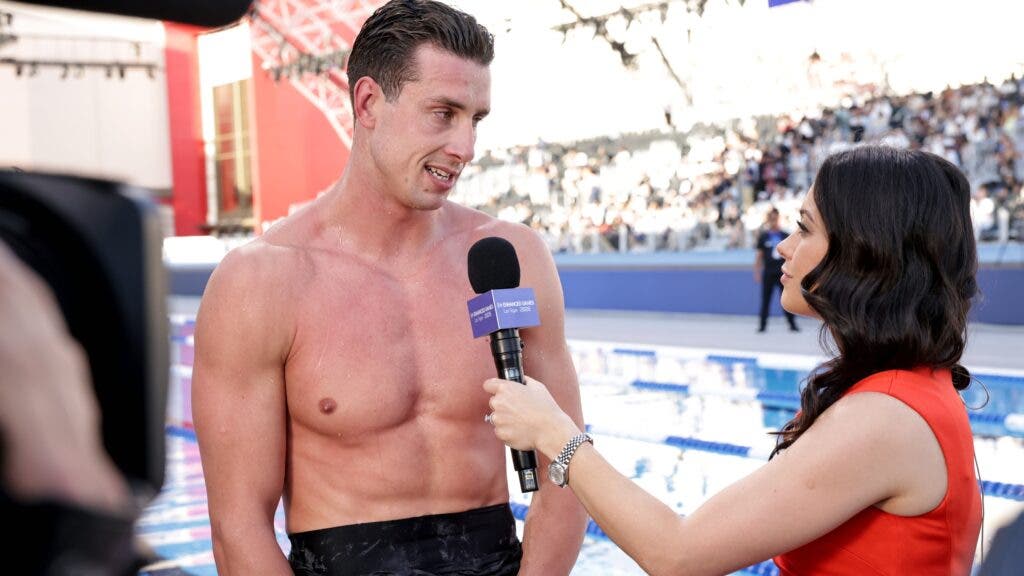
In the end, there was only one world record broken, in the final event. Kristian Gkolomeev, the swimmer, broke the record for the 50-meter free swim. Wearing a banned swimsuit, Gkolomeev earned $1 million. As for the other winners, out of the 15 events, three were won by non-enhanced athletes, including Kerley who roasted his competitors in the 100m in his victory speech saying, “get on that shit a little bit more.”
But the aftermath is only the beginning, and the future, one feared by the world’s sporting organization but looked upon with glee by the founders of Enhanced, seems as remote as ever. As the last remnants of the Games were being disassembled, Enhanced’s stock price had fallen by 40 percent, wiping out $800 million in market value. And when I called to see whether I could speak to Anderson, I was told she couldn’t be reached. A PR representative told me, “The athletes are all taking a bit of a break post-Games.”
