

Updated June 10, 2026 01:11PM
On May 22, Chhebe Bhote strolled into Mount Everest Base Camp after descending from the peak’s summit. Bhote, a climbing Sherpa with one of the Nepali expedition outfitters, spends each spring lugging heavy loads up the mountain before guiding clients to the top and back.
I met Bhote just as he walked into camp, and asked him to show me the contents of his backpack. The massive bag was packed to the brim with items. Half a dozen colorful stuff sacks of various sizes were lashed to the outside, swinging with his every step.
As he unpacked the bag in the dark onto the rocks at Base Camp, new items kept emerging: climbing gear, clothing, equipment belonging to other people. I tallied the full list of items below:
- 1 water bottle
- 2 oxygen masks and regulators
- 2 small medical kits
- 1 sleeping bag (client’s)
- 1 cooking pot
- 1 radio
- 3 down suits
- 1 empty oxygen bottle
- 2 pairs of mittens
- 2 large stuff sacks of clients’ clothing
- 1 air mattress
- 2 jumar ascenders
The bag weighed 90 pounds, and I struggled to simply pick it up. But something was missing.
“Where are your things?” I asked Bhote.
He smiled and shrugged. “I don’t know.”
Climbing Sherpas like Bhote have been thrust into the international limelight on Mount Everest, due to the thrilling and improbable survival story of Nepali guide “Hillary” Dawa Sherpa. Hillary Dawa survived by himself on Mount Everest after going missing on May 29, and then crawled down the peak without food or water until he was found by workers on June 5, six days after he was lost.
As it turns out, the job that mountain workers like Bhote and Hillary Dawa do is backbreaking and unglamorous. But it’s perhaps the most vital role in the Mount Everest guiding business.
A Lifetime Spent Carrying Loads
Bhote doesn’t remember the first time he used a tumpline—the forehead-mounted strap that Nepali porters use to transport loads. For most young men like Bhote, born and raised in a remote village in the foothills of Nepal’s Himalayas, carrying loads on your head is a skill developed almost simultaneously with learning to walk.
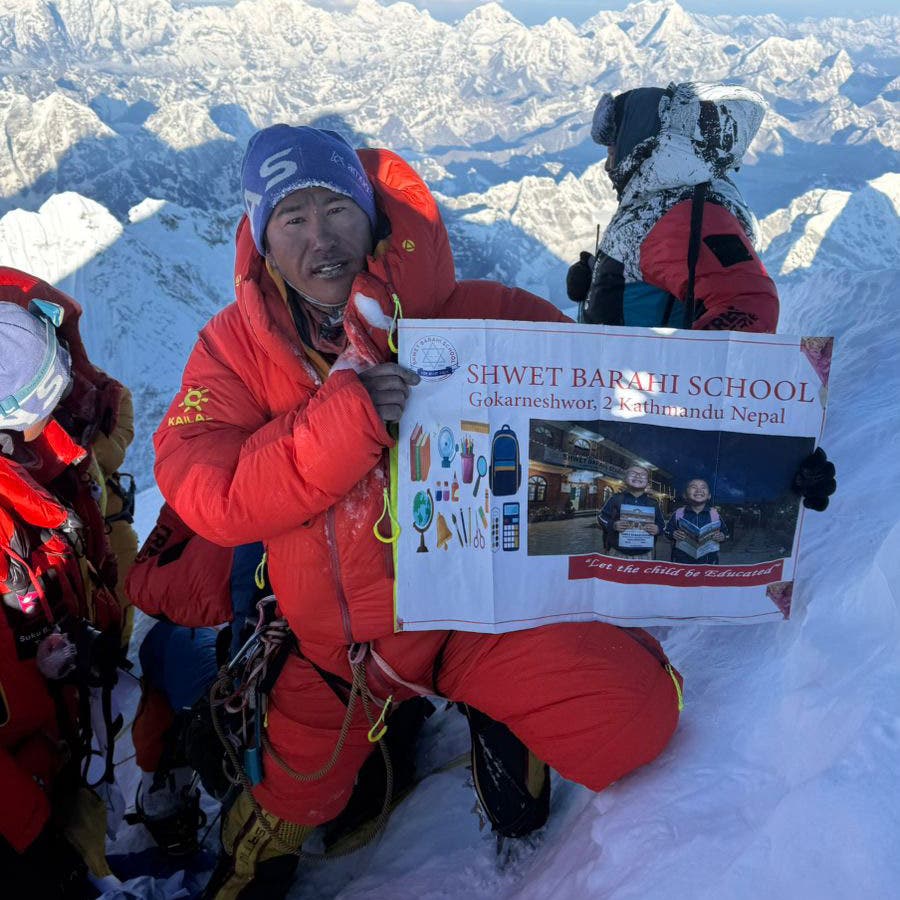
Now 29, Bhote works as a climbing Sherpa on Mount Everest, and every spring he leads climbers from Base Camp up 11,000 vertical feet to the summit. Climbing Sherpas are the important labor force charged with a variety of jobs on Everest, from hauling gear, to building camps, to leading clients to the top and back.
Bhote has been carrying heavy loads in the Everest region for most of his life. When he was just five years old, he started hauling his younger siblings up hillsides in a bamboo cradle while his mother worked the fields.
As he grew older, he ferried heavy loads of firewood, leaves, and grass from the forest to his home. He joined his family on week-long treks to Nepal’s southern border to sell medicinal plants, growing accustomed to having his back bent under weight long before his shoulders had finished growing.
“That’s just how we grew up,” Bhote told Outside. “In our village, we ate potatoes and carried loads. We worked all day just to survive. We didn’t have a chance to do anything else.”
Eventually, Bhote found work as a trekking porter, the workers who carry bags, gear, and food for tourists along the country’s popular hiking routes. This job opened doors for Bhote to take on the more lucrative job as a high-altitude climbing Sherpa on Mount Everest and other 8,000-meter peaks.
He reached the summit of Mount Everest in his early twenties before he made his first trip to Nepal’s capital of Kathmandu, where he lives now with his wife and two young sons. Carrying loads up the peak remains key to his family’s survival. The income from the lucrative spring climbing season on Mount Everest keeps them fed and housed for the rest of the year.
Six Trips Up Mount Everest in Just a Few Weeks
During the 2026 climbing season, on his first of six trips through the Khumbu Icefall, Bhote left Everest Base Camp at 2 A.M. and walked into the yawning darkness of the mountain while the ice was frozen and most stable. It was his seventh year working on Everest as a climbing Sherpa, supplying higher camps and guiding clients to the summit. On his first acclimatization ascent above Base Camp, he carried three mountaineering tents up to Camp II at 21,000 feet. His load weighed 35 pounds. He then helped build the temporary tent city before returning to Base Camp by mid-morning.
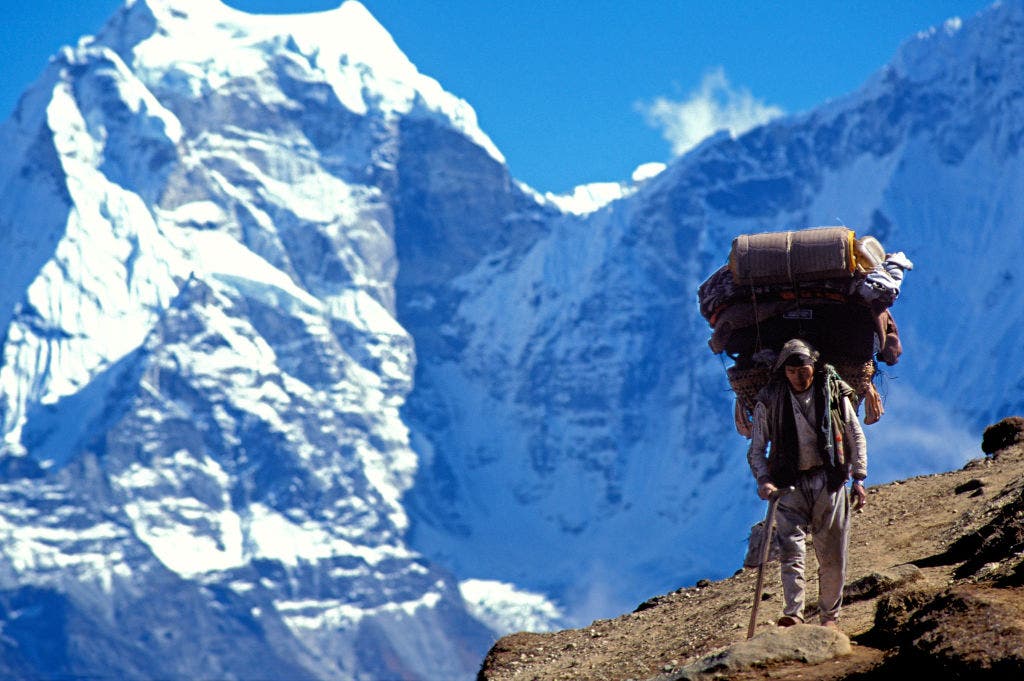
After resting for several days at 17,500 feet, Bhote ascended the peak again to Camp II, this time carrying 40 pounds worth of rice, a lentil soup called dal, and other meals packed into a heavy backpack. For his third trip up the peak, Bhote’s pack held another 40-pound load: an entire rectangular dining tent, roughly 15 feet long when unfolded.
On his fourth trip, Bhote’s pack surpassed 40 pounds: sleeping bags and climbing equipment for a group of European clients. Bhote carried this load while simultaneously guiding the climbers through the labrynthine Khumbu Icefall, the crumbling glacier at the foot of the peak. He walked them past ice seracs and across ladders spanning the crevasses below.
Bhote knew from experience that climbing clients often hide an extra battery bank or two in their sleeping bags. One of the other climbing Sherpas on his team was bold enough to inspect the equipment his clients had handed him and sent back a handful of power banks and noise-canceling headphones, due to the added weight. Bhote was too hesitant to do the same. The devices added only a few more pounds to his pack, he said.
After reaching Camp II, Bhote and his team of clients spent the night. The next morning, he guided his clients up to Camp III at 23,300 feet for another acclimatization hike—ascending to the last camp before the so-called “Death Zone” above 26,000 feet is an important part of every Everest climber’s preparation, as it allows their bodies to get accustomed to the thin air.
This time, he carried little more than snacks and water for himself and the other climbers.
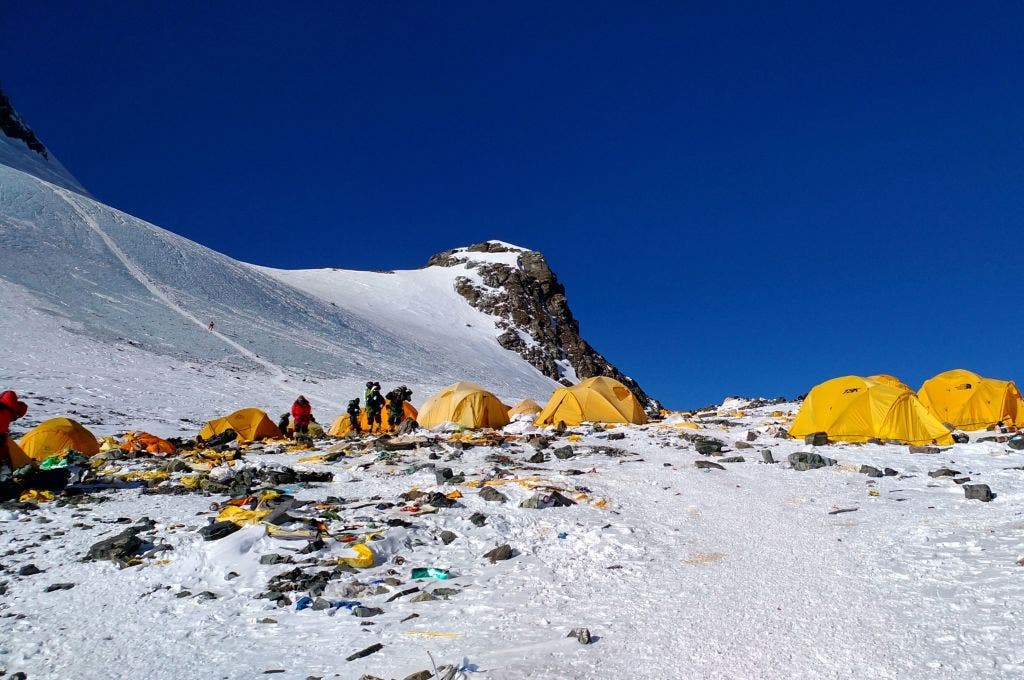
But he was not done carrying items. On his descent to Base Camp, Bhote stuffed his empty backpack with 66 pounds worth of garbage that he collected from Camp II. The disposable items included shredded tent flies, discarded plates and mugs, and empty butane canisters, all bundled in an empty bag that once carried rice. Bhote navigated the Khumbu Icefall with this load on his back, and eventually deposited it in the trash collecting zone at Base Camp. All outfitters must meet a mandatory quota of garbage removal, and Bhote’s load counted toward the season total.
On his fifth ascent from Base Camp, Bhote carried six metal oxygen bottles on his back. The load weighed 53 pounds in total. He departed at midnight and ascended through the Khumbu Icefall and past Camp I under the cover of darkness to Camp II.
There, he rested for the day, and then continued up past Camp III and on to Camp IV at 26,000 feet on the South Col of Mount Everest. Bhote left the bottles at the high camp—in a few days, client climbers would use them on their push to the summit.
With nothing left in his pack but a small breakfast and some juice, Bhote made his way back down to Camp II at 21,000 feet, where he briefly rested, and then walked all the way back down to Base Camp.
Pushing for the Summit After Days on His Feet
For high-altitude workers like Bhote, every passage through the Khumbu Icefall is a lesson in extreme risk. This year, the climbing season was delayed for weeks because of an unstable serac that rope-fixing teams deemed too dangerous to push thousands of workers and climbers beneath. But as commercial pressure mounted, the route was pushed through regardless, forcing workers like Bhote to absorb greater risk with each loaded trip.
Bhote’s sixth and final trip was the five-day summit push. His group left at 2 A.M. on May 16, moving through the relative safety of darkness, their headlamps crawling through the steep icefall like a slow caterpillar, panning across sheer walls of blue ice. After a rest day at Camp II, Bhote and the team donned oxygen masks and joined the procession climbing the steep Lhotse Face toward Camp III. In his pack was his client’s sleeping bag, freeze-dried food for the higher camps, a small camp stove, butane canisters, and three full four-liter oxygen bottles.
To save weight, Bhote wore his heavy down suit rather than packing it. He didn’t bother to bring a sleeping bag for himself. Between tending to clients, melting snow for water, and managing the group, he knew he wouldn’t sleep much above Camp III anyway.
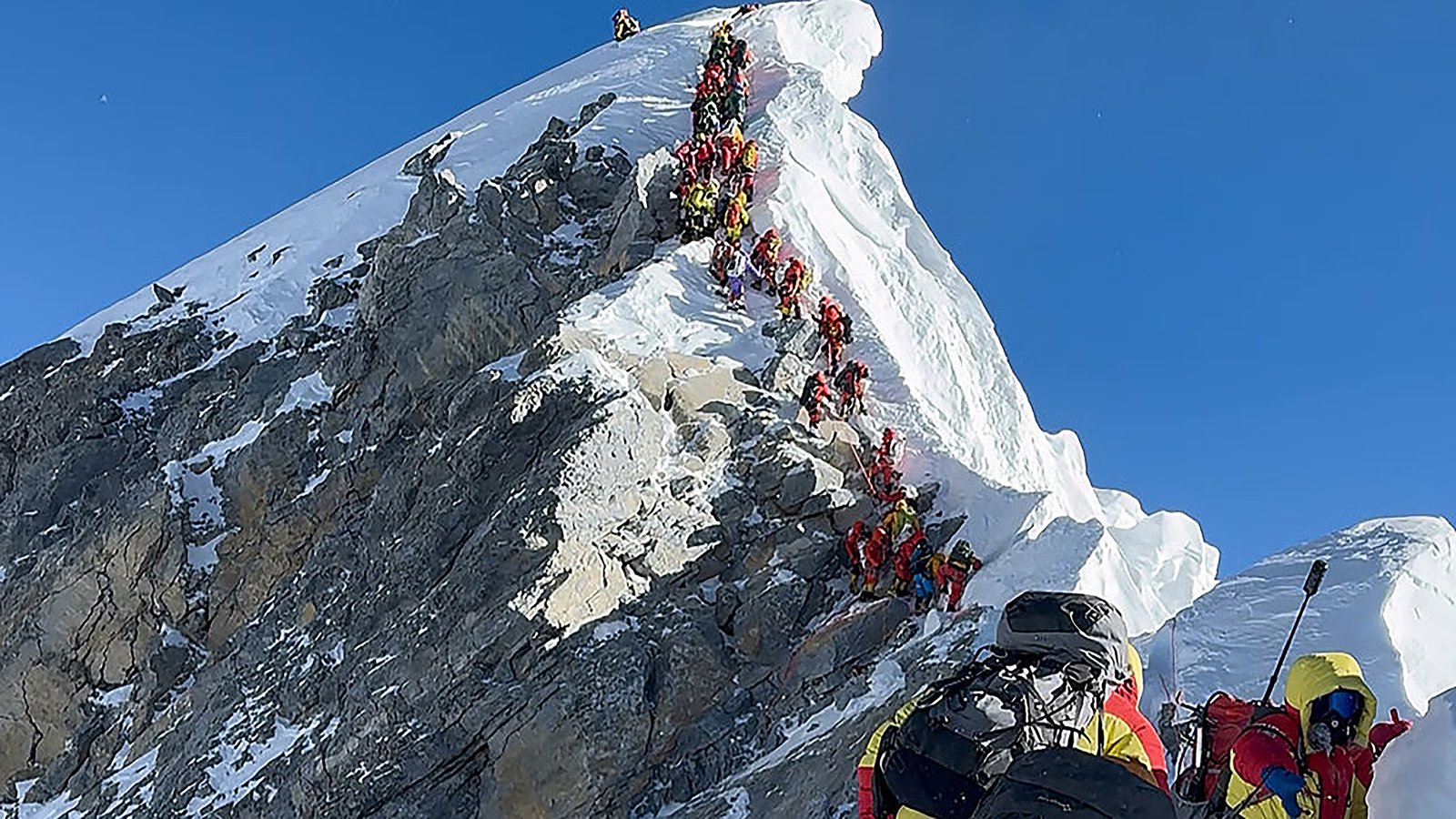
At 5:20 A.M. on May 20, Bhote reached the summit of Mount Everest for the sixth time. The group he led endured massive lines and long waits at the Hillary Step, the last hurdle before the summit. But everyone came down safely. After a 14-hour summit push, the group descended to Camp IV at 26,000 feet.
But Bhote’s work wasn’t done. He and his colleagues dismantled the tents and stuffed empty oxygen canisters into their packs. They descended together. After a brief rest at Camp III, the team descended to Camp II, where they redistributed their gear before descending through the Khumbu Icefall to Base Camp.
In total, he had climbed nearly 35,000 vertical feet and hauled 350 pounds up and down the mountain over the span of a few weeks. It was just another season for a climbing Sherpa on Mount Everest.
