

Published June 11, 2026 09:45AM
Camping chairs have quietly evolved from flimsy afterthoughts into highly specialized pieces of gear designed for everything from river trips and beach hangs to trailhead recovery sessions and outdoor concerts. We tested more than 30 camp chairs over multiple years—on rocky Oregon beaches, gravel bars on California rivers, soggy campsites in Crescent City, and long afternoons in scorching backyards during triple-digit temperatures. Some excelled at portability, packing down small enough to hike into remote campsites. Others prioritized all-day comfort with supportive frames, rocking suspension systems, and lounge-worthy reclining designs.
The best camp chairs on this list didn’t just feel comfortable for five minutes. They stayed supportive through marathon campfire sessions, survived wet weather, handled uneven terrain without collapsing, and proved easy enough to haul around that we actually wanted to bring them outside regularly. Whether you’re shopping for a lightweight chair for minimalist adventures or a plush throne for car camping, these are the comfortable camping chairs worth building your summer around.
Best Camping Chairs: At a Glance
Best Overall Camping Chair
NEMO Satellite Reclining Camp Chair
Chair Weight: 2.9 lbs
Packed Dimensions: 14” x 4” x 4”
Seat Height: 11”
Pros and Cons
+ Excellent reclining comfort for an ultralight chair
+ Small packed size makes it incredibly portable
– Not as plush or cushioned as heavier lounge chairs
– Lower seating position can be tough on sore knees
The NEMO Satellite is one of the most stable and comfortable lightweight recliners I’ve tested—and it packs down to the size of my 8-year-old’s lunchbox.
Instead of relying on bulky hinges, locking hardware, or a separate swinging seat, it uses a suspended recline system built into the seat body, letting you lean backward smoothly while staying fully supported by the aluminum frame. The forged aluminum hubs and tensioned suspension system create a controlled, hammock-like movement—without the twitchy, about-to-dump-you-backward feeling that plagues so many lightweight recliners. I especially appreciated being able to subtly shift my seating angle by pulling on the suspension or just leaning back while reading, without constantly repositioning myself.
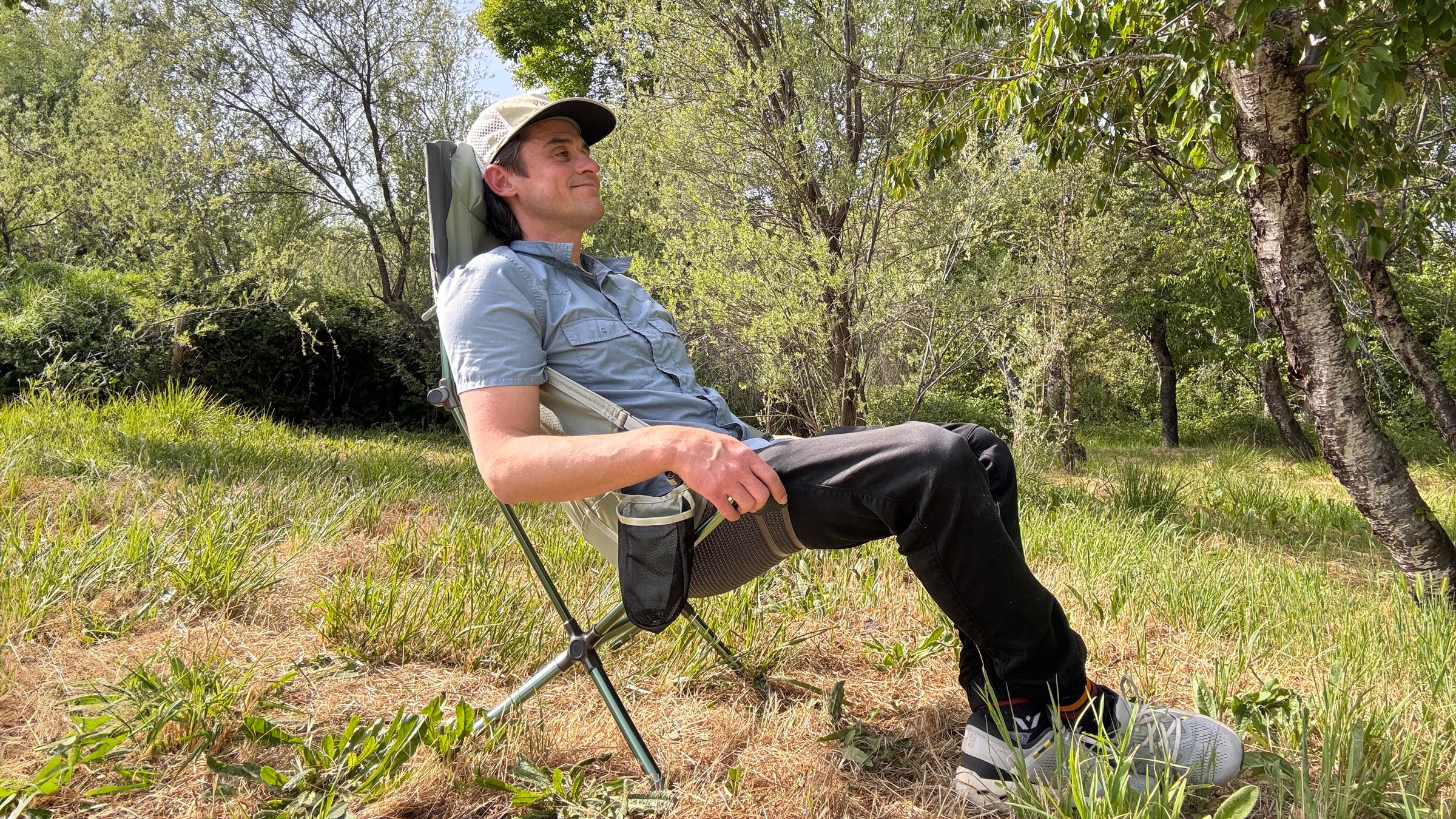
The recycled mesh fabric deserves praise too. It ventilated exceptionally well during hot backyard afternoons and dried quickly after morning condensation soaked the seat at our campsite in Crescent City, California. Unlike heavily padded loungers, the mesh tension provides support without trapping heat against your back. NEMO also built in a slightly higher seat height (11”) than many collapsible, lightweight chairs, which made getting in and out noticeably easier after long trail runs and mountain bike rides.
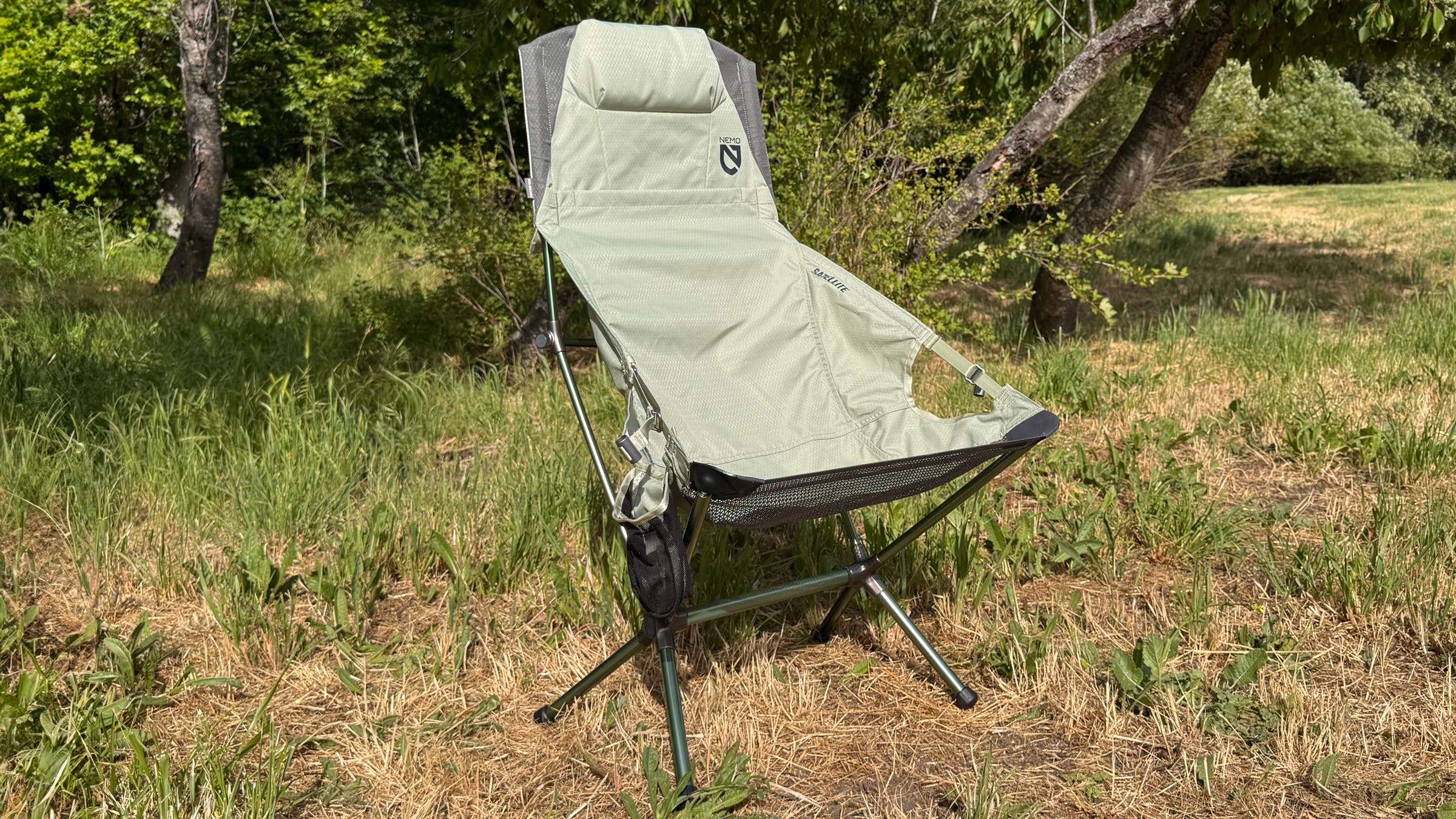
It isn’t as plush as other NEMO recliners I’ve tested, or the heavier steel-frame loungers in this guide—but the fact that it delivers impressive comfort and stability without eating up half the trunk of our Honda Element makes it an easy recommendation.
Most Versatile
DOD Sugoi Chair
Weight: 5 lbs
Packed Dimensions: 4” x 15” x 18”
Seat Height: 12”- 17”
Pros and Cons
+ Soft, supple seat material
+ Variable seat height
+ Can sit upright or recline
– Does not dry quickly
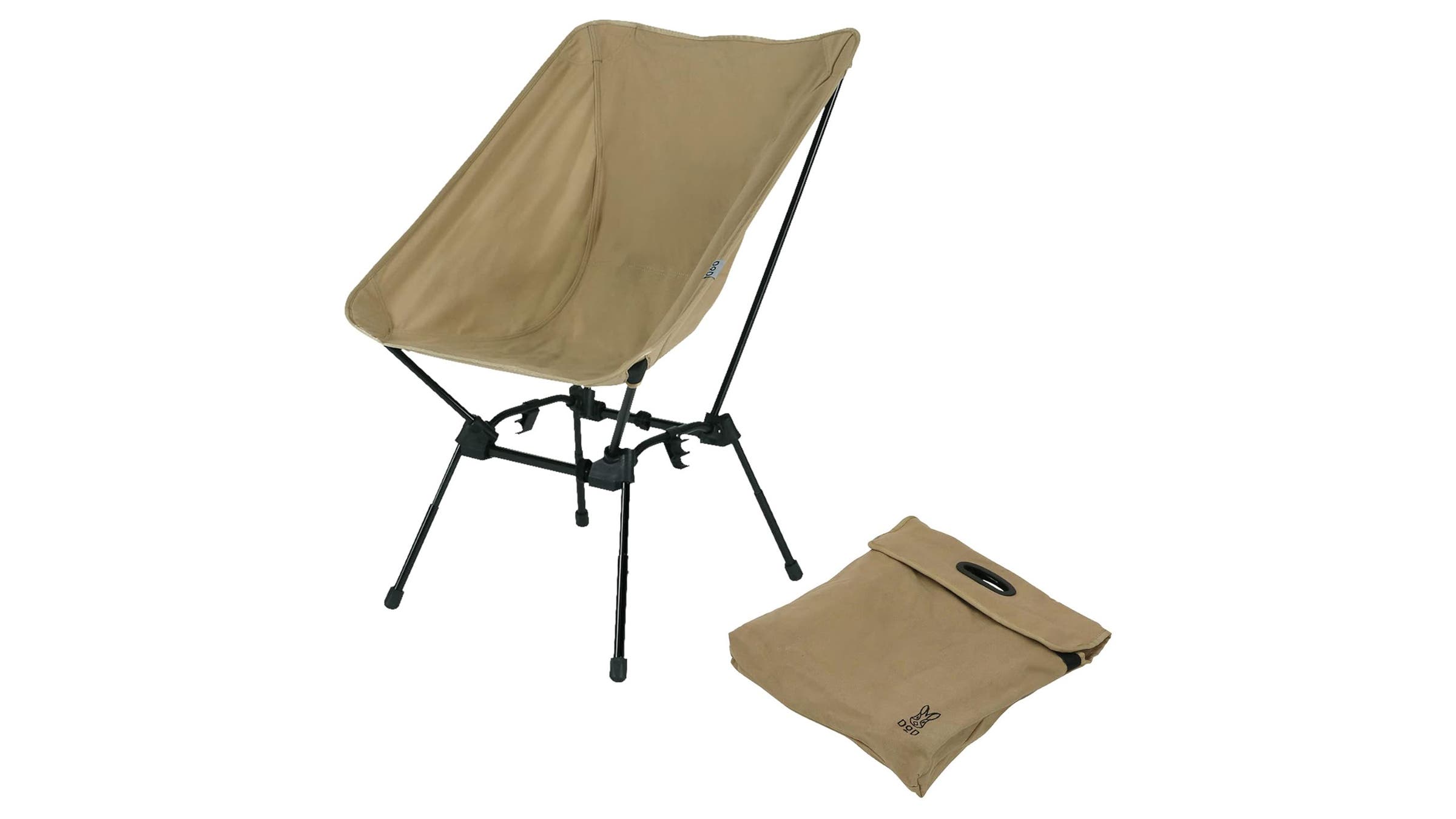
The soft, cotton canvas seat made the slingback-style Soto stand out in our test. It delivers a delightful give that enhances comfort while still providing enough back support. The chair’s adjustable seat height also won us over.
The Soto’s telescoping legs have four height settings—from 12 to 17 inches—that not only let you dial in your preferred seat height, but let you turn this chair into a recliner by dropping the rear leg heights to a lower setting than the front legs. No matter which height the legs were adjusted to, the Soto proved stable for testers up to 280 pounds, even when set up on uneven terrain.
A classic skin-on-frame style makes setup and takedown straightforward. It’s also very portable—it folds flat and tucks into a briefcase-sized canvas carrying case. The only downside to this canvas-backed chair is that it retains moisture. After getting soaked during an early morning rainstorm on the Scott River, it didn’t fully dry out until the next morning.
Most Durable Compact Chair
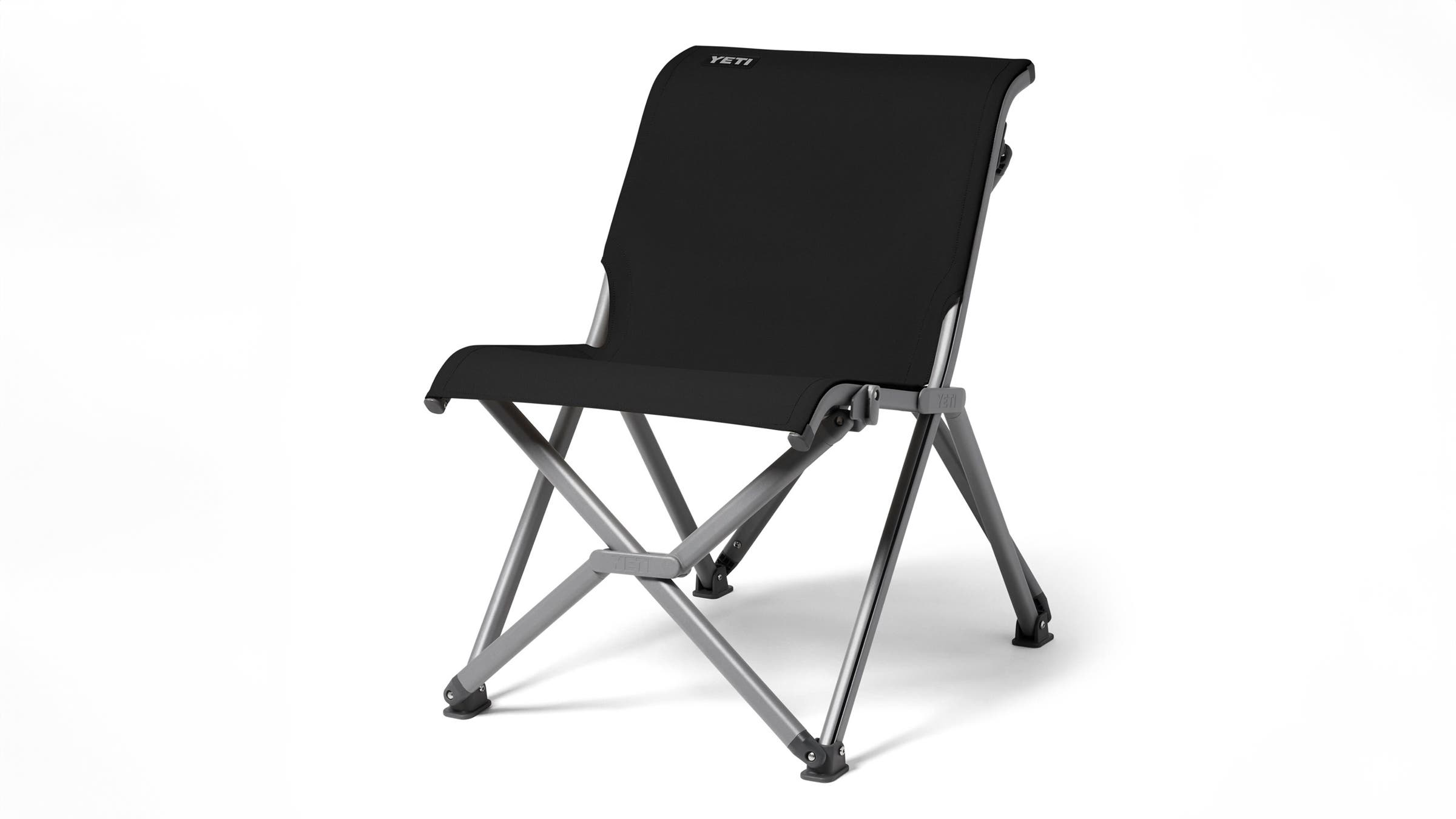
Yeti Trailhead Field Chair
Chair Weight: 10.6 lbs
Packed Dimensions: 28.3” x 11.8” x 9”
Seat Height: 16.8”
Pros and Cons
+ Exceptional lumbar support and overall stability
+ Durable construction and premium materials
– Heavy compared to most portable camp chairs
– Bulky packed size
If you want a chair that keeps your back happy for hours and you prioritize comfort over portability, the Yeti Trailhead Field Chair is the one to get.
It takes the same bombproof design as the original Trailhead and trims it into a more compact, streamlined package. The lower-profile frame and slightly more upright seating position make this feel less like a throne for crushing beers around a fire and more like a highly supportive all-day chair for concerts, soccer games, and camp cooking—exactly what it’s built for. While lighter than the Trailhead Camp Chair, the powder-coated steel frame still feels absurdly solid: one 230-pound tester appreciated how little the frame flexed, and the broad feet prevented sinking into softer ground better than many competitors. I also loved the waterfall-style seat edge, which reduced pressure under my thighs during long sits.
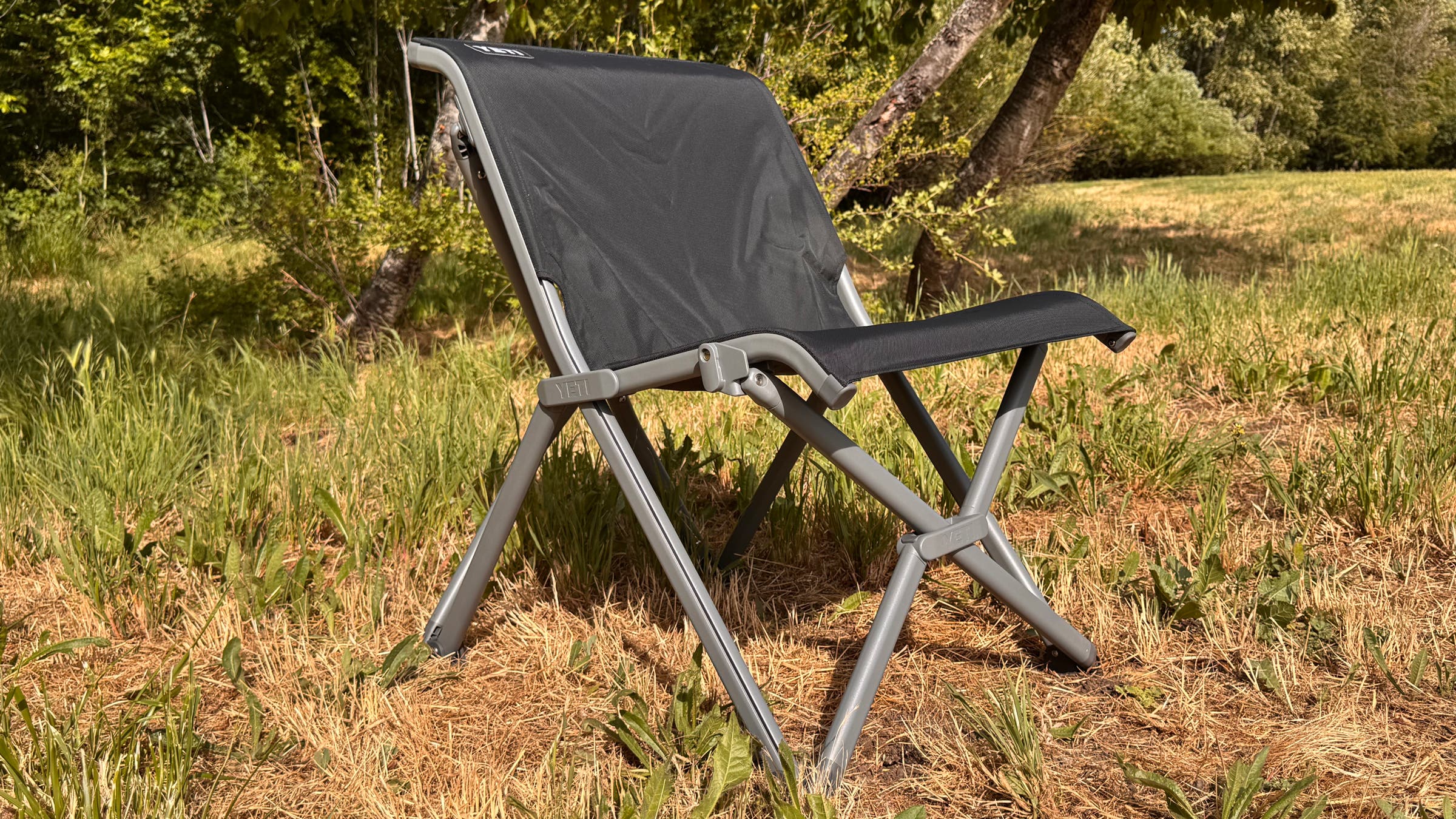
Yeti’s FlexGrid fabric—a tightly tensioned, UV-resistant material that distributes weight evenly across the frame—delivered some of the best lumbar support in this category. Unlike sling-style chairs that slowly taco your spine over the course of an evening, the Yeti kept my posture surprisingly upright even after hours around the campfire.
At just over ten pounds, portability still isn’t the Field Chair’s strong suit. But compared to the 13.3-pound full-size Trailhead, it’s meaningfully easier to haul around a campsite—and it retains the same premium build quality that makes Yeti chairs feel like patio furniture disguised as camp gear.
Most Packable
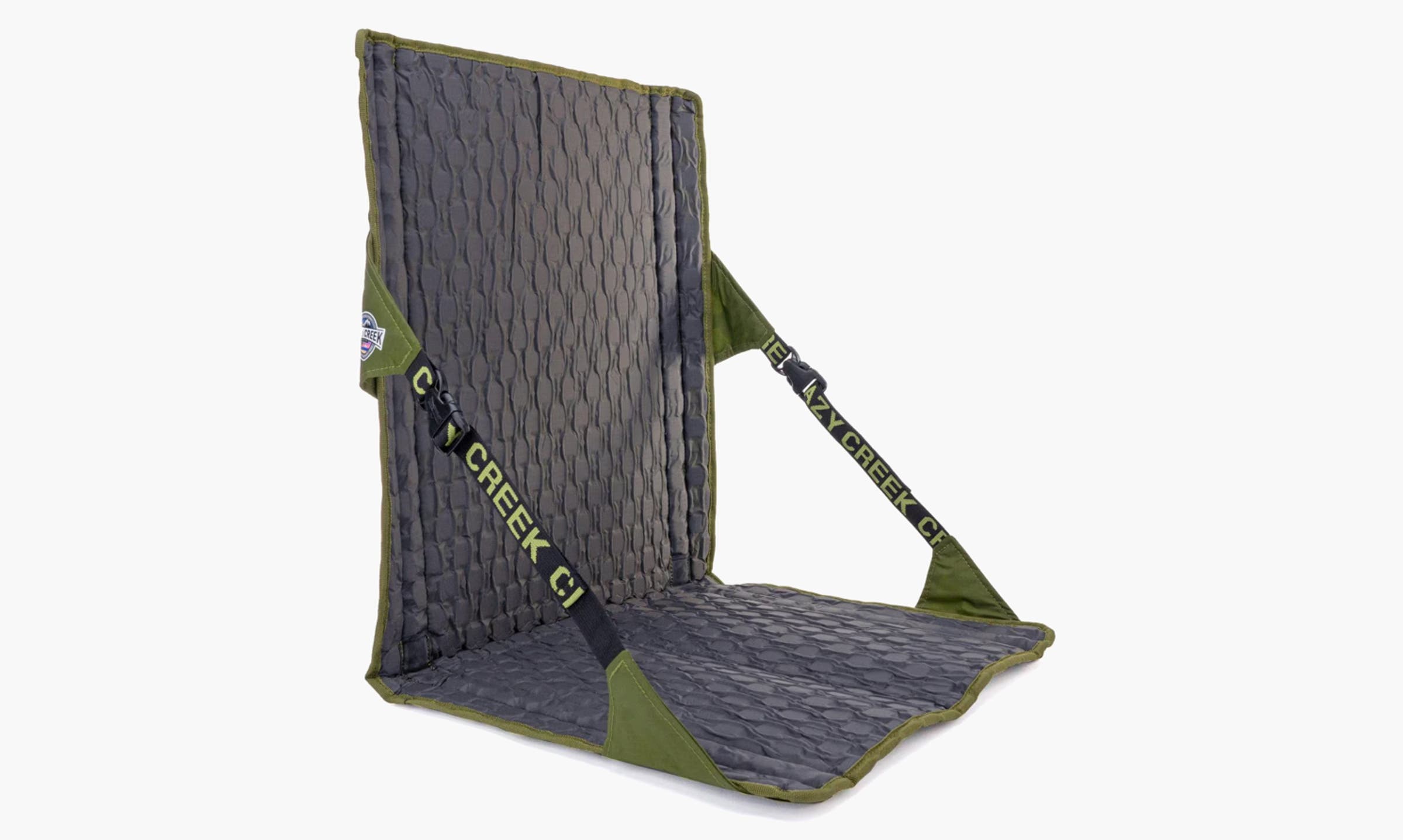
Crazy Creek Hex 2.0 LongBack Chair
Chair Weight: 1.55 lbs
Packed Dimensions: 20” x 5” x 4”
Seat Height: Ground-level chair
Pros and Cons
+ Versatile
+ Uneven ground isn’t an issue
+ Lightweight and easy to carry into remote campsites
– Ground-level design is tough on knees
– Less structured support than framed camp chairs
Bold statement: Crazy Creek chairs remain one of the simplest and most useful camp seating systems ever made. Decades after the design first appeared, it’s still one of the most functional.
The LongBack Hex 2.0 is essentially a highly engineered padded seat that folds flat and straps to your body when carried. No frames, no hubs, no elaborate pole structures. The 22-inch back—about two inches taller than the standard Hex 2.0—adds upper-back support that made a real difference during long mountain lake hangs and late nights around a fire pit. At 1.5 pounds and packing down to the size of a football, it’s too heavy for backpacking, but it was an absolute delight to carry a half mile into a secluded beach on the Oregon coast. The closed-cell foam wrapped in durable coated ripstop nylon shrugged off wet ground, sand, and sharp rocks without showing any real wear. I especially appreciated how the carbon-fiber support stays created enough rigidity to keep me upright while staying flexible enough to actually relax into when reclining.
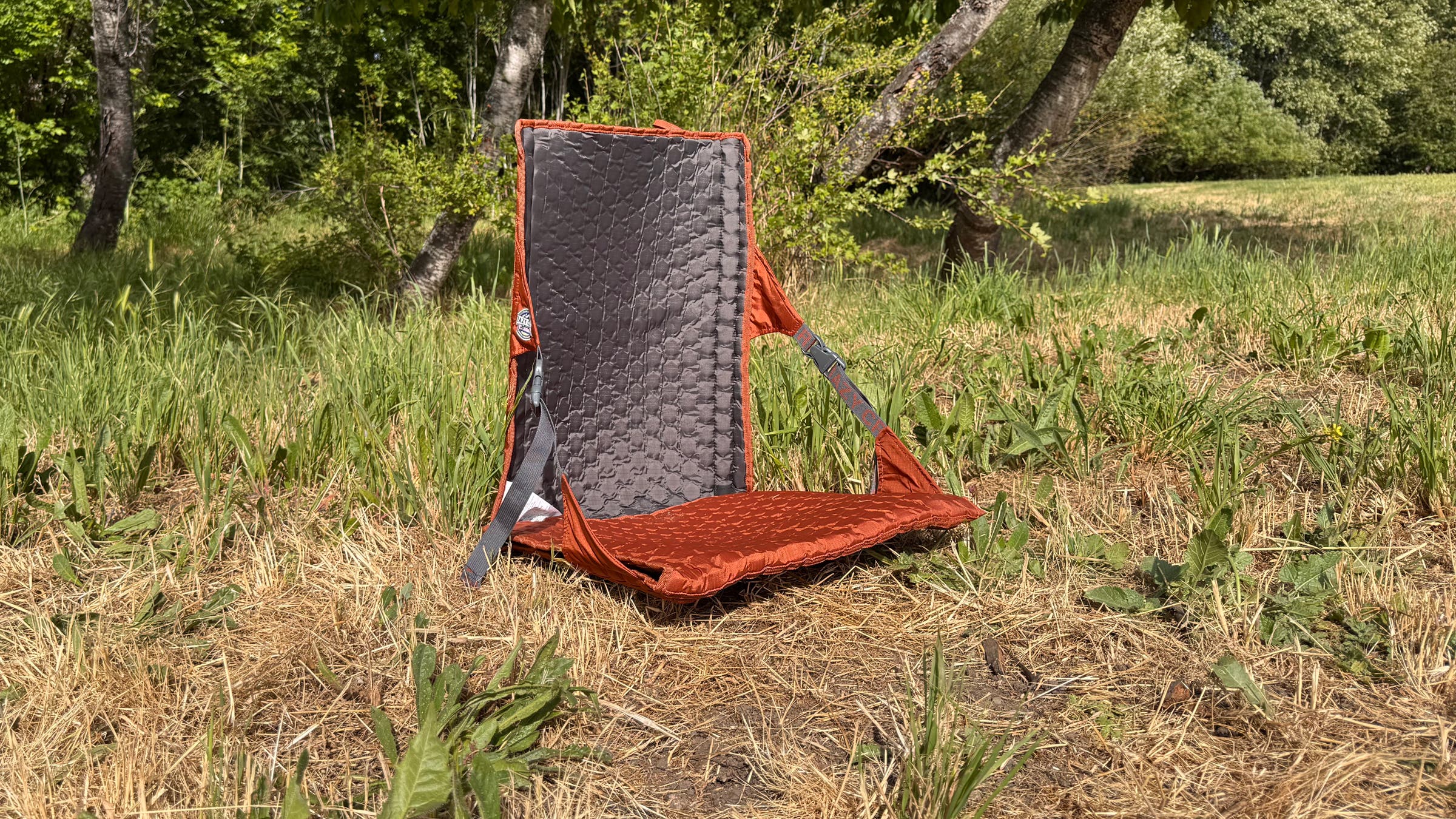
Unlike framed chairs, the Crazy Creek works anywhere traditional chairs struggle—it doesn’t need level ground to support four legs. I used it on steep river banks near the Scott River in California, rocky Oregon beaches, and leaned against a tree reading a book next to a creek by my house. The adjustable side straps let me dial in the recline angle depending on whether I wanted upright support or full dirtbag lounging mode.
The obvious downside is that it sits directly on the ground, making it a no-go for anyone with cranky knees or mobility issues. But for minimalist campers, river trips, outdoor concerts, and adventures where versatility matters more than throne-like plushness, the Hex 2.0 LongBack adds a solid layer of comfort to Crazy Creek’s timeless usefulness.
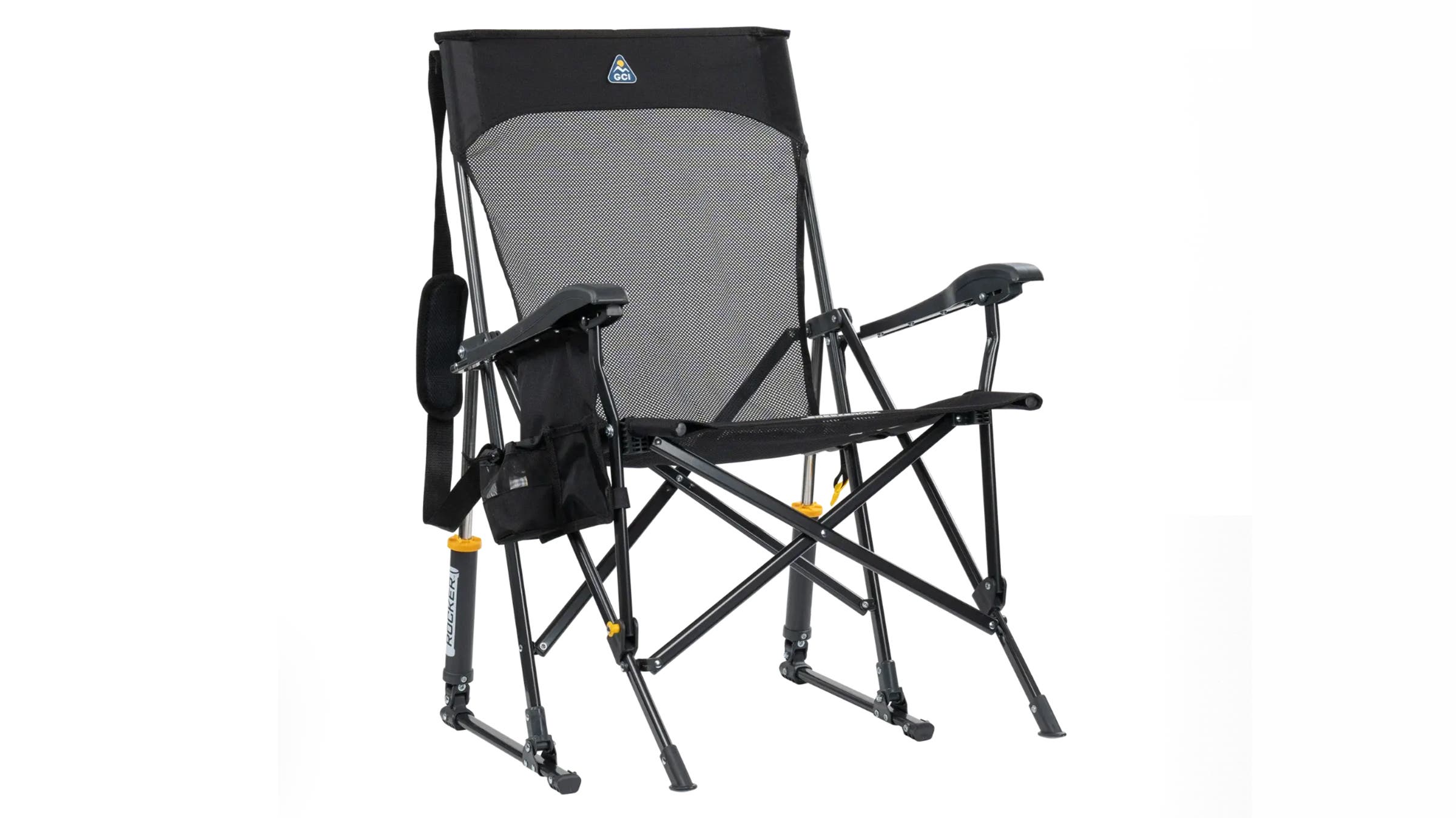
Best Portable Rocking Chair
GCI Outdoor Breeze Rocker
Chair Weight: 12.8 lbs
Packed Dimensions: 34.8” x 25.8” x 4.9”
Seat Height: 19.7 inches
Pros and Cons
+ Smooth and stable rocking motion on uneven ground
+ Ventilated mesh back panel stays cool in hot weather
– Large packed size takes up substantial trunk space
– Heavy and awkward to carry long distances
The Breeze Rocker takes the crowd-pleasing formula of the Freestyle Rocker and adapts it for hotter weather and longer summer hangs. The biggest update is the massive ventilated mesh back panel, which dramatically improved airflow compared to older GCI rockers that could turn downright swampy during triple-digit afternoons.
Like the Freestyle Rocker, the Breeze uses GCI’s Spring-Action Rocking Technology, which delivers an impressively smooth rocking motion even on uneven ground. I tested it on gravel bars, patchy grass, and hard-packed dirt, and the chair consistently felt stable and controlled rather than tippy. The broader seat geometry also made it noticeably more accommodating for larger testers.
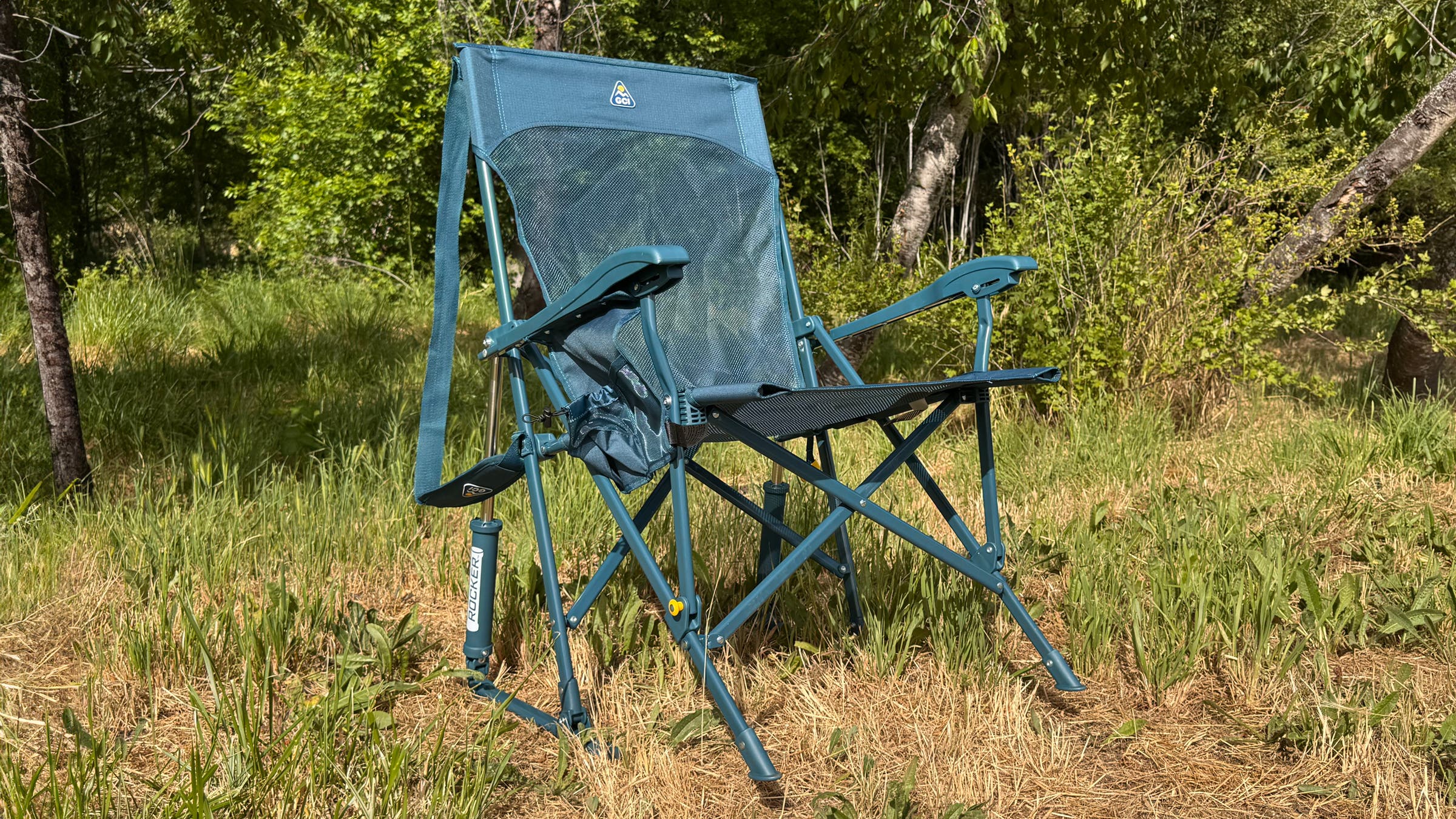
What surprised me most was how supportive the upper back felt despite the lighter mesh construction. The tensioned sling seat cradled my hips nicely while the higher backrest gave me enough support to comfortably sit through multi-hour campfire sessions. I also appreciated the chair’s armrests and oversized cupholder, which comfortably handled everything from skinny La Croix cans to oversized Nalgenes.
Like all steel-frame rocking chairs, though, portability is not the Breeze Rocker’s strong suit. It folds relatively flat but still occupies a huge amount of trunk space compared to collapsible aluminum chairs. Its carry-sling helped with transport, but testers still noted how cumbersome it was to get around if you had to carry it more than a few feet.
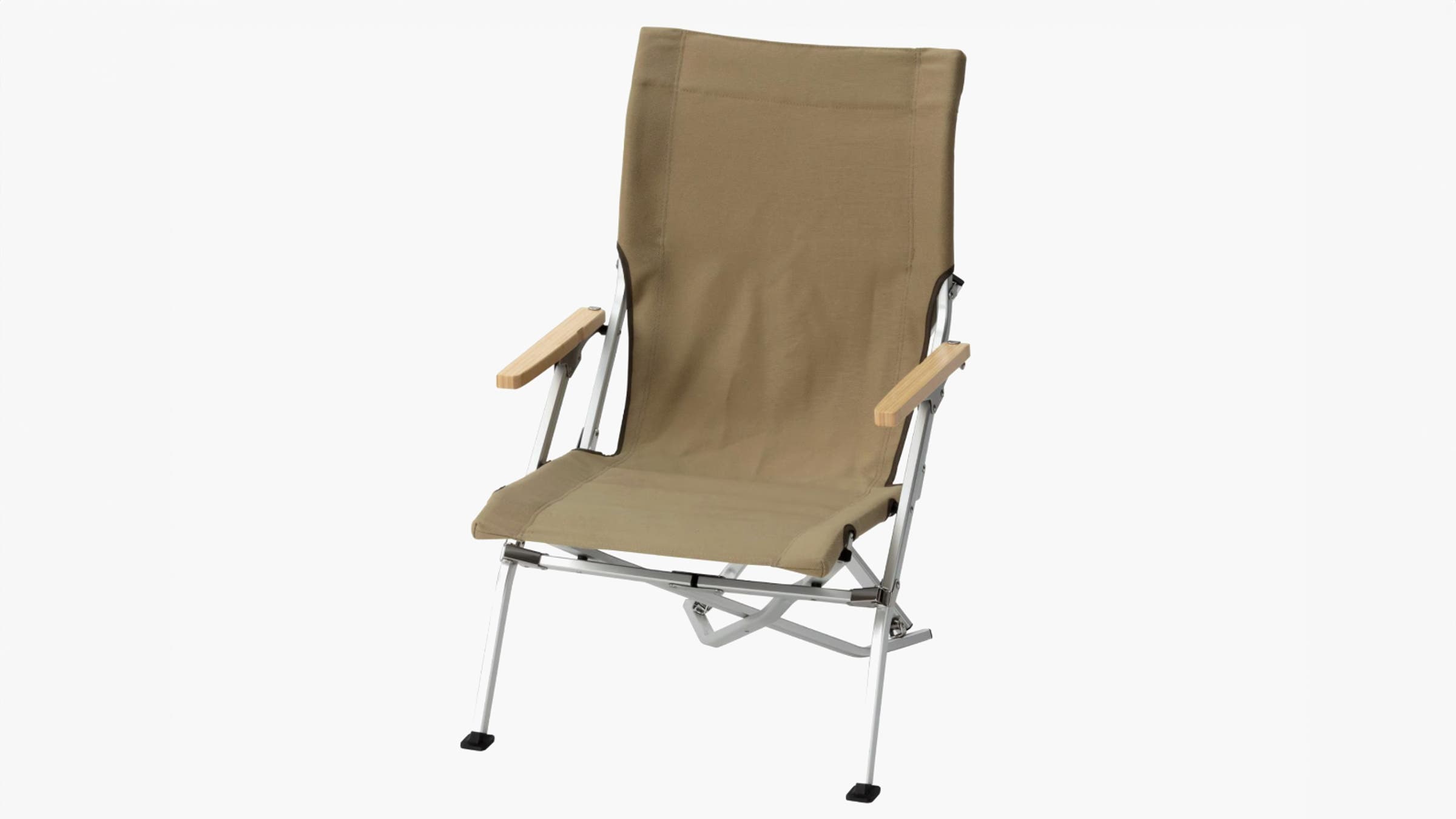
Best Lawn Chair
Snow Peak Low Beach Chair
Chair Weight: 8 lbs
Packed Dimensions: 30” x 7” x 6.3”
Seat Height: 12”
Pros and Cons
+ Beautiful materials and refined furniture-like feel
+ Comfortable low-slung posture for lounging around camp
– Canvas absorbs moisture more than synthetic competitors
– Bulky packed size limits portability compared to lighter chairs
No company makes camping gear that feels more like furniture than Snow Peak, and the Low Beach Chair is a great example of that. Everything about this chair feels thoughtful—from the beautifully finished bamboo armrests to the tensioned canvas seat and low-slung lounging posture.
The Low Beach Chair takes a restrained approach to comfort. The cotton canvas seat has just enough give to feel relaxed while still maintaining enough tension to remain supportive, and the low seat height (12”) naturally encouraged long conversations around campfires. The aluminum frame also delivered impressive rigidity without making the chair excessively heavy at 8 pounds.
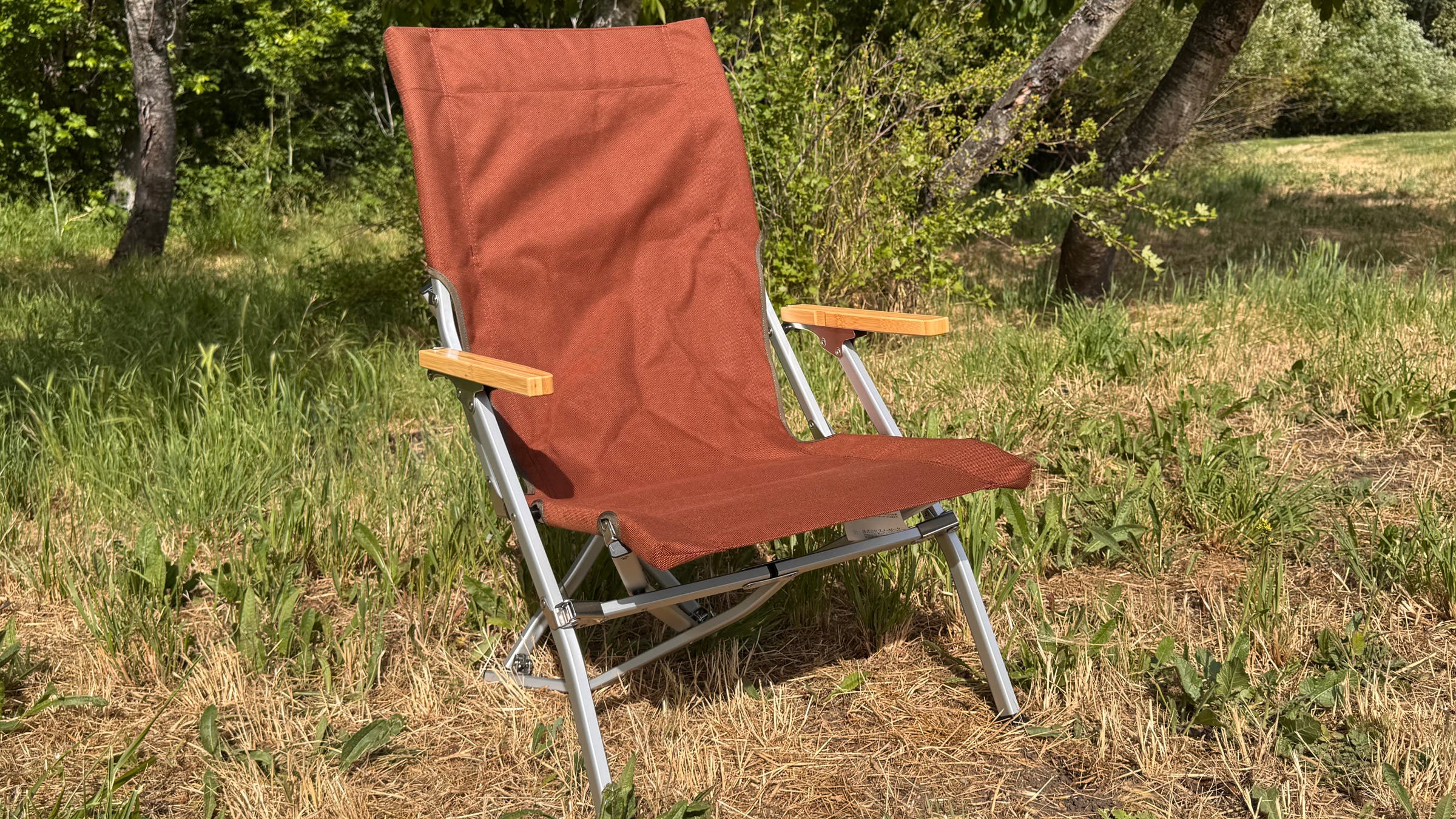
What really stood out during testing was how organic the materials felt compared to the plastic-heavy aesthetic dominating most camping furniture. The bamboo armrests stayed comfortable against bare skin during hot afternoons and gave the whole chair a lowkey residential quality.
The tradeoff for that refinement is portability and weather resistance. The canvas absorbed moisture more readily than synthetic mesh competitors, which made for soggy backsides during a damp trip to Crescent City, and the packed dimensions (about the size of a rolled yoga mat) are fairly bulky. But those shortcomings are easy to overlook for anyone planning to use this chair for backyard barbecues, sporting events, or summer concerts—it was the only chair of the 30-plus I tested that my wife wanted to keep out year-round with our patio furniture.
Best for Families
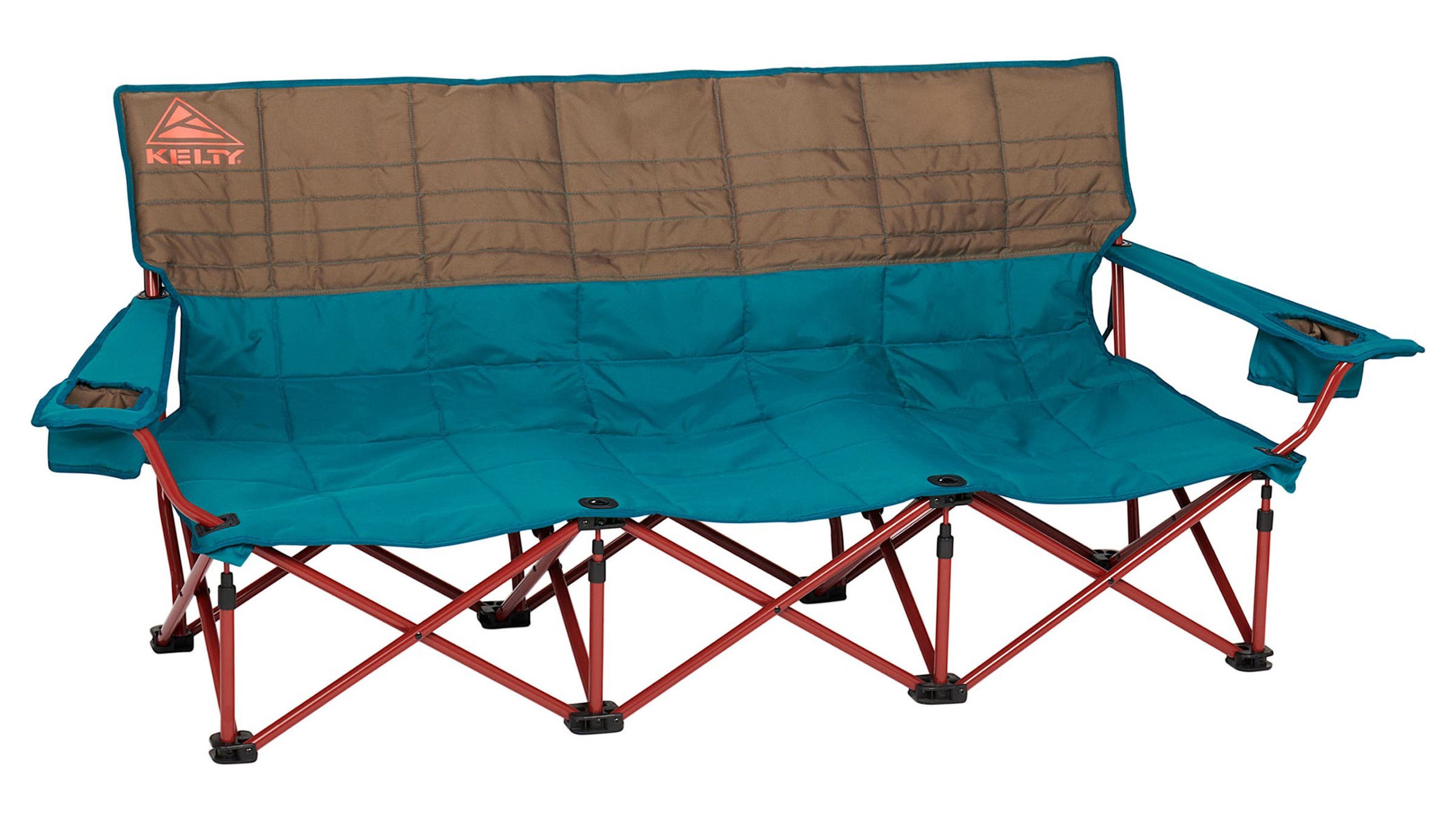
Kelty Lowdown Couch
Weight: 21 lbs
Packed Down Dimensions: 35” x 13.5” x 9”
Seat Height: 12.5”
Pros and Cons
+ Balances comfort and stability
+ Extremely burly materials
– Very heavy
– Huge packed size
Our crew of 25 testers have collectively spent hundreds of hours on this three-person couch over the course of three summers’ worth of testing. When all was said and done, the Lowdown established itself as the unequivocal favorite among kids and families.
While all of the other chairs on this list depend on rigidity for support, the Lowdown has an almost hammock-like back that allowed testers to sink into the low seats. We don’t always love this style of seat because it can feel like you’re melting into the chair (not in a good way); but the Lowdown features light padding on the seat and back that offers just enough support while enhancing comfort.
And although it’s five feet wide, this camp couch is incredibly stable. Credit the steel frame that boasts eight connection points to the ground. The design proved so sturdy, kids felt confident standing on it, and we had to repeatedly ask them to stop using it as a wrestling platform . Save for a tiny hole left by a campfire ember, the 600-denier polyester seat cover continues to look almost new after multiple summers of use.
As a three-seater, the Lowdown doesn’t score high marks for portability. It packs down to the size of a large couch cushion and weighs a whopping 21 pounds, which makes it bulkier to transport than many car camping tents. That said, setup and takedown is not complicated for such a large chair—one piece folds out/in like an accordion and the carrying case simply wraps around the collapsed chair. We just needed a truck bed to throw it in once packed up.
Best Camping Chairs Comparison Chart
Frequently Asked Questions
What are the most comfortable camping chairs?
The most comfortable camping chairs prioritize support, seat height, and stability over ultralight portability. During testing, chairs like the Yeti Trailhead Field Chair and Snow Peak Low Beach Chair stayed comfortable through multi-hour campfire sessions instead of feeling great for the first ten minutes and slowly destroying our posture afterward. Higher-backed chairs with tensioned fabric systems generally delivered the best lumbar support, while low-slung lounge chairs excelled at river hangs and beach sessions. Ultimately, the most comfortable camping chair is the one that fits both your body and the way you camp—and if you spend most of your time car camping, it’s usually worth sacrificing some portability for dramatically better comfort.
Where can I buy camp chairs?
Camping chairs are available everywhere from big-box sporting goods stores to specialty outdoor retailers, but we recommend buying from companies with solid return policies so you can actually sit in the chair before committing. REI, Backcountry, Public Lands, and local outdoor shops carry the widest variety of premium chairs, and brands like Yeti, NEMO, Snow Peak, Crazy Creek, and GCI sell directly through their own websites. If possible, try chairs in person—seat height, back angle, and overall feel can vary wildly from what the specs suggest. If you’re shopping online, pay close attention to weight, packed dimensions, and seat height, because those numbers tell you a lot about how a chair will actually live in the real world.
What’s the best way to store camping chairs?
Clean, dry, and somewhere you can actually find them before your next trip. Chairs thrown wet into the back corner of a garage tend to stay wet, get musty, and slowly deteriorate. Before storing, shake out sand and dirt, wipe down frames if needed, and let fabrics dry fully to prevent mildew. We also recommend creating a dedicated camping gear zone rather than scattering chairs between closets, garages, and vehicle trunks—a little organization dramatically reduces the friction between deciding to go outside and actually getting out the door.
How We Tested Camping Chairs
We tested more than 30 camping chairs across day trips, overnight camping missions, river hangs, beach sessions, backyard gatherings, trail runs, and mountain bike outings throughout California and Oregon, evaluating each on comfort, support, portability, durability, stability, ease of setup, packed size, and overall livability during extended use.
We used every chair in the environments it was designed for. We carried lightweight models into secluded Oregon coast beaches, lounged in them beside mountain lakes and rivers, and pushed larger steel-frame chairs through long campfire sessions and scorching summer afternoons. We paid close attention to how each chair handled uneven terrain—gravel bars, steep riverbanks, rocky beaches, and soft ground where legs tend to sink or wobble.
We also evaluated long-term comfort and ergonomics. We assessed low-seat-height chairs for ease of entry and exit after trail runs and mountain bike rides, and compared sling-style and tensioned designs for lumbar support and posture over long sits. Weather resistance mattered too: we put several chairs through damp coastal camping trips in Crescent City, California, where marine moisture, condensation, and wet ground quickly exposed weaknesses in fabrics and materials.
Finally, we considered portability and livability beyond the campsite. Some chairs disappeared neatly into trunks and traveled easily to concerts and sporting events; others earned their place through exceptional comfort and durability despite bulkier packed sizes.
Meet Our Lead Tester
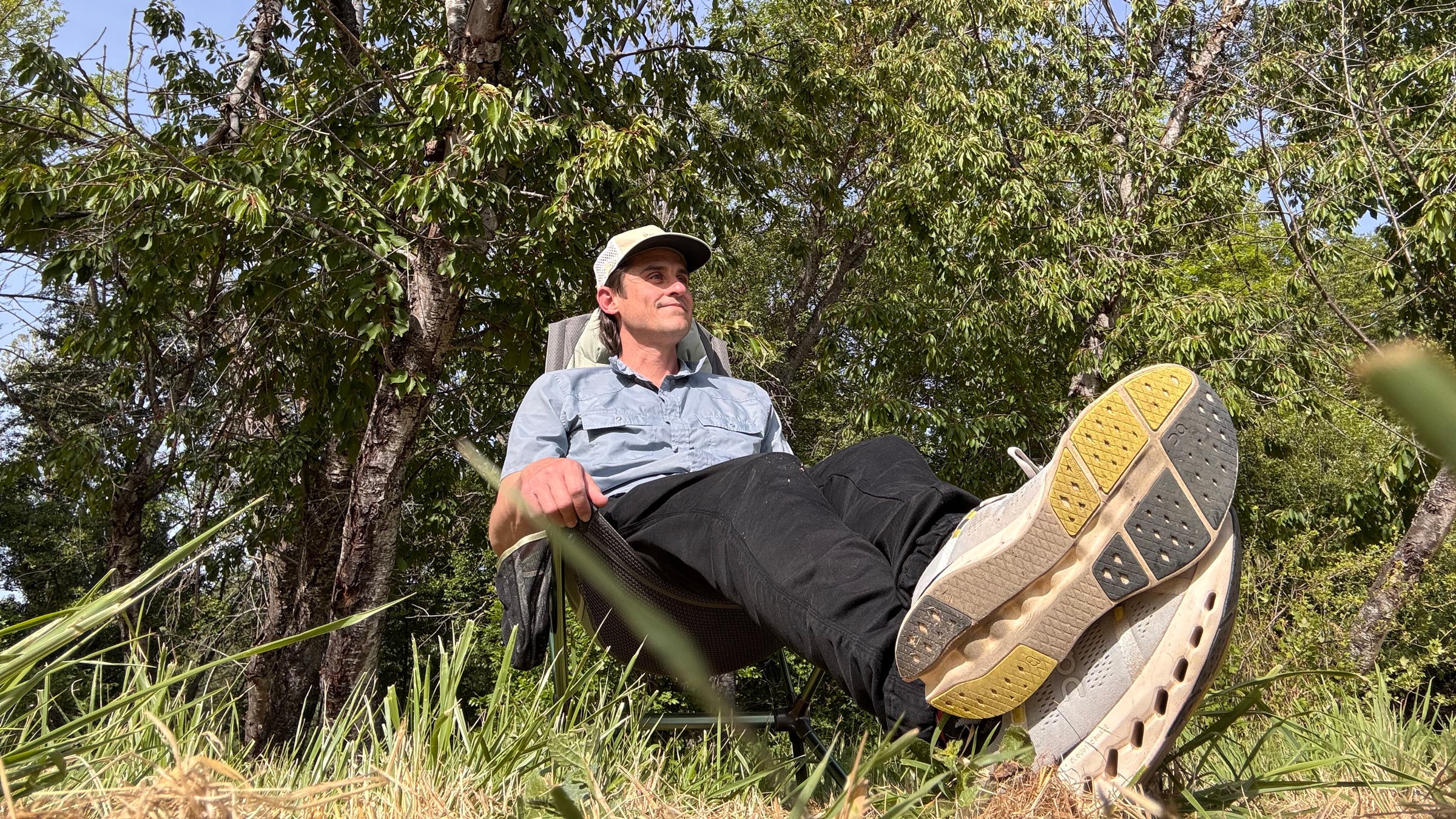
Joe Jackson has tested over 75 camp chairs for this publication during the more than 10 years he has professionally tested gear as Outside’s Gear Guy. He takes testing camp chairs very seriously—he once hiked a collection of camp chairs into one of the most remote class V whitewater runs in California in the name of credible product testing.
