

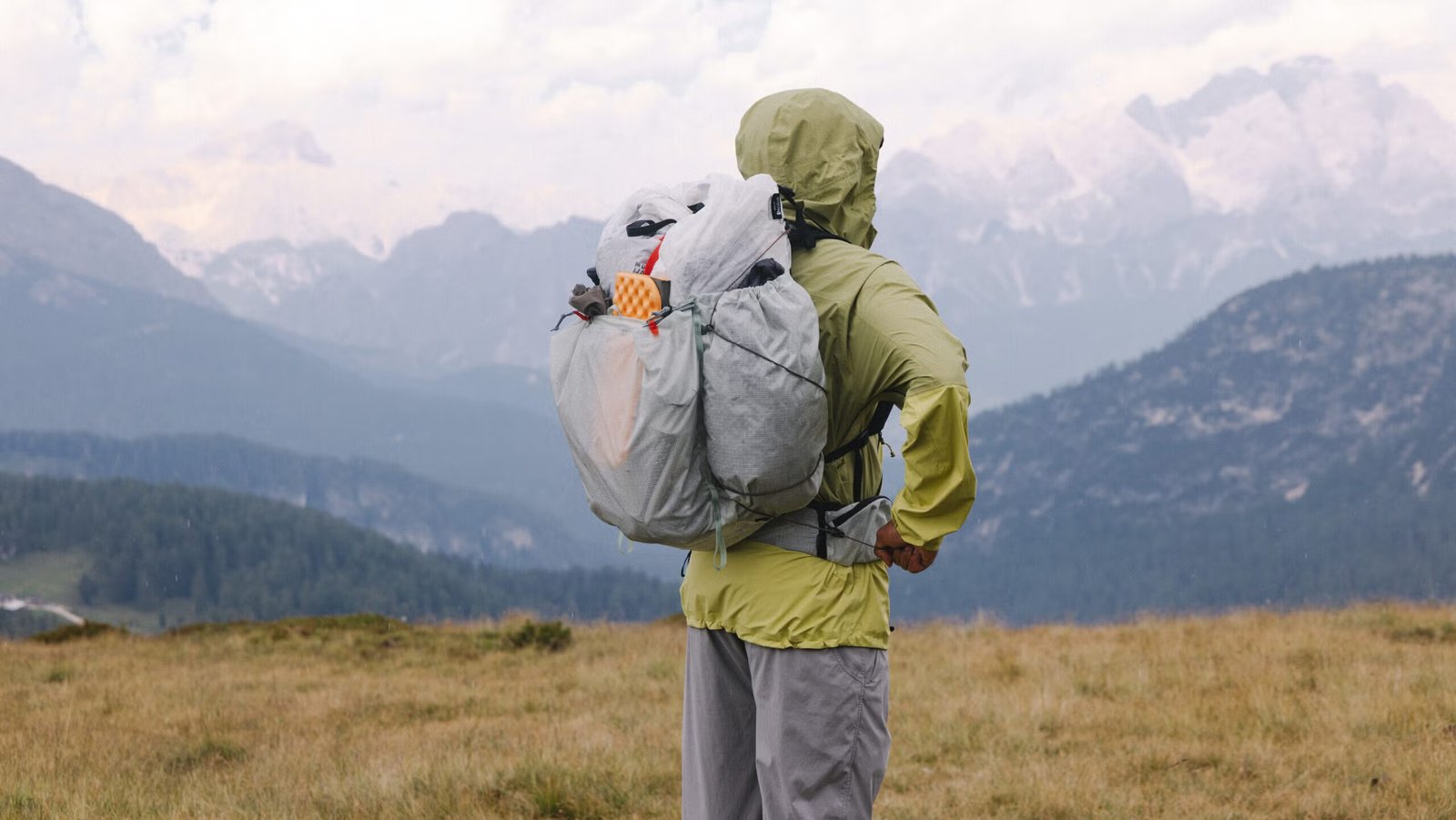
Mountain Hardwear combined its mastery of comfort and durability with the latest ultralight technology
The Lightness of Being (Photo: Mountain Hardwear)
Published June 12, 2026 01:18PM
Going ultralight used to mean making trade-offs: paring down features, sacrificing comfort, and hoping gear would still hold up in the wild. But with more than 30 years of experience making high-performance alpine equipment, Mountain Hardwear isn’t afraid to challenge the ultralight gear equation. The company is building on its legacy of designing durable, mountain-worthy equipment—and proving that lighter doesn’t have to mean less.
To understand how the new Lightness of Being Collection came to life on the trail, we caught up with equipment and accessory design director Ben Guthrie, a key force behind Mountain Hardwear’s pack and equipment design. Guthrie brings a hands-on, field-tester perspective to ultralight gear development, blending technical innovation with real-world experience to create products that perform where and when it matters most.
Outside: How has Mountain Hardwear balanced ultralight design with its longstanding reputation for durability and comfort?
Ben Guthrie: For us, ultralight (UL) isn’t a race to remove features—it’s a design exercise in efficiency. We start with what Mountain Hardwear has always done well: dependable construction and comfortable load carry, then we streamline everything that doesn’t earn its keep. That means simplifying patterns, reducing parts, and choosing materials and builds that deliver strength without extra weight.
We also lean hard on field testing. Our team intentionally sets out on overnight trips together to test multiple rounds of prototypes and fine-tune comfort, breathability, and stability out in nature instead of guessing. The goal is gear that feels calm on your body—no sway, no hotspots, no UL penalty—while still standing up to long miles, variable weather, and use season after season.
The foundation of every backpacker’s kit is their backpack. What makes the Alakazam a top pick for the ultralight adventurer?
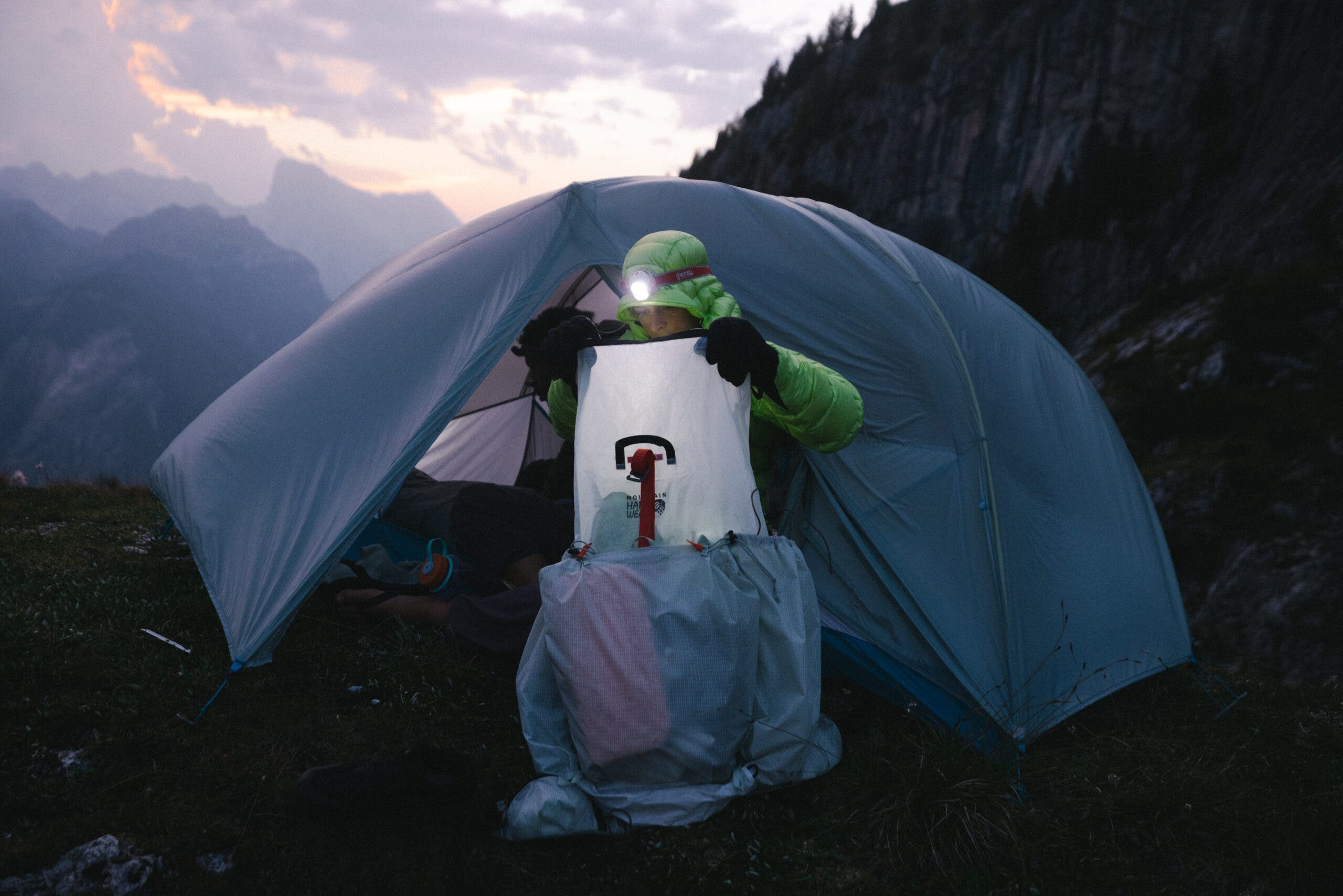
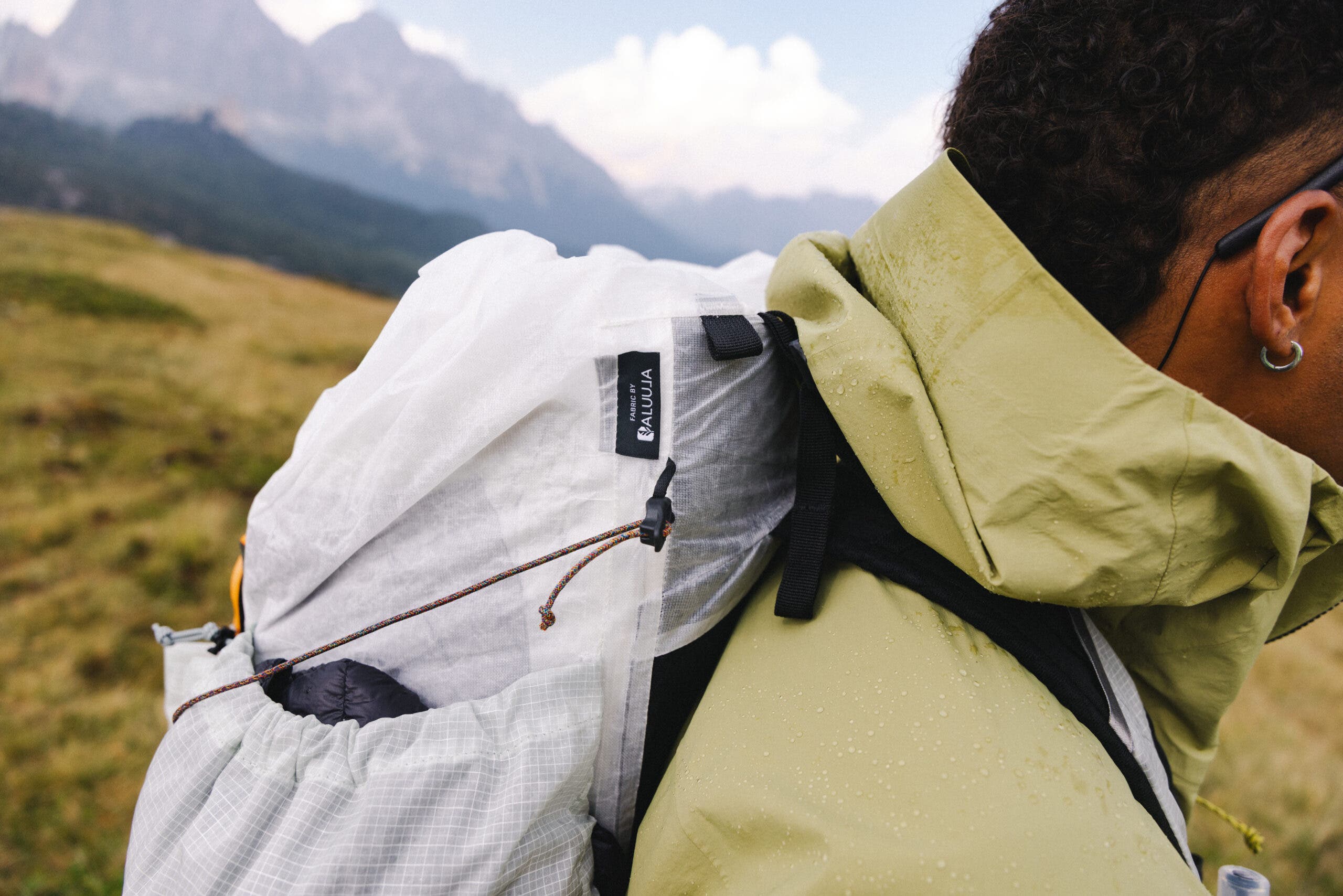
Making a pack that’s less than two pounds didn’t happen overnight. For the Alakazam, we knew that if we could solve weight challenges, our consumer could spend more time enjoying the trail. This encompassed rounds of prototypes, lots of hikes, and loads of tinkering during the product creation phase, because we learned how to work with Aluula. The payoff is a waterproof, ultrastrong main body that lets us build lighter. From there, we focused on carry—because we knew comfort would benefit the experience on the trail. The Gait Keeper hipbelt design moves with your natural gait instead of fighting it, which keeps the load stable and reduces fatigue. Then there’s Giddy Up, which is basically a “choose your own adventure” compression system: Reroute it or remove it, lash what you want where you want, attach it directly to the hipbelt to stabilize the load, or detach it to free those hips. And yes, that swiveling hipbelt still makes me want to dance every time I put it on.
Going lightweight shouldn’t mean cutting out warm sleep. How does the Ghoul sleeping bag help ultralight backpackers rest at night?
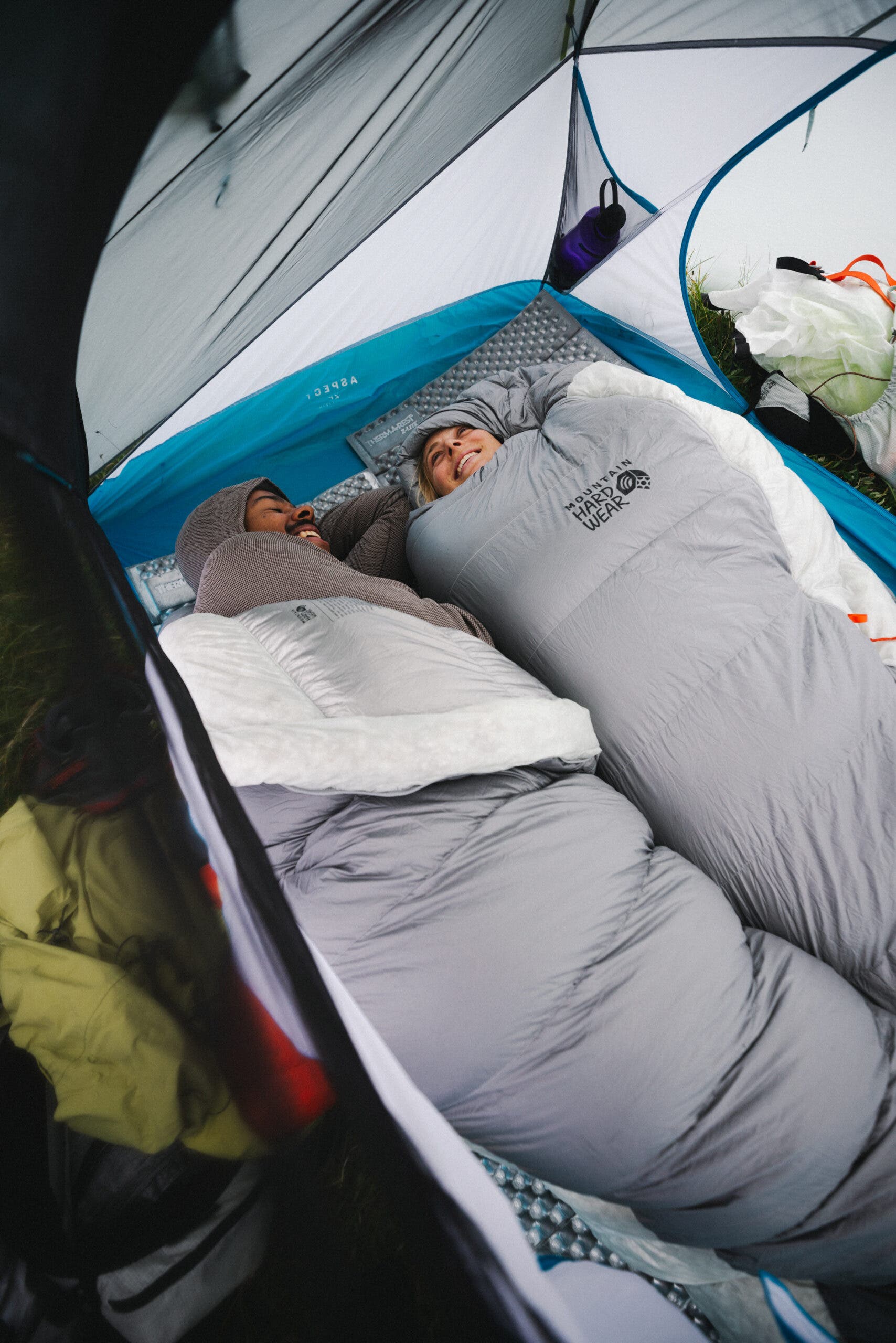
A sleeping bag has fewer moving parts than a pack, so if you want to make a meaningful UL difference, you have to obsess over the details. We started with our Phantom and asked, “Where is this bag wasting warmth or weight?” The answer guided us to streamline the pattern, remove seams, and improve warmth around the sides and top.
Then we added the secret sauce: Radiant Recovery, a metallic-finish fabric that reflects body heat back toward you to help prevent heat loss without adding bulk. Through extensive testing, we developed a mapped, layered baffle construction to maximize thermal efficiency—doubling insulation where it matters most.
By combining this design with high-loft 950-fill down and a hydrophobic treatment, we deliver exceptional warmth with less overall weight. The result is the Ghoul: our lightest, most compressible sleeping bag yet.
Where else can backpackers cut weight?
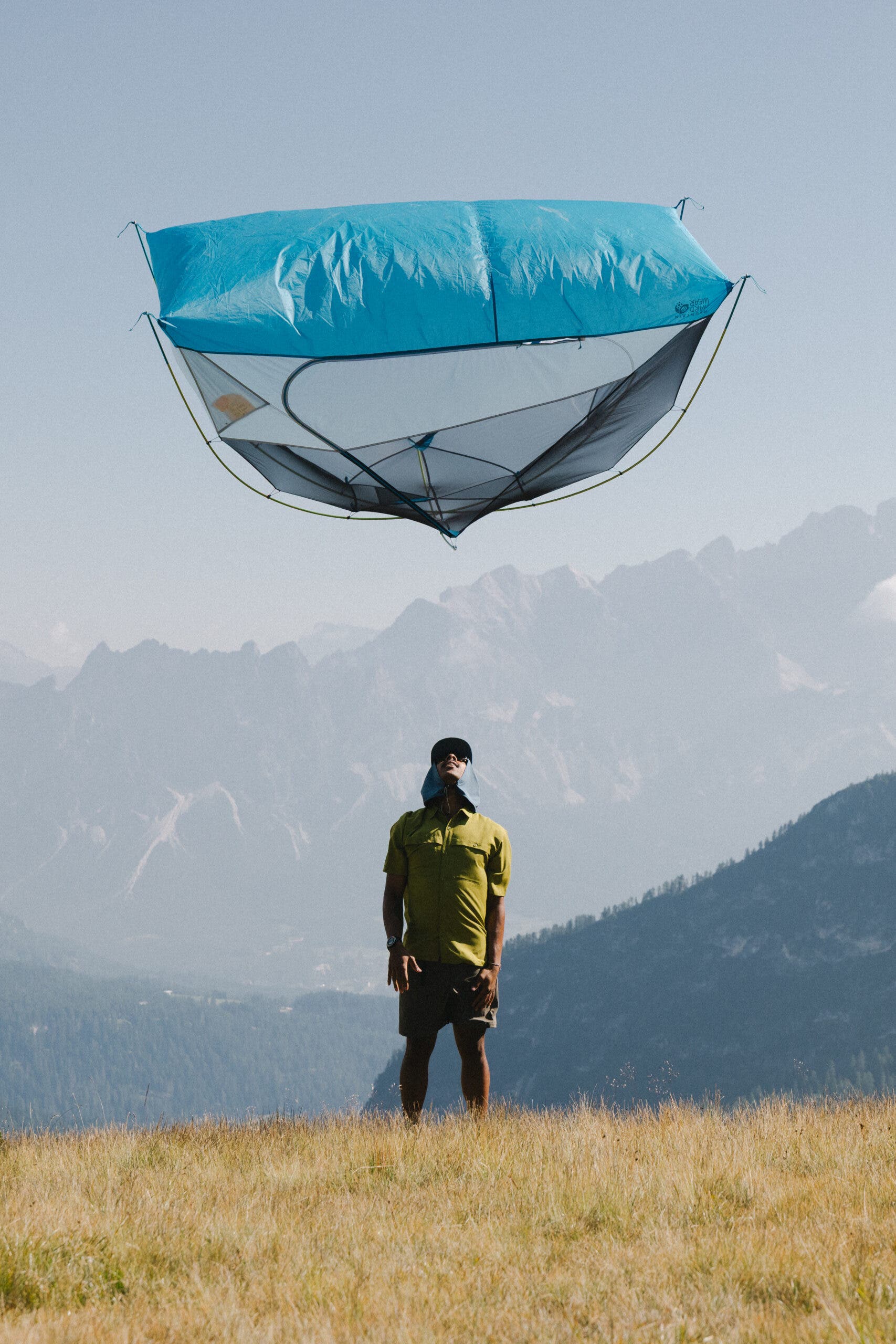
After your pack and sleep system, weigh out your shelter and layers. A lightweight tent can remove pounds fast—Nimbus UL 1 and Nimbus UL 2 have streamlined features with freestanding, double-wall comfort. And honestly, seeing Nimbus get rave reviews helped motivate us to think bigger and build a more complete ultralight trail kit around it.
On the apparel side, the Cloud Cipher Rain Jacket is a spring backpacking necessity. The lightweight, ultrapackable three-layer design, built with our new Dryspell Standard, protects against moisture and wind.
Beyond that, look for any excess weight in the small things, like overbuilt cook kits, extra stuff sacks, or duplicate layers. The best ultralight approach isn’t about suffering for grams; it’s about choosing versatile gear and building a system where everything works together.
What trails are you excited to go ultralight on this summer?
I still love a good ultralight mission, but getting out for long miles is harder these days with a one- and four-year-old. I’m excited to start bringing them out on mellow overnighters and snack-distance adventures. This summer, I’m aiming for steep day loops when I can and family-friendly trips when I can’t—either way, I’m excited to keep the kit in motion.
Mountain Hardwear was founded in 1993 and is based in Richmond, California. We exist to encourage and equip people to seek a wilder path in life. For 30 years, we’ve built essential equipment for climbers, mountaineers, and outdoor athletes and have supported expeditions on the world’s highest peaks. Relentless precision continues to inspire everything we do—our designers sweat every stitch and detail to continuously improve function, durability, and comfort.
