

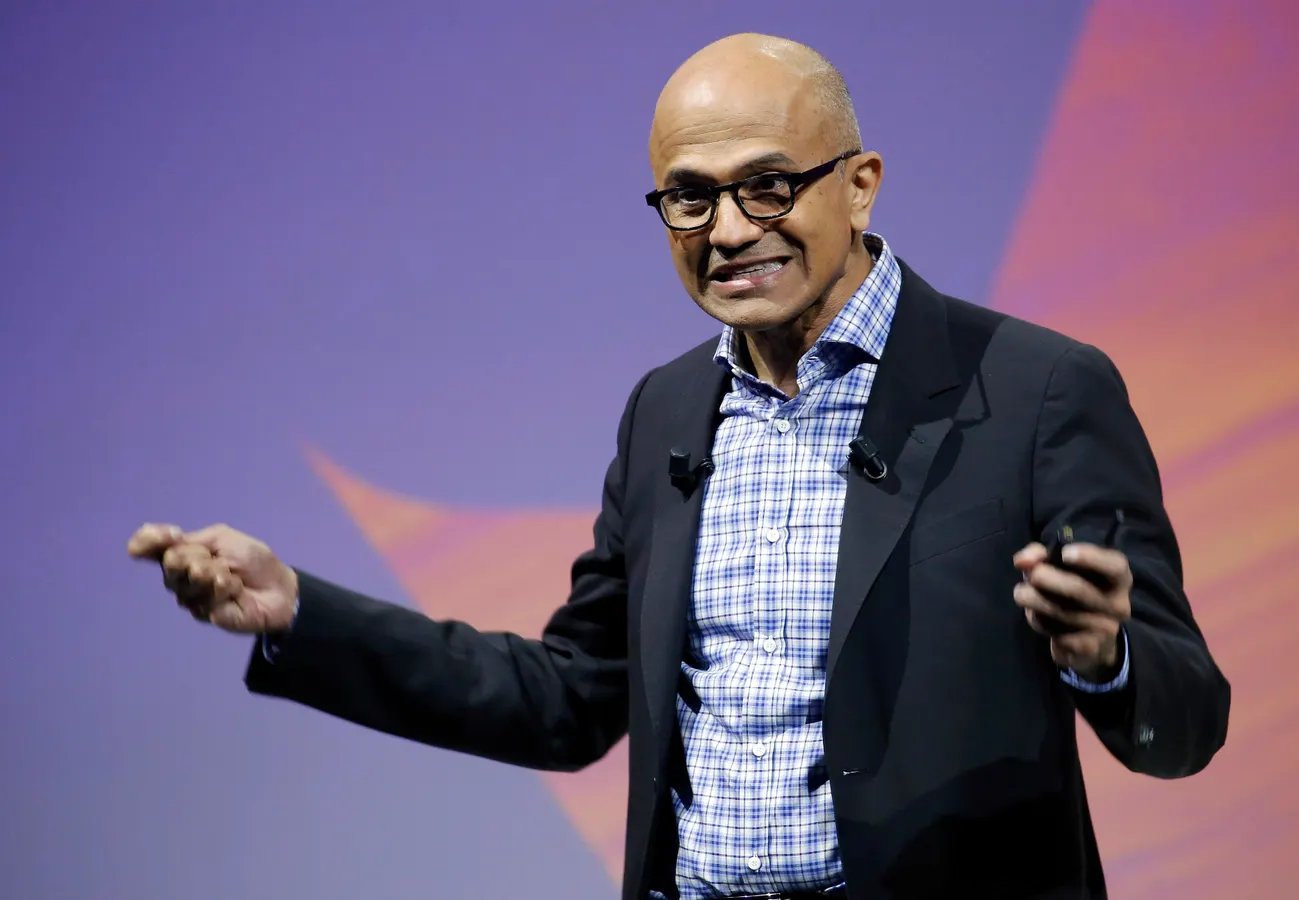
Nadella argues that a learning loop is more powerful than an LLM. (Photo by Chesnot/Getty Images)
Getty Images
Microsoft CEO Satya Nadella just articulated something most enterprises miss about their own AI future: the real competition isn’t which model you pick. It’s whether your organization learns from what it builds.
Here’s the concept.
A learning loop is a system that gets better every time it’s used, not because you upgraded the software, but because the system captured what happened, learned from it, and improved.
Think of a surgeon. Her first surgeries take eight hours each. By surgery 500, four hours. She didn’t get a new brain; her brain learned patterns, optimized movements, anticipated complications. The knowledge stayed in the system.
Most enterprise AI doesn’t work that way.
You deploy Claude or ChatGPT in a workflow. It answers questions. But tomorrow, when you ask the same thing slightly differently, it remembers nothing about your business.
You have access to a smarter general model. That’s a tool, not a learning loop.
The difference in humans in the loop vs the learning loop.
Sandy Carter
Why Microsoft Says Human In The Loop Falls Short
For two years, enterprises have been told the answer is “human in the loop.” Someone approves the AI’s output.
A compliance officer checks it. A manager says yes or no. But human approval is a checkpoint, not learning. The factory doesn’t improve; you just hired someone expensive to stand at the end of the line rejecting bad products. You’re paying for quality control, not competitive advantage.
Nadella’s point is different. What if, instead of checking AI output, your organization captured every interaction, every correction, every outcome, and fed it back so the system got better at your business specifically? That’s a learning loop.
How A Learning Loop Actually Works
Picture a sales team whose AI agent drafts proposals. Without a learning loop, the AI drafts 100 proposals and reps edit 80 of them, because it missed your pricing model or your customers’ real pain points. Next month, same problem. The AI has no institutional memory.
With a learning loop, the system captures every edit. Why did Sarah change the bundle? What objection does Tom always address first? After 500 proposals, the system has learned your company’s actual sales logic, not generic patterns. Proposal 501 needs fewer edits. Proposal 1,000 barely needs any. You’ve built proprietary intellectual property competitors can’t download from anyone’s website.
Microsoft’s Argument That Learning Loops Create Moat
This is why Nadella wrote his X memo. Don’t compete on model selection, he argues; everyone has Claude, GPT, and Gemini. Compete on learning loops that encode your judgment, workflows, and expertise into AI that improves with use. He reinforces this with a warning against “token-maxing,” the reflex to throw the most powerful model at every task. The advantage comes from the system wrapped around the model, not the model’s raw horsepower.
Microsoft’s stake is clear. It wants enterprises building those loops on Azure: fine-tuning there, storing proprietary data there, investing effort that makes switching expensive. The framing conveniently shifts the conversation from “who has the best model” (where Microsoft depends on partners like OpenAI) to “who built the smartest system” (where Microsoft sells the infrastructure).
Where Microsoft’s Rivals Disagree
Not everyone buys the learning-loop thesis.
OpenAI supports the broadest fine-tuning methods today, yet its larger bet is simpler: keep making the base model so good you don’t need elaborate loops. Just write better prompts. Faster to deploy, less governance headache.
Anthropic leans on Projects, retrieval workflows, and constitutional AI rather than broad fine-tuning; as of early 2026 its fine-tuning was limited to older Claude models. The bet is that enterprises value control, safety, and governance over retraining weights. (Note: The Fable LLM from Anthropic was just locked down.)
The open-source path, using LoRA and parameter-efficient fine-tuning on models like Llama, offers independence but hands you the operational burden of running and securing your own infrastructure.
And the pragmatists ask why build a learning loop at all when you can call an API, pay per token, and upgrade automatically with zero overhead.
The Catch-22 Microsoft Glosses Over
Building a real learning loop means solving three hard problems at once. Infrastructure: pipelines to capture training data from live usage, fine-tune on it, deploy the result, and monitor that you didn’t make things worse. Data governance: turning proprietary conversations and workflows into clean, compliant, machine-readable training data, where most teams spend weeks and discover the data was garbage. Discipline: continuous evaluation to confirm the model actually improved on your outcomes rather than memorizing your data. Enterprise consultant Kumar Gauraw has documented the pattern repeatedly: teams rush to fine-tune, rent expensive GPUs, and discover a better-written prompt would have solved it in an afternoon.
Regulation complicates it further. Anthropic’s Dario Amodei recently proposed FAA-style oversight of frontier models, with independent audits before deployment. That’s manageable for OpenAI or Google with their compliance teams; it’s harder for a mid-market enterprise running continuous fine-tuning on proprietary data. The burden may favor centralized labs over distributed enterprise loops.
Why Microsoft’s Bet Is Still Worth Watching
Despite the catch-22, Nadella’s core insight holds: companies that build proprietary learning loops early gain an advantage that’s hard to replicate.
Not because the technology is magic, but because the loop encodes institutional knowledge into systems that improve with each use. That’s building an asset, not buying access to a smarter model.
The real question isn’t whether learning loops work. It’s whether your organization can afford the infrastructure, the governance, and the discipline to build one, or whether you’re better off waiting for models to get so capable that loops become unnecessary.
That’s a strategic choice about what kind of company you want to be. Nadella thinks the answer is obvious. But he’s arguing for a Microsoft-friendly vision, not a universal enterprise truth.
