

Published June 16, 2026 03:09PM
The journey to The Caverns is a bumpy one, down a narrow two-lane country road in the tiny town (population 704) of Pelham, Tennessee. As I cruise by acres of farmland and the occasional house, it feels more and more incongruous that my destination is a world-famous concert hall. But this venue—located underground inside a naturally formed cave—is a geologic wonder that could only exist here. Named 2025’s Theater of the Year by the Academy of Country Music, the rural setting is part of the entire experience of seeing a performance at The Caverns.
After parking in a gravel lot, my trip continues on a well-trod path that runs alongside a field with sweeping views of the Cumberland Plateau, a forested highland which looks golden in the dusk. I’d love to unfurl a blanket in the grass and watch the sun set, but there’s a show to catch, so I forge ahead. The footpath turns to concrete and leads to a wooded area with an amphitheater, crowds milling around food trucks and a few outdoor bars, and glowing string lights overhead. I follow a stream of people until I finally see Big Mouth Cave, also known as The Caverns. As I walk inside, I look up and notice trees growing straight out of the top of the wide, arched limestone entrance, reminding me that, yep, I’m going underground.
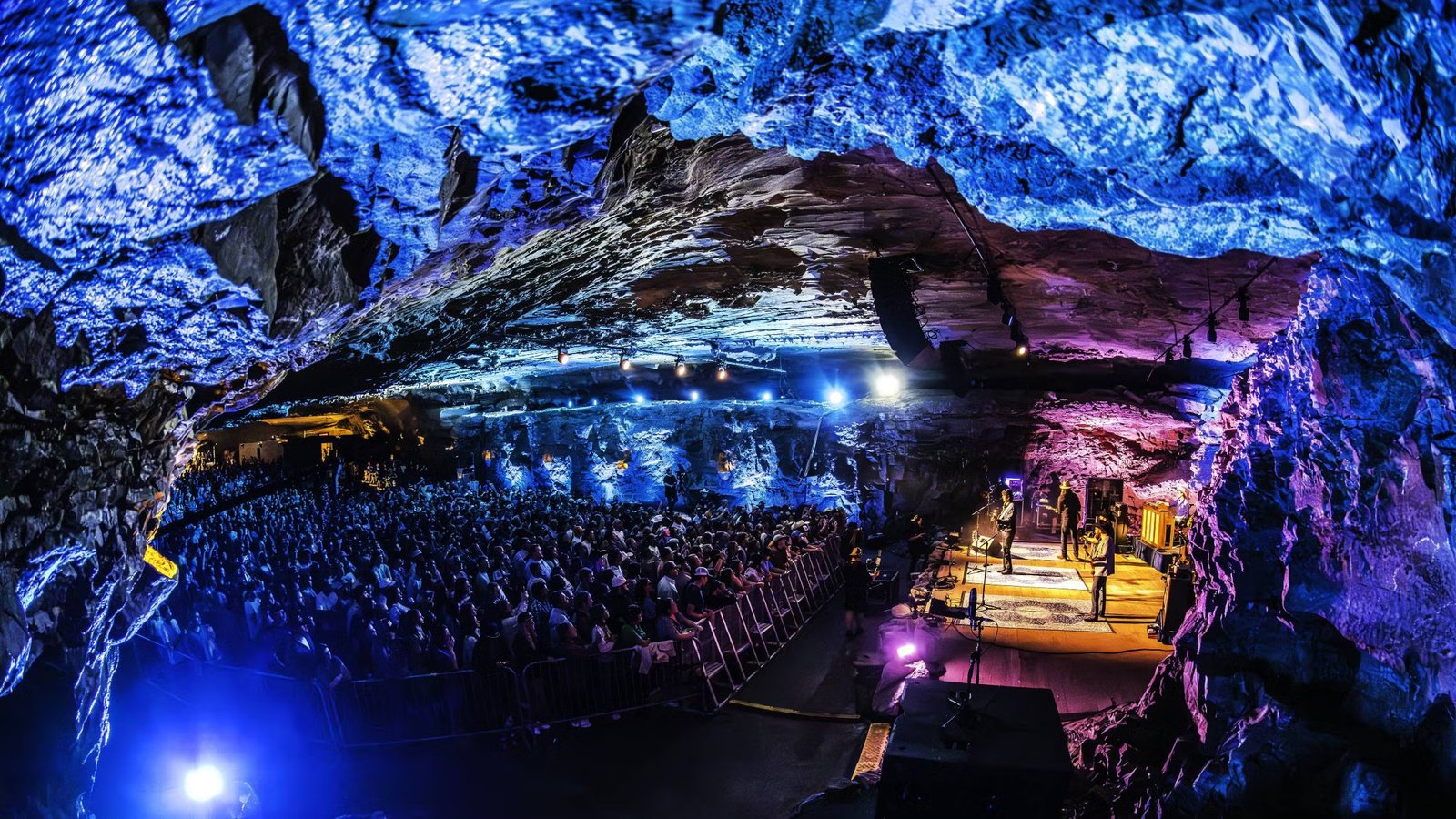
I’ve been on a few cave tours, and I’ve come away thinking stalactites are cool and all, but I’m not a fan of tight spaces. So I was surprised (and relieved) that the main concert hall is wide enough to fit 1,200 people standing or 850 seated, with a gently sloping concrete floor leading down to the stage. It has everything you would find in a traditional venue: bathrooms, a merch area, multiple bars, and even its own beer, Caverns Limestone Lager, from local brewery Common John Brewing Co.
I’m here, in mid-May, to see country rock band 49 Winchester, and when they finally take the stage, the sound is almost overwhelming as it bounces off the limestone walls. Colored lights flash and illuminate the cave’s ridges and crevices. I feel enveloped by the performance—and a little giddy. I’m underground! Seeing a concert!
“Often, after an artist’s first song, they’ll shout out to the audience something along the lines of, ‘I can’t believe we’re playing inside a cave!’ It’s a bit of a reminder that the artist, just like the audience, is having a very unique subterranean experience, too,” Jeff Meltesen, the venue’s marketing director, tells Outside. “Being underground together creates a connection between musicians and audiences that contributes to the energy of the night.”
Meltesen says the light and sound systems are adapted to play off the natural shape and acoustics of the space. “The Caverns uses a modern sound and lighting package similar to what you’d find in many professional music venues, but what sets it apart is how it’s used within the cave environment,” he explains. “The sound system is dialed in specifically for the cave’s unique reverberation, while the lighting design highlights the stage and allows our lighting director to showcase the natural formations throughout the space.”
The one thing that’s missing: a backstage space. When it’s showtime, artists—who have included The Flaming Lips, Brandi Carlile, “Weird Al” Yankovic, and Los Lobos—walk down an aisle past the excited crowd in what has become a signature moment. “If you’re in the right place at the right time, your favorite artist will walk right past you on their way to the stage. For me, that shared path into the cave puts everyone on the same level,” Meltesen says.
Todd Mayo, the owner and visionary behind The Caverns, first experienced the magic of cave concerts through a radio program he launched in 2008 called Bluegrass Underground. Held inside Cumberland Caverns in nearby McMinnville, it became a nationally syndicated television series on PBS a few years later. Over time, the show outgrew its home, and Mayo decided to strike out and find a cave of his own.
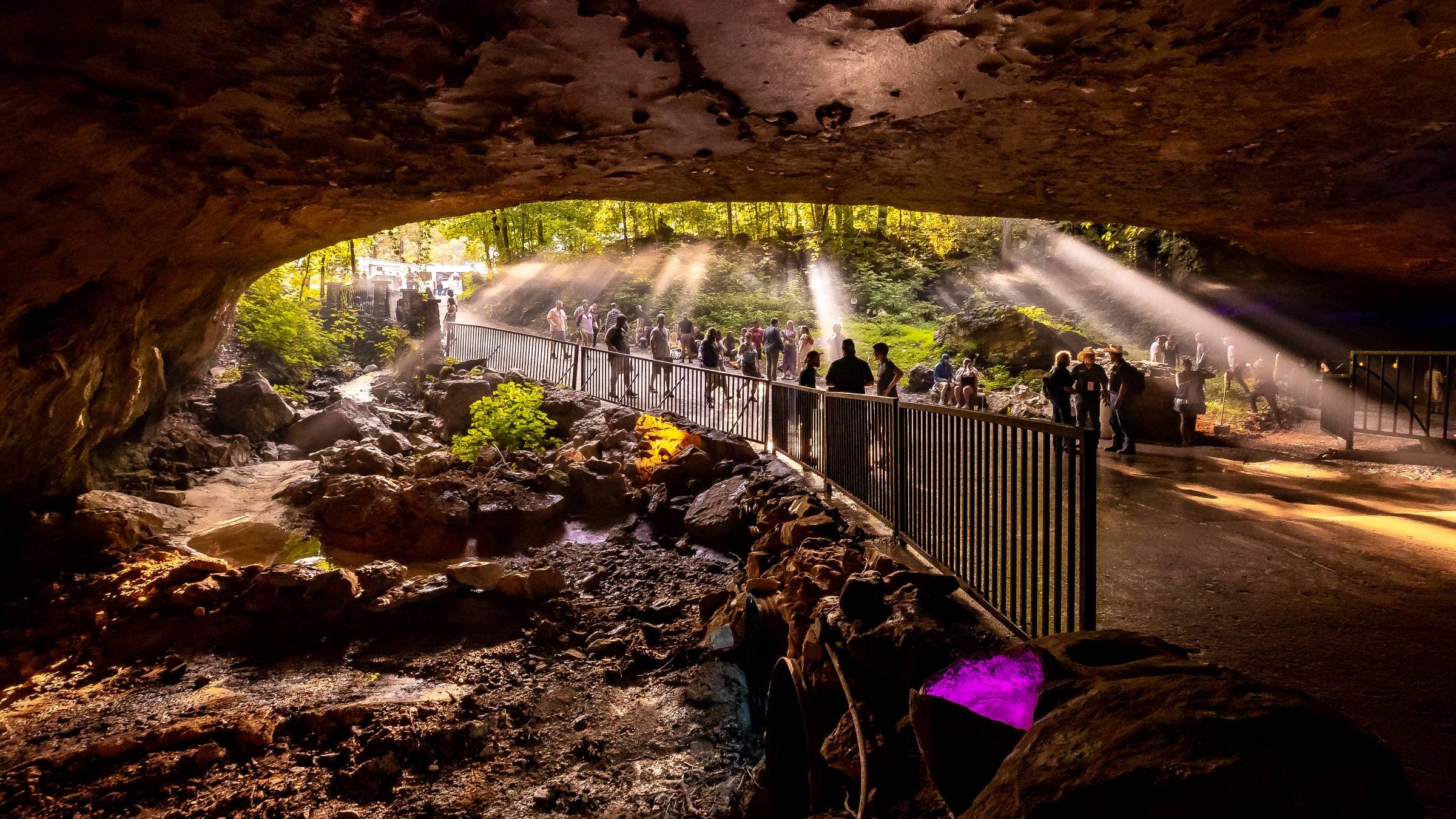
There are an estimated 10,000 caves in Tennessee, but finding one large enough to become a concert hall—and that was available to buy—was a little like trying to find a rent-controlled apartment in Manhattan. Miraculously, Mayo eventually landed the perfect spot: Big Mouth Cave had an interior the length of three football fields, a sound structure, and owners who were willing to accept an offer.
It took two years and a large team, including geologists, archeologists, and biologists, to responsibly transform the cave into The Caverns. “It was excavated and outfitted with a drainage system beneath a concrete floor, along with a stage, lighting, and a professional sound system tuned specifically for the space, plus bathrooms and concessions,” Meltesen says. “Construction took longer than you might expect. Our team worked meticulously to preserve the natural cave features for the local ecosystem and the aesthetics for future guests.” In 2018, bluegrass musician Billy Strings was the first to take the stage when the venue officially opened. The PBS series, now called The Caverns Sessions, has continued and maintains an archive of past performances available online.
The Caverns has not only benefited music lovers. According to a local economic impact report, the venue has generated $88 million in visitor spending and 146 jobs since it opened eight years ago. When venues closed during the pandemic, Mayo and his team built an amphitheater on the property to hold outdoor concerts for up to 6,000 people. In 2022, they launched an annual festival called CaveFest with music above and below ground, plus craft vendors, cave yoga, and other activities. There are yurts, cabins, and an on-site campground for out-of-towners who want to stay during CaveFest, or after any other concert.
The surrounding area offers a wealth of scenic places to visit above ground, so it’s easy to turn a concert into a weekend trip exploring Middle Tennessee. Here are a few standout spots to check out if you’re in town for a show.
What to See and Do Near The Caverns
Fiery Gizzard State Park
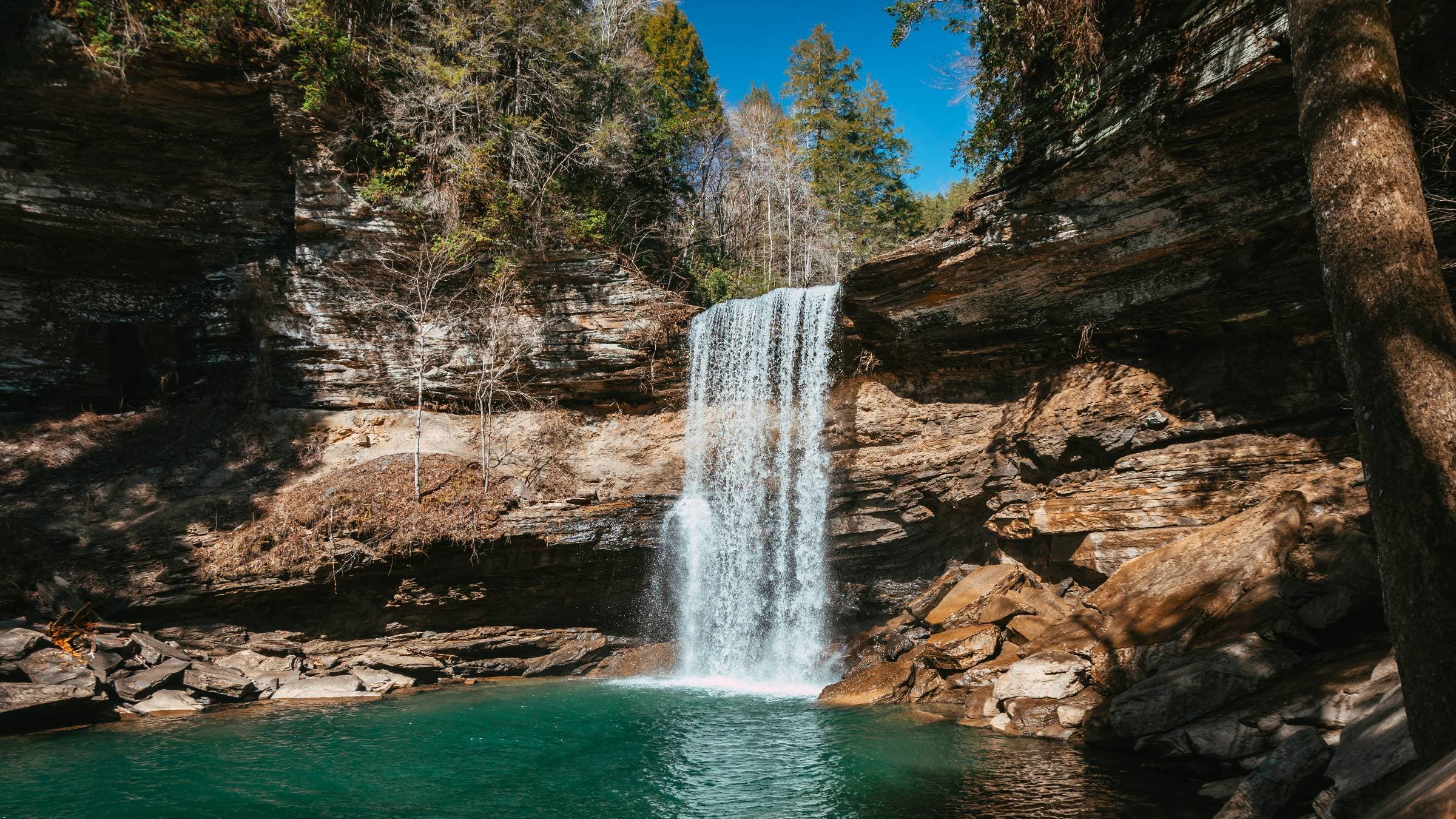
Once part of South Cumberland State Park, this area was designated as a state park in 2025. It’s best known for the rugged 12.5-mile Fiery Gizzard Trail, which rewards backpackers with waterfalls (including one at 60 feet), swimming holes, and dramatic overlooks. Foster Falls is a national destination for rock climbing, with more than 150 routes for climbers of all skill levels. Denny Cove is another popular climbing spot.
Savage Gulf State Park
This park has some of the prettiest vistas in the state and hikes for all activity levels. The Stone Door Trail is less than a mile long, but it’s a memorable one: hikers descend natural stone steps to the trail’s namesake ten-foot-wide stone crevice, which leads to breathtaking views of the gulf (canyon) below. Less trafficked, but equally beautiful, are the North and South Rim Trails, which have a combined 18 overlooks.
The Domain
The University of the South, commonly known as Sewanee, is a small liberal arts college with a very large footprint—13,000 acres, to be exact. Called The Domain, the heavily forested area has 65 miles of trails for hiking, biking, and horseback riding. I took a peaceful Sunday morning stroll around the main campus, which is considered one of the most picturesque schools in the country for its Gothic Revival architecture and old-growth trees.
Cumberland Caverns
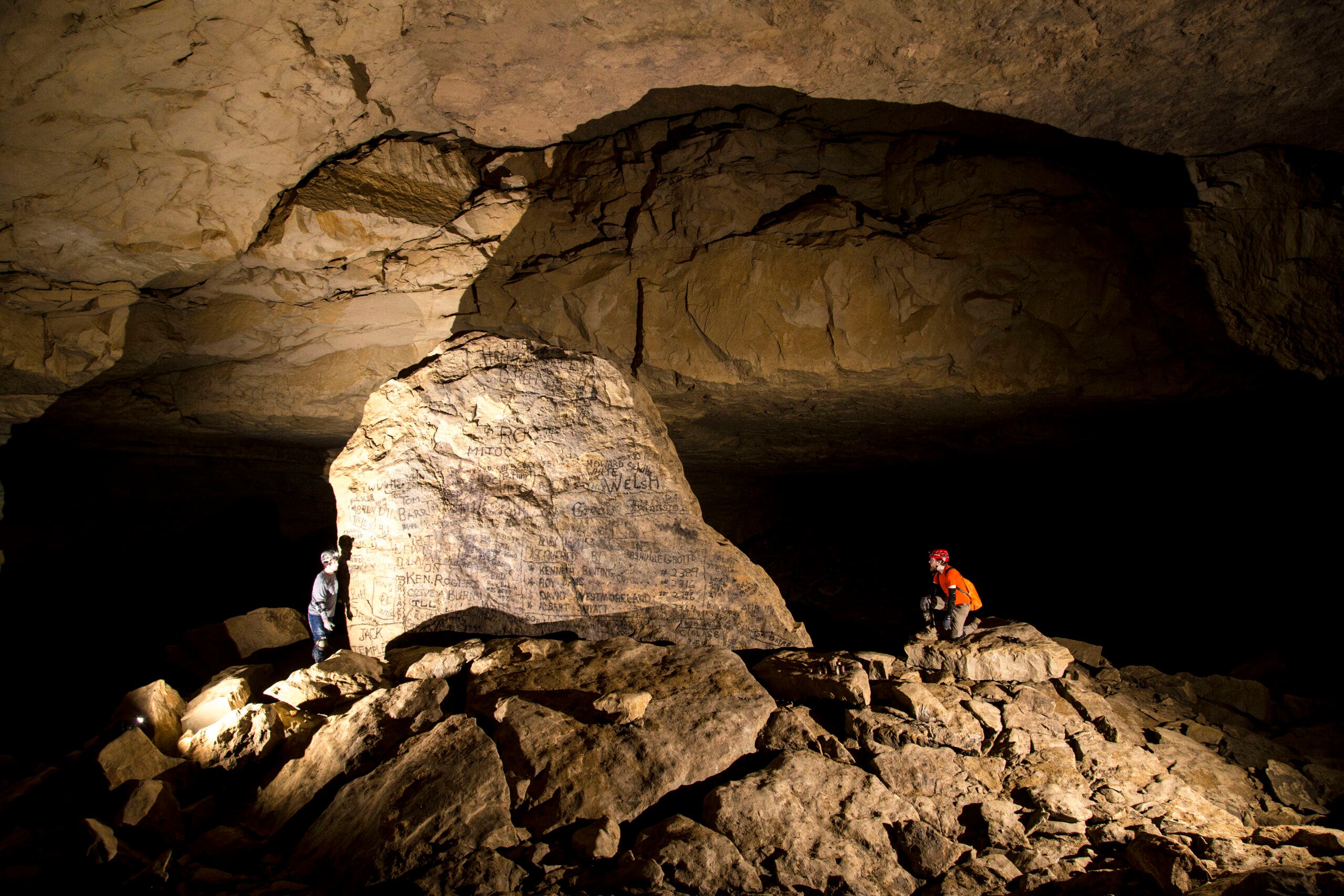
If you haven’t had your fill of subterranean spaces, explore this Middle Tennessee landmark. With 27 miles of passageways, Cumberland Caverns is the longest show cave (one that has been made accessible to the public) in the state. Inside, you’ll see pools, waterfalls, minerals, and a variety of speleothems (formations like stalagmites and stalactites). Several walking tours are available, as well as adventure tours, which involve climbing and crawling. If spending the night underground is on your bucket list, you can do that here, too.
Adventures Further Afield
Located in the village of Leiper’s Fork, about an hour and a half west of The Caverns, Fisher’s Off-Road is a family-run company that offers visitors the exhilarating chance to explore Tennessee backroads in Can-Am Commander and Defender side-by-side vehicles. While I’m way too nervous to get behind the wheel, I loved traversing the rocky dirt roads and water crossings as a passenger, and hearing stories about the area’s bootlegging past from our expert guide.
The Natchez Trace Parkway is one of the most picturesque drives in the country, but like me, you’ll find yourself pulling over quite a bit. The 444-mile road has about 100 well-marked historic sites, trails, waterfalls, and campgrounds. Two highlights for me were hiking a heavily forested trail along a peaceful stream at Devil’s Backbone State Park, and visiting Jackson Falls, where a short but steep walk down a paved path led me to the base of a beautiful cascade surrounded by high, curved rock walls. Both are about two hours from The Caverns.
Lisa Cericola is a Birmingham, Alabama-based freelance journalist who covers food, culture, and outdoor experiences throughout the South. She is the former deputy editor at Southern Living, where she ran the brand’s food and travel departments, and her work has also appeared in Garden & Gun, USA Today, and Southbound, among others.
