

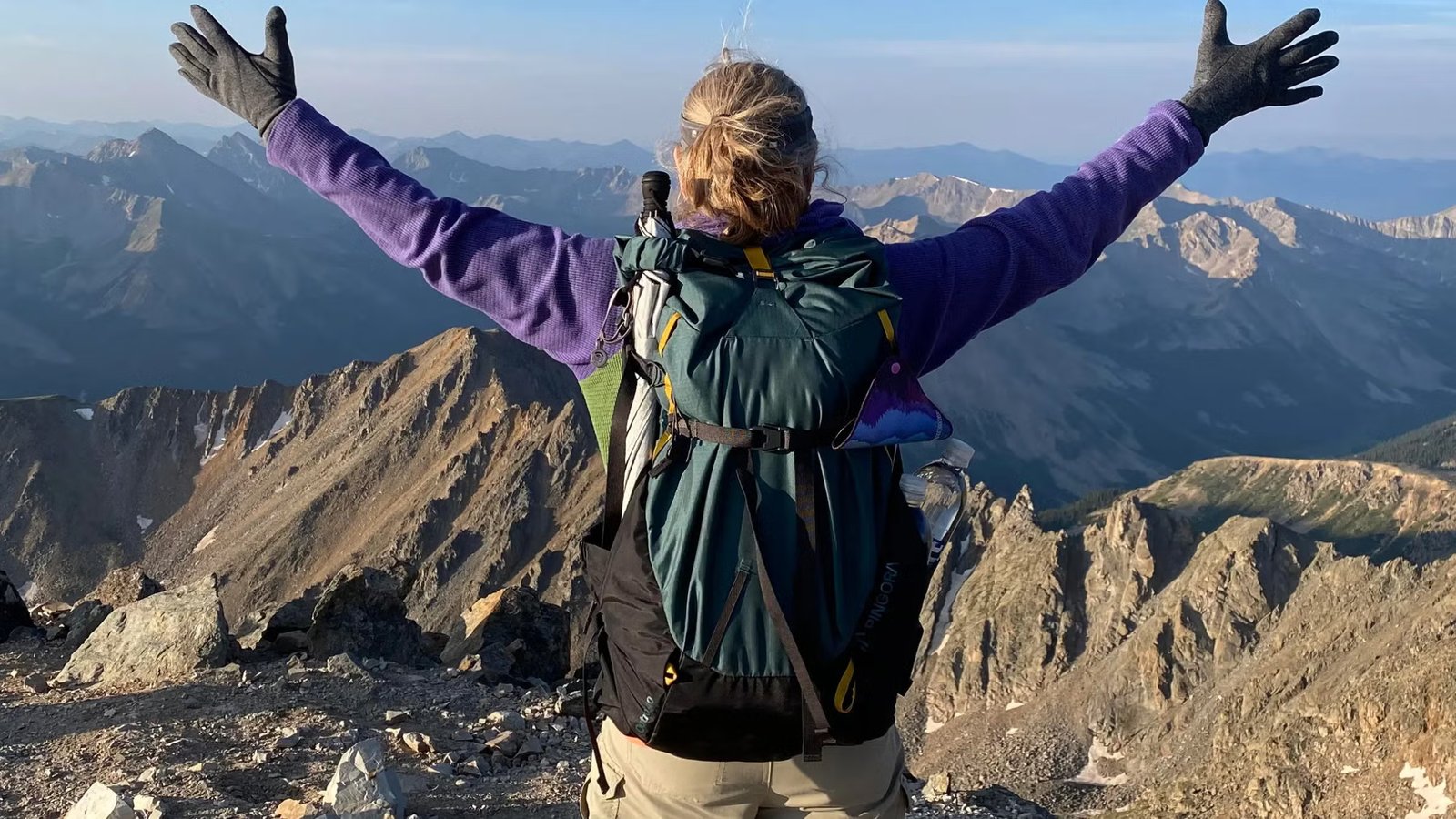
We hauled heavy loads through Alaska’s Chugach and the Italian Dolomites to find the best backpacking packs at every price point—budget, mid-range, and premium included.
Our team logged months of trail miles across the globe to find the best backpacking packs for every budget, from sub-$250 haulers to premium expedition bags. (Photo: Robin Mino)
Published June 17, 2026 04:02AM
A backpacking pack has one seemingly simple job: carry everything you need without making you feel miserable. But when it comes down to it, that task is surprisingly complicated. The right pack can make a 15-mile day feel manageable; the wrong one can leave you counting down every step to camp.
Luckily, today’s backpacking packs are lighter, more adjustable, and more comfortable under a load, with thoughtful storage systems that keep essentials close. After months of testing on trails across the world, we found the best models for a variety of budgets, from $230 to $420.
Best Backpacking Packs: At a Glance
Best Budget Backpacking Pack: Pingora Outro 55
Pros and Cons
+ Customizable fit
+ Good durability
– Shoulder harness was too wide for some testers
– Not water-resistant
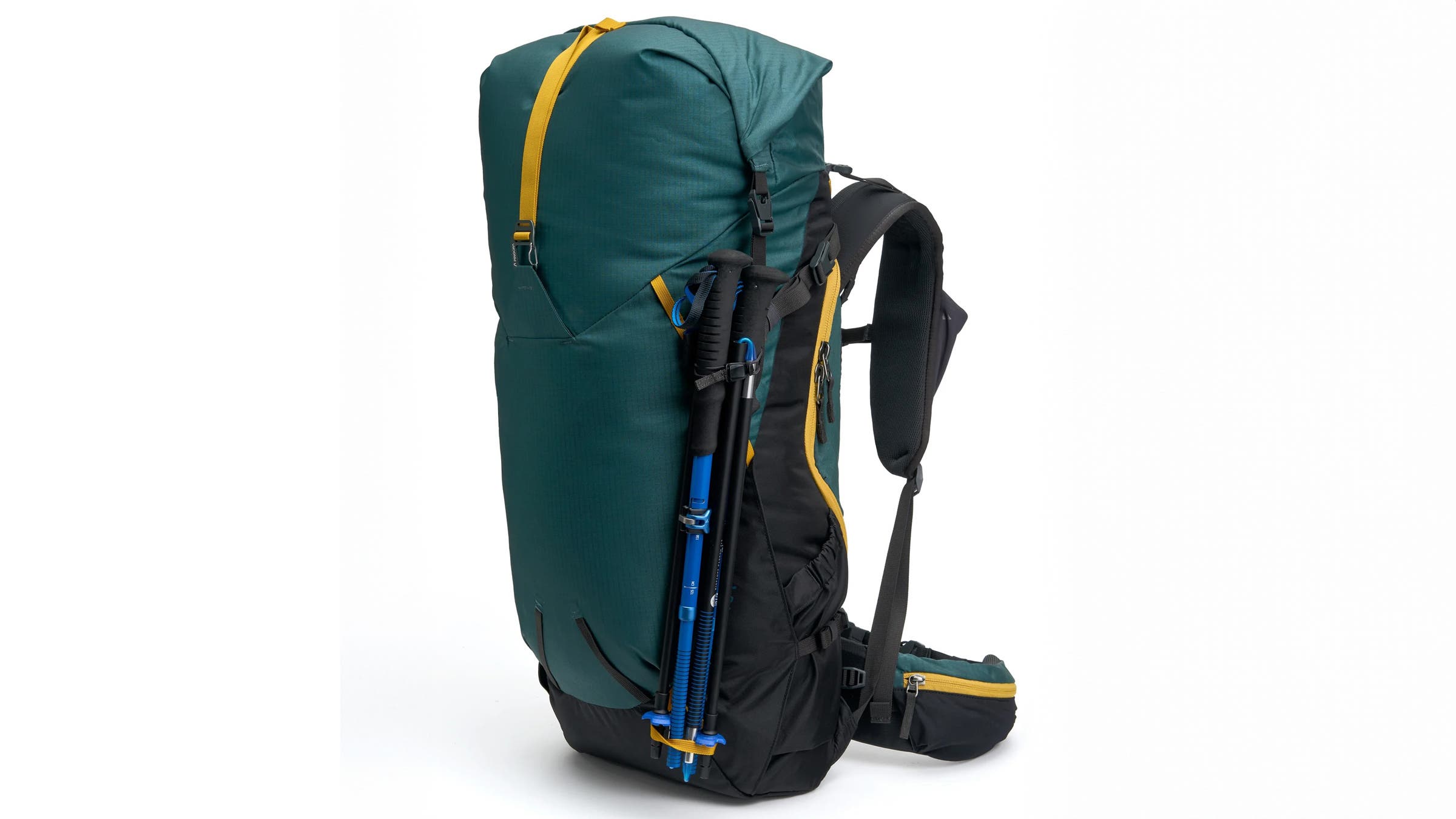
For being on the lower end of the price spectrum, the Pingora Outro 55 doesn’t sacrifice on modular features. Testers call it a “chameleon of a bag” for seamlessly transitioning between bushwacking and alpine scrambling—as well as any other type of hike.
Two side pockets each hold a reusable water bottle, though testers found them easier to access than to re-stow on the move. A zippered interior divider separates camp gear from trail essentials, while the optional three-liter lid converts into a summit pack for side quests. Four chest pockets, two hipbelt pockets, and multiple attachment points for trekking poles or an ice axe kept frequently used gear close at hand during testing in Rocky Mountain National Park.
What sets the Outro apart, especially for its price, is its fit system. Unlike many adjustable packs that compromise comfort for sizing range, the Outro preserves its shoulder-harness geometry regardless of torso length. Pingora accomplishes this with an adjustment mechanism at the base of the backpanel, which maintains an effective load-lifter angle across sizes. Buyers can also customize hipbelt size and choose whether to include the lid. That said, some women and testers with narrow shoulders found the harness too wide.
The pack’s 420-denier nylon body (210-denier on the roll-top) proved durable during off-trail travel and bushwhacks. Water resistance was less impressive, however, with some testers reporting damp gear after prolonged Alaskan downpours—expected for the price point.
Best Mid-Range Backpacking Pack: Gregory Paragon 60/Maven 58
Pros and Cons
+ Sway-free carry
+ Decent breathability
+ Recycled fabric
– No rain cover
– Not the most durable
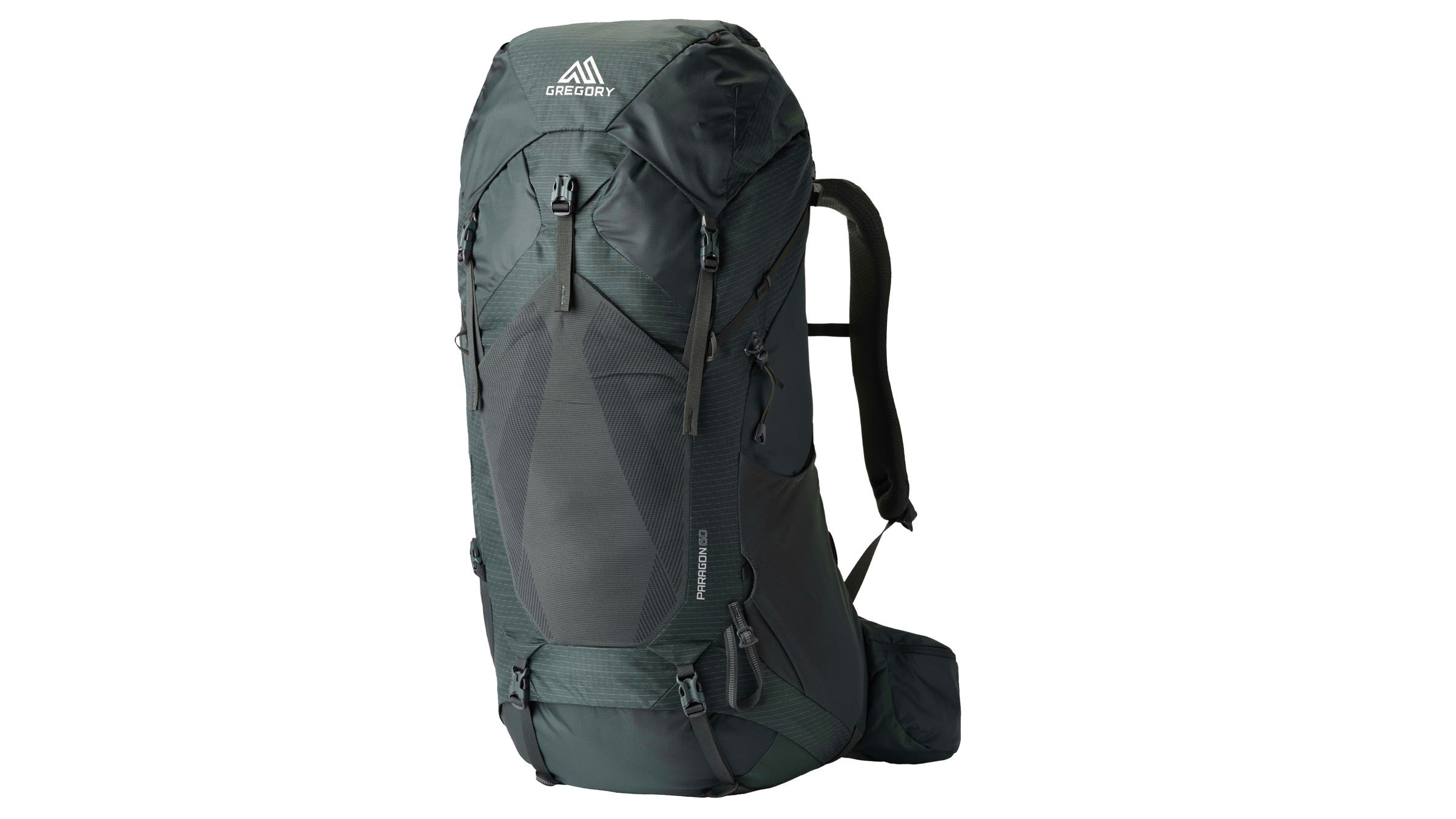
Named the best overall backpacking pack by Backpacker this year, the Gregory Paragon 60/Maven 58 is comfortable, adjustable, organizationally endowed, and highly effective at distributing weight.
The biggest upgrade since the previous version is comfort. A seamless, EVA-padded wraparound harness hugged testers’ hips without creating hot spots, while a steel perimeter frame carried loads up to 40 pounds comfortably on Mount Rainier. Gregory also replaced the old back panel with a foam-free, honeycombed mesh suspension that delivered noticeably better airflow. Even during a 5,000-foot descent in 70-degree temperatures, testers stayed surprisingly dry.
During bushwhacks in Idaho’s Panhandle National Forest, the pack remained stable through rough terrain thanks to a floating hipbelt that minimized sway. “It stayed secure even when I was crawling on my hands and knees under deadfall,” reported one tester.
Organization also remains a strong suit. Hipbelt pockets fit most smartphones, a shoulder pocket stores sunglasses, and a full-length side zipper provides easy access to the main compartment. Testers also appreciated the roomy lid, stretch shove-it pocket, and redesigned side bottle pockets, which are easier to reach on the move.
The updated 40-percent-recycled nylon body fabric proved durable, though the reinforced boot picked up a few small punctures during a rocky ridge descent. Still, between the improved suspension, updated materials, and thoughtful feature refinements, the Gregory Paragon 60/Maven 58 is a meaningful evolution of an already excellent pack.
Best Splurge Backpacking Pack: Deuter Aircontact Pro 75+10
Pros and Cons
+ Zipper access to the main compartment
+ Included raincover
+ Excellent durability
– Some pockets are tough to get into
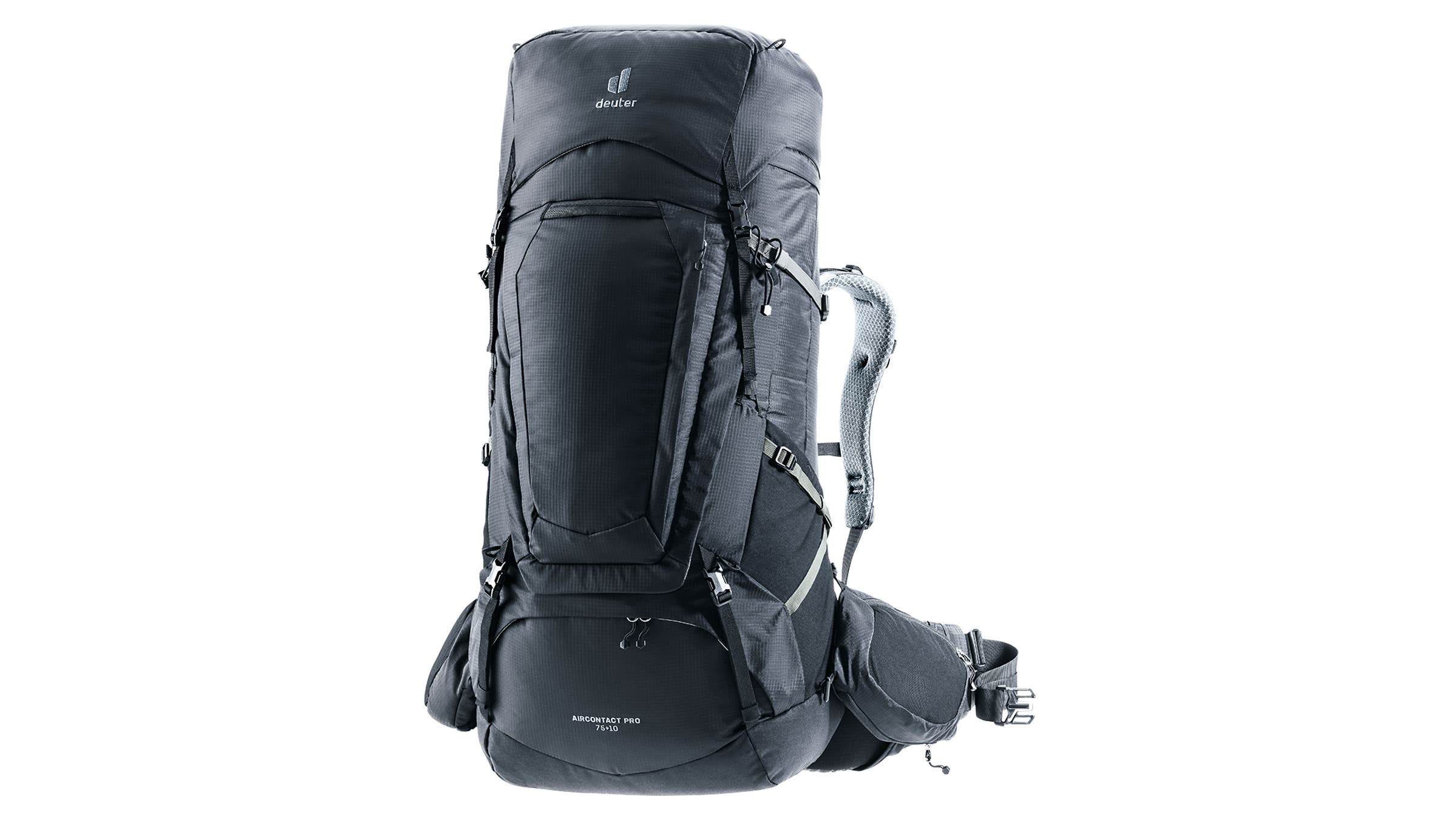
It’s no surprise that the biggest backpack is also the most expensive. Whether you’re hauling a bear canister, packing for a family trip, or preparing for a long water carry, the Deuter Aircontact Pro 75+10 is built to handle serious loads.
The pack starts at 75 liters (65 liters for the women’s-specific SL version), with an extendable collar that adds another 10 liters when needed. At 6.4 pounds, it’s not light, but testers found it carried weight exceptionally well. During testing in Alaska, the cavernous main compartment swallowed everything from bulky camping gear to 60-pound loads. A Y-shaped internal frame and pivoting hipbelt transferred weight efficiently and kept the pack stable on steep, uneven terrain.
“Hiking out of Ship Lake in Alaska’s Chugach National Forest, there’s no trail and the slope goes up, up, up,” said one tester. “The Aircontact Pro 75+10 was comfortable and made the push out easy.”
Features include an easy-adjust backpanel, integrated raincover, side-access zipper, convertible lid, and multiple pockets. The durable ripstop nylon body also held up well to off-trail travel. Some testers found the pocket layout cumbersome when the pack was fully loaded, but for hauling large loads in comfort, few packs do it better—making the Deuter Aircontact Pro 75+ 10 a backpack worth splurging on.
