

Published June 18, 2026 11:07AM
Amid a historically large June swell along the California coast, at least three people have drowned, and another 100 have been rescued. Now, officials are urging beachgoers to use more caution.
With National Weather Service (NWS) beach hazard advisories in effect for parts of California through the weekend, Outside spoke with a long-time water rescue expert for more on how beachgoers can stay safe at a time when the ocean is especially dangerous.
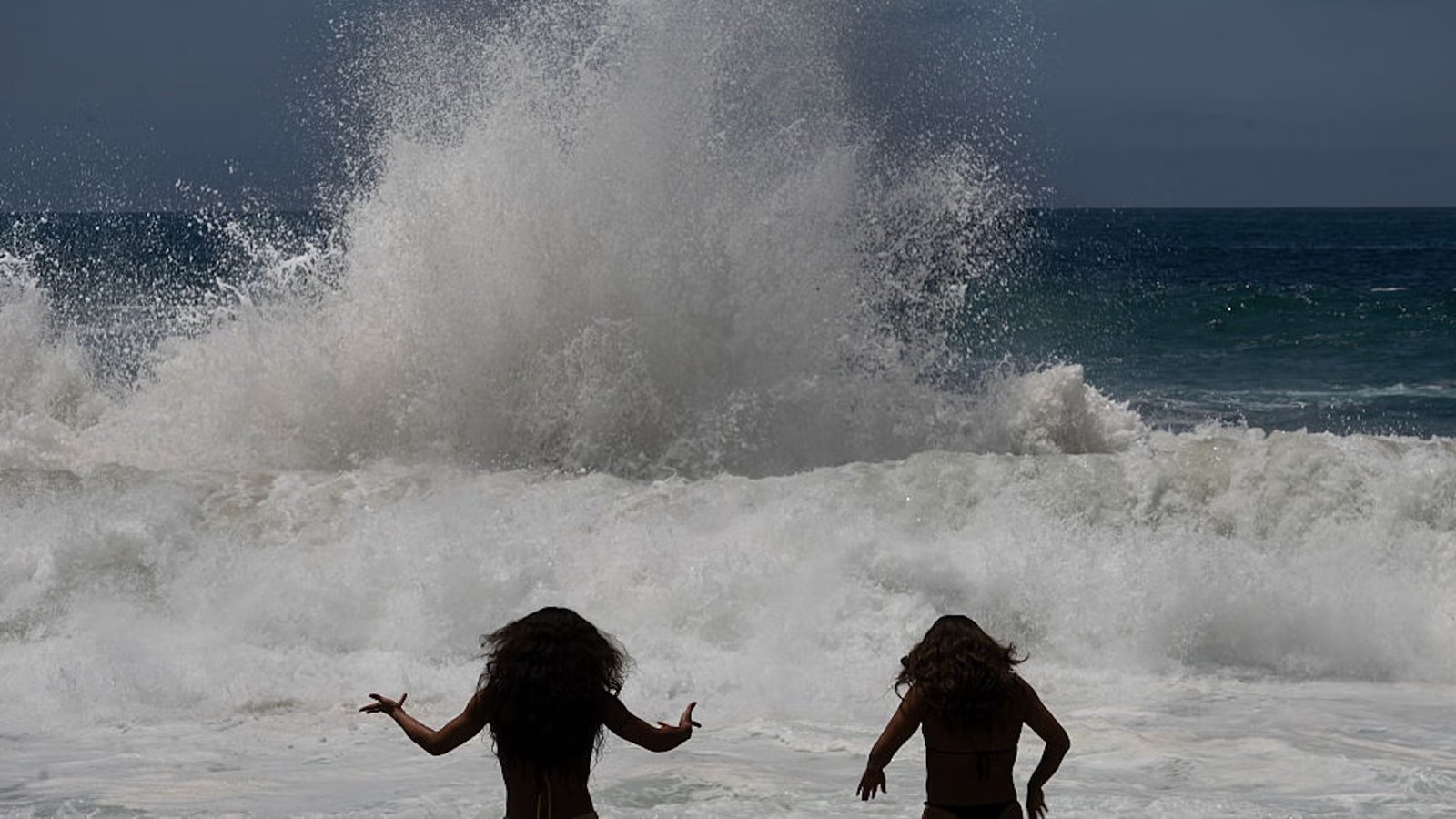
A historic swell hit the Golden State last week, with high tides and waves upwards of 20 feet tall battering the coast from Los Angeles to San Francisco. High surf in the region can hurt or even sweep away inexperienced swimmers, creating rip currents that drag people away from shore.
Ryan Peters, division chief and a ten-year member of the water rescue team at the Central Fire District of Santa Cruz County, told Outside that dangerous swell conditions can mean the difference between life and death.
“Over the last few days, we’ve had close to a dozen calls for rescues and safety checks, assisting swimmers and surfers,” Peters said. It’s often not a single individual’s fitness that catalyzes a rescue, he added, but rather ocean conditions that can put people in trouble.
A five-year-old girl went missing off the coast of Laguna Beach on the evening of June 9, after a wave hit her and sucked her out to sea, the U.S. Coast Guard reported. The current also pulled the girl’s brother and mother into the water. Bystanders rescued both, but failed to find the girl. Rescuers searched for more than 30 hours and eventually found her body on the morning of June 11, about one-quarter of a mile from where she was initially swept into the ocean, according to the City of Laguna Beach.
On June 10, two young women at a beach just north of Santa Cruz also drowned after they were swept into the ocean by high surf. A few days later, on June 14, the Central Fire team saved two other swimmers trapped by a high tide at another beach near Santa Cruz.
“On many of these calls, we end up going out for one individual, like a surfer in distress, and we find that a lot of other people in the ocean at that time also need assistance getting into shore,” Peters said. “Those are the times where, operationally, we can count on not just one incident but multiple incidents.”
The Ocean Can Be Unpredictable Even For the Fittest Swimmer
Peters said his team is most commonly called out to rescue surfers, who are often physically fit, but may not “appreciate the significance of the conditions.”
“Even if they’re somewhat competent and strong in the water, people can get in trouble in those kinds of conditions,” he explained. “So go out with a buddy, let people know where you’re going ahead of time, and never turn your back on the ocean.”
Peters said that beachgoers are often swept into the ocean by waves while recreating in rocky or cliffside areas.
“People go down to some elevated point above the ocean, one that’s low enough to where it’s gonna be affected by high surf activity, to take a picture or something,” he said. “They turn their backs on the ocean, don’t appreciate the significance of the swell and the conditions, and a big wave comes up. It doesn’t take much to knock somebody off their feet, and if the surface is slippery, it’s really easy for people to get dragged into the water.”
How to Keep Children Safe at the Beach
Peters said that caretakers of children should ensure the kids are strong swimmers before taking them to the beach.
“Get kids comfortable in the water,” he said. “Get them doing swim lessons as early as possible. But also, don’t let them swim alone. Keep an eye on your kids at the beach, and if you’re taking kids to the beach, go to an area with lifeguards if you can.”
What About Rip Currents?
Peters said that, aside from waves knocking swimmers out to sea, many swimmers run into trouble when rip currents catch them. Rip currents are powerful, narrow channels of fast-moving water that flow from the shore straight back out to sea.
It’s not always easy to spot a rip current, and asking someone familiar with the area can help distinguish them.
“If you’re at a guarded beach, ask the lifeguard about rip currents,” he explained. “Some will be marked, and the lifeguards will usually know about rip currents in the area.”
If you do get caught in a rip current, don’t try to fight it, said Peters.
“You can’t outswim a rip current, even if you’re a strong swimmer,” he explained. “They will tire you out. The best thing is to stay calm, float if you can, get your breath, relax, and then start swimming parallel to shore.”
A swimmer should be able to determine when they are out of the rip current. “You just won’t be moving further out to sea,” Peters said. “At that point, you can start swimming into shore.”
For more on how to survive a rip tide, read, Everything You Know About Surviving Rip Currents Is Wrong.
How to Identify Dangerous Ocean Conditions
Before heading to the beach, three marine conditions can help determine whether the ocean may be particularly dangerous, according to Peters.
- Significant swell: The size of the waves. Major swells, like the one that hit California in recent days, are generated by distant storm systems.
- Short period: A shortened interval between waves. When waves hit back-to-back, swimmers have less time to recover or breathe between impacts.
- Building tide: A tide transitioning from low to high, which cuts off escape routes along cliff bases.
