

Published June 28, 2026 03:41AM
Chinese running shoes are having a moment. Poke around YouTube or Reddit, and you’ll find plenty of runners obsessing over brands with names like Do-Win and Dynafish, Li-Ning and Qiaodan. That’s because, at a time when Western brands’ everyday shoes can cost close to $200, Chinese brands offer incredible value. Despite runners’ fears about using relatively new and unfamiliar brands, some Chinese brands have top-tier midsole foams and above-average durability at a fraction of the price.
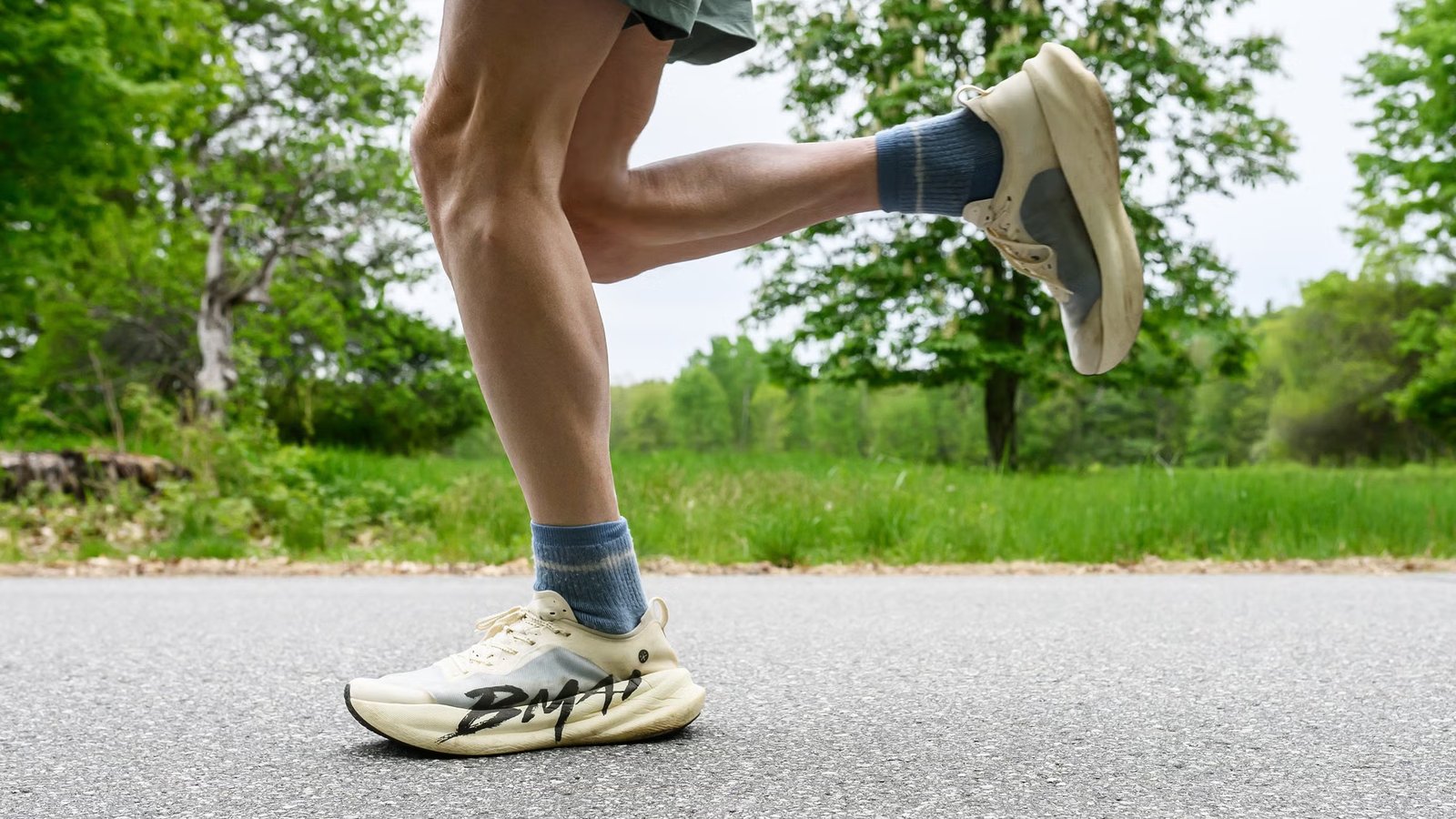
And this isn’t just online hype; I can give a true assessment after running almost exclusively in Chinese shoes since the beginning of the year. I’ve put in more than 1,000 miles in these models, at a wide variety of paces and distances, and on roads, trails, and track. The shoes I’ve run in are among the best I’ve owned in my 47 years of running. The hype is justified.
Unsurprisingly, there are some caveats involving cryptic (and sometimes inconsistent) specs, unfamiliar sizing, and wide delivery windows. The successful shoe shopper in this niche market needs to do more research on the front end of their purchase and exercise patience on the back end. Buying Chinese running shoes will usually take more time and effort than consumers spoiled by one-click shopping and two-day delivery.
In this article, I’ll explain why that is and how to (successfully) buy these gems, then I’ll give quick overviews of my favorites from the Chinese running shoes I tested.
Chinese Running Shoes: At-A-Glance
What to Know About the Chinese Running Shoe Market
China’s running boom continues to grow. For example, almost half a million people sought entry into March’s Wuxi Marathon, which accepted a total of 35,000 registrants, split between the marathon and half marathon.
Competition to reach these runners is cut-throat, according to Lei Yu, a China-born, U.S.-based consultant who has worked with several Chinese sports brands. Most shoes are bought online in a direct-to-consumer model. The official retail price is cut by 30 percent or more almost immediately, and then lowered again a few months later to clear inventory. A plated shoe with a modern midsole foam such as A-TPU or PEBA might cost the equivalent of $50.
The direct-to-consumer model not only keeps prices low but also shortens production cycles. Midsole foams and outsole materials are often available on Chinese shoes a year before they appear in U.S running stores. Almost all of the shoes I tested have an outsole made of casting polyurethane (CPU), a lighter, more durable material than the various forms of rubber that cover most shoes currently sold in the U.S.
One outcome of this quirky system is that nearly all of the shoes I tested are considered go-fast shoes in the U.S.; many are plated racers. Profit margins are so low that Chinese brands focus on these sexier models rather than the heavier, more “normal” shoes that make up the bulk of U.S. sales. Many Chinese runners wear plated shoes daily, Ye says. Brands take this into account and make those shoes a little more durable than a Western brand might. On the flip side, there are only a few Chinese equivalents to ultralight pinnacle racers like the Asics Metaspeed Ray or Adidas Adizero EVO Pro 3.
How to Buy Chinese Running Shoes
First, it’s worth noting that you’ll probably pay more for these shoes than Chinese runners do. But you can still get excellent Chinese shoes for much less than a similar Western model. I bought the Li-Ning Red Hare Pro 9 for $90, shipping and tariff included. As I’ll describe below, it’s comparable to the Saucony Endorphin Speed 5, which retails for $175.
AliExpress, a Chinese everything-imaginable online store a la Amazon, is the best starting point. If the price for a model is more than you want to pay, try again later. I found pricing to be widely variable. Many vendors have sale prices during holidays, such as the Chinese New Year. But plan ahead: My AliExpress orders took between 11 and 25 days to make it from China to Maine.
Prices are even lower on another commerce site, Taobao. Shopping there is for the dedicated—listings are in Chinese, and you need to use either a China-based proxy or an app that Taobao partners with to ship outside of China. Here and here are tutorials for Western runners willing to make the effort.
There are a few options for easier shopping. Anta and 361 Degrees have U.S. commerce sites. Li-Ning has a store on the U.S. version of Amazon. And, just starting in June, perhaps the buzziest Chinese shoe, the Dynafish Xiaonian, is now available at Dynafish.us and the running shoe app Supwell.
Things to Know When Buying Chinese Running Shoes
There are two other aspects of buying Chinese shoes that might differ from your normal experience. First, the standard U.S. specs of weight and heel and forefoot stack height are notoriously hard to find. If you do see stack heights, most brands undermeasure them by not counting the insole, according to Ye.
For the most part, I didn’t mind not having these details. As I noted above, most of the Chinese shoes worth getting are go-fast models. These will generally weigh 7 or 8 ounces in a men’s 9. Their stack heights will usually be similar to what you’re used to in Western shoes. True racing models will adhere to the convention of a 40-millimeter maximum to comply with World Athletics regulations. Heel-to-toe drops are generally between 5 and 8 millimeters. Max-stack super trainers are of similar height to Western ones, with heel heights between 40 and 45 millimeters.
The second detail to be mindful of is sizing. Shoes made for the Chinese market are sized in centimeters; the closest U.S. and U.K. sizes are then approximated. But brands can handle this estimation differently. According to their information, the BMAI (27.5 centimeters) and Do-Win (27 centimeters) models below are said to be the best match to my U.S. size of men’s 9.5. Many of the models I tested are just a little longer than I would like. If I were to conduct this experiment again, I would base my size selection on the closest match to my longer foot’s length (26.5 centimeters) rather than defaulting to my usual U.S. size. Feel free to benefit from my mistakes!
My Favorite Chinese Running Shoes
The list below of my favorites from the shoes I tested is meant to illustrate what’s available, not to be a comprehensive guide. To learn more about the breadth and depth of Chinese running shoes, follow one or more of these English-language YouTube channels:
Of the 30 models I tested, the first eight below (listed in alphabetical order) were the ones I ran the most in because they work best for my running form and training. The final model doesn’t mesh with my gait, but would have 30 years ago when I was faster and put more force into the ground.
For each, I’ve listed stack heights, midsole material, and Chinese retail price. (Divide the Chinese price by seven to get a rough idea of its equivalent in U.S. currency.) These specs were provided by Patrick Cui, a top Chinese shoe authority whose videos you can watch using YouTube’s auto-translate tool. I’ve also listed the weight I measured for my men’s 9.5 equivalent. I’ve noted where I think the true stack height is likely higher than the stated figures.
361 Degrees Miro Nude ST
Chinese Retail Price: 699 RMB
U.S. Price: $160
Stack: 36 mm heel/29 mm forefoot
Midsole: TPEE
Weight: 7.9 ounces
The Miro Nude ST is a beefed-up version of 361’s premier racer, the Miro Nude. There’s a midfoot shank instead of a plate, a more substantive outsole and upper, and a more versatile but still performance-based midsole. The obvious comparison is to the Adidas Adizero EVO SL, the training companion to Adidas’s racers. The same factory makes the midsole foam for the Miro Nude ST and EVO SL.
I find the Miro Nude ST a better all-around shoe. The wider platform makes the shoe more stable than the EVO SL, but not at the cost of performance. Traction is also better in the Miro Nude ST; if you’re silly like me, you can even wear this shoe on non-technical trails. The midsole responds to the force you put into it, so that it’s pleasantly softer at easier paces and more responsive when you go faster. I’ve had good workouts in the ST running everything from 3K to marathon pace.
Anta Zone-2 90
Chinese Retail Price: 699 RMB
U.S. Price: $115
Stack: 38 mm heel/32 mm forefoot
Midsole: A-TPU
Weight: 7.4 ounces
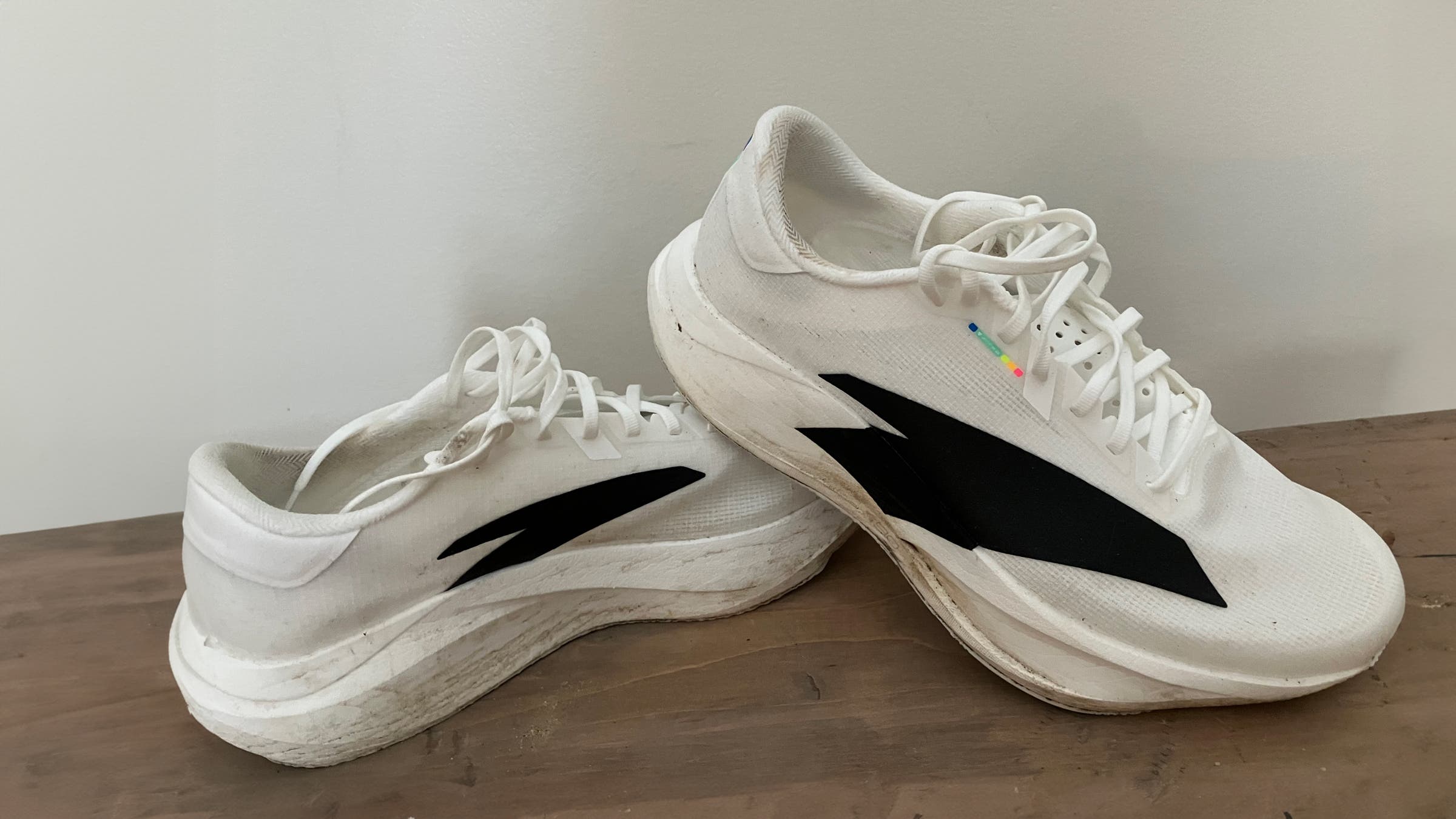
My first run in these was supposed to be 5 miles, because I’d done a long run the day before. But I was enjoying the Zone 2 so much I wound up going 10. They’re a great example of high-quality simplicity—basically, a secure upper over a moderate amount of just-right foam. The ride is soft but responsive, with none of the bottoming out I’ve experienced in similar non-plated shoes like the New Balance Rebel 5.
Anta is rightly criticized for its shoes’ names, such as the impenetrable C 202 G9 2. “Zone 2” is one of its more normal names, but it wrongly implies the shoe is only for easy runs. A friend who bought a pair on my recommendation joked it should be called the Zone 3.5-4. The Zone 2 can easily handle those wonderful runs when you start slowly but find yourself itching to get rolling.
The one substantive beef I’ve seen about the Zone 2 is poor outsole durability. I haven’t experienced that in my first 90+ miles in the shoes, however, and that’s with me being harsher on lateral heel outsoles than most people.
Anta’s U.S. site carries two other models I tested and have made part of my regular rotation. The C 202 7 is a plated racer/trainer that costs $130. The C 202 G9 2 is a premium, 6-ounce racing shoe that costs $180. Both are as good as Western models that cost $50 to $70 more.
BMAI Jingtan 3.0 Turbo
Chinese Retail Price: 999 RMB
Stack: 34 mm heel/29.5 mm forefoot (likely higher)
Midsole: PEBA
Weight: 6.7 ounces
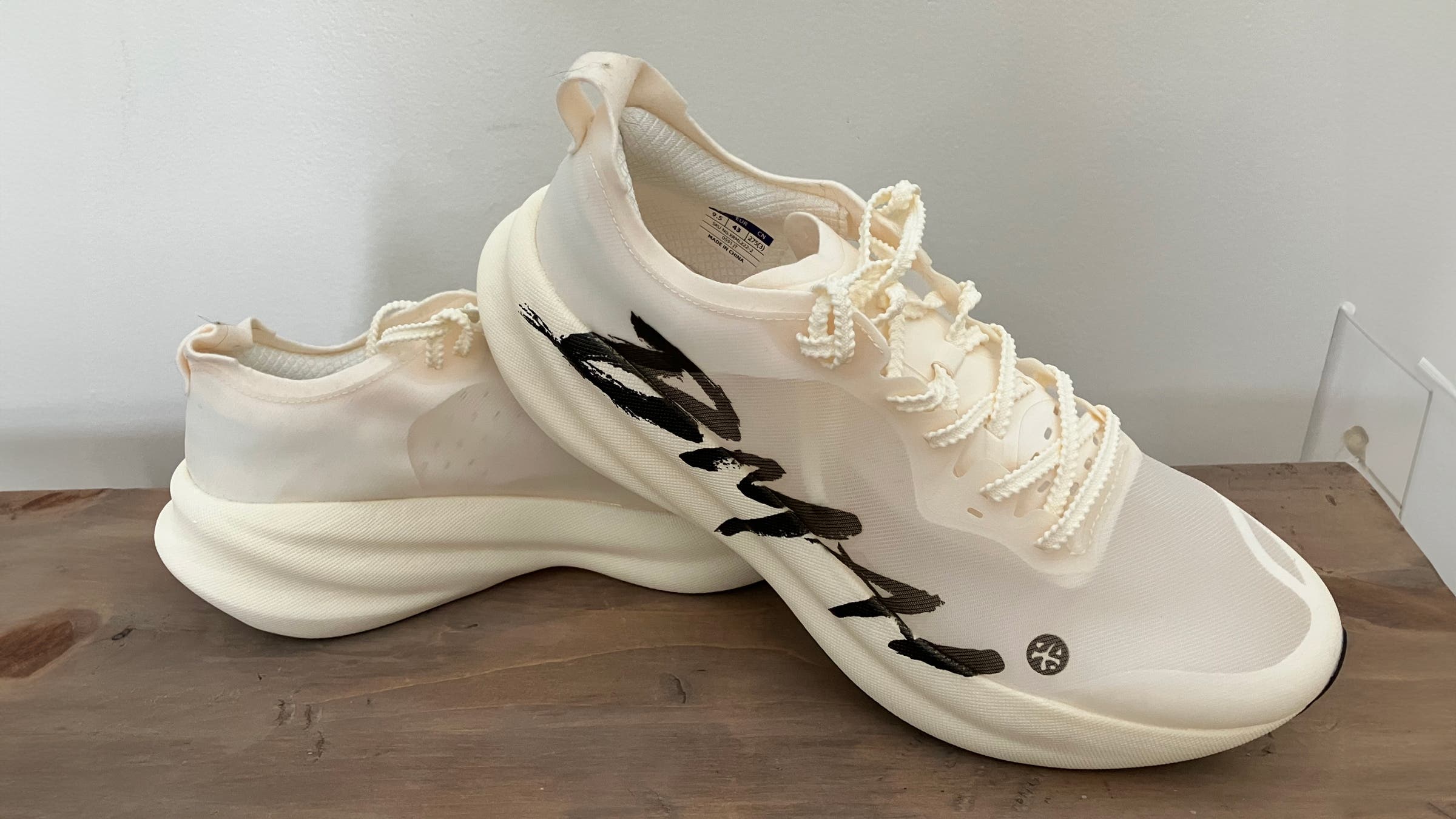
Several sports med experts I’ve talked with advise not wearing carbon-plated shoes more than two or three times a week. The Jingtan tests my willingness to follow that advice. It has felt and performed great on every type of run I’ve done in it, including long tempos, average-length steady states, workouts mixing threshold and 5K pace intervals, and even two-hour trail outings.
The most similar Western model I’ve run in is the Tracksmith Eliot Racer. Both feel like normal, non-plated shoes while having serious race-day credentials. The Jingtan’s ride is smooth at all paces. Rear sidewalls provide just the right amount of stability for forward momentum. The thin CPU outsole gives good traction and shows almost no wear as I near 100 miles in the shoe.
I paid $161, shipping and tariffs included, for the Jingtan. That’s at least $100 less than Western shoes of similar quality.
Do-Win Speedster 3.0
Chinese Retail Price: 699 RMB
Stack: 38 mm heel/32 mm forefoot
Midsole: A-TPU
Weight: 8.1 ounces
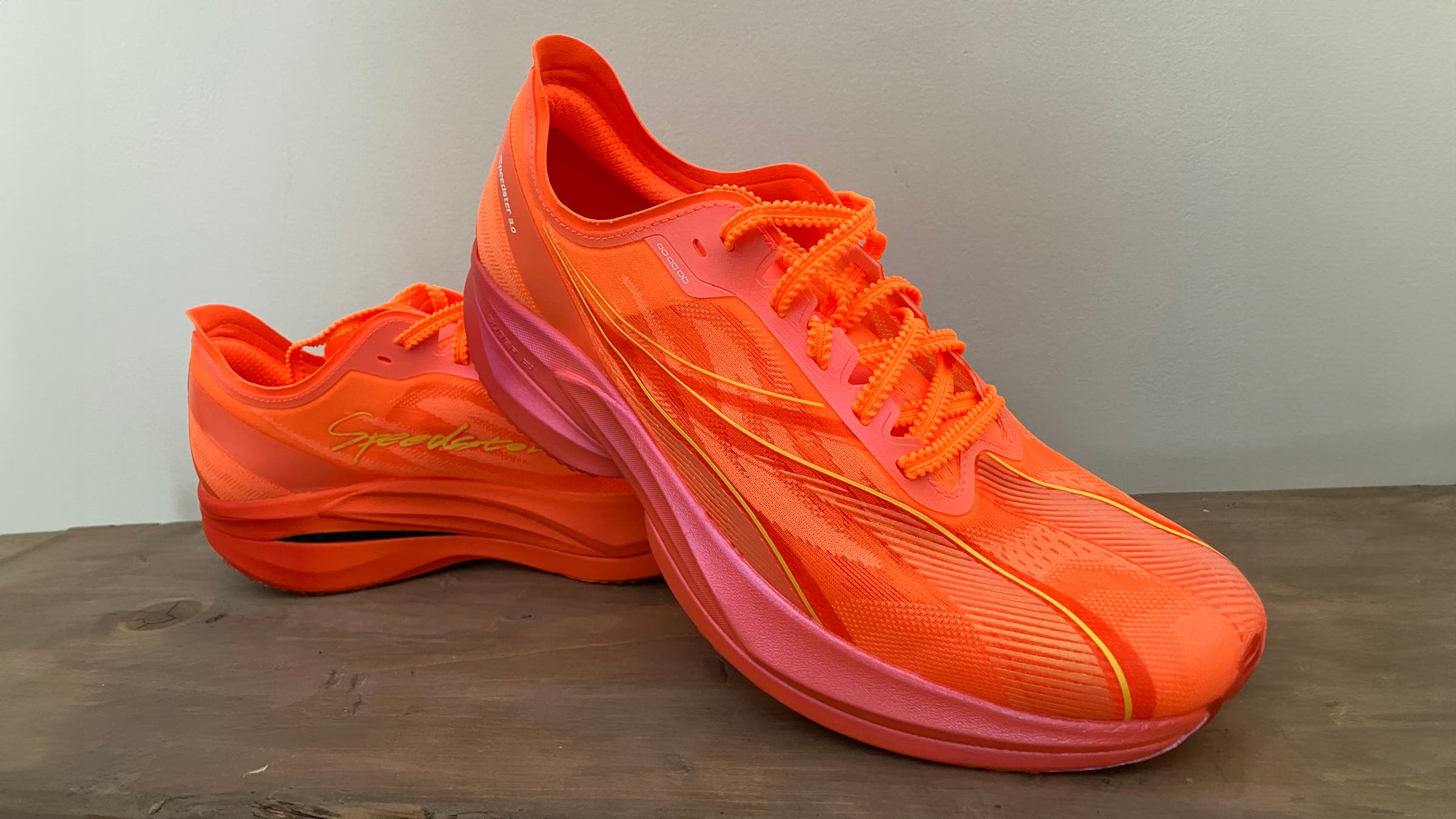
There’s nothing amazing or necessarily eye-catching about this plated trainer/racer (except perhaps its garish color). And there’s nothing wrong with that. Few of us have the form and strength of elites, which is whom the headline-grabbing super shoes are designed for. Most of us do best in models like the Speedster that combine performance, protection, and durability.
The shoe’s plate sits low in the foam. This produces a firm but not harsh ride that, for me, works best at 10K to threshold pace. A solid heel counter with internal padding adds stability and comfort. I also appreciate that the Speedster doesn’t feel odd at slower paces. This is a shoe you can warm up and cool down in, yet still experience that super shoe bonus when it’s time to go fast.
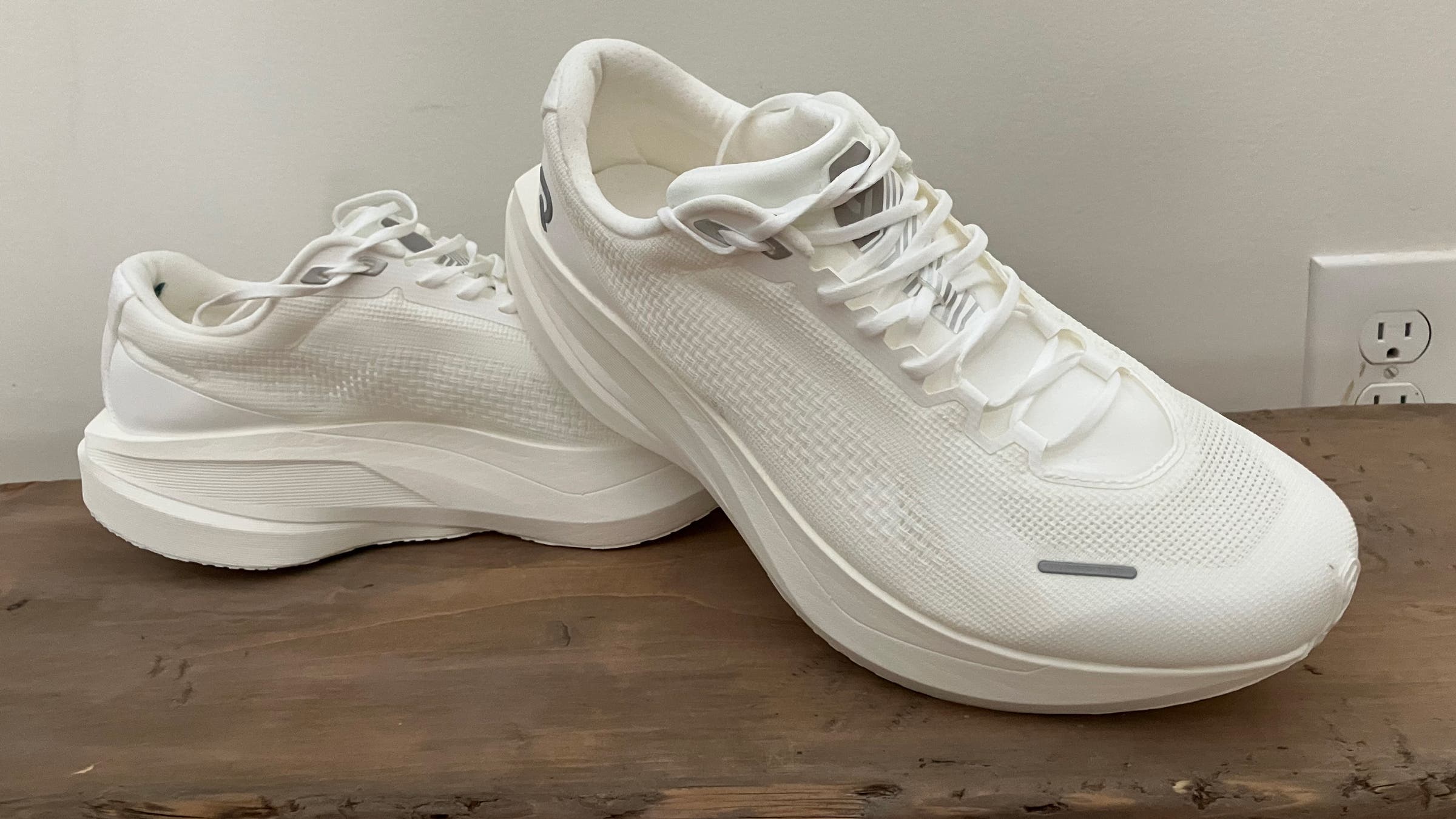
Dynafish Xiaonian
Chinese Retail Price: 499 RMB
U.S. Price: $150
Stack: 41 mm heel/34 mm forefoot
Midsole: TPEE
Weight: 7.1 ounces
Earlier this year, Outside dubbed the Asics Megablast “a new leader in lightweight luxury performance.” The catch: The Megablast costs $225.
Instead, how about paying a third less for a similar non-plated shoe that many people familiar with both models, including me, think is better than the Megablast? The upper is more supportive, the outsole is more durable, the midsole provides a pleasantly accommodating ride at a greater range of paces, and the Xiaonian is an ounce lighter. Like the Megablast, the Xiaonian is a good choice for marathoners seeking comfort, lightness, and performance over 26.2 miles without the aggressiveness of a super shoe.
The main drawback to the Xiaonian has been needing to buy it on Taobao. That just changed in June, when Dynafish.us and the running shoe app Supwell started selling it for $150. The shoes will ship from within the U.S. and are forecast to arrive within five business days of ordering.
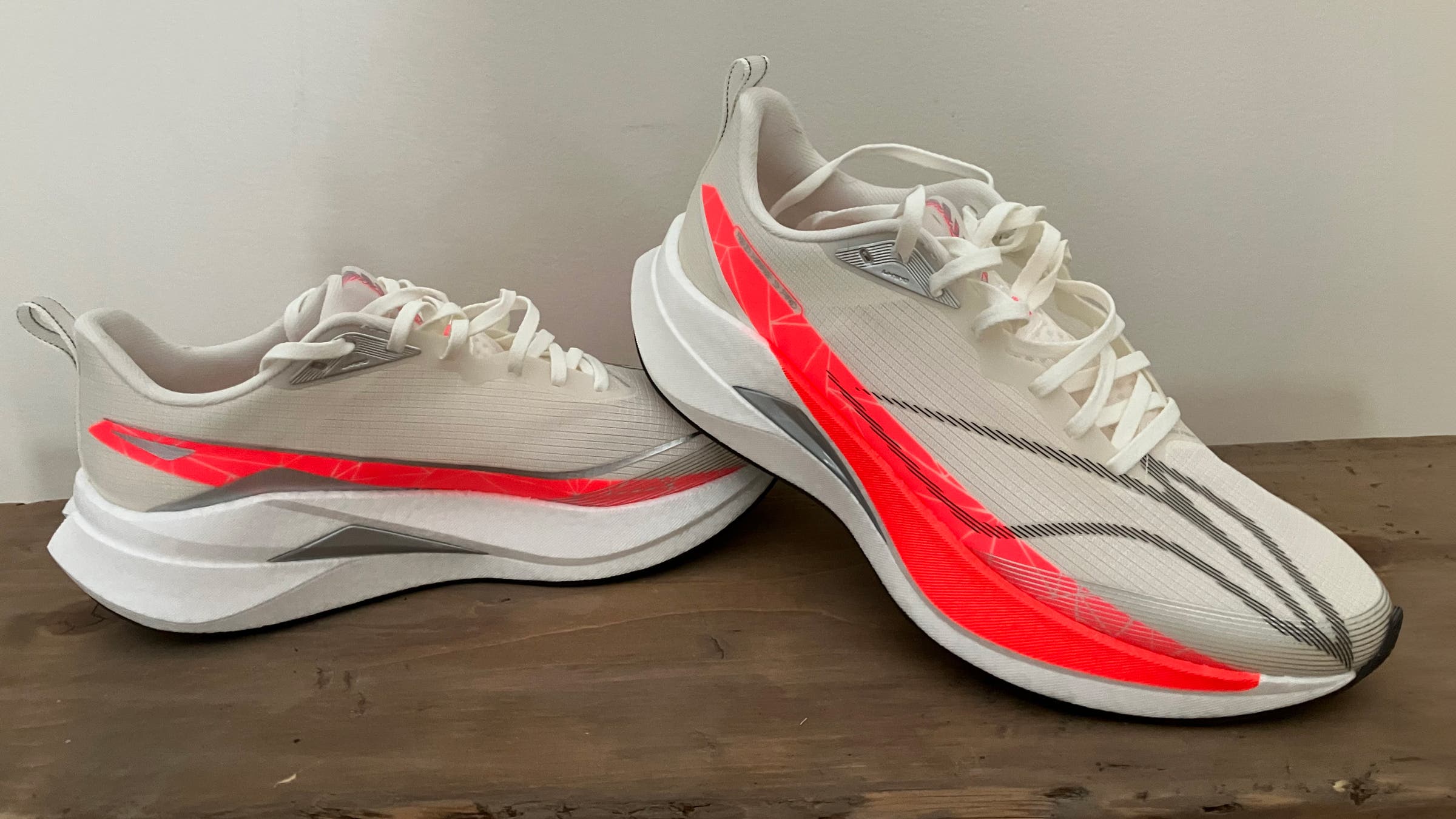
Li-Ning Red Hare Pro 9
Chinese Retail Price: 599 RMB
U.S. Price: $99
Stack: 35 mm heel/28 mm forefoot (likely higher)
Midsole: Beaded A-TPU
Weight: 8.5 ounces
This model is a perfect example of why so many runners have been nerding out over Chinese shoes: Its beaded midsole foam, versatility, flexible plate, and balanced cushioning matches that of a fan favorite, the Saucony Endorphin Speed 5. Yet, as I mentioned above, I paid $90 for it.
As with the Endorphin Speed, I consider the Red Hare Pro a suitcase shoe—a model I would pack if I could take just one pair on a trip. It has enough structure for long runs without weighing me down. There are obviously faster shoes, Chinese or otherwise, but the Red Hare Pro works decently for me on everything from strides to marathon pace. One of my favorite uses for it is to run an hour in the woods, and then exit to do a 30- to 40-minute tempo run home. Its outsole durability is much better than that of the Endorphin Speed.
Did I mention I got it for $90?
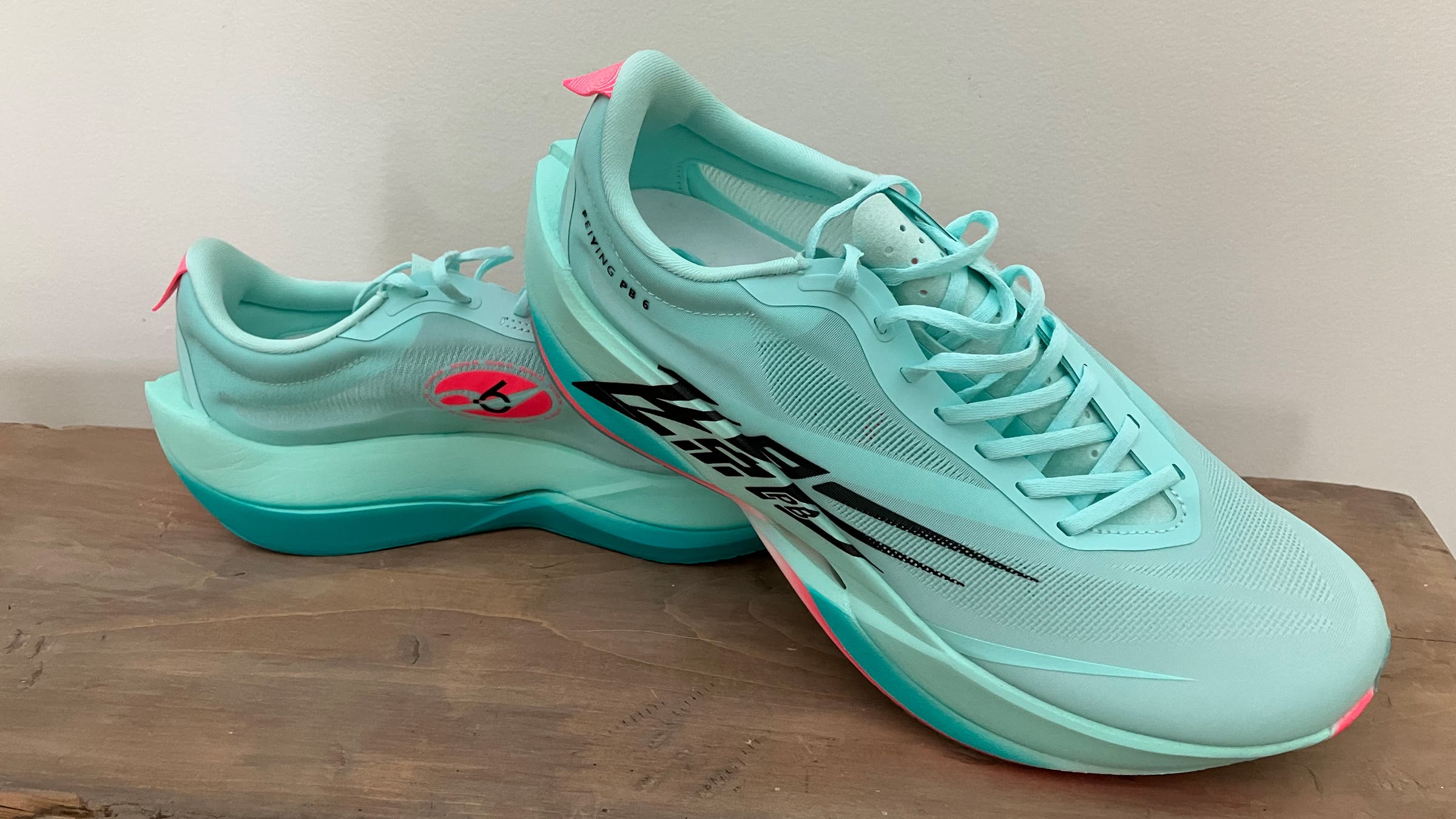
Qiaodan Feiying PB 6
Chinese Retail Price: 899 RMB
Stack: 36 mm heel/30mm forefoot
Midsole: TPEE
Weight: 7.5 ounces
Like the Do-Win model above, the Feiying PB 6 comes from that seemingly bottomless pool of excellent Chinese super shoes built for ambitious recreational racers. The plate is positioned between two layers of TPEE foam; the upper layer is a little softer. The result is that bouncy, propulsive ride synonymous with go-fast shoes. But thanks to its more moderate stack height, the PB 6 feels more stable and natural than similarly designed taller shoes.
As might be obvious by now, I have an embarrassment of riches when it comes to racing shoes. The PB 6 will be what I wear this summer and fall for road races in the 8K to half marathon range.
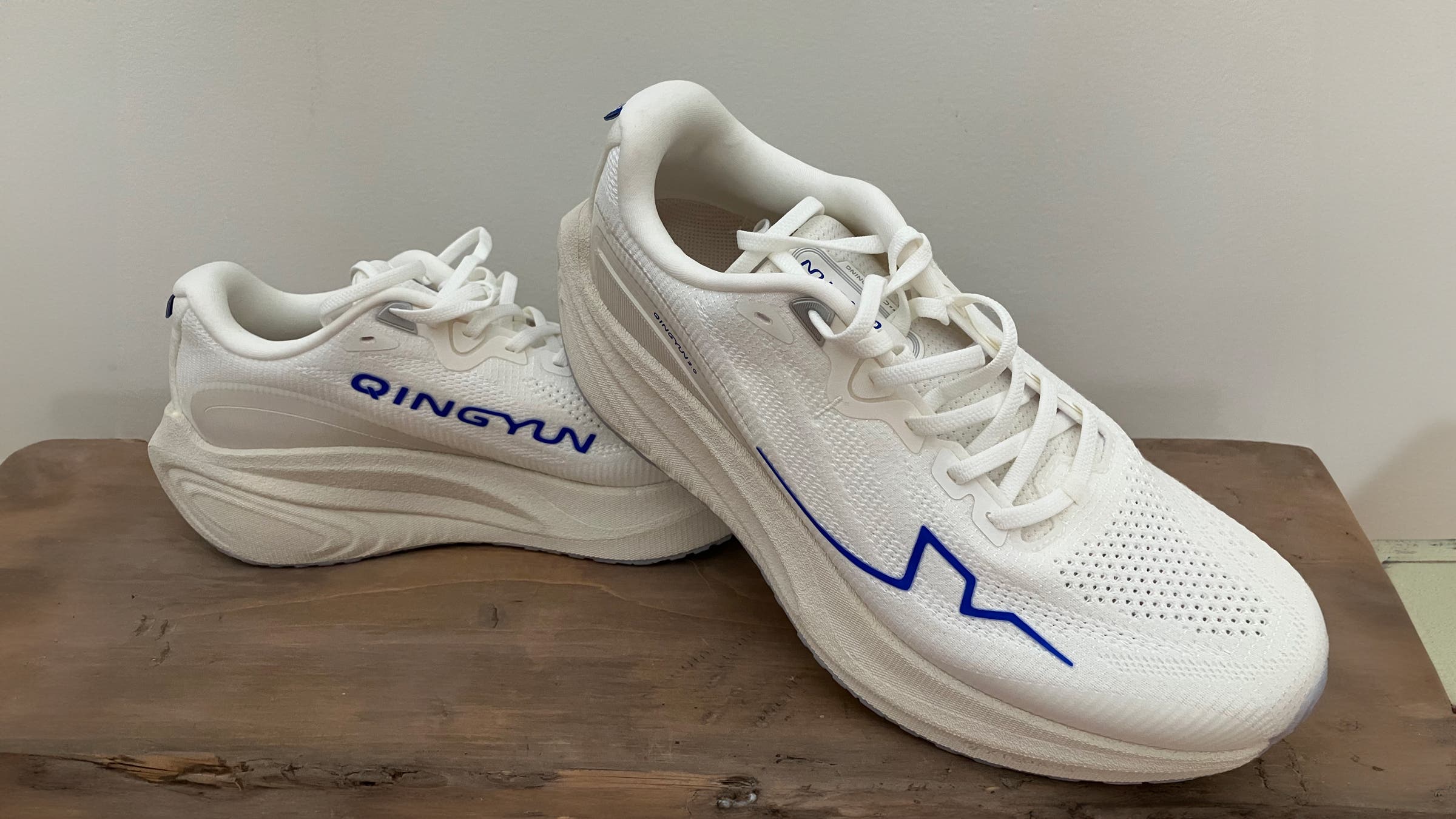
Xtep Qingyun 2.0
Chinese Retail Price: 599 RMB
Stack: 40 mm heel/30 mm forefoot
Midsole: Beaded A-TPU
Weight: 10.9 ounces
This is the heaviest shoe I tested. In fact, it’s the heaviest shoe I’ve regularly run in over the past few years.
I was pleasantly surprised by how much I like it. That’s probably due to the tuning of the A-TPU midsole, which strikes a Goldilocks balance of firm enough to keep you moving forward but soft enough to pamper tired legs. A small piece of carbon restricted to the midfoot provides just the right amount of stability. It’s now my go-to on true recovery runs, whether that’s a short jog the afternoon after a morning workout or a longer run the day after a hard interval session. Bonus: The nubbed outsole provides good-enough traction on trails, where the Qingyun is nimble despite its height and weight.
One Model That Didn’t Work for Me—But Might Work for You
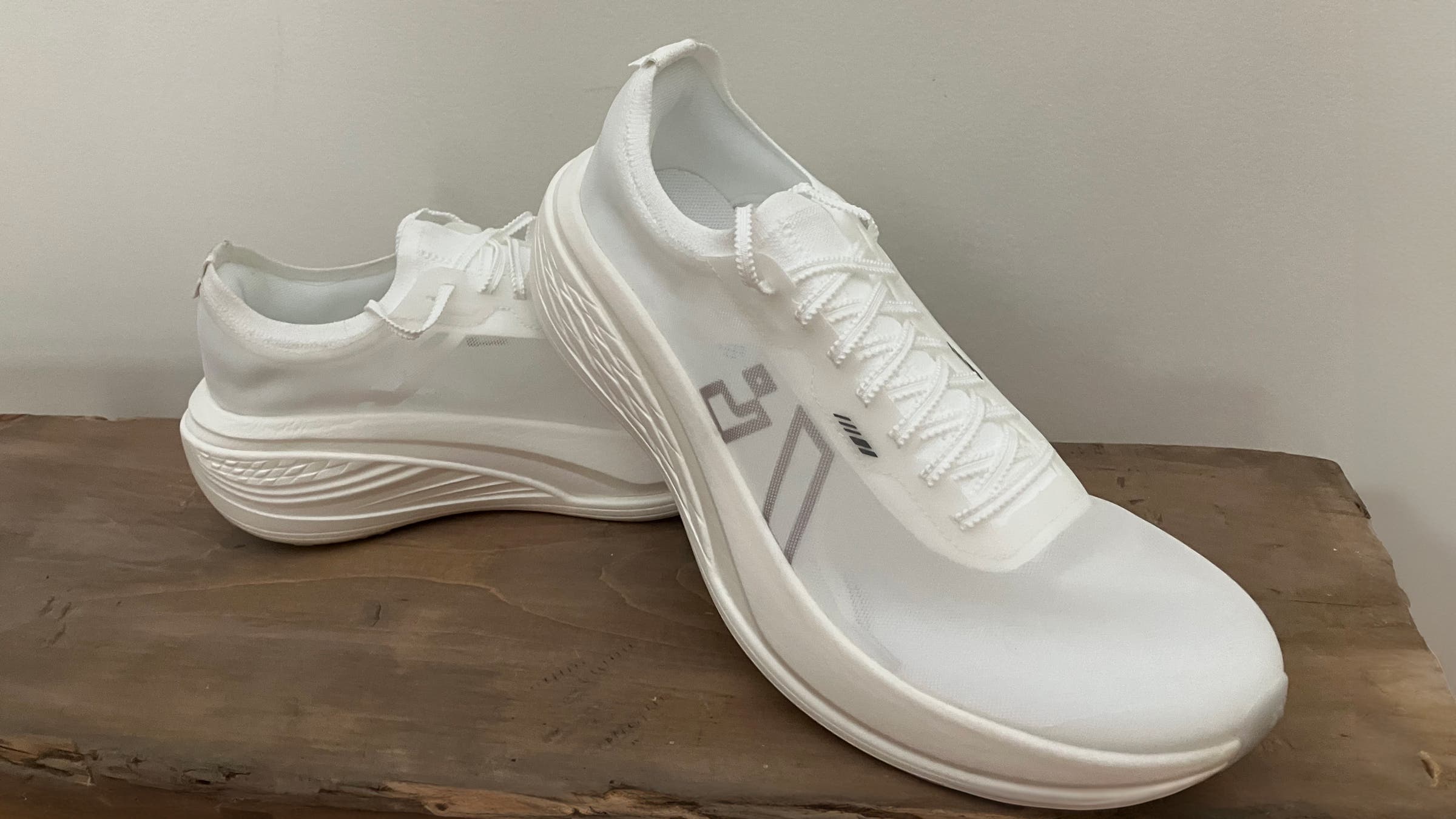
Runsifly Flare Elite
Chinese Retail Price: 699 RMB
Stack: 39 mm heel/31 mm forefoot
Midsole: PEBA
Weight: 6.3 ounces
Runsifly launched earlier this year with one shoe, this plated racer. The slab of soft PEBA foam felt great until I started to tire; then the platform became too unstable for me. If you’re accustomed to such shoes and can hold the proper form even when you’re fatigued, the Flare Elite could be an excellent half marathon or marathon racing shoe, and a good choice for faster long runs.
