

New canine physiology research reveals a faster, safer way to prevent heatstroke on the trail.
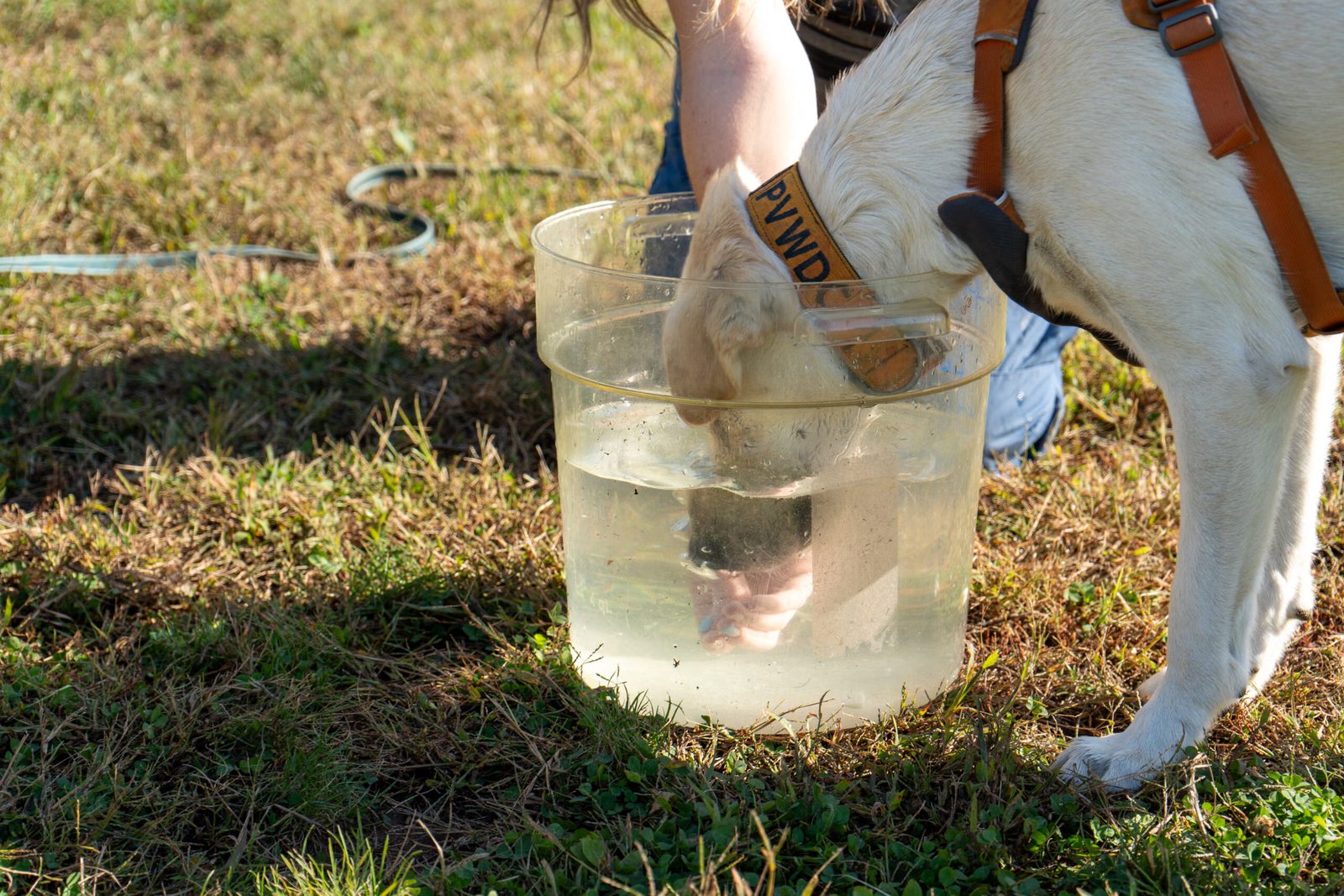
Start training your dog to dunk their head by familiarizing them with a bucket of water (Photo: AKC)
Published July 9, 2026 01:32PM
Just like humans, dogs are sensitive to heat. An incident involving an overheated dog can quickly become deadly. Nearly half of all cases of heatstroke in dogs are fatal, with hundreds of dogs dying in the U.S. every year.
New research suggests that most pet owners are incorrectly treating their dogs for heat stroke. Instead of pouring water on a dog to cool it off, an owner should instead dunk the dog’s head in water.
That’s because a dog’s head helps them cool down, and previous methods for treating heatstroke, such as applying alcohol to a dog’s paws or putting wet towels on their belly, don’t directly address the root cause.
“Dogs mainly cool themselves down by panting. When they pant, warm blood rushes to their head to help release heat. Cooling the head, mouth, and nose (by dunking the head in water) accelerates that process,” Stephanie Montgomery, veterinarian and CEO of the AKC Canine Health Foundation, told Outside.
Research Shows Partially Dunking a Dog’s Head Reduces Heat Stroke
In 2022, Cynthia Otto, executive director of the PennVet Working Dog Center at the University of Pennsylvania, studied whether partially immersing a dog in water would help treat heatstroke. When compared with other common methods, her research, in conjunction with the AKC Canine Health Foundation, found that the head-dunk method delivered the fastest, most sustained reduction in body temperature.
“This technique can be invaluable for dogs that overheat,” Otto told Outside.
Signs of heatstroke include relentless heavy panting, weakness, vomiting, or a dark brick-red gum color. Experts recommend cooling the dog first and transporting them second.
How To Train Your Dog To Dunk Their Head
Start by placing a treat or favorite toy in an empty, clean, clear container and letting their dog retrieve it. Then, add just enough water to cover the bottom of the container—but no deeper than the fleshy part of the dog’s nose—and place another treat or toy in the water for them to fish out. Slowly double the amount of water and repeat, making sure the dog is blowing air out of its nose as it dunks its head into the water to retrieve the treat.
If your dog is not blowing air out under the water, you can hold the treat at the bottom of the water until they start doing so, then reward them. Eventually, you want the dog to submerge its head, past its eyes, into the water to ensure it is cooling down effectively.
But be careful: Never attempt a head dunk if your dog is lethargic, seizing, or collapsed, as they cannot protect their airway from drowning.
Other Tips and Tricks To Prevent Heatstroke
To prevent overheating in the first place, Montgomery recommends keeping your dog hydrated and cool whenever possible.
“Offer plenty of fresh, cool water and provide access to shade, fans, or air conditioning if available. Take morning or evening walks to avoid the hottest part of the day,” she said.
Leave a dog in a parked car—even with the windows cracked and the air conditioning on. Temperatures can quickly rise if air conditioning fails.
“The most important things for owners to do are recognize that their dog is getting hot, stop activity, and cool their dog! If there is a pool or body of water, let the dog get completely immersed; however, if you have limited water, teaching them to dunk their head is a highly effective means of rapidly cooling! It is also a fun trick to train, but be sure to train it before your dog needs it,” Otto said.
If a dog is showing signs of heat stroke, move them to a cool, shady, or air-conditioned area and cover them with cool but not ice-cold water. If your dog doesn’t know the head-dunk trick, pour cool water over their neck, belly, and armpits. In any case, where there is excessive panting, weakness, collapse, or vomiting, contact your veterinarian. Signs can worsen quickly, and heat stroke is a medical emergency.
While you’re here, did you know you should put bug spray on your dog? Some brands can be deadly for canines—be sure to read more on how to safely treat your pup here.
