


We tested tons of options to find the real difference between a $140 sleeping pad and a $400 camping mattress.
A high-quality camping mattress can turn a challenging night in the woods into a deeply restorative sleep experience. Investing in the right sleep system ensures you wake up fully recharged for a day of outdoor adventure. (Photo: Canva)
Published July 16, 2026 04:36PM
The difference between a miserable night in the woods and a restful one often comes down to a few inches of foam and air. Whether you’re hauling in a plush camping mattress or rolling up with a minimalist sleeping pad, your sleep system plays a major role in how you sleep outside.
Fortunately, there’s never been more choice or more variation in price when it comes to sleep setups. A basic foam mat can cost less than $30, while a premium insulated air mattress can climb above $300. But a higher price tag doesn’t always guarantee better sleep.
To find out what your money actually buys, we tested 25 options and narrowed down our list to nine of the best sleeping pads and camping mattresses. Then we compared three standout models across the price spectrum: a budget bed, a mid-priced favorite, and a splurge-worthy upgrade. All three offer a comfortable night outdoors. But because sleep is so subjective and personal, the question comes down to how much you’re willing to spend for some solid Zzzs.
Best Camping Mattresses and Sleeping Pads: At a Glance
Best Budget Sleeping Pad: Kelty Kush Air Bed ($140)
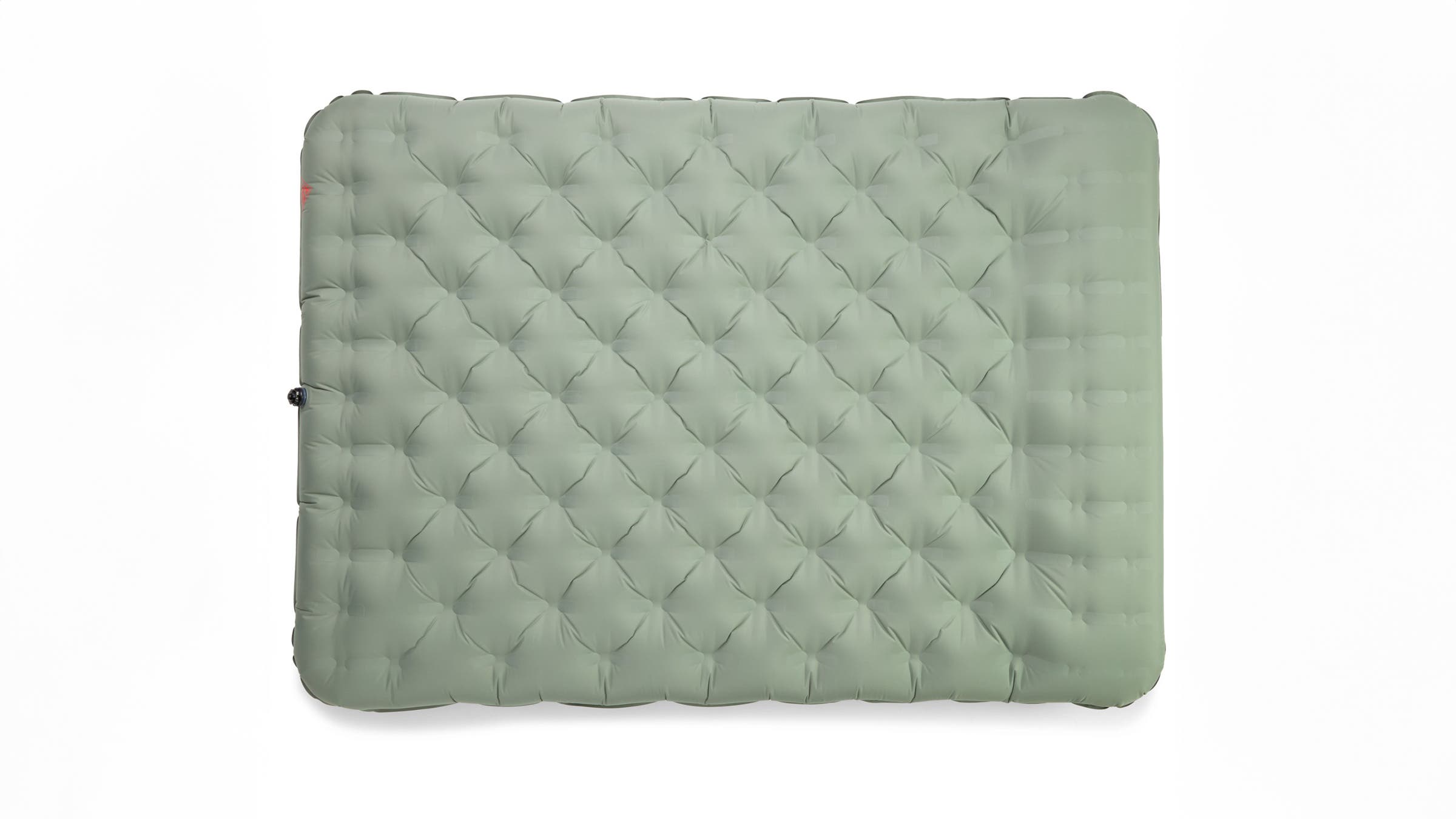
Thickness: 6 inches
Dimensions: 79″ x 55.5″
R-value: N/A
Pros and Cons
+ Rechargeable pump included
+ Packs down small
– Loud topper
– Rough against bare skin
Not everyone needs fancy foam or luxurious materials to catch up on rest. The Kelty Kush Air Bed is one of the simpler sleeping pads out there, but it still offers six inches of padding that kept testers off the ground and comfortable down to 30-degree nights. You can’t say the same about a $30 piece of foam or even the $60 Therm-a-Rest Z-Lite.
Without any internal foam, the Air Bed packs down smaller (to about the size of a laptop) than other mats at this thickness, and it easily blows up in about four minutes with an included USB rechargeable pump. Our tester didn’t even need a top off during a weekend trip.
While $140 is a fair price for a blow-up sleeping pad, it comes with a few tradeoffs: The polyester exterior makes a zip-zip sound if you toss and turn at night. Fine if you’re solo, but possibly annoying to tent mates. The material was also pretty rough against bare skin, which isn’t that big of a deal if you stay in your sleeping bag or pack a top sheet.
Best Mid-Range Sleeping Pad: Nemo Roamer ($260-$280)
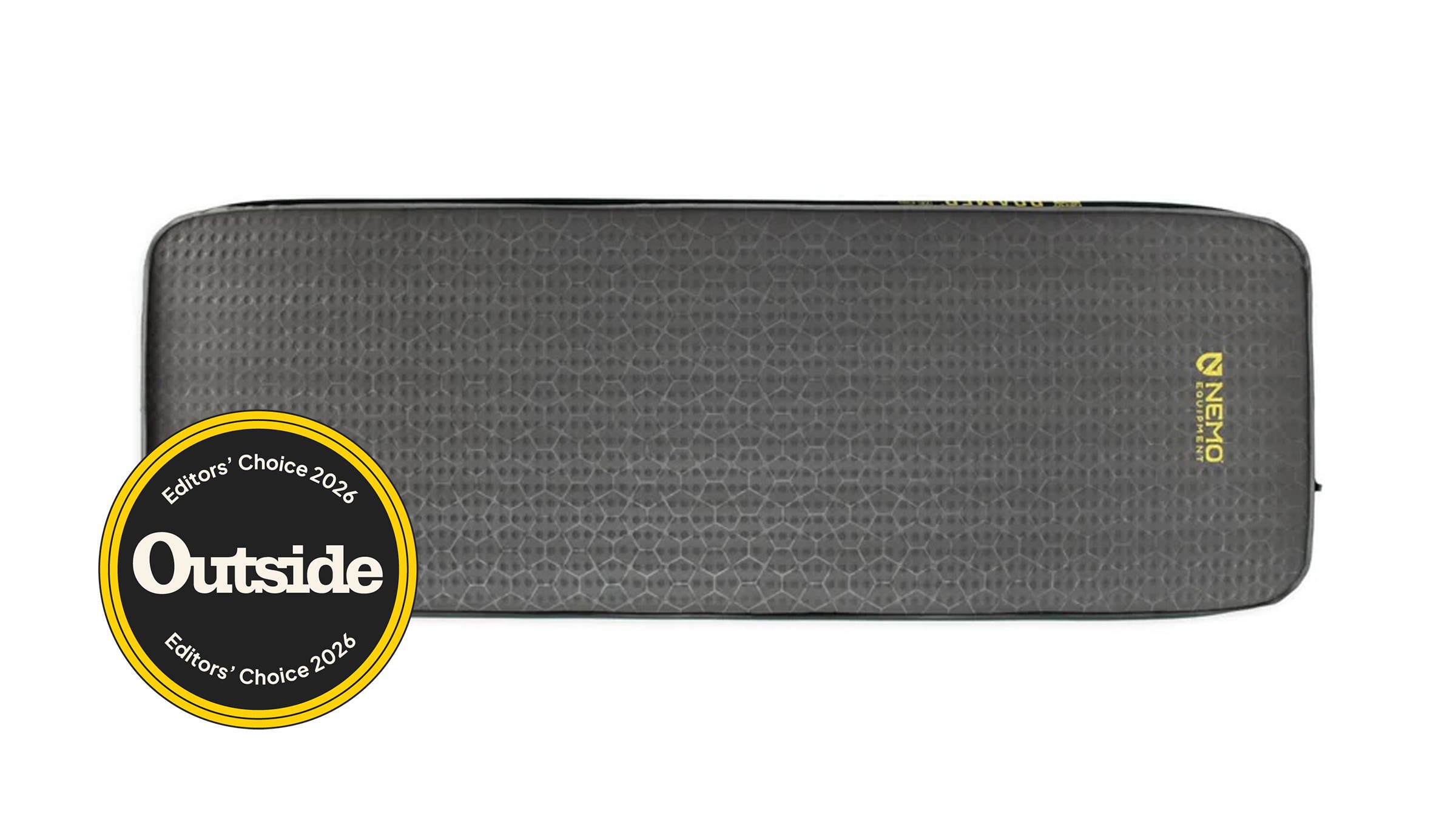
Thickness: 4 inches
Dimensions: Ranges from 76” x 25” to 78” x 52”
R-value: 7
Pros and Cons
+ Supple upper
+ Exceptional comfort
+ Several sizes
– Expensive
– Hard to pack into stuff sack
If you’re looking for “the closest thing to my bed at home that I’ve ever camped on,” as one Colorado tester put it, you’re gonna want to invest in the Nemo Roamer. We even gave it an Editor’s Choice award after the longtime favorite got a major update for 2026.
At four inches thick, with an inflatable open-cell construction, Nemo boosted insulation to a 7 R-value—keeping sleepers warm even when temperatures dipped below 30 degrees F. The updated PU stretch polyester fabric is soft to the touch and won’t immediately pop if it bumps a rock.
Doubling the money of the Kelty Kush Air Bed also gets you a self-inflating valve and dump valve that makes setup and breakdown a cinch. Top it off with the stuff sack or your own lungs for a firmer pad. Our least favorite aspect? Trying to fit the sleeping pad into its original stuff sack turned into a wrestling match.
Best Splurge Sleeping Pad: Zempire Monstabed Twin ($400)
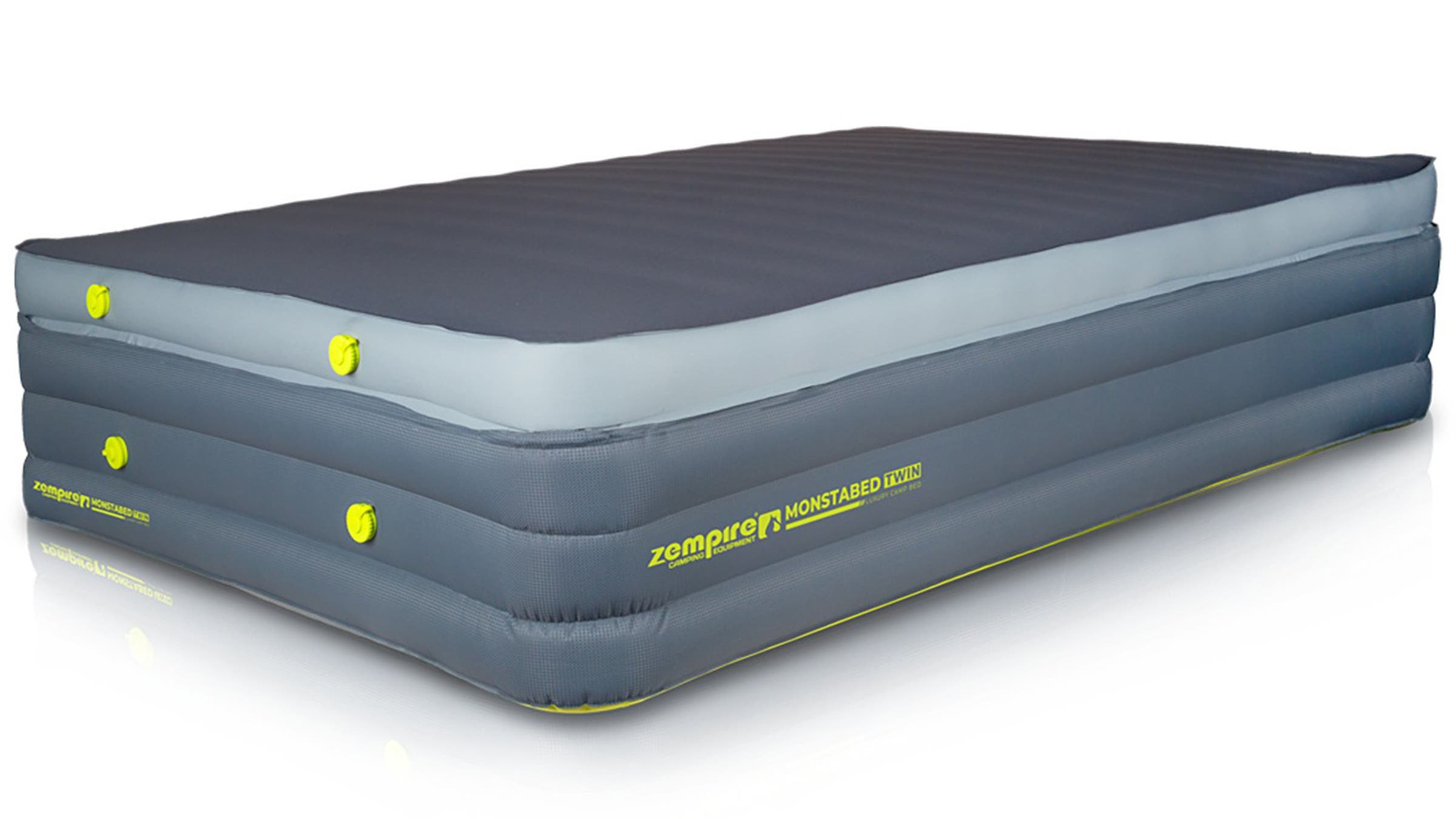
Thickness: 16.5 inches
Dimensions: 77” x 53”
R-value: 10.5
Pros and Cons
+ Warm and comfy topper
+ Height is easier for campers with bad backs or other injuries
– Heavy and large when packed
– Narrow for two campers
Maybe you have a bad back. Or maybe you just prefer to sleep 16.5 inches off the ground when you’re camping. That’s what $400 gets you—and more.
Testers swooned over the Zempire Monstabed Twin’s incredibly luxe topper that provides extreme coziness and a whopping 10.5 R-value. Here’s where all that warmth comes from: An open-cell foam topper perches on an inflatable platform, which expands easily with the Monstapump ($50) or a similar electric pump. Packed up, it’s about the size of a large carry-on suitcase—monstrous compared to other sleep systems but not an issue for car camping.
Despite the “twin” in its name, this version is an inch less than a standard full-size bed and sleeps two campers. At 53 inches wide, it won’t fit in any regular tent. Inside the Zempire Pro TM V2 tent it’s a perfect fit. There’s also a smaller Single size and larger Queen size.
Drawbacks were minor. The 150-denier ripstop polyester base fabric isn’t as tough as other fabrics, so we wouldn’t recommend scraping it over rocks. All in all, if you’re looking for a bed that’s even comfier than your mattress at home, you’ll pay big bucks for it.
