

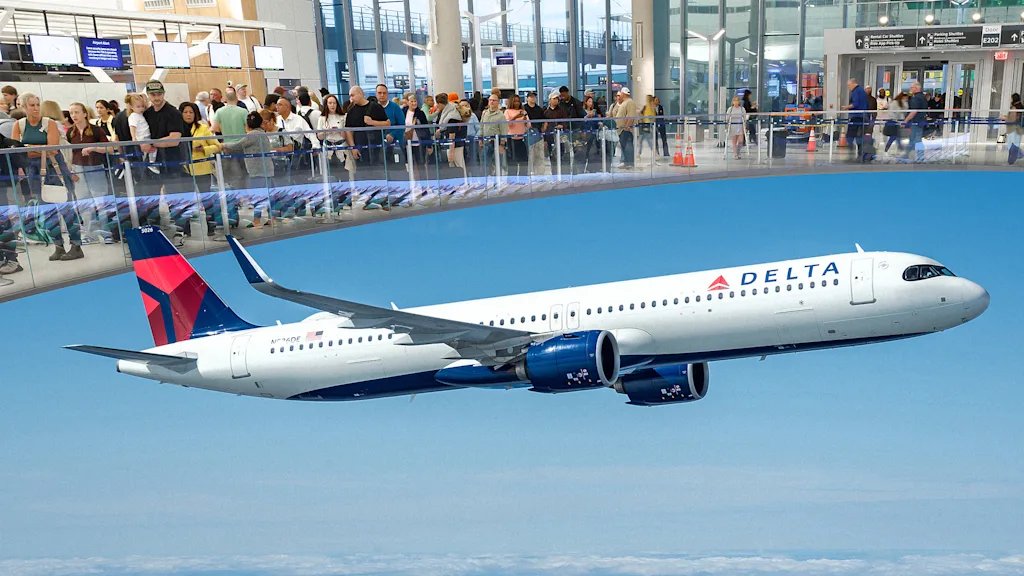
As brand obsessions go, our collective love/hate relationship with airlines may be one of the most passionate and unique. It’s a perfect storm of time pressure, cost, emotional stakes, and a complete lack of control as a customer.
An airline’s product is the experience, and that experience has a laundry list of potential pain points—check-in, lost luggage, boarding, seat comfort—that can ruin the entire thing. Now, the U.S. government is throwing a shutdown-size wrench into the mix.
Due to a partial government shutdown, funding for the Transportation Security Administration has been paused. TSA workers have not been paid for more than a month, leading to staffing shortages at some airports. As both sides of the aisle point fingers and try to find a compromise, line-ups at airports are snaking so long that many airports have stopped even trying to post estimated wait times for travelers. On March 25, acting TSA head Ha Nguyen McNeill told Congress that air travelers are experiencing the highest wait times ever under the TSA.
What do you call the opposite of a brand halo? A brand anchor? That’s what this entire situation is for airlines, since their customer experience is tied directly to this shutdown funding fallout.
One airline, however, decided to step up to distinguish itself in a way we haven’t seen a brand do in a long time. On March 24, Delta announced that it was suspending its “specialty services” perk for U.S. Senators and Representatives, which gave those government employees high-touch service like escorting them past lengthy security lines and a dedicated check-in experience.
“Due to the impact on resources from the longstanding government shutdown, Delta will temporarily suspend specialty services to members of Congress flying Delta,” the airline said in a statement to Fast Company. “Next to safety, Delta’s no. 1 priority is taking care of our people and customers, which has become increasingly difficult in the current environment.”
The move follows what an “outraged” Delta CEO Ed Bastian told CNBC last week. “It’s inexcusable that our security agents, our frontline agents, that are essential to what we do, are not being paid, and it’s ridiculous to see them being used as political chips,” Bastian said.
