

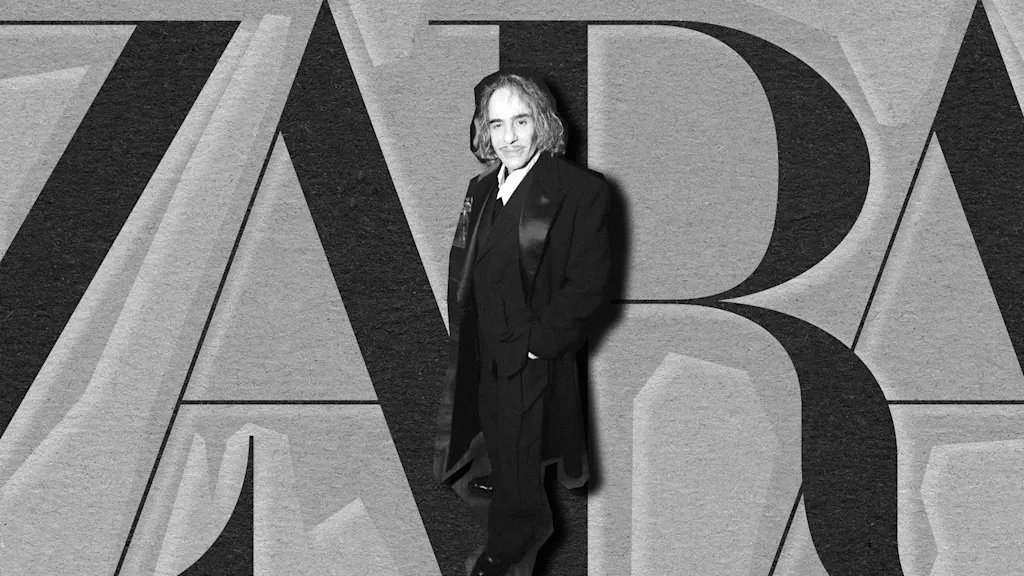
The most surprising move in fashion in years
To understand the shock value, a little context. Galliano’s career has been defined by the haute maison—Givenchy, his own label, Dior, and then a celebrated decade at Maison Margiela, where he orchestrated some of the most critically lauded runway shows of his generation. These institutions were the frame through which his genius was legitimated, distributed, and priced. The assumption was that a designer of his stature would always find his home inside another of fashion’s storied houses.
Instead, he is going to Zara. Not as creative director. Not to relaunch a diffusion line. But as a “creative partner” who will deconstruct and “re-author” pieces from Zara’s own vast archive—taking the ephemera of fast fashion and subjecting it to a couture process. The first collection drops in September 2026.
The fashion world’s reaction ranged from confusion to awe. But strategists should recognize it immediately: this is what the end of competitive advantage looks like in real time.
Seasons are dead. So are categories.
For most of its modern history, fashion has operated on a set of assumptions so stable they felt like laws of nature. There were four seasons. There was a clear hierarchy: haute couture at the apex, then ready-to-wear, then high street. There were coherent “looks”—a house had an aesthetic DNA, a consumer had a tribe, and the two found each other through ritual (the show, the magazine, the boutique).
All of that is dissolving. Seasons have become continuous flows. TikTok-native consumers don’t cycle through trends on a quarterly basis—they layer them, mix them, reject the premise that a wardrobe needs a coherent sensibility at all. Streetwear bleeds into suiting. Archive Margiela sits alongside H&M finds. The “look” is now personal curation, not institutional affiliation.
