

Updated April 21, 2026 02:37PM
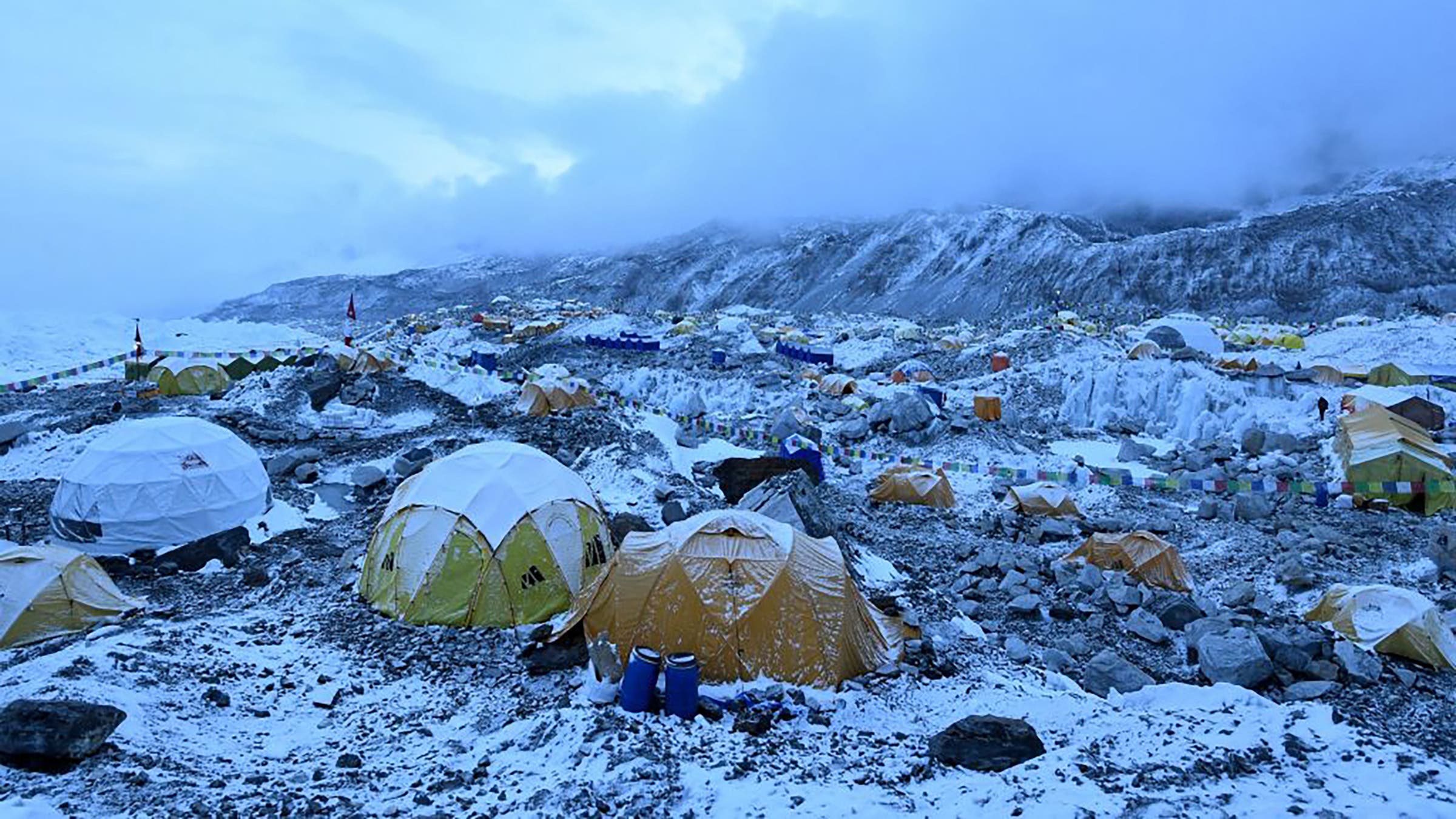
Climbers in Nepal’s Mount Everest Base Camp are getting antsy this week as they await the official start to the spring climbing season.
But a critical delay in the Khumbu Icefall is preventing anyone from venturing onto the peak. And the setback, which has pushed the start of the season past its normal date, is raising anxieties that the mountain could become crowded and congested later in the season.
“We’re starting to get worried,” Daniel Mazur, an American guide with the outfitter Summit Climb, told Outside. “We came here to climb Everest, and we can’t get on the mountain yet, and that is concerning.”
How a Delay in the Khumbu Icefall Is Impacting Life on Everest
- A dangerous ice serac in the Khumbu Icefall has prevented workers from completing the route across the glacier
- The delay has prevented climbers, guides, and porters from venturing onto the mountain
- Some guides worry that the delay will prompt most of the summit teams to push for the top at the same time
- Guides are climbing other peaks to help their clients acclimatize to the elevation
What Is the Khumbu Icefall?
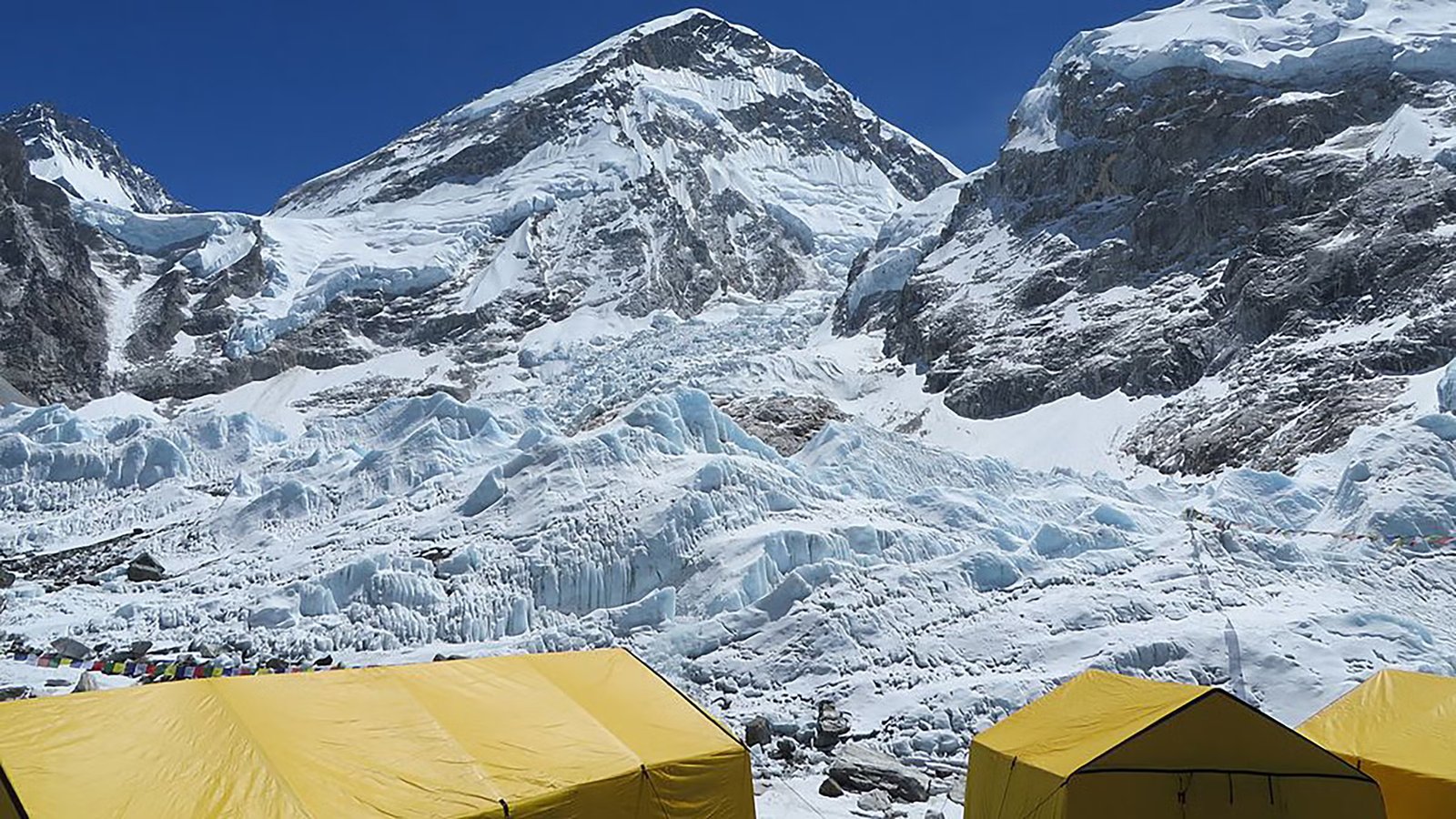
The Khumbu Icefall, a treacherous tumble of glacial ice and rock rising above Base Camp, is the first obstacle that climbers face on their way up Mount Everest. Every year, a team of specialized Nepali workers called the Icefall Doctors charts the route up the glacier that climbers, guides, and mountain workers use throughout the season.
The Icefall Doctors string ropes to demarcate the pathway, install ice screws and pitons up vertical walls of ice, and lay metal ladders across crevasses. Nobody can venture onto the peak’s upper slopes until this critical job is complete.
As of April 21, the route through the Khumbu Icefall has not been finished, guides and officials with the Nepal government told Outside. The Sagarmatha Pollution Control Committee (SPCC), the government body that oversees the Icefall Doctors, did not respond to multiple requests for comment.
Guides and Nepali officials told Outside that the hiccup is due to a dangerous serac—an unstable tower of glacial ice—that looms above the glacier. At any moment, this massive block of ice could crash onto the route.
“The Icefall Doctors have worked in this sector for ten years, and they think the serac will fall any day now,” Himal Gautam, the director of Nepal’s Department of Tourism, told Outside. “We have to trust them. The Government of Nepal has always placed human safety at the core of our priorities.”
The caution is warranted—the icefall has been the site of some of the worst tragedies in Everest history. In 2014, collapsing seracs triggered an avalanche that killed 16 mountain workers. In 2023, a collapsing ice tower killed three people.
What a Delay Means for Climbers
The Icefall Doctors often complete the route in early to mid-April, and in 2025 the route was finished on April 11. But setbacks are common. In 2024, the team didn’t finish the route until April 17 due to crumbling and unstable ice.
Delays in the icefall often impact the timetable that Everest outfitters must follow later in the season. Once the icefall route opens, a rope fixing team ascends higher on the peak to set the safety lines to the summit. Porters bring oxygen bottles, tents, and supplies to higher camps. And climbers and guides begin their acclimatization hikes—ascents to higher altitudes that help their bodies adjust to the thin air.
“By May 1, you really need to be getting all of your camps built on the upper mountain and the Lhotse Face,” Mazur said. “Summit attempts really start taking off around May 14.”
Mazur is among the Everest outfitters targeting the early windows of clear weather that often occur in the first or second week of May.
Other outfitters, however, wait for a second or third window of clear weather in late May. American guide Garrett Madison often tries to climb Everest later in the season to avoid congestion.
“For the teams that are looking to summit early, this will definitely impact their schedule,” Madison told Outside. “There are a lot of people rearing to go. They’re going to have to be more flexible.”
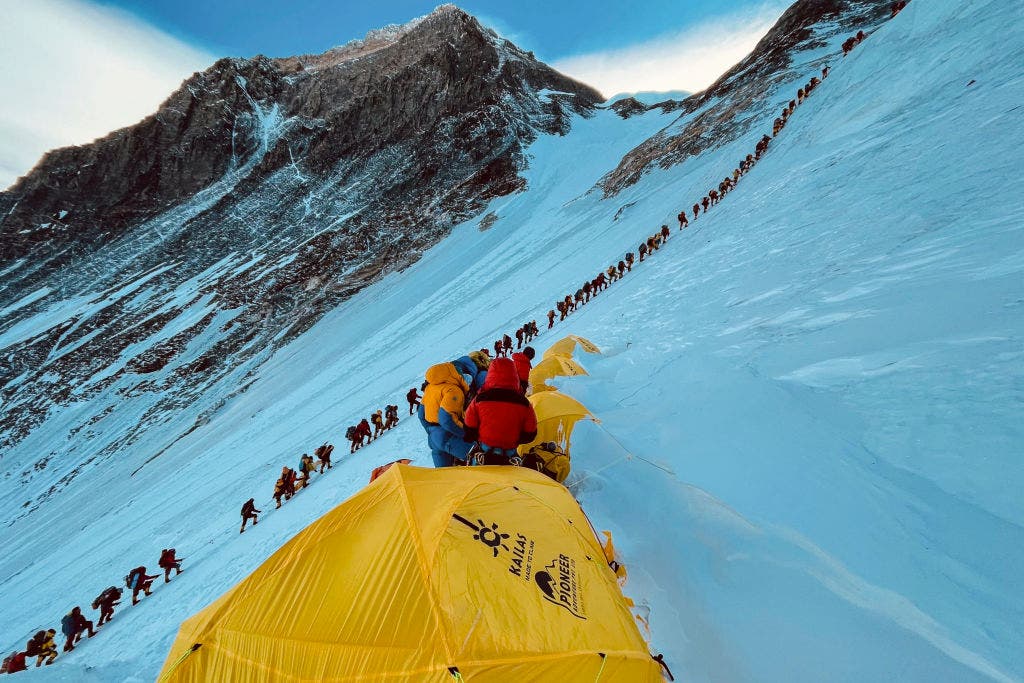
Madison said that early-season delays sometimes force everyone to climb at once, which results in congestion and crowding along the route. In 2012, Madison said, the route to the summit didn’t open until mid-May, resulting in one of the worst instances of crowding in recent memory.
“There was a really short window, and that created a ton of congestion higher on the mountain,” Madison said. “It led to a famous photo of a line of climbers going up the Lhotse Face.”
“Hopefully this year doesn’t turn into that,” he added.
Everest Guides Make Alternative Plans
Mazur told Outside that the dangerous serac is not visible from Base Camp. But throughout the week, he said, he has seen SPCC workers ascend into the Khumbu Icefall. Flying drones operated by the agency also buzz overhead throughout the day. He said SPCC officials have spoken to him about the hazard.
“It seems like everyone is waiting for this piece of ice to fall,” he said. “But if it doesn’t fall right away, we don’t really know what will happen.”
Thaneshwor Guragain, the general manager for guiding company Seven Summit Treks, said his company’s large client list is “creating pressure” amid the delay. Seven Summit Treks is one of the largest expedition operators on Everest, and its list of clients sometimes approaches 100 people.
“We are hopeful they will open the fixing lines; we have a lot of clients waiting for the Khumbu Icefall to open.”
Jiban Ghimire, general manager for the guiding service Shangri La Nepal Treks, told Outside that a longer delay could result in traffic jams occurring in the Khumbu Icefall if and when the route is completed.
Mazur said he’s already adjusting his climbing timetable due to the setback. Rather than completing his acclimatization hikes on Everest, he will take his clients up three nearby peaks: 23,494-foot Pumori, 20,305-foot Island Peak, and 20,075-foot Lobuche East.
Ascending these peaks, he believes, will prepare his clients for the summit push if and when the route finally opens.
“We need to keep going, keep moving,” he said. “We already went through a lot of work just to get here.”
Ben Ayers contributed to this report.
