

Given its $24 billion price tag and two decades in development, one would think that the Artemis II mission’s Orion spaceship would be flawless. Alas, that’s not how things work in the space program. These machines’ designs are so complex and so many things can go wrong that there is always going to be a breaking point somewhere.
Sometimes this involves comical but potentially dangerous consequences—like Artemis II’s toilet malfunction or its Microsoft Outlook glitches—while other times there are tragic endings, like the losses of the space shuttles Challenger and Columbia and their crews. Still, I wasn’t expecting a “use a T-shirt or something to block the sunlight rather than the spaceship’s built-in window shades” in my 2026 NASA bingo card.
That’s exactly what happened on Day 4 of the ongoing lunar flyby. I was listening to the highlights when this exchange—which I’ll explain below—between Mission Control and the Artemis II crew happened:
Houston: We have a small request for you guys. Um, with this attitude that we’re using for the bakeout, we’re getting the sun on the window shades and we’re a little worried about them heating up too much. We would like to request that you please remove the window shades. We understand that will make it awfully bright for you guys, and we want to encourage you to use a T-shirt in the cabin or something similar, if needed, to block out that sunlight. But the shades will help us with the temperature constraint on the windows.
Maybe in space, nobody can hear you scream. But after that, I swear I heard four astronauts rolling their eyes all the way from 240,000 miles up.
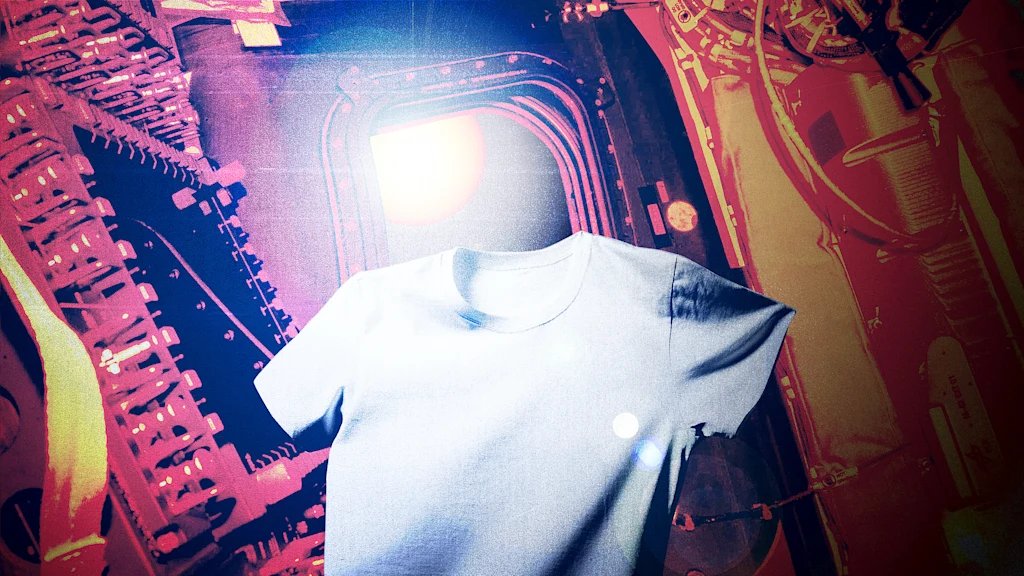
Orion: Okay. Uh, so we have our makeshift T-shirt on Window 1. Is that one okay to stay up then, based on what you said? And we’ll take off the Window 2 shade. The other ones are already off.
You may be wondering why in the name of Lyndon B. Johnson the crew of Artemis II was forced to use some old Taylor Swift concert T-shirts to block the sunlight. And yes, “What the rocket nozzle?!” is exactly the exclamation that came to my mind, too. Flying to the moon is not like going from Houston to Dallas in a Greyhound bus in the middle of August. Why couldn’t they use the built-in shades, which probably cost several million dollars to develop along with the Orion windows? After all, aren’t those windows supposed to sustain the heat of the reentry? How can they get damaged by a shade?
The explanation
Let’s go through what we know: On April 4, Orion was turned into a “bakeout” position. In spacecraft operations, this specific orientation intentionally exposes parts of the spacecraft to prolonged, direct solar radiation, often to outgas materials or manage ice buildup. In this case, that sunlight was shining directly on the windows and hit the inside window shades. Sunlight in deep space, unfiltered by Earth’s atmosphere, is blindingly bright, so astronauts use the shades to block it in order to manage their sleep cycle and to avoid excessive sunlight in the cabin.
Since the opaque shades absorb solar energy, they also absorb heat. So Mission Control became concerned that the shades were getting too hot. But the problem was not the temperature of the shades. It was the windows.
