

The Ninth Circuit Court of Appeals upheld the designation of Baaj Nwaavjo I’tah Kukveni, protecting nearly one million acres of sacred Indigenous land and critical wildlife habitat from extractive industries.
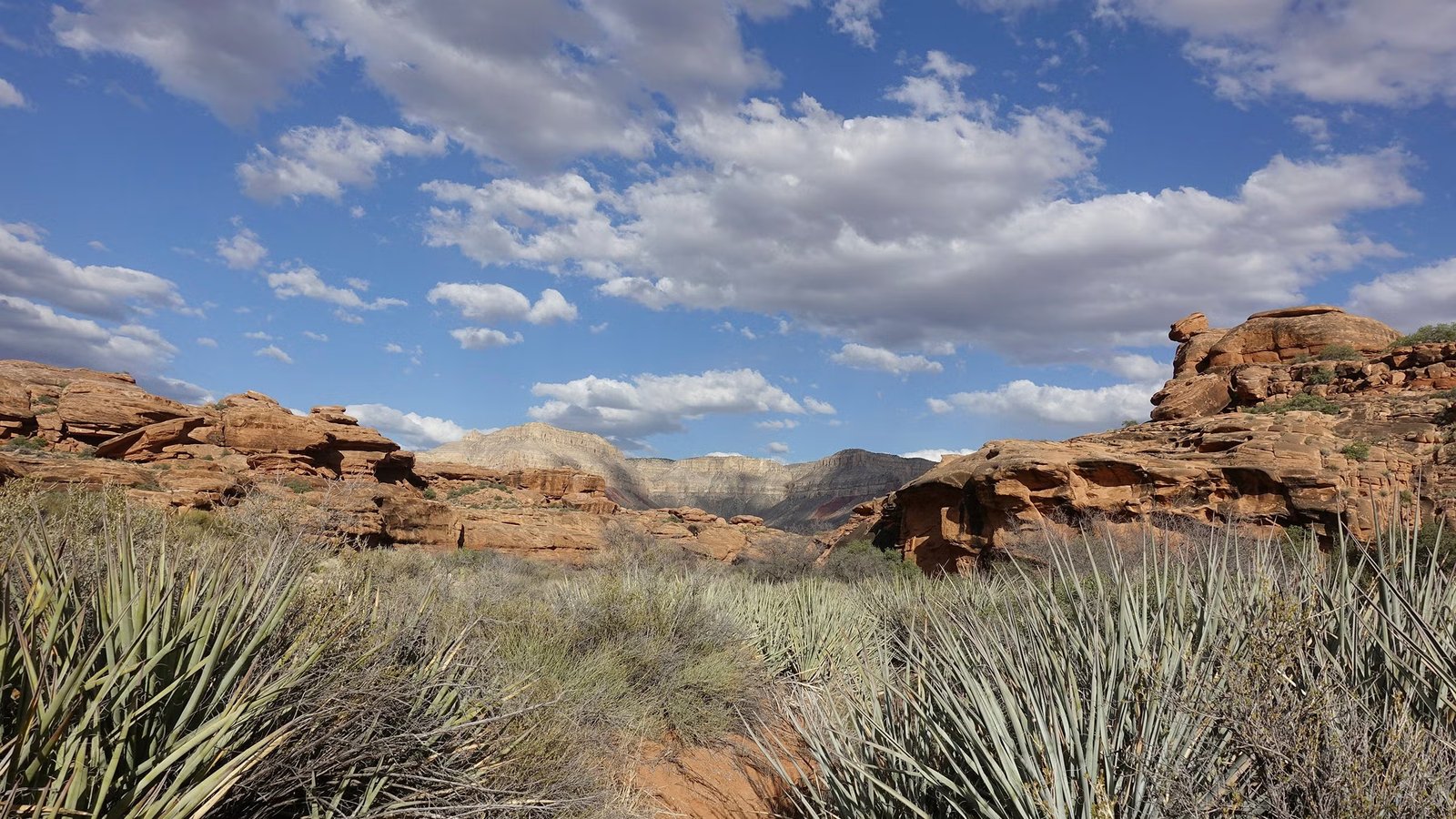
Hack Canyon portal to Grand Canyon (Photo: Getty Images)
Published April 7, 2026 01:14PM
Outside the bounds of Grand Canyon National Park, one of our country’s newest national monuments protects nearly 1 million acres of public lands filled with fascinating rock formations, endangered California condors, and access to the mighty Colorado River. That protection is once again safeguarded from uranium mining-related threats by a recent court victory that even involved the governor.
Baaj Nwaavjo I’tah Kukveni—Ancestral Footprints of the Grand Canyon was established on August 8, 2023, by President Joe Biden to safeguard “myriad sensitive and distinctive resources that contribute to the Grand Canyon region’s renown.” The monument contains at least 3,000 cultural and historic sites, as well as diverse plant and animal species and breathtaking landscapes. The monument’s designation was a hard-won victory by a coalition of Indigenous communities whose ancestral and current homelands were at risk from resource extraction. This included the Havasupai—the people who still live amid the alluring turquoise waterfalls deep in the canyon—who worried that contamination might affect their only water source.
The Legal Battle Over Uranium Mining
Like other national monuments throughout the country, however, Baaj Nwaavjo I’tah Kukveni has faced challenges to its existence. On February 3, 2026, the Arizona State Legislature, along with the County of Mohave, and the towns of Colorado City and Fredonia, sought to appeal the monument’s designation in court. The groups alleged future injury from the loss of tax revenue from uranium mining, among other injuries. The national monument designation prohibited mining, mineral leasing, and geothermal leasing, though mining had already been prohibited under a 2012 ban that ran through 2032. The state of Arizona and Governor Katie Hobbs intervened as defendants, advocating for the monument’s continued existence.

“Arizona voters across the political spectrum have shown strong support for the national monument,” Amber Reimondo, the energy director of Grand Canyon Trust, said in a statement.
On April 1, 2026, the Ninth Circuit Court of Appeals rejected the lawsuit and upheld the monument’s designation on the grounds that future injury must be imminent, not speculative: Thus, allegations of possible future injury are not sufficient. The ruling cited unknown economic conditions in 2032, when the mining ban was set to end.
While negative economic impacts are a common objection to the creation of national monuments, a 2026 report by the Montana-based research group Headwaters Economics, which analyzed communities surrounding 30 large national monuments, found that the designation does not disrupt local economies. In fact, the report found a slight increase in growth per capita income following a monument’s creation.
The Future of the Grand Canyon’s Ancestral Footprints
“This is very much a victory,” Reimondo said. “It’s one challenge that has gone in favor of protecting public and sacred lands. But there are still threats out there.”
In February, the Arizona Legislature sent Congress a non-legally binding memorial asking it to streamline access to Arizona federal lands that agencies have put off-limits to mineral extraction. The memorial included Baaj Nwaavjo I’tah Kukveni.
Reimondo reminds Grand Canyon advocates that decision makers tend to have short memories. “If they don’t hear consistent messaging, they deprioritize.” Her suggestion for those who want to see Baaj Nwaavjo I’tah Kukveni and Arizona’s other national monuments remain free from extractive industries? Continue contacting your representatives and senators to ensure it’s on their priority lists.
