

Published April 8, 2026 12:30PM
Portable power stations have come a long way in the past several years. Since I started using power stations for camping nearly a decade ago, the technology has advanced so much. Now, I’m convinced that anyone building a camper van or overland rig is better off with one of these all-in-one units than a traditional camper van or RV electrical setup—a complicated system of standalone batteries, inverters, converter chargers, solar charge controllers, breakers, and wiring. A modern portable power station combines all of that into one unit, and is a much simpler solution for most people.
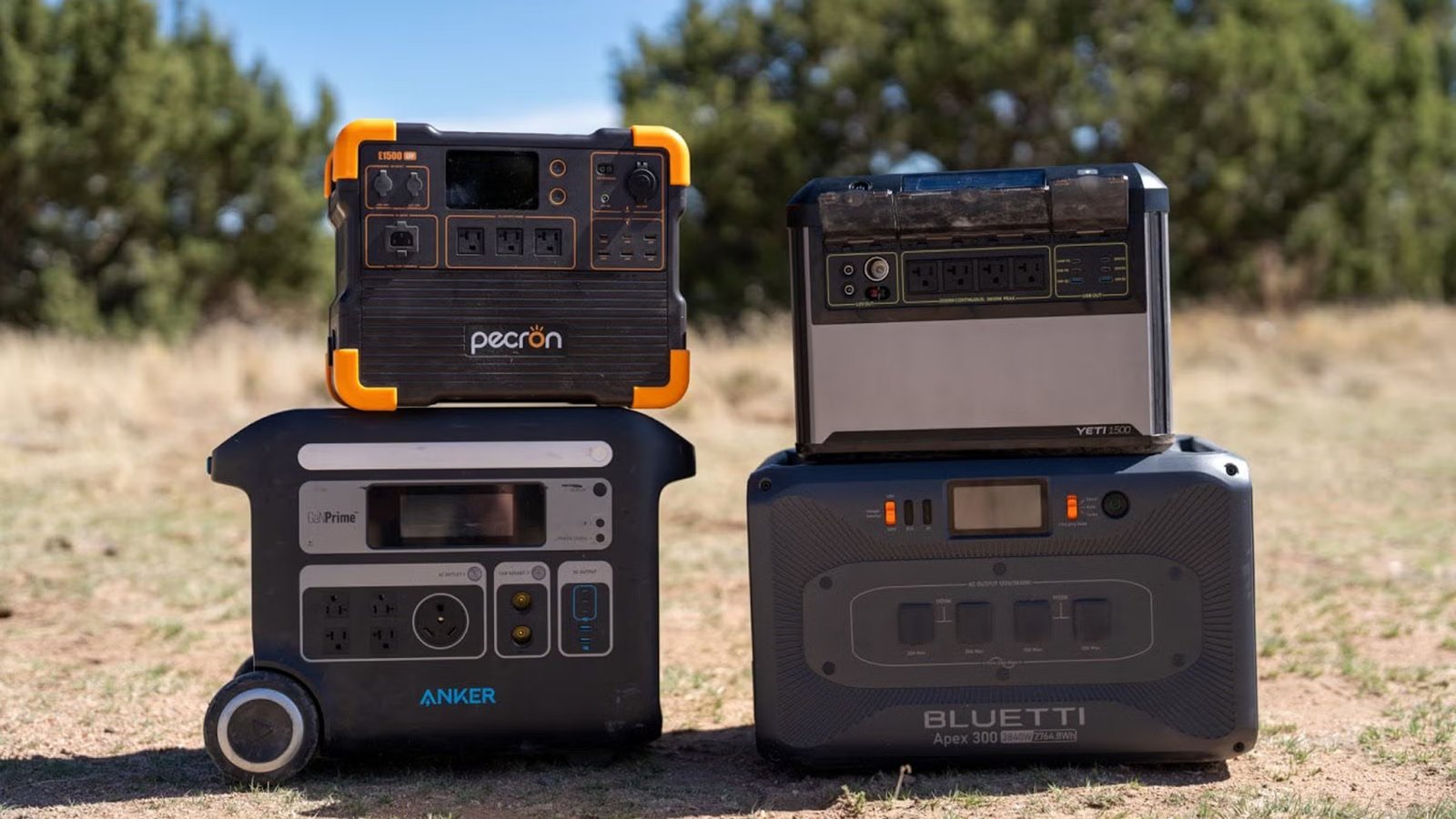
Over the last six months, I tested five of the top portable power stations on the market to figure out which work best for camping and off-grid travel. I evaluated each based on durability, ease of use, reliability, quirks, power output, and charging speed.
Most of my testing focused on how efficiently these units powered common camping appliances: electric coolers, lights, a Starlink mini, 12v AC units, and diesel heaters, as well as extras like e-bikes, cameras, walkie talkies, laptops, and phones. I used the units as standalone power stations in my camper van and in a Tune M1 truck camper. These are the four best portable power stations I recommend for adventurers heading off-grid.
Best Portable Power Stations: At a Glance
Best Portable Power Station Overall
Anker Solix F2000
Pros and Cons
+ Built-in light
+ Easy to transport
+ Great build quality
+ Fast recharge times
+ Expandable with expansion batteries
– More difficult to integrate into camper system do to ports
– Uses XT60 instead of Anderson ports
I’ve been using Anker’s F2000 since it launched in 2023 (then called the PowerHouse 767). It was one of the first portable power stations to include a TT-30 port for RVs—the 30-amp outlet found on traditional generators and campground hookups. That was novel at the time, and I loved being able to plug my Airstream into the unit and effectively double its battery capacity without reworking the rig’s electrical system.
The Solix F2000 was also the first LiFePO4 portable power station I used, and the recharge time was mind-blowing: just 1.4 hours to go from 0 to 80 percent via AC, or about 2.5 hours using five 200-watt solar panels. Its 2,048Wh capacity feels ideal for most camping trips, and the 12 ports mean there’s always room for more gadgets.
At first, the suitcase-style design felt odd, but I quickly came to appreciate the wheels and extendable handle. They make moving the unit much easier, and both wheels and handle have held up to years of abuse. Durability is clearly a focus for Anker—they rate the F2000 as impact-resistant, drop-proof, flame-retardant, and UV-resistant.
It also carries four UL certifications from SGS, underscoring Anker’s emphasis on safety and longevity. I’ve generally had great luck with Anker products, from small phone-charging power bricks to larger portable power stations like this one, and the company’s customer service is consistently highly rated.
One standout feature is the built-in light above the display. It proved especially useful returning to camp after dark on an elk hunt, when I needed to quickly get e-bikes, walkie-talkies, and other gear charging before tackling dinner and camp chores. It’s a small detail you end up appreciating often, even around the house.
My main issue came when trying to power a Vevor diesel heater. The two car-socket outputs are rated for 120 watts but couldn’t handle the heater’s 150–180W startup surge, triggering overload protection every time. None of the other portable power stations in this test had that problem, despite similar ratings.
I also wish the unit included built-in Anderson ports for high-amp DC applications instead of an XT60 connection, which I find less secure for camper and RV use. Anker appears to have heard that feedback from many users—the newer Solix F3000 adds an Anderson port. I haven’t tested the new version yet, but I still highly recommend the Solix F2000. Buy the F2000 for a killer deal, or step up to the F3000 for $1,299.
Best Value Portable Power Station
Pecron E1500LFP
Pros and Cons
+ Recharges from solar very quickly
+ Built-in wireless charger
– Noisy
– Wish it had one more high wattage USBC port
– App is a little glitchy
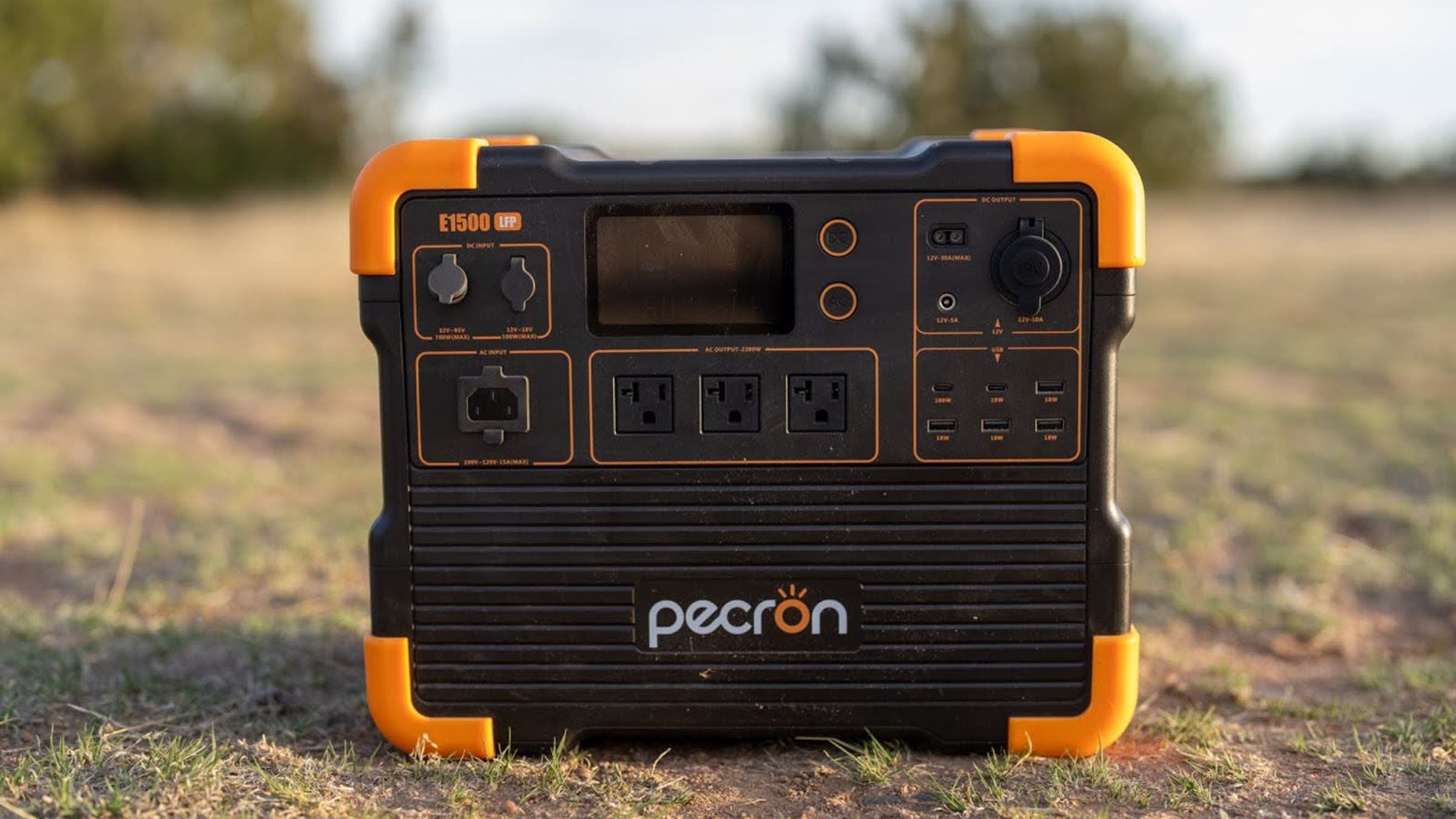
I’ve been using the Pecron E1500LFP to power my Tune M1 camper for the past six months, and it’s performed extremely well so far, with only a couple of minor glitches. Pecron is known as a budget-oriented brand in the portable power station world, but the E1500LFP delivers a lot of features for the money.
On its own, the unit offers 1,536Wh of capacity, expandable up to a massive 9,216Wh with additional expansion batteries. It recharges from a wall outlet in 1.8 hours, accepts up to 700 watts of solar input, and a DC-DC charger (sold separately) can refill it in about 3.5 hours. There are 12 output ports, plus one of my favorite features in this test: a built-in wireless charger on top. I love being able to drop my phone on it at night instead of fussing with cables, while keeping the USB and USB-C ports free for other devices.
The unit feels fairly rugged, and the rubber corner bumpers are a nice touch for outdoor use. At just 40 pounds, it’s also one of the lighter portable power stations I tested and easy to move around camp. It uses a few uncommon input ports, including a GX16MF solar connection, but Pecron includes enough cables and adapters to make camper integration straightforward.
I’ve noticed a few quirks with this power station since I started using it, mainly involving the app. It works well when it works, but I’ve had repeated pairing issues and mostly gave up trying to control the unit from my phone. Thankfully, you don’t really need the app, but it reinforces the brand’s budget positioning compared to competitors with more polished software.
Noise is the other tradeoff. All power stations make some sound when cooling fans or the inverter kick on, but the Pecron is noticeably louder than the others. It also produces occasional high-pitched electrical noise when powering certain devices, like the lights in my Tune M1 through the 100W USB-C port. None of this affected performance, but it’s worth noting if you plan to sleep near it. Also worth consideration: The warranty on this unit is TKTK, and reviews suggest Pecron’s customer service can be hit or miss compared to brands like Anker.
Despite those minor issues, this unit has genuinely impressed me—especially considering you can currently buy it for just $469.
Best Power Station For Rugged Adventures
Goal Zero Yeti 1500
Pros and Cons
+ Rugged
+ Built for outdoor adventure
+ Great track record
– No alternator charger accessory
– Can’t add more battery capacity
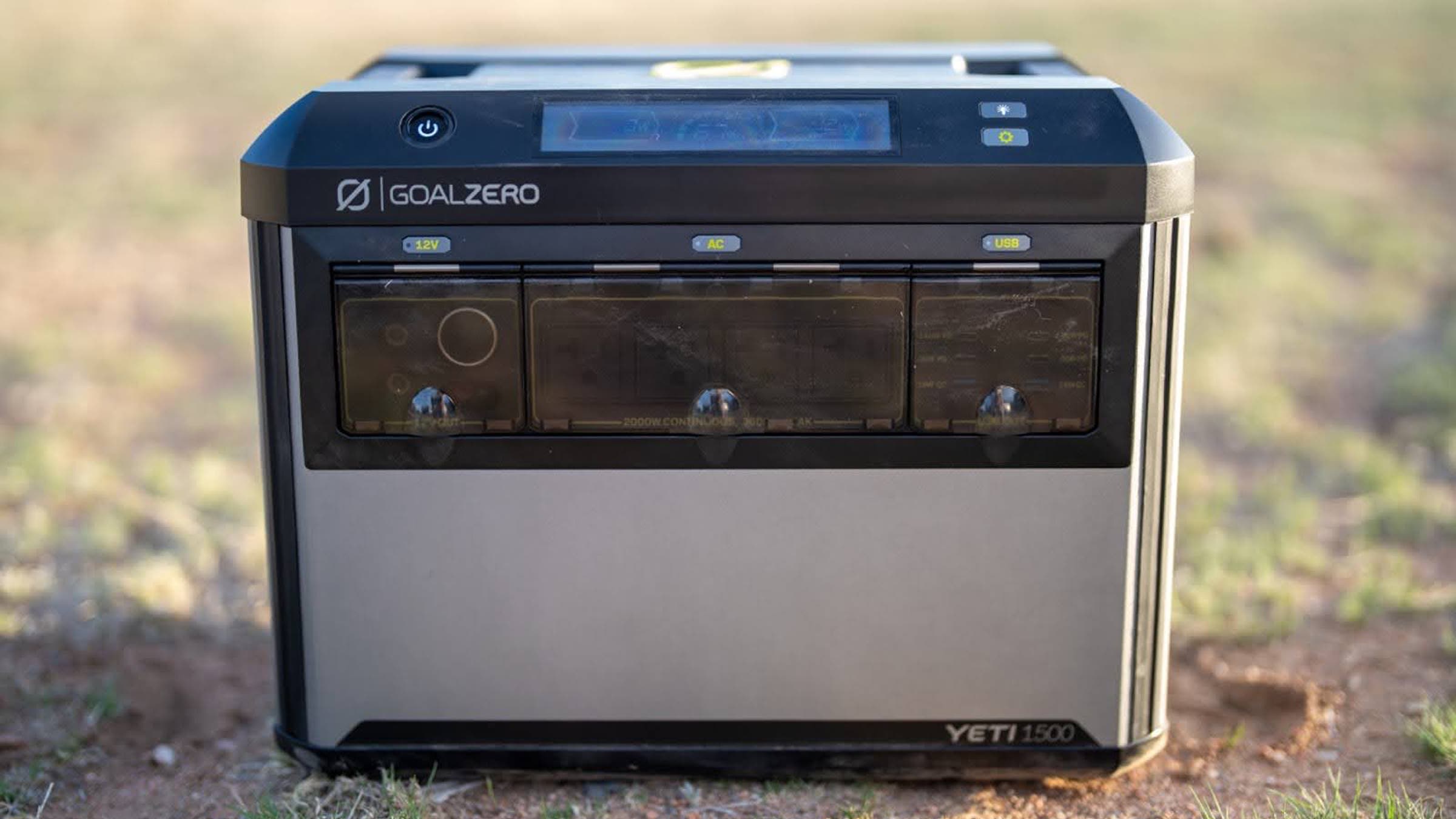
Goal Zero’s new Yeti 1500 replaces the longtime fan-favorite Yeti 1500X. It’s the newest model in this test—and the one I’ve spent the least time with—but so far I’ve been impressed. Goal Zero essentially took everything I liked about the 1500X and improved it. The biggest change is the battery chemistry: instead of lithium-ion NMC (nickel manganese cobalt), the new 1500 uses modern LiFePO4 (lithium phosphate), increasing lifespan from roughly 500 cycles to 4,000 cycles, or about 10 years of use.
Perhaps most importantly, the new Yeti 1500 recharges much faster. It goes from empty to full in about 1.1 hours via a wall outlet, or 4.3 hours from 400 watts of solar—roughly ten times faster than the Yeti 1500X. It also accepts up to 900 watts of combined DC and solar input from panels or a vehicle outlet.
In practical terms, that means you can keep a camp powered longer with fewer solar panels. The unit also doubles the number of AC and USB-C ports, making it far easier to keep all of your camp gadgets charged. One USB-C port delivers up to 140 watts, enough to power a Starlink Mini directly—something the older model couldn’t do. Despite all that power, the Yeti 1500 was the most compact unit I tested, weighing just under 53 pounds.
Both the unit and Goal Zero’s app are intuitive, and I appreciate small upgrades like lights that illuminate the ports when you open the dust covers. Durability also sees meaningful improvements: the unit has an IPX4 water-resistance rating, dust covers for every port, and has been subjected to rigorous drop and vibration testing. To my knowledge, few portable power stations undergo that level of testing, which makes this one feel especially suited for life in the back of a pickup or integrated into a camper van. I also love the built-in T-slot channels hidden behind rubber gaskets on the corners, which make it easy to tie this thing down or build it into an overland rig.
You don’t need to worry much about leaving it outside overnight in the rain, either. The brushed aluminum panels feel robust and give the Yeti 1500 the most premium feel of any unit in this test.The new 1500 includes a five-year warranty, and Goal Zero’s customer service has long been among the best in the industry—I can personally attest to that (see below).
I have just two gripes. First, you can’t expand capacity with add-on batteries like you can with competing power stations. That capability exists in Goal Zero’s 4000 Pro, but it would be nice to keep the smaller form factor while adding storage when needed. Second, Goal Zero hasn’t yet released an alternator charger to replace the Yeti Link, and the new units aren’t compatible with the old system. That’s a major drawback, since alternator charging is often the fastest and most efficient way to recharge a power station in a camper setup.
Then there’s the price. At $1,500, the Yeti 1500 costs more than similarly specced units like the Pecron or Oupes. Goal Zero says that reflects the unit’s durability and customer-service support. I’m curious to see whether it lives up to that durability hype over time.
Most Versatile
Bluetti Apex 300
Pros and Cons
+ Easy to use
+ Can also function as a whole home backup or power an off-grid cabin
+ Unique 240V option
– No DC ports without D1 Hub accessory
– More of a generator replacement than a power station
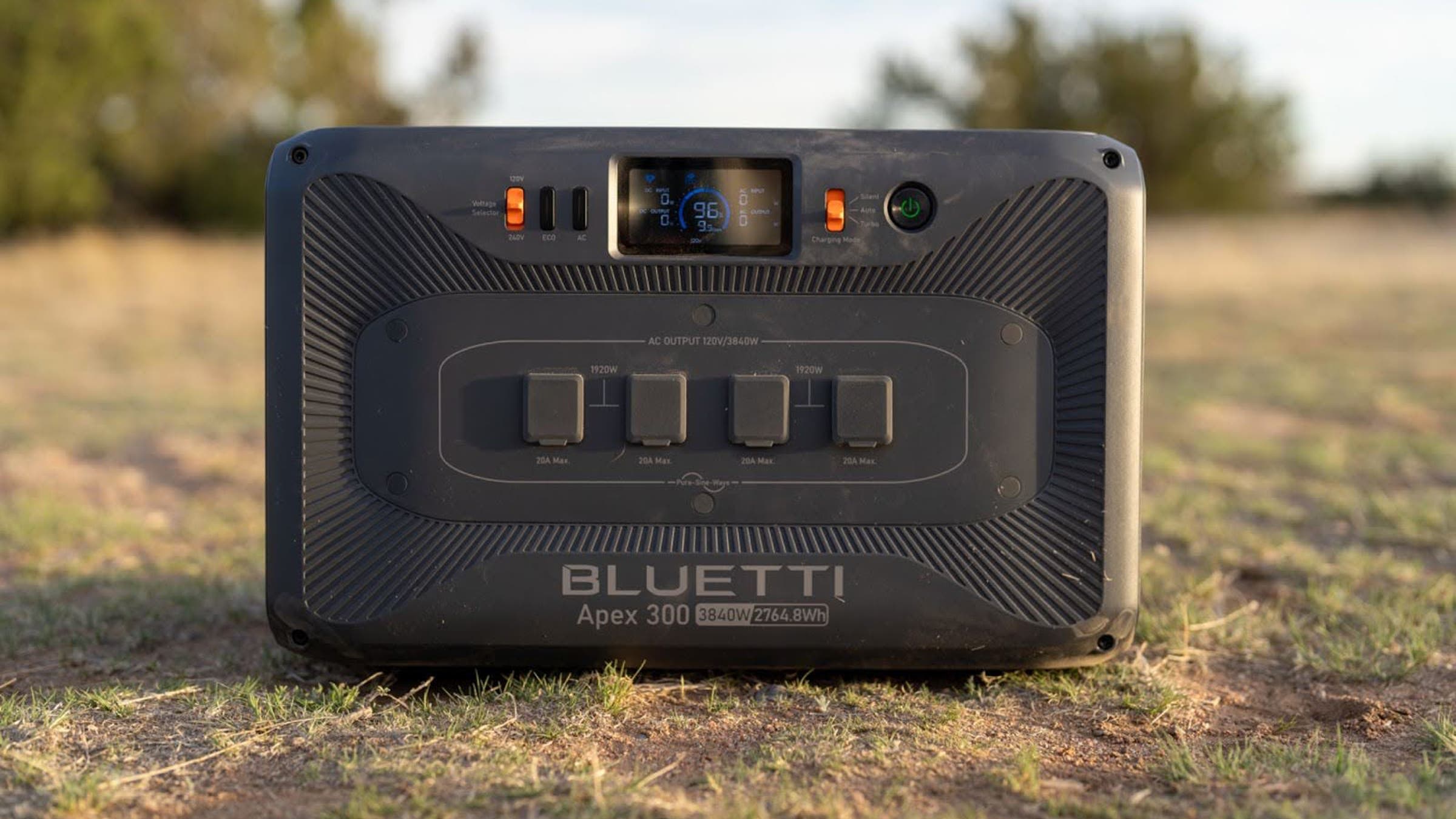
The Bluetti Apex 300 might seem a bit out of place on this list at first glance—it’s the heaviest unit here at 83 pounds and lacks built-in DC ports. But I’ve found it to be one of the simplest solutions for powering a larger camper or RV, a workshop, or even an off-grid cabin.
The Apex 300 offers 2,764Wh of capacity and is highly scalable. It can connect to two or three additional Apex 300 units and up to 18 expansion batteries for a total of 58kWh—enough to power an entire home. You’d never need that much capacity for an adventure rig, but the flexibility is appealing: use it off-grid to power your gadgets, then bring it home and integrate it into a whole-house backup setup. It can even switch from standard 120V output to 240V for running large appliances like a dryer.
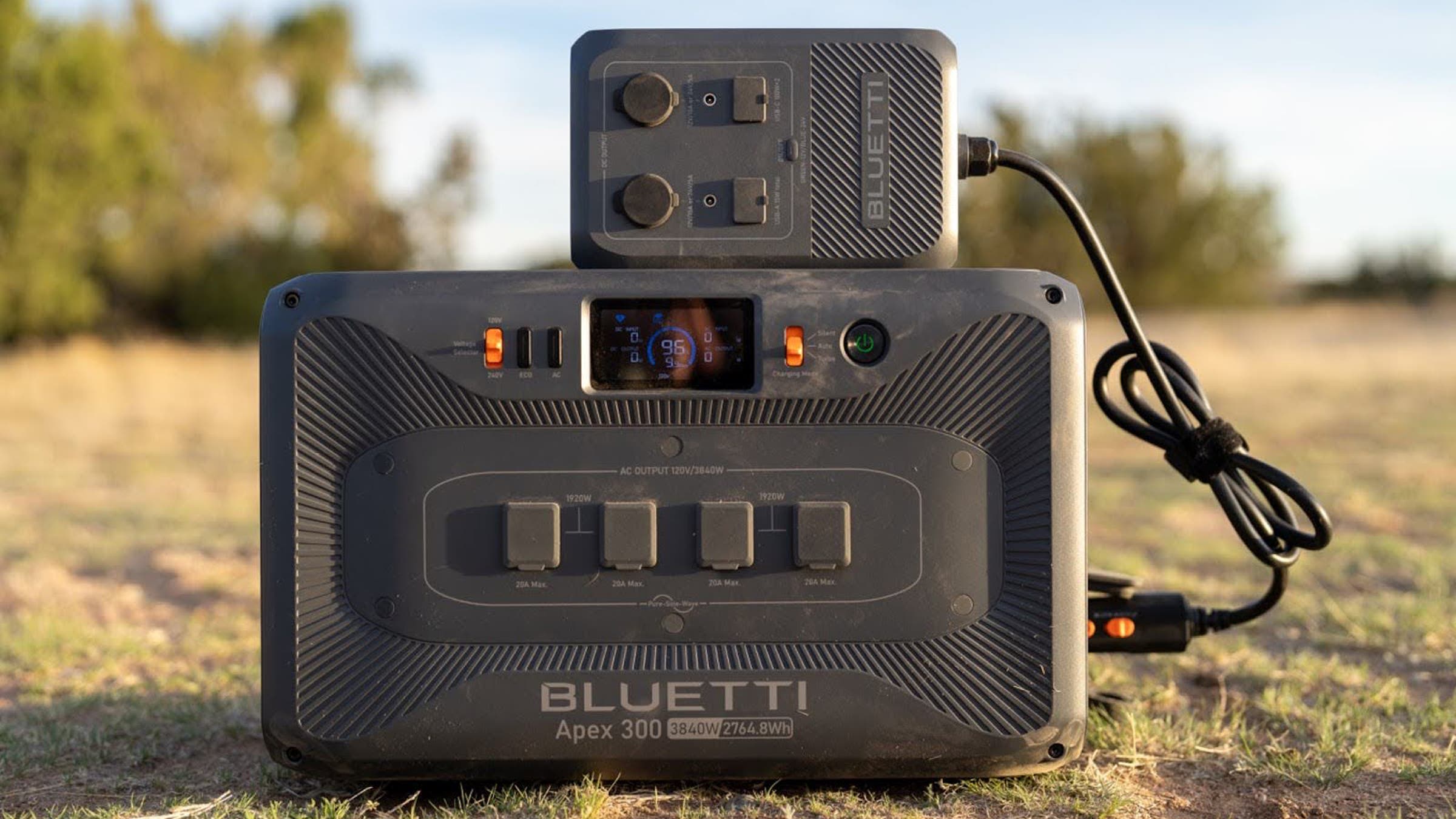
For RV and camping use, the front panel includes four standard AC outlets for typical appliances, along with both 30-amp and 50-amp AC ports that allow you to plug an RV directly into the unit. For 12-volt needs, Bluetti offers the Hub D1, which connects to the side and powers everything from Starlink to a diesel heater. The Hub D1 also includes a 12V, 50-amp Anderson port that can tie into an RV’s DC panel for a more semi-permanent setup capable of running high-wattage DC appliances.
The takeaway is that the Apex 300 is an unusually versatile and straightforward power station—equally capable of powering an adventure rig or serving as expandable backup power at home. As a side note, Bluetti’s new Elite 300 is another unit I’m eager to test and will likely compare more directly with the other portable power stations in this roundup.
Frequently Asked Questions
What is the best portable power station?
Our pick for best overall power station is the Anker Solix F3000. (We also highly recommend the previous model, the Solix F2000). If budget is your primary concern, you can’t beat the affordable Pecron E1500LFP. The new Goal Zero Yeti 1500 promises to be the most durable of the bunch and will be well suited to overland and van builds. The Bluetti Apex 300 is a great option for folks looking to power larger campers and RVs, or who want the versatility to add serious capacity for home usage.
How big of a power station do I need?
The short answer is: it depends. Everyone will have different power needs, and it’s best to actually do the math and figure out what your energy requirements are before buying one. There are also a handful of calculators out there that can help you estimate this. In general, I’ve found that a 1500wh power station is the bare minimum needed to power the basics of a simple adventure rig (think lights, powered cooler, fan, heater) for a weekend. If you’re invested in longer off-grid adventures, look something in the 3000wh range.
What’s the fastest way to recharge a portable power station while on the road?
An alternator charger, or DC-DC charger, is the best way to keep your power station topped off while you’re on the road. They typically pull 500-1000 watts from the vehicle’s alternator while you’re driving, and also accept input from solar panels at the same time. That means you can often recharge one of these power stations in just an hour or two of driving, compared to charging via a standard-sized, vehicle-mounted solar array, which takes nearly a full day.
What are the disadvantages of a portable power station?
These days, not many. However, if you have a really complex camper build and need a truly custom setup, or you just prefer the ability to build onto your electrical system and swap individual components as necessary, a portable power station might not be for you. It’s also worth noting that no portable power station is perfect, and many fail over time. So it’s important to take warranties and customer service ratings into consideration when buying a power station.
Meet Our Lead Tester
While Bryan Rogala is no electrician, he has been using portable power stations consistently for over a decade in campers, trailers, and trucks for off-grid camping. He’s also wired a custom power system in a truck camper, and retrofitted the electrical guts of several RVs over the years. These days, he’ll pick a portable power station over messing with a camper’s electrical system any day.
