

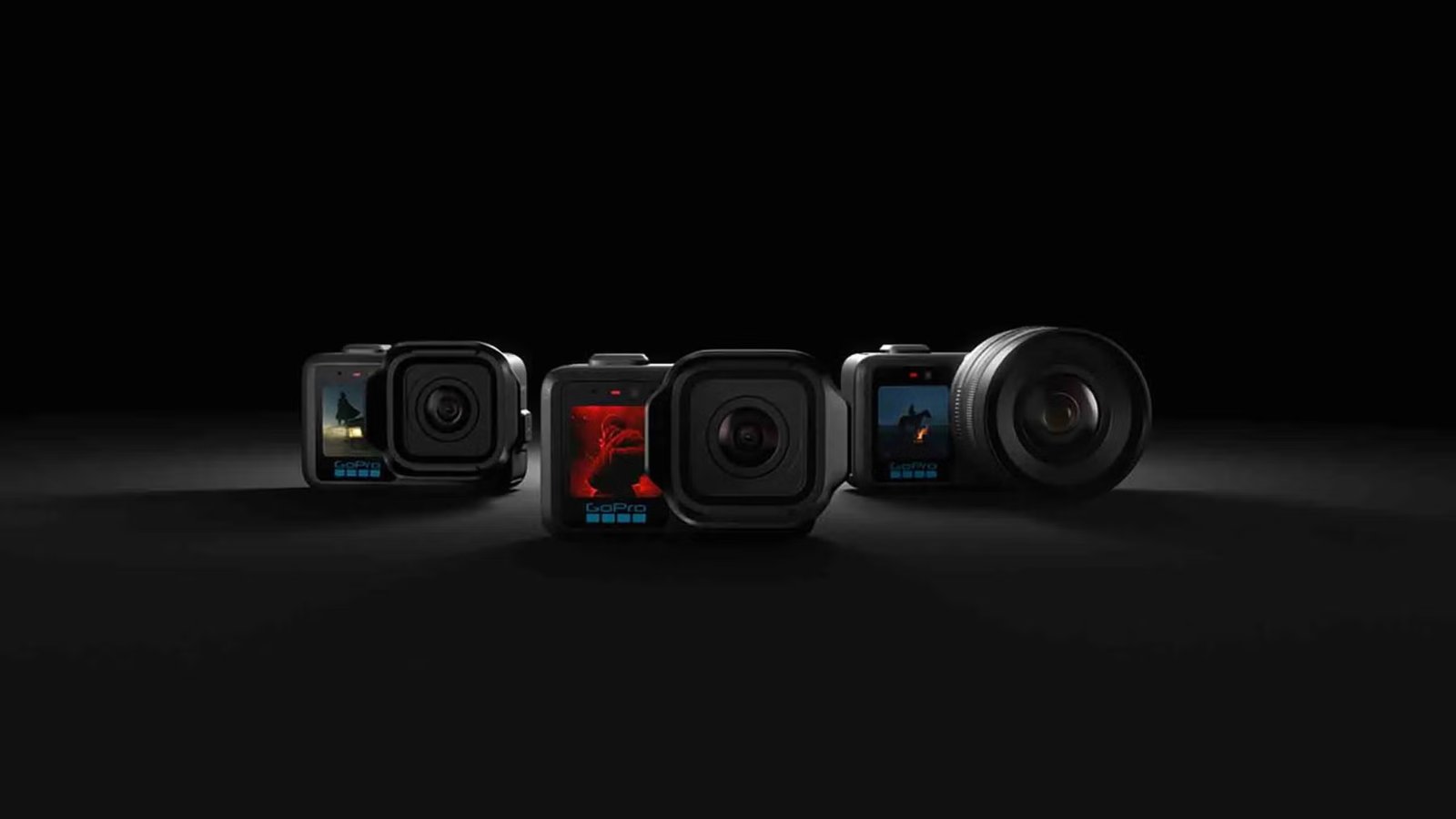
Our resident camera tech experts explains everything you need to know from GoPro’s launch announcement.
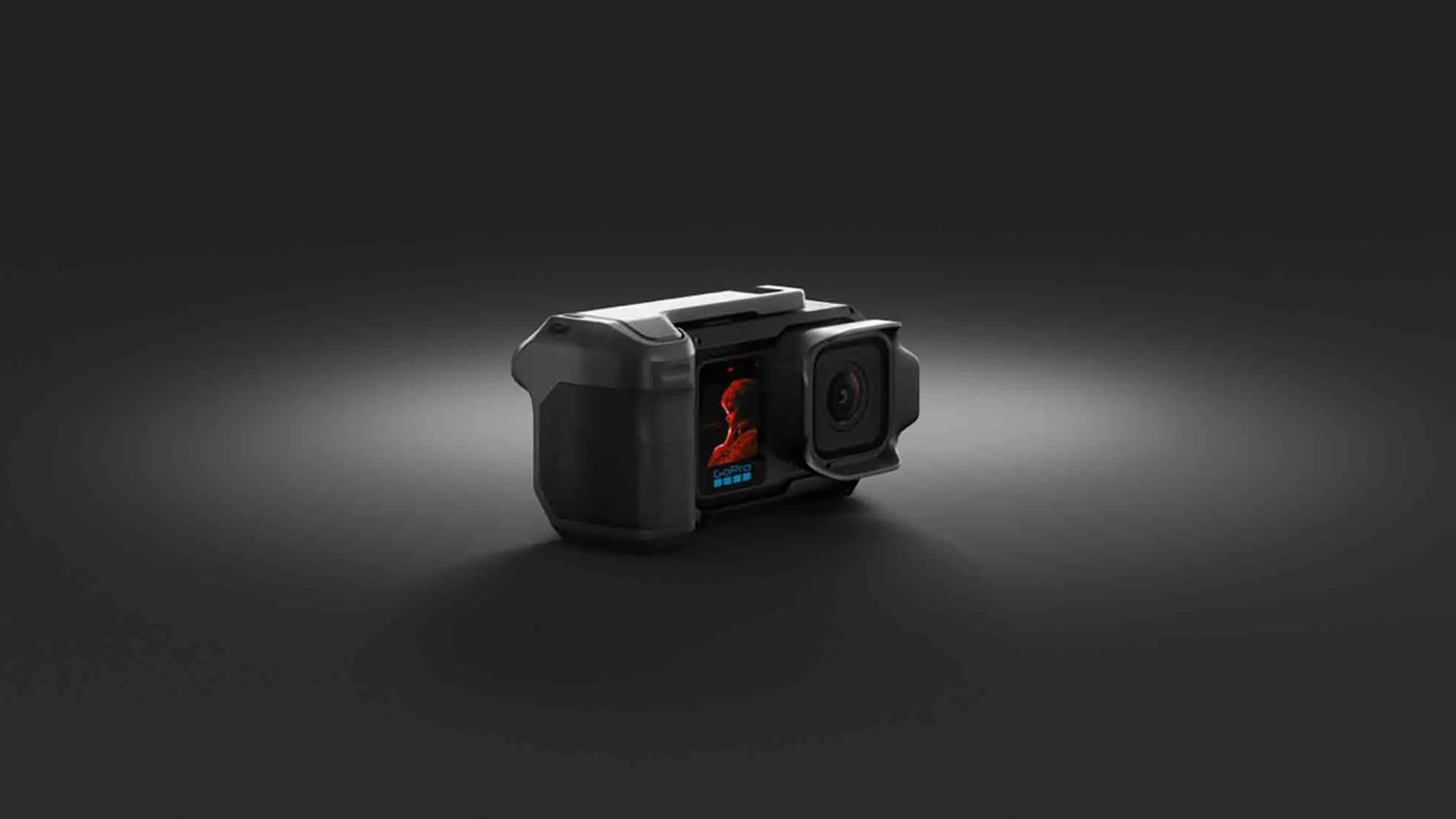
The new GoPro Mission 1 lineup, featuring the Mission 1 Pro and the groundbreaking Mission 1 Pro ILS (right), the brand’s first camera designed for interchangeable micro four-thirds lenses. (Photo: Courtesy of GoPro)
Published April 14, 2026 09:36AM
Whenever I test a new camera—be it a mirrorless or the new iPhone—I always focus on sensor size. The bigger the sensor, the more light it can drink in. More light equals higher-resolution video and photos and better low-light performance.
So I was delighted to learn that a much larger sensor is the biggest reveal from GoPro’s just-announced line of new cameras, dubbed the Mission 1 series. Both of the two new models feature a large one-inch sensor paired with a blazing-fast GP3 processor that allows the cameras to shoot a super detail-rich 8K video and capture low-light footage that’s leagues better than the current flagship Hero13.
Fast Facts: GoPro Mission 1 Pro and Mission 1 Pro ILS
- Larger 1″ sensors for better resolution and low-light performance
- Both shoot 8K and 32x slo-mo video
- Upgraded battery for longer shoot times
- 50 mp RAW images
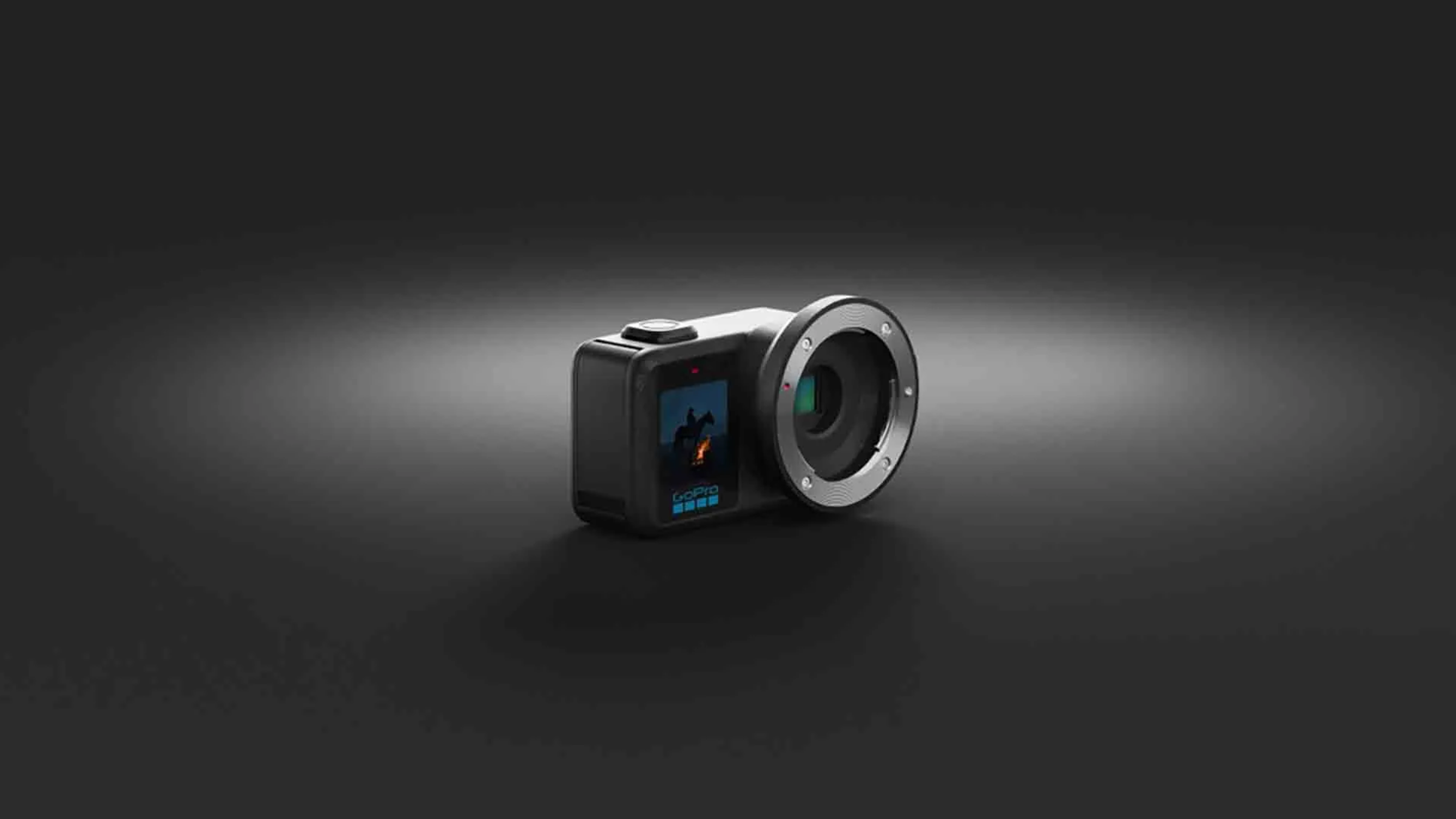
- Mission 1 Pro ILS works with interchangeable micro four-thirds lenses
- Mission 1 Pro available for pre-order May 21; Mission 1 Pro ILS available Q3 2026
Sign up to receive your exclusive code and be the first to know when the new MISSION 1 Series drops.
Bigger, Better Sensor
According to GoPro, the new sensor is 73.6 percent larger than what comes in the Hero13. Compared to competitors, it’s 22.7 percent bigger than the sensor in DJI’s flagship Osmo Action 6, and 46.4 percent bigger than the sensor in Insta360’s flagship Ace Pro 2. This new GoPro sensor is still significantly smaller than what comes in a full-frame camera, and slightly smaller than what comes in a four-thirds camera—but the extra light-gathering capability is still a big deal for anyone who loves the versatility of shooting with GoPro cameras.
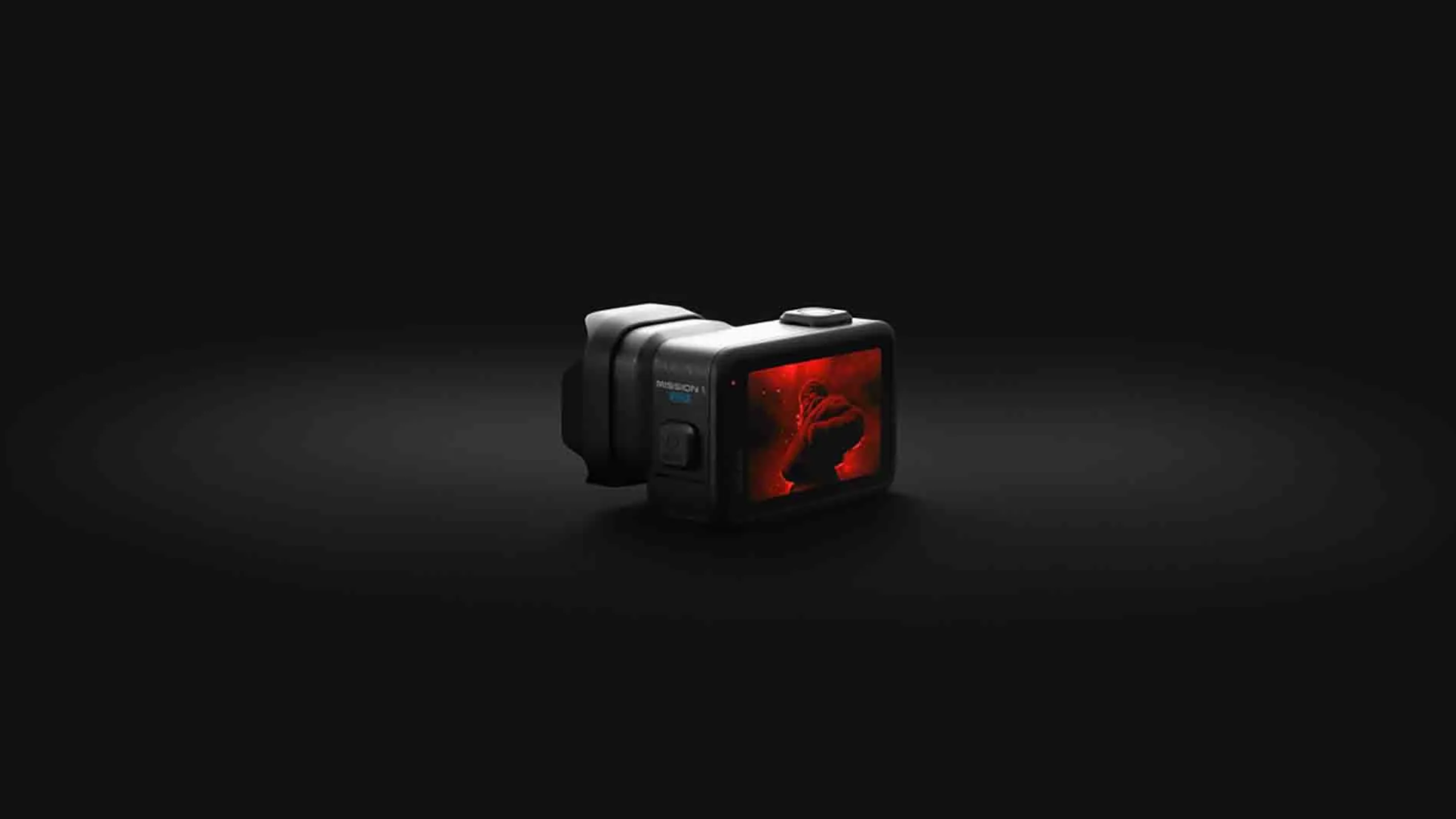
Thanks to the new sensor and faster processor, there’s also a huge range of slo-mo options. In 1080p, the cameras will shoot a time-warping 32x slo-mo footage that’s so slow a 10-second real-time clip, when stretched out, lasts five minutes and 20 seconds. They will also shoot rich 4K footage at 8x slo-mo, and microscope-worthy 8K footage at 2x slo-mo.
When it comes to still images, the larger sensor allows the new cameras to shoot 50 mp RAW photos, or pull 44 mp jpeg photos from the 8K footage.
Interchangeable Lenses
Like other GoPros, the Mission 1 Pro comes with a fixed GoPro lens. The Mission 1 Pro ILS, however, works with interchangeable lenses—a first for the brand. When the Pro ILS ships, it won’t come with a lens provided by GoPro but instead is designed to work with over 300 micro four-third lenses already on the market.
Heavier, But Still Adventure-Ready
To accommodate the enhanced sensors, GoPro had to make both the Pro 1 and Pro ILS bigger and heavier than a Hero13. But not that much bigger: The Pro 1 is only 1.7 ounces heavier and 8.3 millimeters longer. And GoPro has ensured that these slightly larger cameras still display the characteristics that have defined the company since the beginning: portability and easy mounting.
Both work with all the GoPro mounts—magnetic, standard, and threaded—and the Pro 1 is waterproof, no housing needed, down to 20 meters (66 feet). If you want to dive with the Pro 1, you can buy a housing that will keep it safe down to 60 meters (196 feet). The Pro 1 will be as easy to mount as a Hero13, and if you’re willing to put up with a little weight and bulk penalty, the footage will be worth it.
No one will want to strap a Pro ILS onto their helmet when using a huge four-thirds lens. However, GoPro did release marketing materials that show a Pro ILS with a small lens hanging off a bike helmet, and it didn’t look terribly awkward or head-tiltingly heavy.
Until now, video creators who wanted more resolution than a Hero13 would usually go to a micro four-thirds or even to mirrorless setup. Those cameras got creators the resolution they wanted, but they didn’t come with the GoPro-level accessories they needed to shoot footage in the most extreme conditions. By stepping up their sensor and making it work with their rad-seeking mounts, GoPro believes they have created a medium-to-high-resolution camera system that’s currently unrivaled on the market.
New Creator Accessories
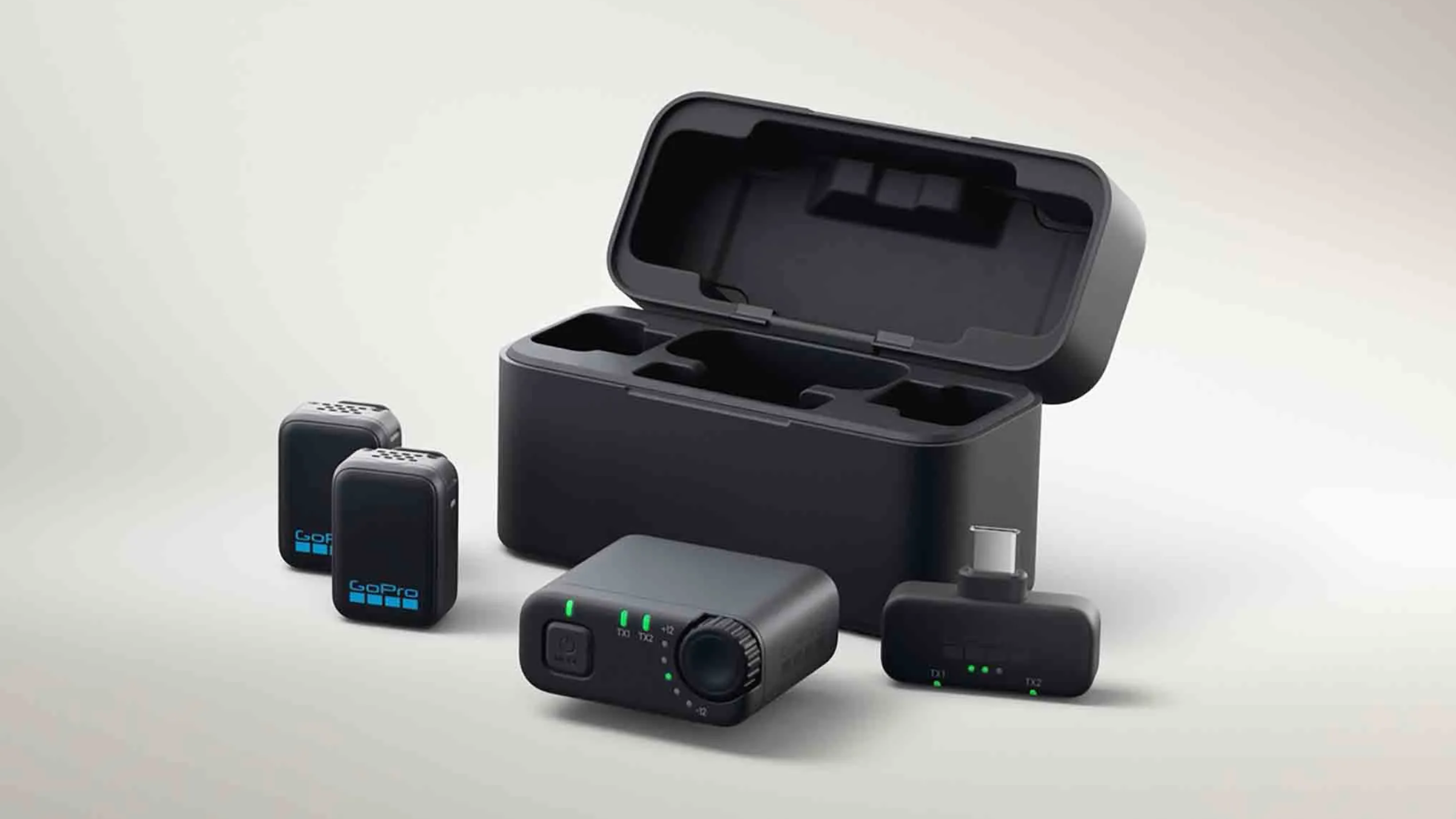
Knowing that GoPros also have lots of competition in the first-person social or vlogging market, where users often prefer iPhones, the DJI Osmo Pocket 3, or micro four-thirds cameras, GoPro is also launching a whole system to capture this crowd. With their Creator and Ultimate Creator packages, buyers can get hand-held, selfie-style mounts (one with its own mechanical video stabilization), lights, and a new wireless mic system that comes with a receiver and two high-quality wireless mics. For social shooters who work mostly on TikTok and Instagram, there’s a new vertical mount adapter.
I’m personally excited about another accessory, called the Grip Edition, that essentially turns the Mission 1 Pro into a classic point-and-shoot camera. It’s simply a grip for your right hand, similar to what you’d find on a four-thirds or mirrorless camera, with a shutter release button on top. Having a GoPro that is ergonomically easy to use as a camera and shoots huge RAW files means I have a powerful two-in-one system for editorial shoots and travel, so I don’t have to bring another camera.
To power all this newness, the Mission series also comes with an advanced battery called the Enduro 2. Paired with the efficient GP3 processor, the Enduro 2 allows the cameras to shoot three-plus hours of 4K footage (80 percent longer than the Hero13), and five-plus hours of HD footage (70 percent longer than the Hero13). When you crank the resolution up to 8K, the Mission 1s will last well over an hour as long as there’s some airflow to help with heat management.
The Verdict: Should You Upgrade to GoPro’s New Mission 1 Cameras?
Normally, I’m lukewarm about new GoPro launches because it’s rare they release something that’s over-the-top exciting. But I can’t wait to get my hands on the new Pro 1 and Grip Edition for a real-world test. The added resolution and still-camera functionality are going to make my job as a journalist easier and improve the quality of my work. I’m excited to see where the camera can help me push my creativity.
The Pro 1 opens for pre-orders on May 21 and is available on May 28. The same goes for the Pro 1 Grip Edition. The Pro ILA, Creator, and Ultimate Creator Edition add-ons are coming in Q3 of 2026. GoPro said they’re not announcing MSRPs until May 21 because of the current fluctuations in memory pricing. The Hero, Hero13, and Max 2 cameras will stay on the market.
