

Published April 16, 2026 09:34AM
The biggest cycling tech story of 2026 is not a new electronic drivetrain, lighter carbon frames, or another tweak to geometry. It’s a wheel—specifically, a much bigger one. After years of quiet prototyping, rumors, and one-off customs, 32-inch wheels are arriving in public view in multiple places all at once. They’re showing up on prototype cross-country race bikes, on production-ready gravel grinders, and in the product plans of tire and suspension companies that usually don’t make a move unless they believe a new category has real legs.
Why 32” Wheels Are a Big Deal
Over the past five or six years, mountain bike product development has largely shifted toward refinement rather than reinvention. Bikes have gotten better, but in smaller increments—changes that often aren’t enough to push riders to upgrade. You could argue that’s even a good thing, at least for riders (myself included) who are tired of buying bikes that feel obsolete a season or two later. As someone who tests bikes for a living I’ll put in plainly: If you invested in a new mountain bike back in 2020, it’s still just as good, just as capable, as one you may be tempted to buy today. There’s never been another period of time in my career when I would have said this.
But 32-inch wheels are poised to disrupt this equilibrium, just like 29-inch wheels did two decades ago. Those bigger hoops replaced 26-inch wheels in nearly every mountain biking category. They rolled over obstacles with ease, carried more speed, and once geometry caught up, they handled better and gave riders more confidence.
Can 32-inch wheels push the envelope even further? Or is this just the cycling industry’s attempt to make the bikes we already own feel outdated—a response to the post-pandemic whiplash that’s left many bike brands searching for a reason to get riders buying again?
The Performance Upshot
To understand how real this shift is, I spoke with engineers, product managers, and test riders across the industry—from Fox, Trek, Maxxis, and Vittoria to smaller design firms and bike brands already working on production models. Some are still experimenting. Others are preparing to bring bikes to market. All of them are trying to answer the same question: where do 32-inch wheels actually make sense?
Right now, the clearest answer is cross-country, where efficiency gains matter most, and riders are willing to tolerate tradeoffs. Craig Richey, senior director of marketing and product strategy at Fox Factory, said the industry is already past the what-if stage. “I think we’re beyond the exploration phase now with 32 for XC,” he said. After months of testing a 32-inch full-suspension XC bike, he came away impressed: “The amount of traction is unbelievable. Even on a very minimal tread XC tire, the grip is phenomenal. Roll-over speed is really good. You don’t get hung up on little bumps.”
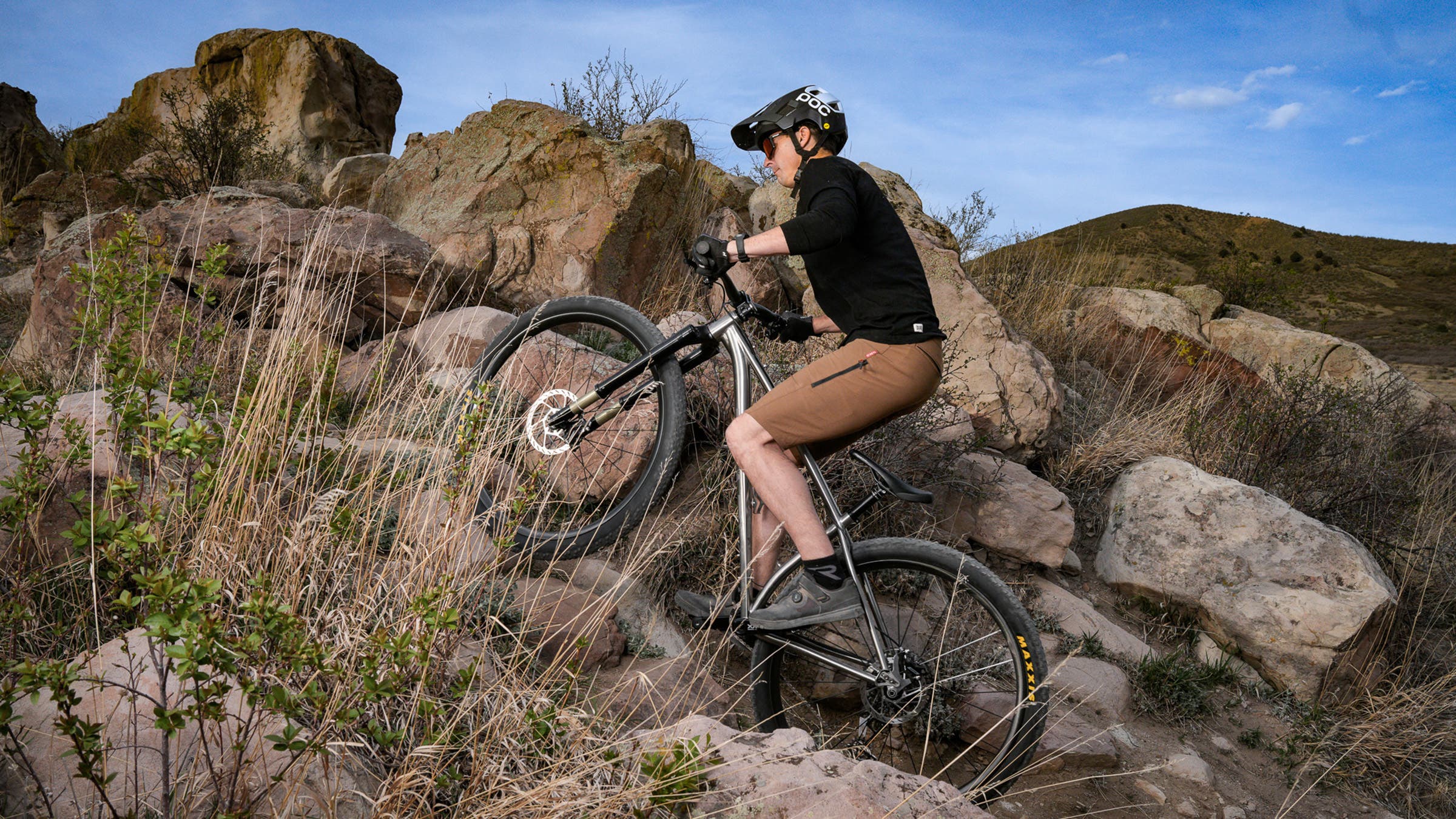
What stood out more was how close that performance already is to today’s race bikes. The prototype Richey has been riding since last summer is a heavy, aluminum early-stage test mule—at least five pounds heavier than a modern carbon 29er. Even so, he said it carries essentially the same speed as a refined World Cup-level XC bike.
If cross-country is the obvious starting point, gravel may be the category with the broadest appeal. Ken Avery, senior VP of product development at Vittoria Tires, said the basic theory is already becoming clearer in testing: all else being equal, a larger wheel rolls more smoothly and may offer “a few watts advantage” in some cases, though he was careful to note that the company has not published its final test data. Avery also sees gravel as a potential sweet spot because the riding is less technical and rider fit is less restrictive than it is on mountain bikes. “In the big mile gravel events that are so common, I could certainly see this being something that’s quite popular,” he said.
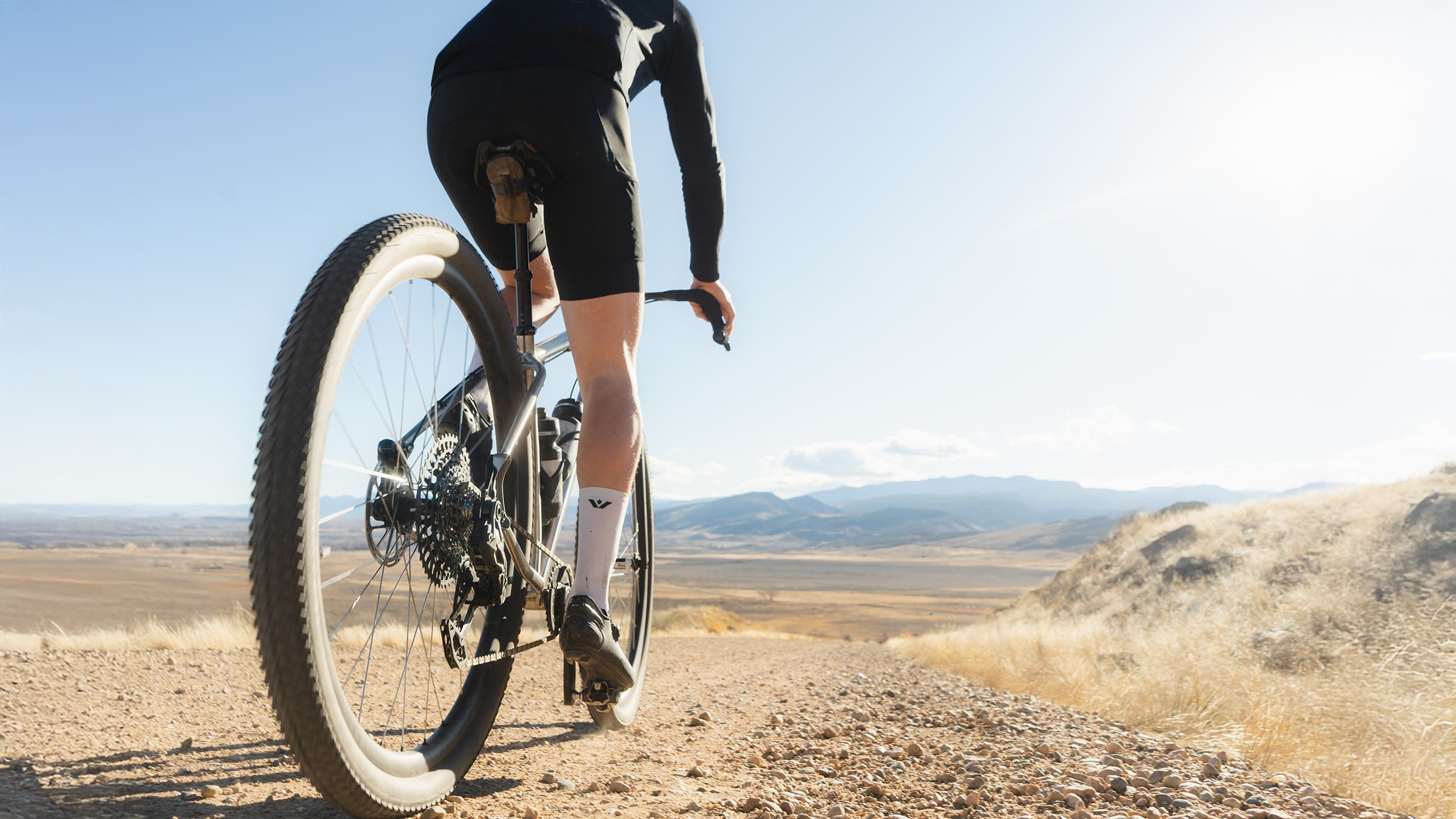
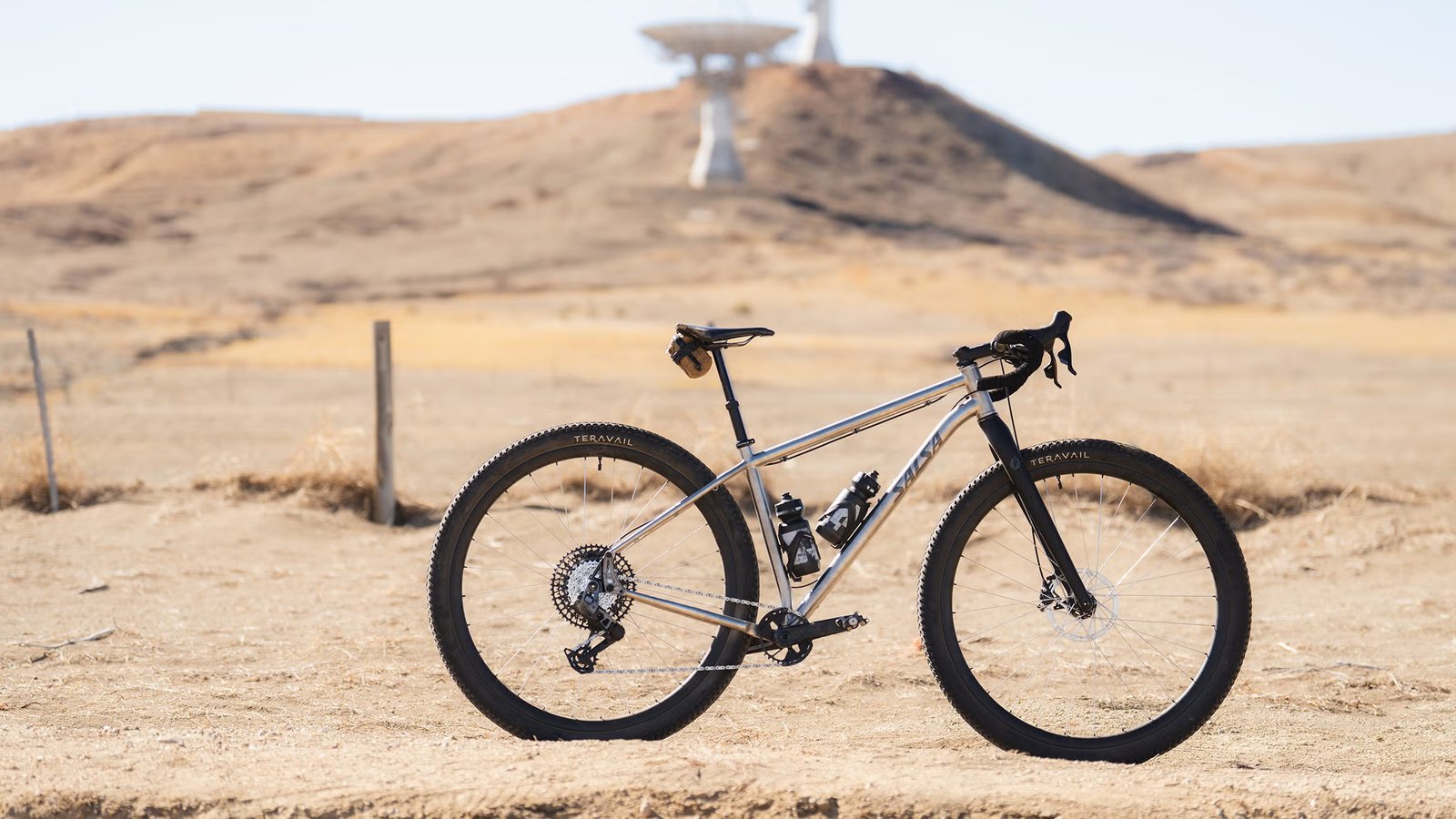
Salsa is one of the brands leaning hardest into that idea. Its new Fargo 32 bikepacking model, which will be available to consumers this fall, is the first clear sign that 32-inch wheels may not stay confined to the race course. Salsa product manager Joe Meiser said the company’s testing showed that the larger wheels roll faster and farther under the same amount of power, while also increasing the tire contact patch by roughly 10 to 15 percent. On loose surfaces, he said, the effect is immediately obvious: “It really doesn’t flinch in the sand.” The comparison Meiser keeps coming back to is the 26-to-29 shift. “32 is to 29, 29 is to 26,” he said.
If the benefits are that clear, the obvious question is why it took so long to get here.
The Problem With a New Tire Size
The answer comes down to where the rubber meets the trail. Travis Brown, Trek’s R&D field test manager and a former professional mountain bike racer who has worked on everything from early 29ers to mixed-wheel platforms, said brands have been experimenting with oversized wheels for years, but until recently, the industry lacked a proper, modern tire to enable serious comparative testing.
“You wouldn’t think that the tire would be the bottleneck to discovery,” said Brown. “But building frames is easy. Building rims is pretty easy. Suspension forks are a little bit more challenging, but everything is easier compared to getting tires made.”
The issue isn’t just design; it’s a six-figure commitment. Developing a new tire size requires entirely new molds and curing equipment, and those aren’t small investments. Unlike frames or rims, where brands can prototype quickly and iterate in-house or with smaller production runs, tires demand full-scale manufacturing from the start. Until recently, there wasn’t enough confidence in 32-inch wheels to justify that level of investment.
That shift needed a catalyst. Duncan McGuire, sports marketing and athlete manager at Maxxis, said the company’s 32-inch program began because race teams were asking for an edge ahead of the 2024 Paris Olympics. The original goal was to have a 32-inch version of Maxxis’ fastest mountain bike tire, the Aspen, ready for those Games, but development timelines pushed that out. Now, instead of being unveiled for Paris, the category looks set to break out through this year’s World Cup season and into 2027 and 2028 product cycles.
Other Design Challenges
The next question was whether 32-inch wheels could work on smaller bikes. Much of the early conversation around 32-inch wheels has centered on taller riders, but Salsa pushed to see if that had to be the case. Allison Schmitz, a design engineer at Salsa and a 5’3″ rider, helped develop a size small prototype after questioning whether it was even possible. “It might seem counterintuitive to make a small 32-inch bike, but I can confidently say that small riders can handle these larger wheels,” she said.
In testing, Schmitz said the benefits were clear—better rollover, traction, and momentum—as were some trade-offs. “All those benefits come with the compromise of a slow start up… and on certain pavement climbs… I didn’t necessarily feel the increased speed.”
Other brands are seeing the trade-offs as well.
Julien Boulais, director of marketing and strategy at Faction Bike Studio, a design and engineering firm that develops bikes for brands behind the scenes, said the opportunity is clear, but so are the limits. “I’d be surprised if 32-inch wheels take over as much of the industry as 29ers did,” Boulais said, pointing to packaging challenges and the risk of brands forcing the wheel size into categories where it might not belong.
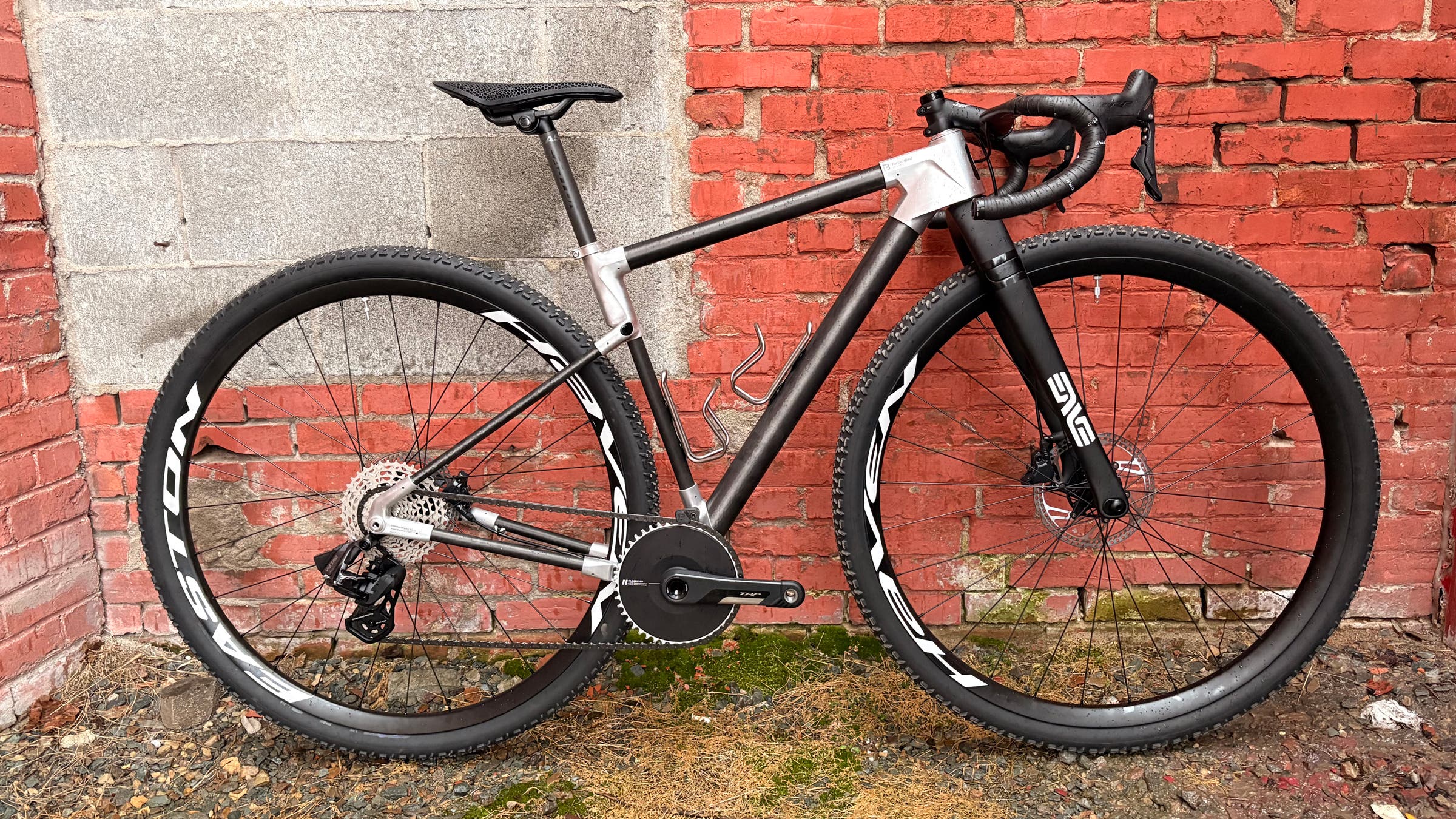
Even among brands pushing the concept forward, there is hesitation to overpromise. Revel is showing two 32-inch concept bikes this spring, but is not selling them yet. “It’s pretty easy to make one and say, ‘Hey, we have a 32-inch bike,’” founder Adam Miller said. “It’s not as easy to make one that rides well,” he added.
Thirty-two-inch wheels currently live in the tension between clear performance gains and very real design challenges. For one, bigger wheels are harder to package. Toe overlap becomes more of an issue on gravel bikes. Front ends get taller. Complete bikes get longer, especially as suspension travel increases. Brown said mixed-wheel setups will likely be part of the answer in some segments, while Richey noted that outside of XC, the category is still in an early phase of exploration.
There are also the knock-on effects that average riders will care about more than racers do. Bike racks will need to be longer, as will travel bags. Finding spare wheels, tires and other replacement parts in boutique bike shops will pose a challenge during the adoption phase. Richey put it plainly: “For pros, a one percent gain is enough to justify all kinds of inconvenience. For everyone else, that equation is different.”
32” Wheels: Future or Fad?
Even the most optimistic voices aren’t calling this a universal replacement. Avery compared the current moment to plus tires and fat bikes, where the industry pushed hard for universal adoption before settling into more defined use cases. The difference is that 32-inch wheels appear to offer measurable performance gains in some disciplines, not just a different ride feel.
Sea Otter will be the first real look at how far along this shift actually is. There will be prototype bikes, early production models, and likely a handful of racers quietly testing new equipment.
What happens next will depend on how quickly the industry can solve the underlying challenges—weight, fit, suspension, and supply—and whether the performance gains are noticeable enough for riders to justify the cost. Whether 32-inch wheels become the next standard or settle into a niche is still an open question. But for the first time, it feels like one worth asking.
