

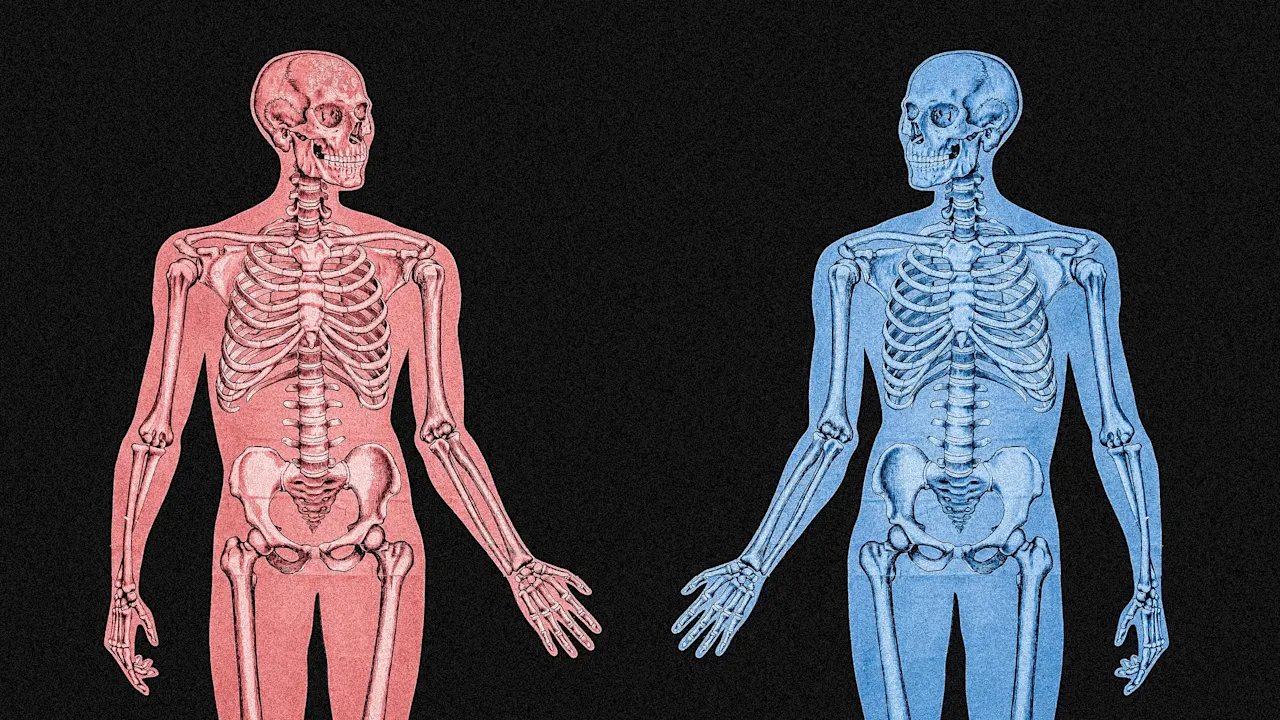
Over the past few years, words that once had no place in workplace conversations have slowly entered HR agendas: menstruation, endometriosis, perimenopause, menopause, breast cancer and—more slowly—male andropause or prostate cancer. These are not passing trends. They signal a deeper shift in how we understand work and the people who do it.
For decades, work was designed around a fiction, that of the “neutral” worker, an abstract individual assumed to be fully available, consistent, rational, and unaffected by bodily constraints. But this neutrality was never real. As Caroline Criado Perez has shown in her brilliant book Invisible Women, many systems and environments have been designed around a male body treated as the default. And that includes workplaces. Hence, the implicit expectation is that women adapt to a model never designed for them, to organizational structures, as well as tools and equipment.
Yet people do not leave their bodies at the door when they enter the workplace. Hormonal cycles, pregnancy, postpartum recovery, menopause, and andropause are not “private” issues without professional consequences. They affect energy levels, cognitive load, availability, and sometimes long-term career trajectories. Their historical invisibility has come at a huge cost (albeit largely ignored) both for individuals and for organizations.
{“blockType”:”mv-promo-block”,”data”:{“imageDesktopUrl”:”https:\/\/images.fastcompany.com\/image\/upload\/f_webp,q_auto,c_fit\/wp-cms-2\/2026\/01\/PhotoLVitaud-169.jpg”,”imageMobileUrl”:”https:\/\/images.fastcompany.com\/image\/upload\/f_webp,q_auto,c_fit\/wp-cms-2\/2026\/01\/PhotoLVitaud-11.jpg”,”eyebrow”:””,”headline”:”\u003Cstrong\u003ESubscribe to Laetitia@Work\u003C\/strong\u003E”,”dek”:”Women power the world’s productivity — it’s time we talked more about it. Explore a woman-centered take on work, from hidden discrimination to cultural myths about aging and care. Don’t miss the next issue — subscribe to Laetitia@Work.”,”subhed”:””,”description”:””,”ctaText”:”Learn More”,”ctaUrl”:”http:\/\/laetitiaatwork.substack.com”,”theme”:{“bg”:”#2b2d30″,”text”:”#ffffff”,”eyebrow”:”#9aa2aa”,”subhed”:”#ffffff”,”buttonBg”:”#3b3f46″,”buttonHoverBg”:”#3b3f46″,”buttonText”:”#ffffff”},”imageDesktopId”:91472264,”imageMobileId”:91472265,”shareable”:false,”slug”:””,”wpCssClasses”:””}}
It is essential to note that gendered health is not only about biological differences. It also reveals how work itself is structured. Women, for example, experience higher rates of musculoskeletal disorders, partly because they are overrepresented in repetitive jobs and are more likely to carry a disproportionate share of unpaid caregiving and domestic labor. Work is never experienced in isolation. It is embedded in real lives, with cumulative fatigue, constraints, and vulnerabilities. Gendered health, in that sense, sits at the intersection of biology and the sociology of work.
Persistent taboos
Taboos are slowly shifting. Menstruation, endometriosis, and menopause are more visible in public debate than they were a decade ago. Yet in many organizations, silence remains the norm. Many women remain cautious about speaking openly, all too aware of the risk of being reduced to sexist stereotypes.
Male themes are as invisible if not more. Andropause, i.e. the gradual testosterone decline associated with aging, is less socially recognized than menopause. Its invisibility reinforces the myth that only women’s bodies are a “problem”. In reality, aging affects everyone. As workforces age and careers extend, organizations are increasingly confronted with more diverse, uneven, and non-linear health trajectories.
There is a structural tension here. Acknowledging gendered health can trigger unintended consequences. It can reinforce bias by framing women as less stable. In some cases, even well-designed policies—such as leave for endometriosis or pregnancy loss—are underused because employees fear stigma. In cultures that remain implicitly sexist, formal rights do not automatically translate into real usage.
A more universal approach is required
This is why a purely category-based approach has its limitations. A more effective lens may be a more universal approach to vulnerability. Rather than segmenting workers into fixed groups (“women,” “seniors,” “caregivers”), it may be more accurate to focus on life “moments”. Work lives are punctuated by predictable and unpredictable disruptions: disease, grief, separation, caregiving responsibilities, burnout, recovery periods. These situations are widespread and recurrent. Today, a majority of workers are caregivers in one way or another. And there will be more and more of them with population aging. At the same time, careers lengthen and transitions multiply. Therefore the stable, continuous and homogeneous industrial model of work no longer reflects reality.
This is where the idea of universal design comes in handy. Originally developed in disability studies, it proposes designing systems starting from the most constrained users. In practice, what improves accessibility for people with disabilities often improves usability for everyone. Applied to work, this logic invites us to rethink schedules, career paths, flexibility, and recovery periods—not as exceptions, but as structural features. The goal is robustness through inclusivity.
And we need to think differently about age
All this also requires revisiting how we think about age. Behind gendered health lies another blind spot: ageism. We still tend to treat chronological age as a proxy for capability. Yet age is a weak indicator of health, energy, or engagement. With longer life expectancy, variation within age groups is widening. A 60-year-old worker may be fully capable—or significantly constrained. The average says increasingly little.
Long term the model of the “ideal worker” is unsustainable. This fully available, always-healthy, unencumbered employee has never been representative of reality. But demographic change is making this fiction even less viable. Organizations should now be managing diversity of conditions as a structural norm.
That’s why gendered health is not a niche topic. It is an entry point into a broader question: how durable is work as currently designed? Recognizing bodies, ages, and life moments is the very condition for organizational resilience.
{“blockType”:”mv-promo-block”,”data”:{“imageDesktopUrl”:”https:\/\/images.fastcompany.com\/image\/upload\/f_webp,q_auto,c_fit\/wp-cms-2\/2026\/01\/PhotoLVitaud-169.jpg”,”imageMobileUrl”:”https:\/\/images.fastcompany.com\/image\/upload\/f_webp,q_auto,c_fit\/wp-cms-2\/2026\/01\/PhotoLVitaud-11.jpg”,”eyebrow”:””,”headline”:”\u003Cstrong\u003ESubscribe to Laetitia@Work\u003C\/strong\u003E”,”dek”:”Women power the world’s productivity — it’s time we talked more about it. Explore a woman-centered take on work, from hidden discrimination to cultural myths about aging and care. Don’t miss the next issue — subscribe to Laetitia@Work.”,”subhed”:””,”description”:””,”ctaText”:”Learn More”,”ctaUrl”:”http:\/\/laetitiaatwork.substack.com”,”theme”:{“bg”:”#2b2d30″,”text”:”#ffffff”,”eyebrow”:”#9aa2aa”,”subhed”:”#ffffff”,”buttonBg”:”#3b3f46″,”buttonHoverBg”:”#3b3f46″,”buttonText”:”#ffffff”},”imageDesktopId”:91472264,”imageMobileId”:91472265,”shareable”:false,”slug”:””,”wpCssClasses”:””}}
Source link
