

Published April 17, 2026 10:11AM
It’s no secret the economy has been unpredictable recently, and even if your job hasn’t been hit, you’ve probably felt the pinch of inflation. The outdoor industry is no exception, with outdoor gear prices increasing 11 percent in the past year.
The good news? There are plenty of ways to save money on gear. You can peruse used items on Marketplace or secondhand stores, or through initiatives like Patagonia’s Worn Wear and Cotopaxi’s Preloved, which offer an added layer of confidence. If only new will do, patience can pay off by shopping end-of-season sales, or you can buy less technical gear and apparel at discount stores like Target or Walmart.
In between pricey gear from name brands and lower-quality items from the discount stores lies another option: private-label gear and apparel from outdoor retailers. These products span nearly every outdoor category and are easily competitive in design, materials, and quality compared to top name-brand goods. I’ve been testing products from REI, Backcountry, and Decathlon’s own brands for years, and am continually impressed with the range of categories, apparel fit, and overall quality. I’ve often wondered how the stores match high-end performance gear in a range of categories while undercutting top-shelf competitors’ prices. It turns out the answer is similar to what I found in my deep dive on budget shoes: a cost-effective streamlining of the development and manufacturing process.
How Do REI, Backcountry, and Decathlon Sell Their Gear for Less?
The direct sales model contributes the majority of savings. When stores own their branded items, they can reduce retail markup and cut out the middlemen. They also keep the majority of development and design in-house and don’t need the same marketing pushes, which creates an even stronger return.
“We maintain competitive prices by controlling margin outcomes through direct factory relationships,” said Vice President of REI Co-op Brands Isabelle Portilla. This method allows a portion of those margins to be passed back to customers.
Most factory-to-shelf processes look something like this: A jacket (or bike, or backpack, or sleeping pad) travels from the assembly line to the distribution center, then to the retail shelves, and then to the customer.
Every link in the supply chain adds a cost that eventually gets passed to the consumer. It begins at the factory, where a brand pays a “landed cost,” which includes material, construction, freight, and tariffs. In a traditional model, a third-party retailer buys that gear at a wholesale price. Finally, the retailer applies a markup to reach the shelf price—often as much as double the wholesale price— which is what the customer pays.
(A quick heads-up here: Naming conventions for these lines can get confusing. REI’s branded items are labeled under REI Co-op, but Decathlon’s self-branded lines have separate brand names like their Van Rysel cycling line and Kiprun running gear. Backcountry splits the difference, with both Backcountry-labeled items as well as their own Stoic line.)
Direct-to-consumer (DTC) models—like outdoor gear house brands—skip the middle step, selling straight from their own distribution channel to the consumer. By selling through their own websites or flagship stores, these brands bypass the wholesale-to-retail handoff, allowing them to eliminate third-party markup and pass those savings on to the consumer.
“We own the entire journey,” Beverly Jacobus, Decathlon US’s director of specialty brands, told me. “We built a completely vertical business model and brought research, development, production, and the supply chain entirely inside our own walls.” Decathlon maintains some third-party retail partnerships, but its primarily internal ecosystem and robust e-commerce channel allow the brand to pass those overhead savings directly to the consumer.
While the consumer isn’t getting wholesale pricing, the savings can be significant: around 25–35 percent off top-shelf pricing for comparable items (the actual percent off depends on material and construction costs and whether the product uses name-brand components).
Why Lower Cost Doesn’t Equal Lower Quality
One reason consumers pass up less expensive products is that they’re cheaply made or use lower-quality materials. Many house brands, however, use the same premium components and rigorous testing as their name-brand competitors. For example, REI’s Teris GTX rain jacket uses a PFAS-free Gore-Tex membrane—the industry gold standard found in everything from Fjallraven to Arc’teryx. Decathlon’s Quechua MH500 hiking shoe uses a proprietary rubber blend, lab-tested for grip using protocols similar to Vibram’s rubber testing.
Moreover, by keeping the design cycle entirely in-house, brands can act on consumer data with speed and precision. For example, REI redesigned its Magma sleeping bag line after consumer feedback, analyzing over 150,000 body scans to offer the sleeping bags in nine width and length options. Because the feedback loop, lab testing, and manufacturing stayed under one roof, they were able to save time, money, and resources.
Finally, house brands benefit from massive savings in customer acquisition. House brands still invest in advertising, but their items enjoy shelf-side visibility, with the clear metric advantage of a reduced price point next to comparable items. With a constant stream of organic foot traffic in their own stores and websites, house brands don’t have to buy customer attention in the same way a third-party brand must through external marketing.
Outdoor Gear Still Doesn’t Come Cheap, Exactly
This streamlining and reduced pricing still doesn’t mean that house-brand products are cheap or accessible for everyone. Outdoor gear is expensive, and even 30 percent savings is out of reach for a lot of people. While a pair of name-brand shorts might run you $85, REI’s version hits the $65 mark. You see similar spreads across the board: Backcountry’s $400 ski bibs undercut the $500 industry standard, and Decathlon’s $109 bike shorts offer a significant discount over the typical $160 price tag. The price savings are there, but you can still get far less expensive gear by buying used or shopping at non-specialty stores.
The target consumer for house brands is still a core outdoors person shopping for premium gear. A casual once-a-year camper, on the other hand, will be fine with a budget-friendly Coleman tent, and the person getting dragged to a Fourth of July 5k because they were promised a hot dog doesn’t need $65 running shorts.
What you get with private-label gear is a solid middle ground between budget stores and top-shelf outdoor name brands. You’re paying more than you would for true discount gear, but the developers are embedded in the outdoor world and draw on in-house research like REI’s Magnusson Lab, which measures product-specific performance and durability throughout the design process. Think of it like getting state of the art gear at a discount without waiting for an end-of-season sale.
What I’ve Tested (and Recommend) From REI, Decathlon, and Backcountry
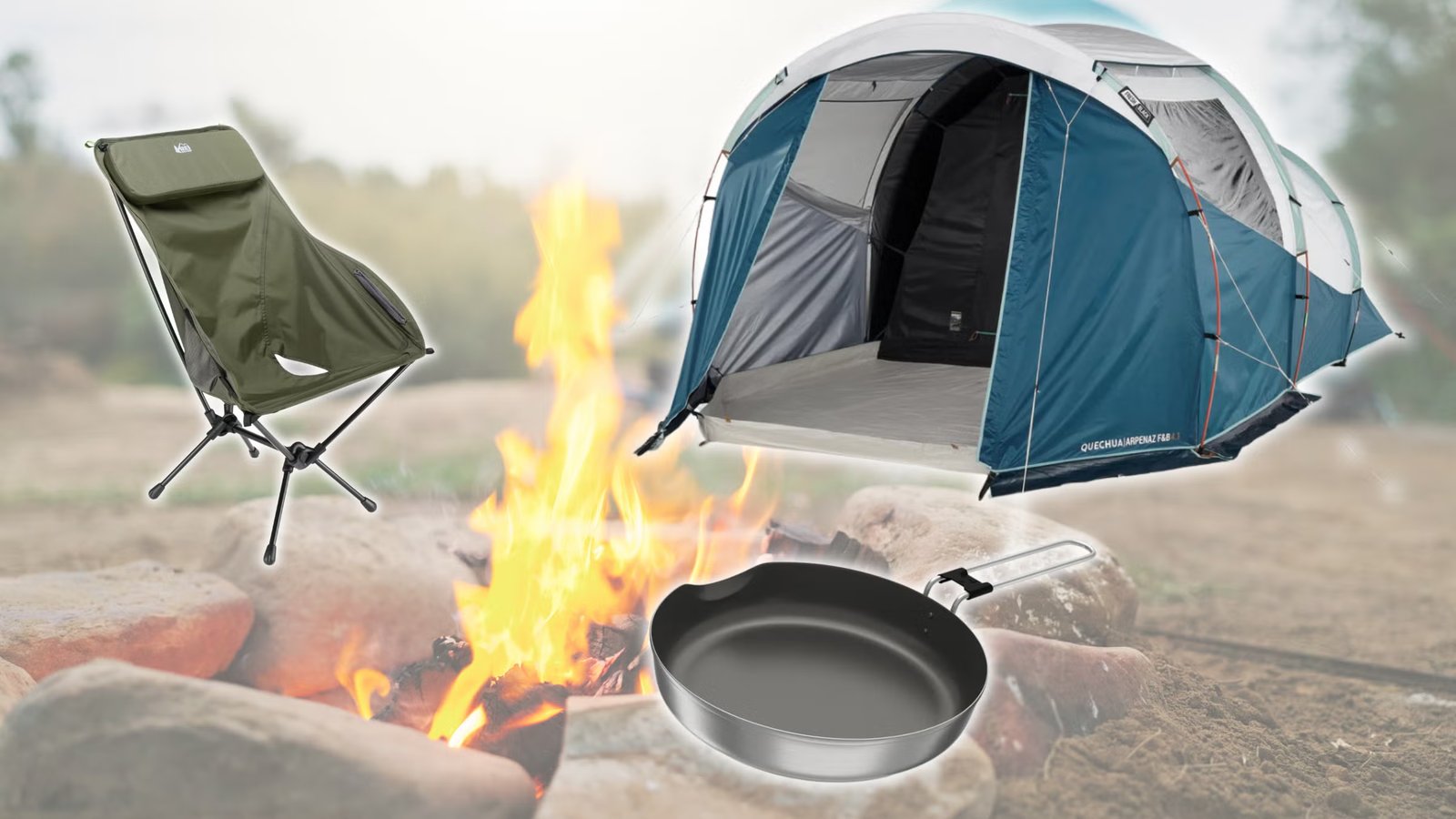
REI: REI’s Swiftland running line is excellent, including the compression shorts and windshell. Their Flexlite Camp Dreamer Chair is my top pick this season, and they redesigned their sun protection layers using customer feedback, including the new, lighter-weight Flash Shade Hoodie.
Decathlon: Decathlon’s affordable front-country camping products include the four-person Quechua tent and their 15-piece camp cookware. I also wear the Simond MT100 jacket whenever I need a packable down layer (and reviewed it in full here), and they debuted entry-level gravel bikes with excellent geometry and durable components, which held up on a trip that tested my early-season fitness to the point of agony.
Backcountry: Backcountry’s snow sports jackets and bottoms have Gore-Tex models and a range of fit options for different body types. They’ve also recently expanded their travel bag lineup.
