

Published April 20, 2026 02:11PM
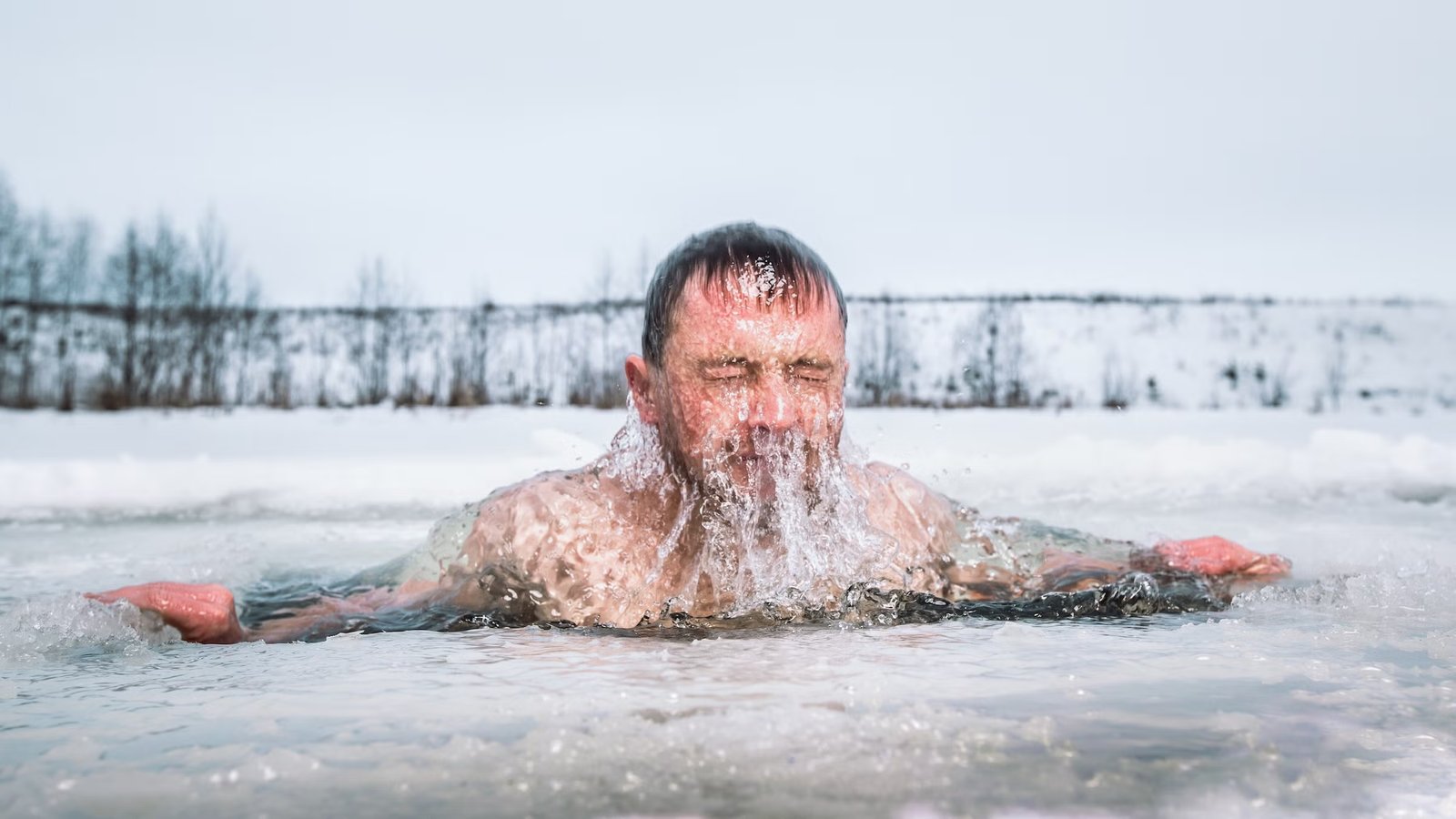
When you see a shirtless guy (and let’s be honest, it’s usually a guy) hacking through a frozen tub with a hatchet to start his morning with a cold plunge, he’s probably not just doing it for the Reels views or to put hair on his chest. He’s taking that cold plunge because he believes an ice bath will improve his workout recovery, boost his metabolism, and make him think more clearly (and not just about why he wishes he weren’t so damned cold). Oh, and he thinks it might inspire you to do the same.
Before you dive in, though, there are some cold, hard truths to know about cold plunging: Even though ice baths have exploded in popularity, with a market valued at more than $300 million, not all of its purported benefits have been proven by science.
“Cold plunging’s been used for a long time, but really the systematic studies have been quite few,” says Chris Minson, PhD, a professor at the University of Oregon and co-director of the Exercise and Environmental Physiology Lab, where he studies how heat and cold affect our bodies. The practice, he says, is outpacing our scientific knowledge.
“I think the biggest thing when it comes to the science literature is that it’s just such a mixed bag,” says Kelli McCormick, PhD, a postdoctoral researcher at the University of Ottawa, where she studies how heat and cold impact our cells and our longevity. “There are some studies that are saying, ‘Yes, it’s helpful,’ and some that say the exact opposite in the same scenario.”
Both Minson and McCormick are believers in cold plunging, but they—and other experts I spoke with—have caveats about its impact and how it’s done. They don’t want to throw cold water on your attempts to get healthier and recover from your workouts with an ice bath. But getting results and benefits isn’t as simple as making a tub as cold as possible and jumping in. Here, scientists share what we know about those backyard cold plunges, and eight ways people get ice baths wrong.
What We Know About Cold Plunges (and What We Don’t)
When it comes to temperature and our bodies, we actually know a lot more about heat than cold.
“If you really want to look at adaptations and positive effects on biomarkers, there’s way better evidence for saunas than there is for cold water immersion,” says Shawn Arent, PhD, CSCS, chair of the Department of Exercise Science at the University of South Carolina. “I’m not going to dismiss [cold plunging] just based on the body of literature right now, but if we based it just on the literature right now, it’s not overwhelmingly convincing.”
Many studies on cold plunging are small, he says, and most are conducted on men only; the effects may be different in women. Some studies are also conducted not on people doing cold plunges, but going for cold swims. In these cases, some of the benefits—like improved mood—could come from the cold water, the activity itself, social benefits from being with others, or some combination of all three.
Some cold plunge benefits that studies have shown include:
- Increased autophagy: Often touted as a benefit of fasting, autophagy is a cellular process by which cells destroy damaged molecules inside themselves and recycle the raw materials. In a study conducted by McCormick, young men who cold plunged in 57-degree Fahrenheit (F) water for up to 30 minutes per day for a week had increased levels of autophagy without increasing the levels of apoptosis, where cells are killed off.
- “Beige-ing” of body fat: Our bodies have multiple types of fat. There’s white fat, which is “normal” fat that contributes to inflammation. There’s also “brown fat,” a more metabolically active type that heats you up and burns up to 15 percent more calories at rest. Cold exposure increases the proportion of brown fat in your body, a process called “beige-ing,” which could improve cardiovascular disease risk. This effect, though, is not huge, Minson says: It’s a really small increase in fat and calorie burning.
- Improved blood vessel health: In a 2023 study, Minson and colleagues found that a 15-minute cold plunge improved cardiovascular health by increasing “shear stress” on the blood vessels. By being in the cold, blood flowed through the vessels in a way that’s more like how it flows during exercise, which can improve the health of blood vessels.
- Acute improvements in mood: Multiple studies and people’s subjective experience support the idea that cold plunging can boost your mood. But that effect is fleeting, says Charles Raison, MD, director of the Vail Health Behavioral Health Innovation Center in Vail, Colorado. “There’s no evidence that this effect persists in any way that would hold promise as an antidepressant effect on a long-term scale,” he says. Heat treatments, on the other hand, can have lasting improvements on depression for days and weeks after a single treatment.
- People don’t call in sick: In a one-month study from the Netherlands, one group of people were asked to take warm showers, while the others finished their normal shower with 60 to 90 seconds of icy water. In the three months that followed, the cold shower group called out sick from work 29 percent less than the warm shower group. They weren’t necessarily less sick, though: There was no statistical difference between the groups in how often or how severely they felt sick. The cold shower crew just didn’t call off.
Mistake 1: You dive straight into icy plunges.
Those primal dudes on Instagram and the athletes meeting with Kevin Hart on Cold as Balls are dipping into baths of literal ice. So the water’s got to be really, really cold, right?
Actually, no. To get the benefits of cold plunging, the water probably doesn’t need to be as cold as you imagine at all (and water that’s too cold might impact your ability to reach those benefits—more on that in the next section). But truly icy water is an extra-special blunder during your first plunges, experts say.
For starters, it makes the whole process more unpleasant, says Minson. While many people want to ice plunge because it’s unpleasant, thinking that will add to the benefits, the effect might instead be that you just never want to plunge again.
Extra-cold early plunges may also impact how well you breathe while in the water, says Altaf Mapara, MS, a physical therapist who works with Team Kenya Olympic athletes at his facility, Performance Medicine, in Nairobi, Kenya. When you first get into any cold water, Mapara explains, your instinct is to gasp, take in a big breath, and then hold your breath.
Cold immersion is already a stressor on the body, triggering alarm bells that release stress hormones like cortisol, increasing respiration, and sending fluids rushing from your extremities into your core. When you hold your breath in the water, that’s an extra stressor, which reduces the amount of time you can stay submerged.
At his facility, Mapara doesn’t even have people start in the cold plunge itself. In the days leading up to their first plunge, he suggests taking progressively cooler showers, getting used to breathing in chillier water before taking the plunge. Minson suggests the same type of protocol.
McCormick suggests starting with water that most people would think of as lukewarm. “Twenty-five degrees Celsius [77°F] is the threshold for cold exposure,” she says. Once you’re in water of that temperature, you’re already doing cold immersion. Start with water that’s cool, not cold, to see if you like the experience, and gradually work your way down to colder exposures.
Mistake 2: Your water’s too cold to stay in long enough for you to reap the benefits.
Even after you’re accustomed to plunging, cranking up the cold to dip into single-digit Celsius temperatures may give you an “Instagram effect” where you look tough, but they’re not necessary to make adaptations to your body.
In fact, McCormick says, ultra-cold ice baths in the range of 5°C (around 40°F) will probably make the duration of your plunge too short for you to see any benefits.
“You’re only going to be getting skin cooling at that point,” she says, “so you’re not going to have that deeper muscular cooling.”
In McCormick’s study, where cold plunging led to increases in mitophagy (a type of authophagy targeting mictocondria), study participants were in water that was 57°F (13 to 14°C), and stayed for up to 30 minutes; she’s now looking at the effects of the same temperature for only ten minutes. Most studies with benefits for metabolism, mood, and alertness work with water temperatures around 15°C (59°F). For muscle soreness, a review of nine studies found that a water temperature of 11 to 15°C (51 to 59°F) for a duration of 11 to 15 minutes provided the best results.
Minson suggests building up to plunges that last two to five minutes in water that’s 50 to 59°F.
Mistake 3: You’re trying to match others’ times in the water—even if you’re a woman.
Your favorite, fittest influencer says they’re taking a morning cold shower for ten minutes—and maybe you saw a research study that says participants saw benefits when plunging for 20.
“The competition component of it is a little dangerous,” she says. “People are like, ‘Well, that person’s doing five minutes.’ But, that person also has a different build than you.”
People respond differently to cold based on how much body fat they carry and how much surface area they have. Individual differences can also exist among people who are the same size. In her study on autophagy, McCormick says that some subjects had to come out of the water within ten minutes because their bodies were becoming hypothermic, while others could go for 30 minutes.
There are also gender differences here, Minson says. Most studies on cold immersion are on men, but Minson studies cohorts of both genders, and has done studies on women alone. While he says there are not usually differences in safety between the two, there are differences in how men and women experience cold because of differences in our bodies.
“Women will tend to have a little bit less muscle mass. Women tend to have a little bit more body fat than men,” he says. This means more surface area. “That means they may get colder a little faster than a male would in the exact same temperatures. But depending on their percent body fat, the body fat can act as an insulation … so you can make an argument that a woman will cool faster or might cool slower.”
In older women, McCormick says, increased torso body fat and increased vasoconstriction in the arms and other peripheral tissues means that heat is conserved better than in older men.
The point: Don’t use someone else’s plunge time as a benchmark for yours. Minson suggests starting with plunges of just 30 seconds, and building from there to his goal times of two to five minutes.
Mistake 4: You’re cold plunging while trying to gain muscle.
There’s an idea in the athletic realm that after a hard workout, you’ve got to get in the ice. There’s some evidence that doing so can make you less sore, depending on the type of workout you’ve done. In a 2013 study, high-level athletes felt less sore after a sprint workout when they did a post-workout cold immersion. A research review of 17 small studies from 2012 found that a cold bath after a workout—especially a running workout—resulted in reduced rates of muscle soreness after exercise than in those who didn’t plunge.
But if your fitness goal is to make yourself into a hot slab of beef, Arent says, jumping in the cold is a mistake.
That’s because multiple studies have shown ice plunges throw cold water on muscle growth: After resistance training, ice blunts increases in muscle size, and can also mess with the development of both strength and power.
“There may be a time and place for cold plunges,” Arent says. “For example, if I’m an athlete and I’ve got back-to-back matches, or if I’m in parts of preseason and I need to continue to perform, maybe I’m not as worried about the adaptation from my training session. So maybe there’s an upside there.”
But if you’re hoping to get bigger or stronger, skip the post-gym chill.
Mistake 5: You’re cold plunging alone.
On social media, cold plunging can smack of “alpha/lone wolf” energy. But cold plunging alone can be dangerous, McCormick says.
“For one, when you are in cold exposure, your dexterity is definitely affected. People think, ‘it’s all good. I’ll just pop back out [if I get too cold],” she says. But your muscles and coordination may not work as well after chilling. Add slipperiness to that, and there’s a chance you could stumble or struggle to get out of a high-walled cold tub, like a converted trash can. Having someone on hand who can help you out of the pool, or keep you steady, is crucial.
The second risk, she says, is in how cold dulls your mind.
“A lot of the cold exposure research came from an incident in the military in the 90s. They made a bunch of decisions that were poor because the officers in charge of a training protocol were also affected by cold exposure,” she says. “Hypothermia affects how you think … and that’s where the danger comes in.”
This can especially be true if you’re a really extreme or intense person, she says, because your dulled thinking might keep you in the pool too long. Your body size has some effect on how cold impacts you, but it’s not the only factor: In her studies, bigger men sometimes get dangerously cold very quickly and need to come out of the water sooner than others. That’s not because they aren’t tough. It’s because of their unique physiology. Having someone to monitor how you’re doing and if you start slurring or talking funny can keep you out of this danger.
One more reason plunging alone is dangerous is the way it impacts your breathing. In addition to the initial gasp, being in cold water makes people hyperventilate. That type of breathing can result in hypocapnia, a condition where carbon dioxide levels are lower in the blood than normal. When you’re in hypocapnia, you can suffer from symptoms that include dizziness—which is not good when getting out of the plunge pool without help.
Mistake 6: You’re at risk for cardiovascular disease.
“When you think about the cortisol response, the catecholamine response, there’s vasoconstriction, there’s a stressor response,” Arent says. “For people with existing cardiovascular conditions, this can have a massive impact on that system.”
When you get into cold water, your body undergoes what’s called “cold shock.” In addition to making you gasp, cold shock results in an acute spike in your blood pressure. Cold plunges cause acute spikes in blood pressure. Cold immersion can also cause sudden, even fatal, heart arrhythmias, even in healthy subjects.
If you’re taking blood pressure medication or are at risk for cardiovascular disease, talk to your doctor before trying a cold plunge.
Mistake 7: You plunge (or take cold showers) too close to bedtime.
An icy plunge can improve sleep. In one study of well-trained endurance runners, spending ten minutes in cold water around three hours before bed slept more soundly, with fewer nighttime wake ups, and had more deep sleep in the first three hours of slumber—the type and time of sleep that recharges testosterone levels.
But jumping into a cold pool or taking a cold shower too close to your bedtime could actually disrupt your sleep, Minson says. That’s because cold water really does wake you up a bit. The release of noradrenaline makes you more alert. And cortisol, which normally drops off as you fall asleep, gets a boost when you’re in chilly water.
Minson’s recommendation: Do your cold immersion in the morning if you can. If you’d rather ice up in the evening, leave a few hours between your plunge or cold shower and sleep.
Mistake 8: You think you have to cold plunge.
There are just some people, Minson says, who are never going to enjoy cold plunging. And here’s the good news: They don’t have to!
The benefits of cold plunging are not so overwhelming or convincing that cold exposure is a must-have, says Arent. And they’re not unique, either, meaning you can get them in other ways.
Want to improve your sleep? Exercising, making changes in your diet, and altering your bedtime routine can also help.
Looking for better fat-burning? The effect from cold exposure isn’t even that strong, Minson says: “You’d be better off going for a 15- to 20-minute walk, a jog, or lifting some weights,” he says. “You’ll have more overall calorie burning than if you’re going to do cold.”
Want to reduce inflammation? Studies have found that ice plunging is not any more effective at triggering anti-inflammatory responses after an intense workout than ten minutes of easy cycling.
Want to wake up or improve your mood? Saunas are associated with improved mood, and the effects last longer than with cold immersion.
Looking for more autophagy? Heat stress and fasting both improve it.
The bottom line: Cold immersion isn’t a must-have. If you don’t like it, don’t do it! And if you do, like it more (and keep it safe) by avoiding the other eight mistakes above.
