

As water levels at the Southwest’s favorite reservoir reach new lows, officials are warning of shifting channels and limited access. Before you head to Glen Canyon, here’s what you need to know about closures, submerged hazards, and expert safety tips for a successful trip.
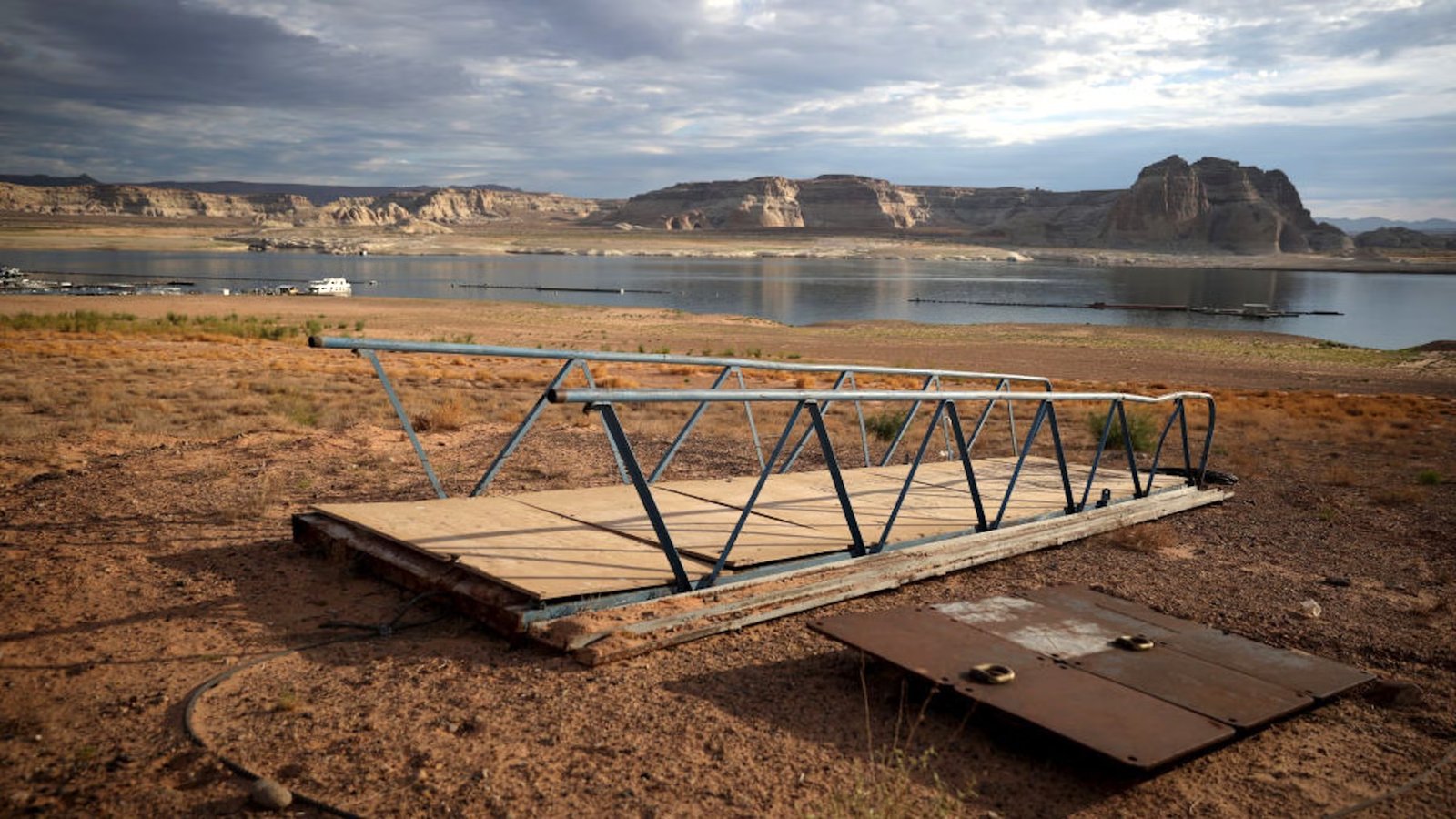
A boat dock sits on dry land near Lake Powell during a drought in 2021 (Photo: Justin Sullivan/Getty Images)
Published April 20, 2026 03:09PM
With summer quickly approaching, one of the American Southwest’s most popular boating destinations is facing a crisis. Lake Powell in Glen Canyon National Recreation Area is expected to reach historically low water levels this summer, and the National Park Service (NPS) is advising tourists to expect longer lines, more volatile conditions, and increased hazards on the water.
In an April 17 statement, the NPS warned that boaters on Lake Powell, a 160,000-acre reservoir on the Utah-Arizona border, could encounter “exposed shorelines, submerged obstacles, and narrower or shifting channels” because of the reservoir’s low water line.
“Visitors should operate vessels at safe speeds, maintain a proper lookout, and take early, deliberate action to avoid hazards, especially in unfamiliar areas and near busy launch ramps,” the statement said.
What the Low Water Levels Mean for Your Trip
As of April 19, the lake is at an operating level of 174 feet below its full-pool elevation of 3,700 feet above sea level, according to Bureau of Reclamation hydrologic data. The lowest level on record was 181 feet below its full pool level, reached in 2023.
The lake’s water is down 32.17 feet from April 2025 levels.
“You’ll need to plan ahead and get an earlier start,” Jesse Romell, the founder and owner of Lake Powell Guide Services, told Outside. The 52-year-old Romell has been boating on Lake Powell since he was a child, and guiding on the water since he was a teenager. In the past two years, he’s boated over 20,000 miles across Lake Powell with his clients.
“You’ll also want to plan on a longer walk to get to the water from parking, maybe five or ten minutes on a busy day,” he said. “Also, make sure you’re keeping up to date with the NPS resources for updates on ramps and availability.”
Ramp Closures and Access
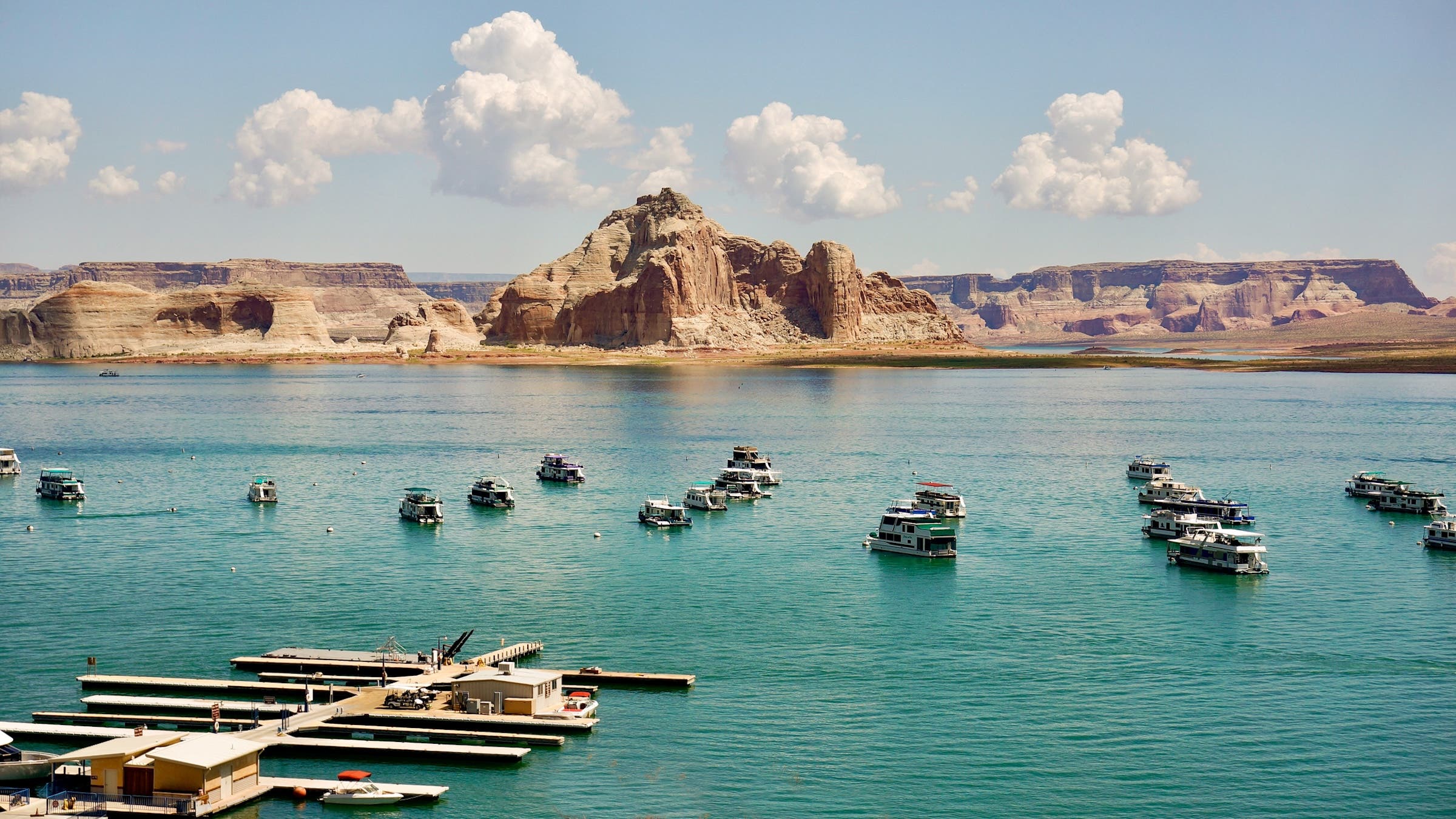
The best resource for boaters on Lake Powell is the NPS’s information website, which keeps a running tally of ramp, dock, and other closures and lists the minimum safe water level for each. As of April 19, just two of Lake Powell’s 11 launch ramps are open: Wahweap Stateline Auxiliary Launch Ramp and Bullfrog North Launch Ramp. The NPS lists the ramp at nearby Rainbow Bridge National Monument as “use at your own risk.”Small boats can beach to access trails, the NPS explains, and caution is advised to avoid quicksand and unstable soils.
To prevent congestion at the few open ramps, the NPS recommends readying boats at a nearby parking lot before driving to the ramp to unload and get on the water as quickly as possible. The availability of restrooms, floating walkways, fuel, and convenience stations may vary with water level.
Essential Safety Tips for the 2026 Season
Before arriving, officials urge boaters to check the status of those facilities and brush up on basic water-safety protocols. The NPS maintains a webpage dedicated to boating, outlining seven critical safety tenets for the season:
- Weather: Always check the forecast before you hit the water.
- Lifejackets: One is required for every person on board. Children and anyone on a personal watercraft (like kayaks or jet skis) must wear them at all times.
- Navigation: Stay vigilant. Shorelines and underwater hazards will shift constantly as water levels fluctuate.
- Wakes and Wakeless Zones: Approach wakes at a 45-degree angle. Never judge a wake’s force by the size of the boat producing it. “Depending on hull design, even relatively smaller boats can produce serious wakes,” the NPS notes.
- Bow Riding: Sitting on the front edge of a moving boat is illegal.
- Carbon Monoxide: Do not allow passengers to congregate around engines or the backs of boats when running.
- Camping: Visitors may camp anywhere along the Lake Powell shoreline, except in developed marinas and inside Rainbow Bridge National Monument.
How Low Water Impacts Life on the Lake
Romell told Outside that once out on the lake, boaters should avoid entering water that is yellowish, as this is a common indication of a shallow area.
Lower water levels raise the danger, Rommel said, but responsible boaters should be able to navigate the problem areas. The danger on the lake, in his opinion, doesn’t come from the submerged hazards, but from other boaters.
“The biggest hazard with lower water levels will be uneducated boaters in smaller areas,” he said. “Those are people who rented a boat, and just don’t know how to drive.”
Romell said that just because the water levels are low doesn’t mean Lake Powell is off-limits to visitors. He believes the changing landscape makes this summer a historic time to visit.
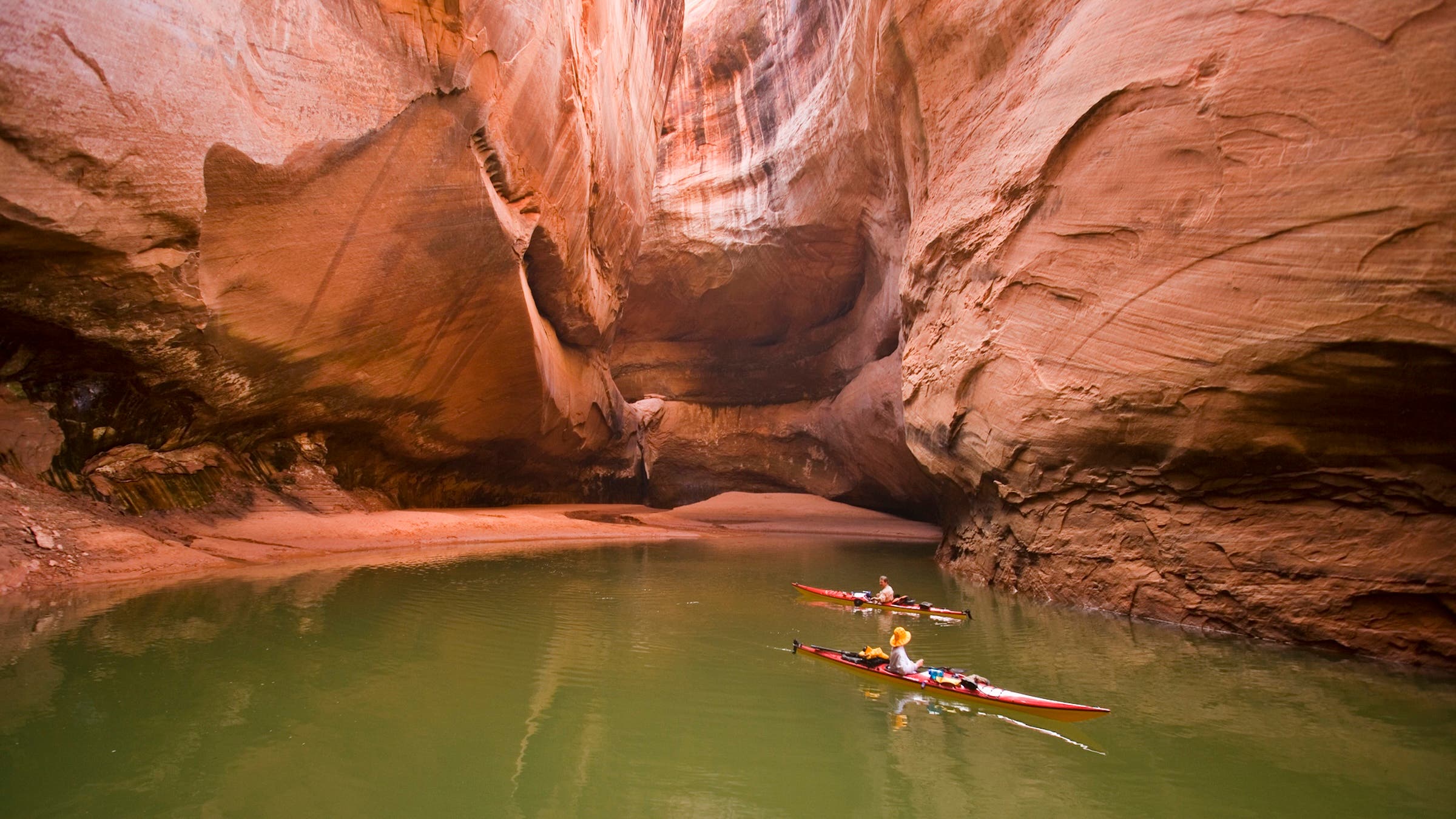
“Maybe you gotta work a little harder to get your stuff on and off the water,” he said. “Maybe the lines are a little bit longer. But you know what? People are also getting a once-in-a-lifetime opportunity to see things that haven’t been seen in a while. Everybody’s here to see the canyons, and with the low water, the canyons on the lake are more dramatic now than they’ve ever been.
Lake Powell Snapshot: April 2026
- Primary Launch Access: Wahweap Stateline Auxiliary Ramp is the most reliable access point for main-channel boating.
- Alert Level: High Caution. Low water levels have exposed significant submerged rock hazards outside of marked channels.
- Essential Requirement: All boaters are strongly advised to file a float plan with park dispatch before heading out.
- What’s New: Canyon narrows, once submerged for decades, are now accessible to hikers and kayakers. Check the official NPS status page for daily ramp closures before departing.
