

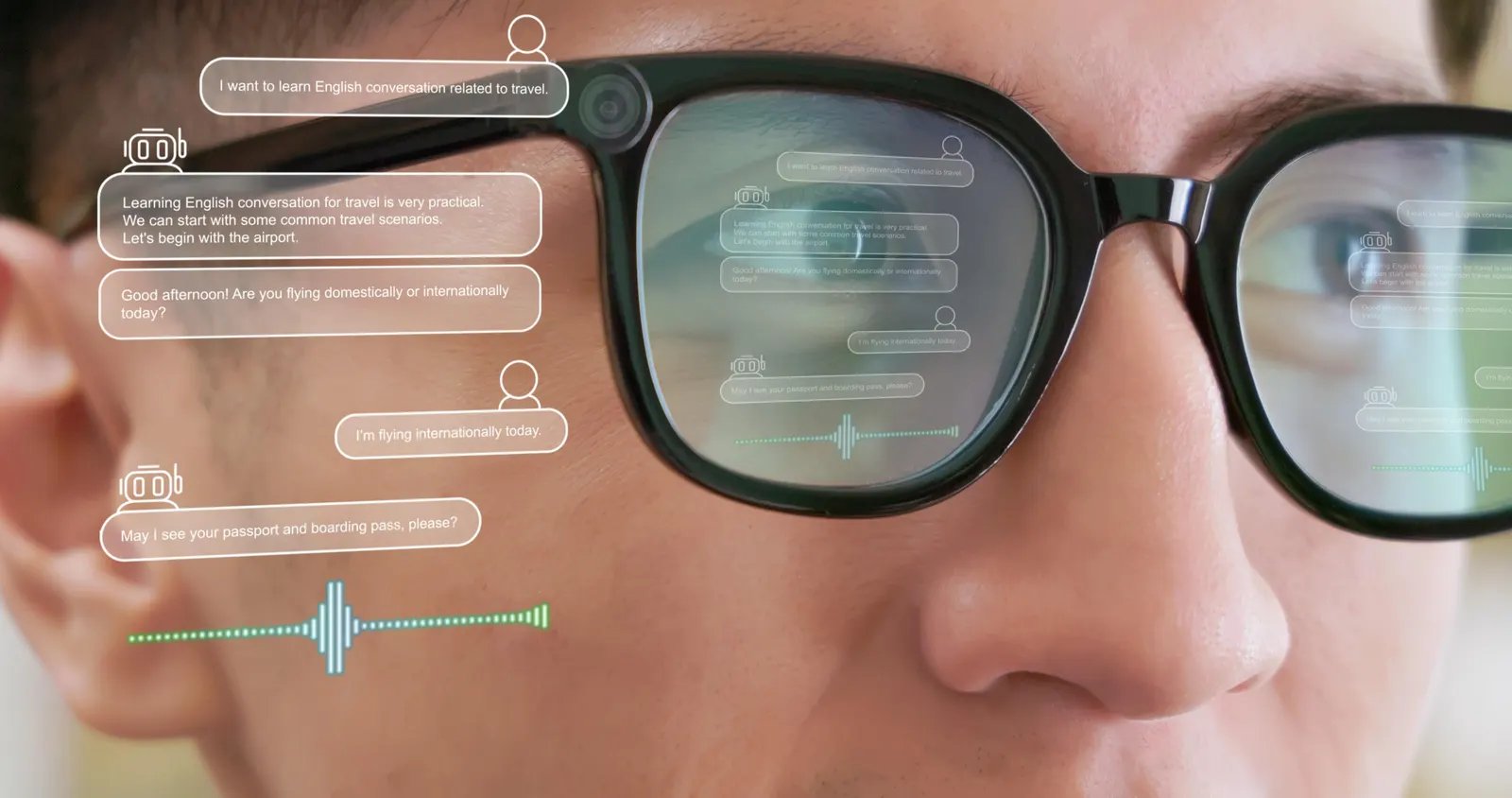
Apple’s next era may usher in groundbreaking augmented reality products.
getty
Apple’s 50th anniversary comes at a moment of notable transition. With Tim Cook moving into the role of executive chairman and longtime hardware leader John Ternus stepping in as CEO, Apple appears to be entering a new phase in its evolution.
I recently wrote about Apple’s milestone anniversary, but in the weeks since, colleagues and media — aware of my decades covering the company — have increasingly asked what could define its next era. While products like a foldable iPhone may extend its leadership in smartphones, augmented reality, particularly in the form of wearable glasses, stands out as the most consequential opportunity ahead.
To understand what could define Apple’s next era, it’s useful to look at how the company has historically approached transformative product decisions, something I’ve observed firsthand.
When Steve Jobs returned to Apple in 1997, the company was near bankruptcy with $1 billion in debt and in need of a clear strategic reset. In a meeting shortly after his return, he outlined a plan to refocus on Apple’s core customers — engineers, creatives and professionals, neglected under previous leadership — while elevating industrial design as a central pillar of the company’s strategy. At the time, that emphasis on design was not widely understood, but it would soon become a defining element of Apple’s approach to building category-defining products.
Jobs delivered on both fronts. The iMac, a brightly colored departure from the standard PC form factor, became a commercial success and helped stabilize Apple’s finances. It was followed by the iPod, a ground-up redesign of the MP3 player that accelerated the shift to mobile digital music and transformed the music industry.
That was followed by complete redesigns of the Mac desktops and laptops, including the first true ultralight MacBook that Jobs introduced by pulling it out of a manila envelope in 2008.
Then, in 2007, he introduced the iPhone, sparking the explosive growth of the smartphone market. Today, the industry sells over 2.5 billion smartphones annually, with Apple leading the premium segment of that market. It is also the most profitable smartphone maker.
That was followed by the introduction of the iPad in 2010, which birthed the mobile tablet market.
By the time Jobs died in 2011, he had already instilled in Cook and Apple’s leadership a clear vision: Build great products that are easy to use and genuinely enhance people’s digital lives.
In 2015, Apple introduced the Apple Watch, which is now the best-selling smartwatch.
In 2017, Apple introduced ARKit at WWDC, marking what I consider the company’s true next big initiative — providing the software foundation for Cook’s vision of AR and its potential impact on Apple’s trajectory.
Hours after Apple debuted ARKit, I had the opportunity to speak one-on-one with Cook about it and his vision for its future. He was enthusiastic about this new software, but even more excited about AR and Apple’s future investments in it.
Cook expressed his belief that AR could be a transformative concept that makes the computing experience even more personal in the future. He then expressed that developing AR products could be Apple’s biggest contribution to the digital world in the future.
Over the last decade, ARKit has matured, and I believe it will become the new OS for future Apple AR products. It has already influenced apps developed for Apple’s Vision Pro headset. Although the Vision Pro has been only mildly successful, I believe its development has helped Apple refine their broader AR vision, which will be applied to future AR products.
Cook also told me, following the ARKit announcement, that he believes augmented reality will ultimately be delivered through some type of glasses — designed to look normal and comfortable enough for all-day wear.
Interestingly, Apple’s new CEO, Ternus, is the product genius behind the new Macs and iPhones, and he oversaw the transition from Intel processors to Apple’s own chips. He will now drive the design of future Apple AR products.
Over the last five years, the concept of smart glasses has led us down the path to delivering AR glasses in many styles and designs. Companies like Meta, Even Realities, Rokid and Xreal have led the way with their versions. Snap Spectacles is the only one that delivers an AR experience, but mostly for gaming.
However, most glasses on the market are primarily informational and AI-based. The holy grail of smart glasses is delivering a deep AR experience that seamlessly connects the digital and real worlds in real time, enabling mobile experiences.
There are plenty of rumors suggesting Apple could introduce its first AR glasses in 2027. That may happen, but one thing seems certain: Apple won’t bring smart glasses to market until they fully reflect the vision Cook, Ternus and their team have for AR, and how they intend to deliver it the Apple way.
As Apple enters this new leadership phase, the question is less about whether it can sustain its current businesses and more about what platform will define its future. Jobs’ legacy was built on category-defining products that reshaped entire industries. Tim Cook expanded that foundation into one of the most profitable ecosystems in history.
Now, with Cook as executive chairman and Ternus leading Apple’s next chapter, the company’s long-term trajectory may hinge on its ability to bring augmented reality into the mainstream. If successful, AR glasses would not just extend Apple’s product lineup — they could establish the foundation for its next era of growth.
Disclosure: Apple and Meta subscribe to the research reports from the company I founded, Creative Strategies, along with many other high-tech companies around the world.
