

Published April 22, 2026 04:00PM
Ahead of Sir David Attenborough’s 100th birthday in a few weeks, one of his most defining moments in the wild is the subject of a new Netflix film, A Gorilla Story. The legendary broadcaster inspired generations by bringing the natural world into our homes, but one unexpected encounter with a baby gorilla in Rwanda’s Virunga Mountains nearly 50 years ago created an especially lasting legacy. Not only did it make a profound impact on the eminent environmentalist, but the iconic footage helped shift the perceptions of mountain gorillas at the brink of extinction, and bring more resources to their conservation.
A Gorilla Story: Told by David Attenborough, directed by Oscar-winner James Reed (My Octopus Teacher) and produced by Silverback Films, features never-before-seen footage and archival scenes from Attenborough’s unscripted encounters in 1978 with Rwanda’s endangered mountain gorillas.
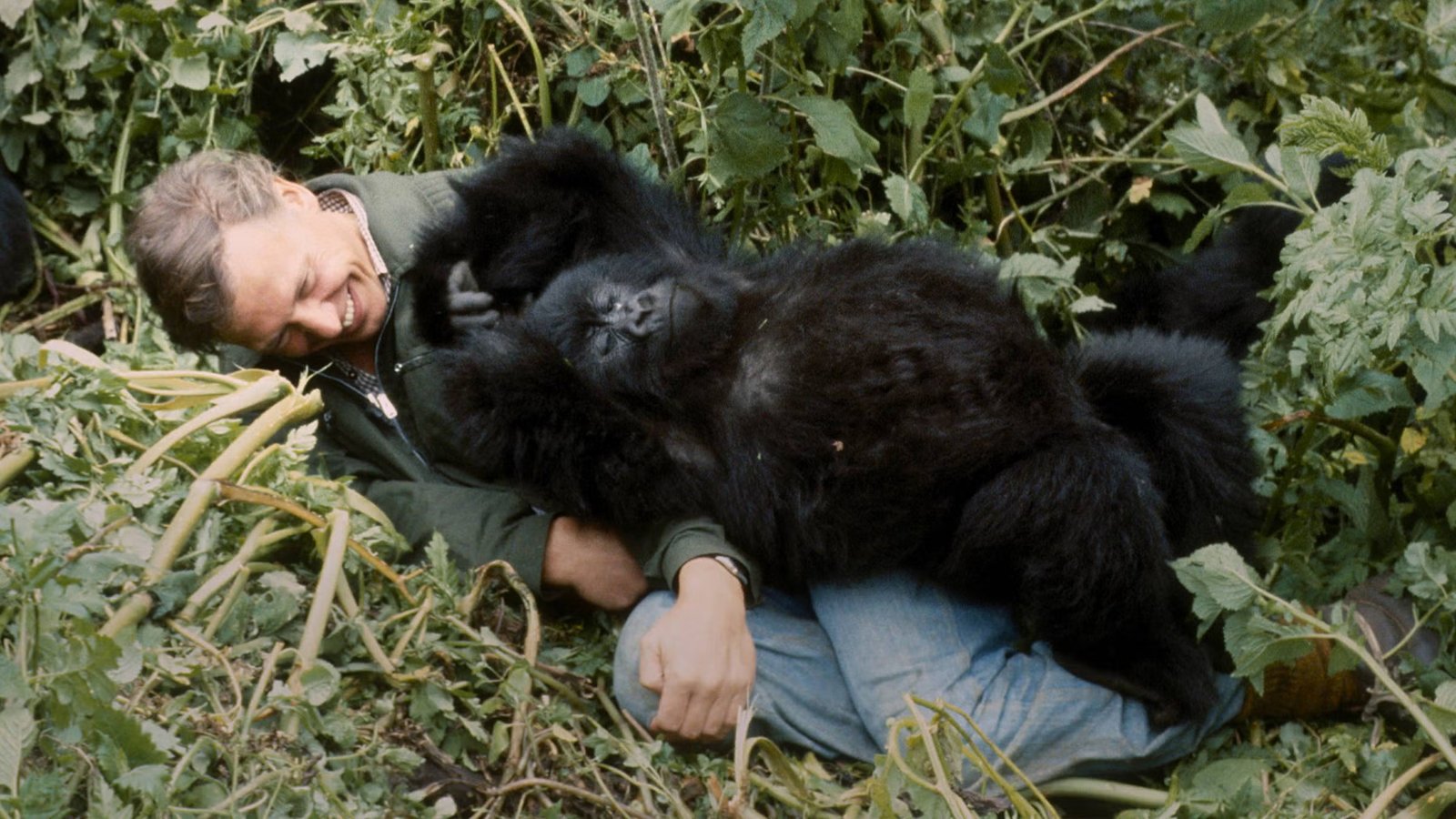
The Netflix doc takes us back to Attenborough’s days as a young awe-struck naturalist filming his breakthrough TV series, Life on Earth (1978). During filming, he has a surprise meeting with a family of gorillas, and an exceptionally close one with a baby gorilla named Pablo. Revisiting this important moment in his career, A Gorilla Story follows the evolution of Pablo’s family, or the “Pablo group,” as they’re referred to, over five decades, with the British naturalist’s signature gripping narration and poignant memories, no less dimmed over the years.
In January 1978 in Rwanda’s Volcanoes National Park, Attenborough and his film crew weren’t expecting to capture a meeting of the gorillas directly. As the American primatologist Dian Fossey always did, he announced his presence with a few low grunts. The gorillas let Attenborough approach, and what happened next was even more surprising. “I felt a weight on my feet, and I look down and there’s little Pablo,” recalls Attenborough in A Gorilla Story. “Look at this lovely little creature… just sheer bliss really.”
“Many people would think it was the most important sequence in that [Life on Earth] series. If not, actually, in my filmed life,” Attenborough says in the new Netflix doc.
In the archival footage, immediately following his unexpected moment with Pablo, he says directly to camera: “There is more meaning and mutual understanding in exchanging a glance with a gorilla than any other animal I know.” The naturalist had no idea at the time what an impact this moment with little Pablo captured on film would leave behind.
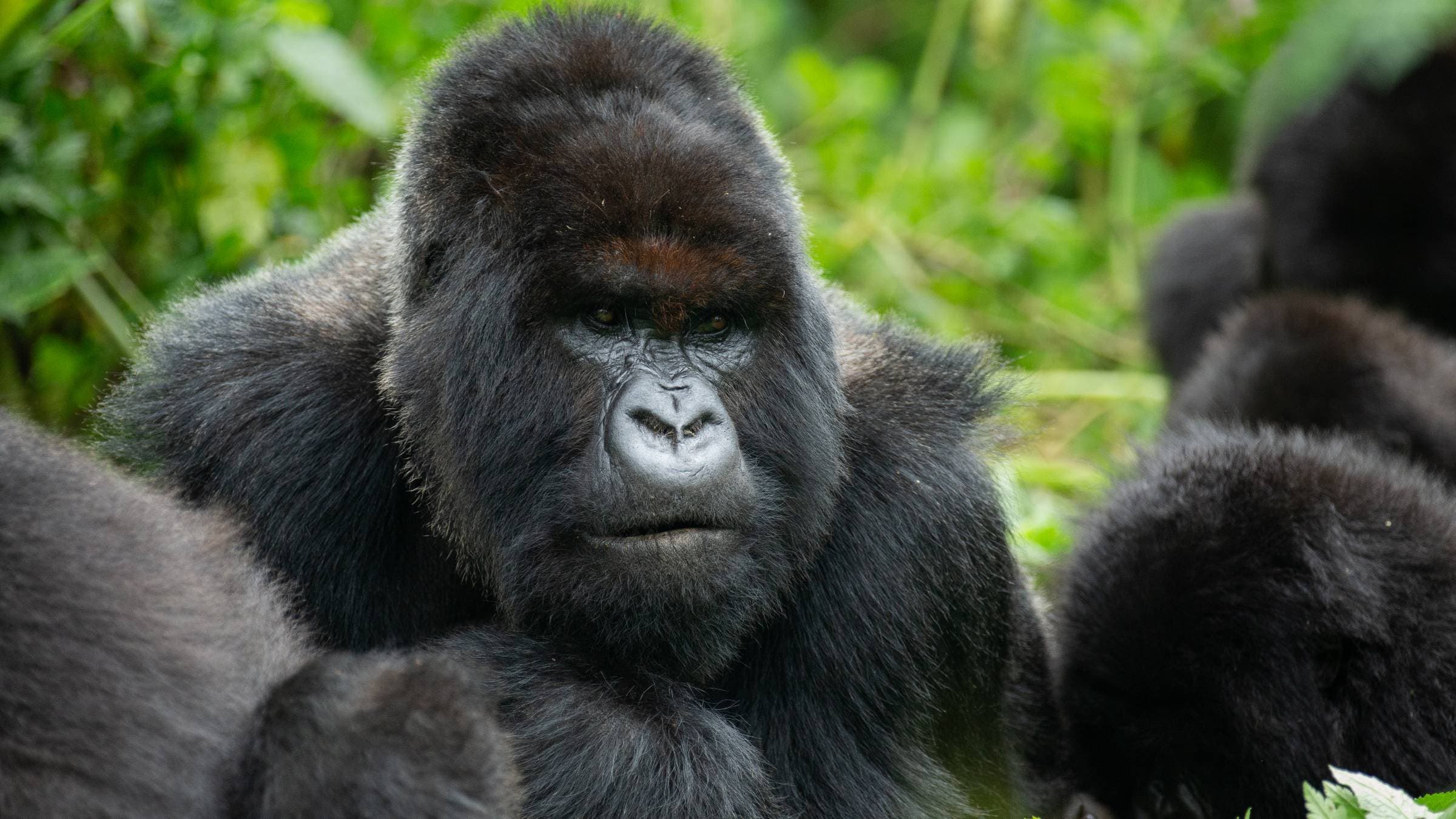
Now nearly 50 years later, things are looking up for the Pablo group as they are for the entire endangered species as a whole. Today there are over 600 mountain gorillas across the Virunga Mountains. Their population has more than doubled since Attenborough filmed there five decades ago.
“The first time I met mountain gorillas in 1978, they allowed me to approach, which of course would not have been possible without the pioneering work of Dian Fossey,” Attenborough credits the conservationist hero in A Gorilla Story. Fossey lived among the gorillas, studying the intimate details of their lives, and helped save the mountain gorilla from extinction by pioneering active conservation and transforming their perception from violent monsters to gentle beings. Fossey’s work halted the population decline and shifted focus to anti-poaching, establishing a lasting legacy of scientific research and habitat protection. Today her work is being carried over by the Dian Fossey Gorilla Fund.
The Lasting Legacy of Attenborough’s Gorillas Encounter
“When Sir David filmed in the late 1970s, the Virunga mountain gorilla population had fallen to somewhere around 300 individuals from an estimated 450 just a few decades earlier and reached a low of around 250 individuals by the early 1980s,” Dr. Tara Stoinski, president, CEO, and chief scientific officer of the Dian Fossey Gorilla Fund, tells Outside.
Stoinski and her team have been part of A Gorilla Story since the start and suggested to the filmmakers that they focus on the story of Pablo’s family.
“We supported the film as both scientific advisors, providing the context and detail on the individual animals that enabled such rich characters to come to life on the screen,” says Stoinski. They also accompanied the film crew when they were with the gorilla group, helping them identify individuals and anticipate behaviors.
“What has happened since [Attenborough’s 1978 encounter] is one of conservation’s most remarkable stories,” says Stoinski. Not only has the mountain gorilla population in this region more than doubled to 600 individuals, but they are the only great ape subspecies whose numbers are actually increasing, she reports.
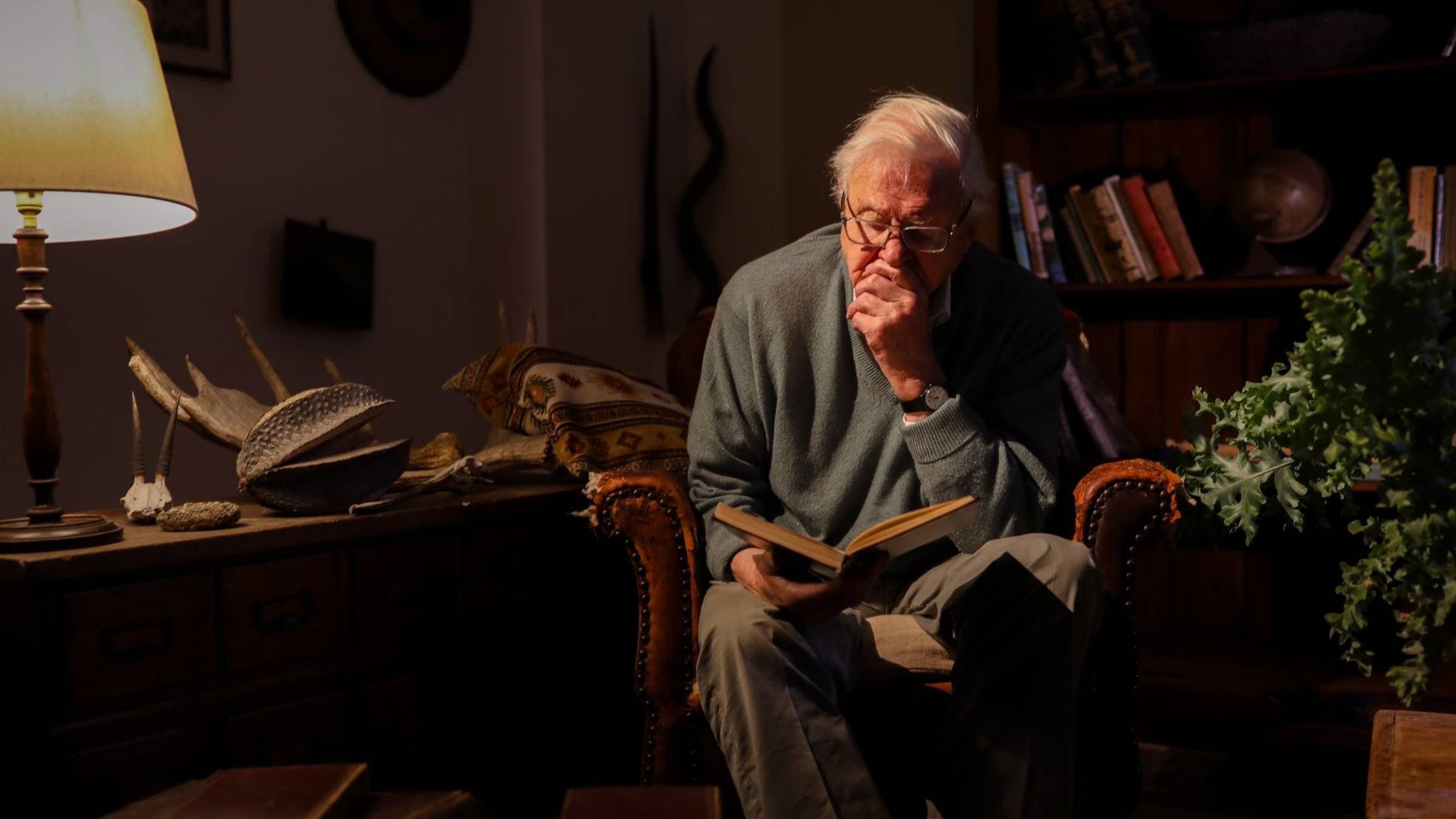
And what happened to baby Pablo? He went on to form his own group in 1993. “Today, more than 32 years after its creation, we continue to study and protect this family, making it one of the longest-studied gorilla groups in history,” adds Stoinski.
Attenborough filmed in Rwanda shortly after the 1977 tragic killing of Digit, one of Fossey’s favorite gorillas. During this time, gorillas were being significantly affected by direct poaching, something that fortunately no longer happens. “The awareness that Dian had already raised about how much the gorillas are like us and the threats they faced were further reinforced by the iconic footage of David interacting with Pablo. [It] helped further spread the word and bring more resources to conservation,” Stoinski tells Outside.
How Tourism Has Impacted the Conservation of Gorillas
Alongside daily protection, tourism has also played an important role in supporting gorilla conservation in Rwanda, says Stoinski. It generates significant funding, which strengthens protection efforts and benefits local communities.
“Revenue from tourism is used for park protection and gorilla monitoring and also supports community development, helping to support infrastructure, education, and healthcare to areas surrounding the park, thus reducing reliance on forest resources,” the Dian Fossey Gorilla Fund CEO tells Outside.
Praveen Moman, the founder of Volcanoes Safaris, revived gorilla tourism in post-genocide Rwanda and pioneered a community-based tourism model. In 1997, he founded Volcanoes Safaris, inspired to help rebuild tourism in Uganda and Rwanda after years of conflict. At the time, it was considered unthinkable to invite international visitors to Rwanda and Uganda to see the dwindling gorilla population. But bringing tourism back aided in the recovery of the mountain gorilla population.
In fact, Moman has often said there wouldn’t be any gorillas today without tourism—without its positive economic impacts to the local communities. To visit the gorillas in Rwanda today, travelers must purchase a trekking permit, which costs $1,500 per person. Three-fourths of the fee supports gorilla conservation, 15 percent goes to the government, and 10 percent goes directly to the communities that live near Rwanda’s four national parks where the gorillas roam free.
In Rwanda, gorilla trekking with local guides is strictly limited to one hour with the gorillas (while it can take hours to first find the animals in the mountains). It’s an enforced conservation measure to prevent disease transmission and reduce stress on the animals. The rangers at Volcanoes National Park who lead the visitors to the gorillas ensure a 23-foot distance is kept, and the time limit is respected.
“The film is a reminder that the gorillas have survived thanks to the commitment of the governments of the region, conservation organizations, communities, the private sector, and revenue generated by sensitive and controlled ecotourism,” says Moman.
Just like Attenborough, seeing gorillas in the wild was an unforgettable moment in my life. In 2023, I went gorilla trekking in Volcanoes National Park and hiked to see gorillas in Uganda’s Bwindi Impenetrable National Park with Volcanoes Safaris. There was no way to prepare for what it would be like to encounter gorillas—a species we share 98 percent of our DNA with—in the misty mountains. One of my fellow travelers said it best: It was like watching humans in gorilla costumes. Like us, they form strong family bonds, they bare their teeth when they are content, and hum or sing when they find their preferred food.
“[It’s] one of the greatest conservation success stories I have witnessed,” Attenborough says in the Netflix doc. “And perhaps that’s down to the profound connection people feel towards gorillas. It is a connection that has stayed with me my whole life. And it all began with one special little gorilla.”
Kathleen Rellihan is the senior travel and culture editor at Outside. She says there’s life before seeing a baby gorilla in the wild, and life after. Gorilla trekking through Rwanda’s Volcanoes National Park was an unforgettable life highlight for her as well.
