

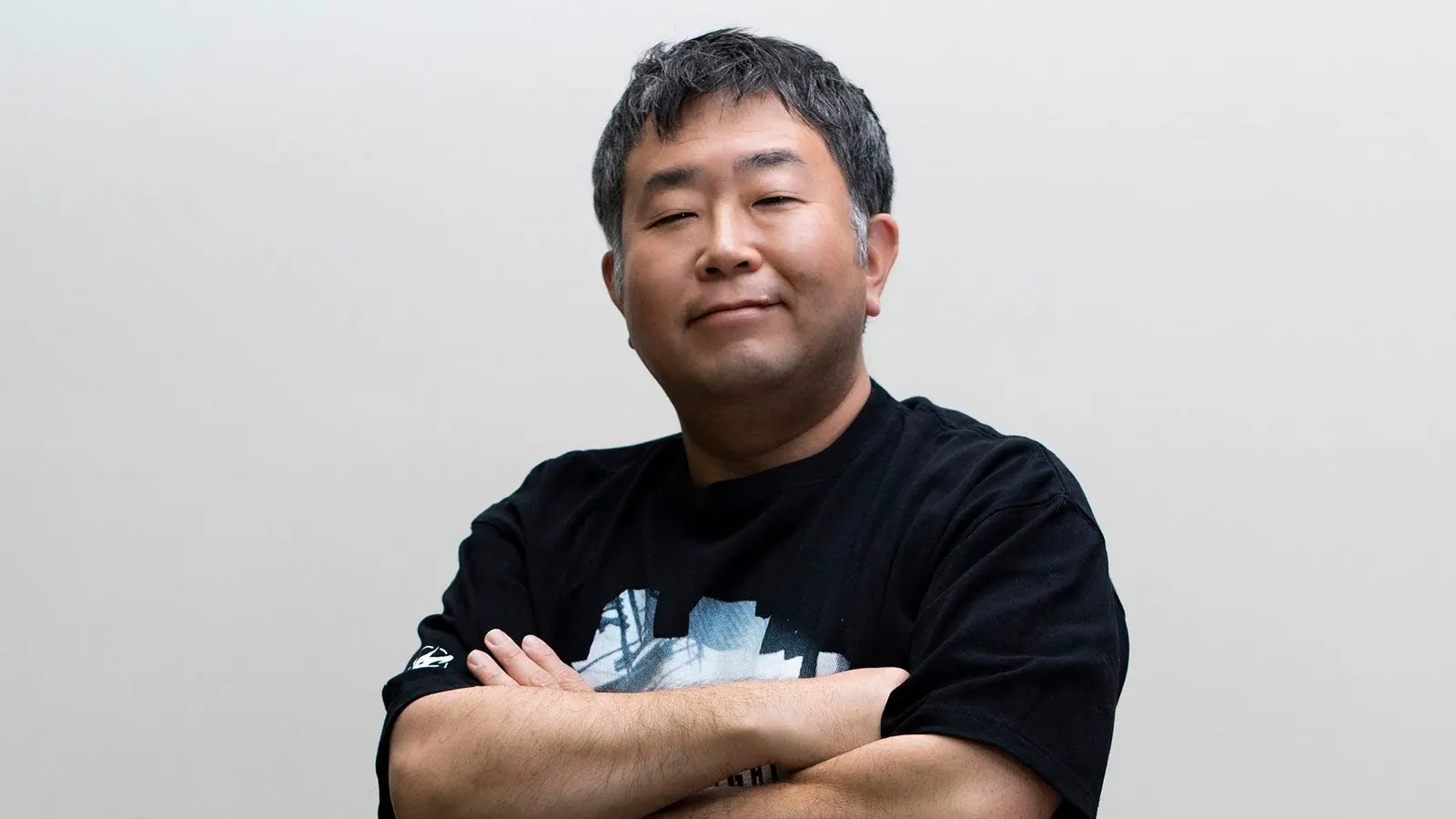
Toshihiro Nakaya, head of IP for the Virtua Fighter and Super Monkey Ball series at Sega.
Sega
With a new Virtua Fighter game on the way, I caught up with Toshihiro Nakaya at Sega to find out what the future holds in store for the beloved fighting game series.
Nakaya’s full job title at Sega is Head of IP Promotion, Business Division, RGG Studio. That means he’s primarily responsible for business development, external partnerships, licensing, and community management.
However, in real terms, he serves as the head of IP for the Virtua Fighter and Super Monkey Ball series, and acted as general producer on Virtua Fighter 5 R.E.V.O.
Before I get to that, I wanted to find out more about Nakaya and what drew him to working at Sega.
“I was born in 1974 in Kochi Prefecture, located on the island of Shikoku in Japan. It’s a mountainous coastal region overflowing with nature, meaning I spent much of my childhood outdoors playing baseball and fishing. My parents also ran a toy shop, so I was raised alongside model kits, radio control cars, tabletop games, and video games. Being brought up in a home where I could play any game at any time, I can still clearly picture the look of envy on my classmates’ faces. Since I was so involved in rugby during my teens, I didn’t spend a lot of time playing video games at home. Instead, I’d spend my downtime at the arcade playing motion-based and competitive games. The technological advancements were revolutionary. New titles brought visuals and effects you had never seen before, one after the other, making it an era where each game was its own distinct experience.
“My upbringing probably played a big part in my wanting to work in entertainment. That said, I wasn’t particularly gifted in programming or art, so rather than working as a developer, I was drawn to the business side of the industry.
‘Virtua Fighter 5 R.E.V.O. World Stage’ was recently released for the Nintendo Switch 2.
Sega
“When I graduated from university in the mid-90s, there was a major job crisis in Japan known as the Employment Ice Age. I applied for tons of jobs, but had no luck. Eventually, I was fortunate enough to receive an offer from Sega, a company I had adored for ages. As a new hire, I gained experience through amusement facility management, equipment sales, product management for arcade titles, and marketing. Fast-forward to 2021, and I landed my current position at RGG Studio.
“Since I grew up with a wide range of consoles and hardware, one of my earliest memories is gaming on Sega’s SG-1000. I later took a break from consoles and spent much of my time at the arcade, and Sega was one of the hottest arcade game developers when I was a student in the 90s. They pioneered motion-based games that use huge arcade cabinets, and these titles became a hit not only in Japan but around the world. In the console market, I was particularly drawn to the Sega Saturn and its massive library of fun titles.
“Another main draw of Sega was my desire to work in Tokyo. I envisioned that I’d be in the big city, working for a major company in a thriving market that was expected to grow tremendously. Much to my surprise, the headquarters at the time were actually located near Haneda Airport, quite a way from central Tokyo. Embarrassingly, I found out on the day of my interview.”
Nakaya’s list of game credits is suitably long, but I wanted to know what Sega games meant the most to him. Naturally, it was a Virtua Fighter game.
“Virtua Fighter 3, without a doubt. It was released in 1996, the same year I joined Sega. It used the Model 3 arcade system board, marking a major leap forward for 3D graphics, and I’m not exaggerating when I say it was one of the first games ever to depict lifelike human characters. It also introduced a dedicated dodge button, which was innovative in letting players strategically maneuver around the stages’ uneven terrain.
“I was working at the arcade when it released, and I actually had a shift on launch day. You could feel the anticipation as players waited for the cabinets, fresh off the truck, to be powered on. The intense, head-to-head matches that followed filled the room with energy, and that left a lasting impression on me. It’s what drove me to remain at Sega for all this time, and even 30 years later, it feels simultaneously surreal and exciting to be so directly involved in Virtua Fighter.
It’s here I was curious to know what Nakaya thought about Virtua Fighter’s staying power as a gaming franchise.
‘Virtua Fighter 5 R.E.V.O. World Stage’ features online multiplayer and a large roster of playable characters.
Sega
“I believe Virtua Fighter’s constant innovations and leaps in technology have won over many fans. The original broke new ground as the world’s first 3D fighting game, featuring smooth and lifelike character animations that were unprecedented. Virtua Fighter 2 pushed boundaries further on that with better graphics and more realistic combat, leading to a surge in popularity. Arcades across Japan were filled with Virtua Fighter 2 competitors, and top players became legends in the community, laying the foundations for modern-day esports.
“Each new entry took greater leaps forward. Virtua Fighter 3 made full use of cutting-edge graphics technology, Virtua Fighter 4 connected arcades across Japan with online play, and Virtua Fighter 5 introduced automated commentary. These titles were all revolutionary for their time, and those innovations have continued to surprise players, true to Sega’s core values. That makes Virtua Fighter one of the core franchises that defines Sega.”
Finishing up, Nakaya was keen to talk about the future of the Virtua Fighter series.
“At The Game Awards in December 2024, we announced a brand-new entry in the series, the New Virtua Fighter Project. As part of a long-running series, we want to deliver a brand-new gameplay experience while staying true to its roots, especially in terms of the innovation and realism the series is known for.
“Over time, it has become the norm for gamers worldwide to buy games online and play against each other in real time. There’s also a wider range of platforms available, from consoles to PCs, and player preferences continue to diversify. Gaming is no longer limited to just playing, watching streams, and supporting well-known players have all become part of the culture. In response to these changes, we at RGG Studio aim to deliver a Virtua Fighter title that can be fully enjoyed in both versus and single-player modes, while being as engaging to watch as it is to play. Ultimately, through Virtua Fighter, we hope to encourage communication between players and create experiences that bring people together.
“This project will be the first title of the series to be available on consoles at launch. As such, we’ve got plans to encourage as many players as possible to give it a try. We also plan on sharing a clearer picture of the New Virtua Fighter Project in the not-too-distant future, so please stay tuned for further updates.”
Virtua Fighter 5 R.E.V.O. World Stage is now available on the Nintendo Switch 2.
Follow me on X, Facebook and YouTube. I also manage Mecha Damashii and am currently writing regular columns in Japanese about mecha games and mecha anime for both Game*Spark and Automaton.
