

Published March 24, 2026 04:35PM
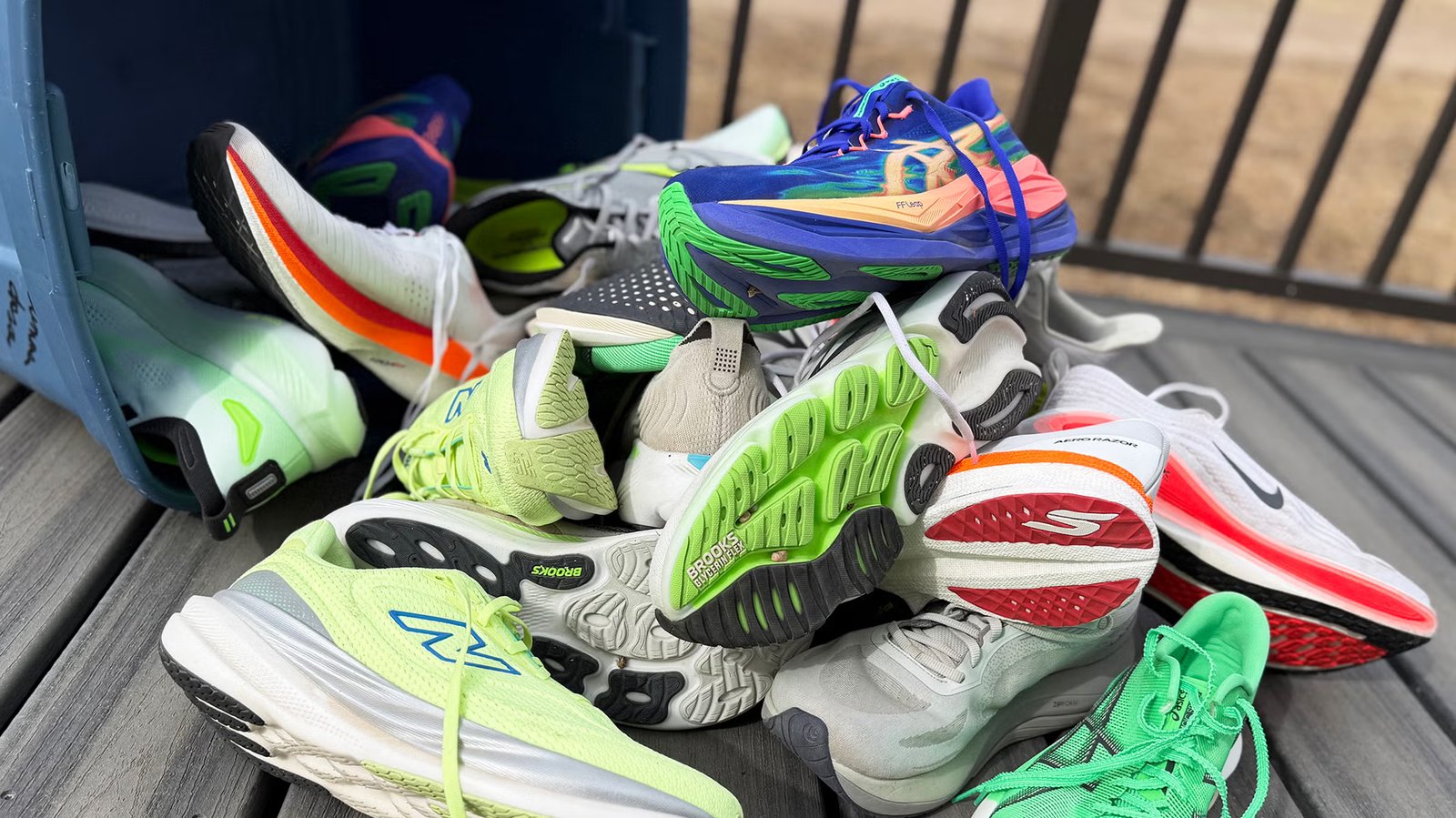
Every year, we put hundreds of running shoes to the test. When people hear that, they inevitably ask us: What’s the best shoe? Our answer is always the same: It depends on the runner and the run.
Because running shoe needs are so personal, we’ve designed our testing process to match. Our team of nearly 25 testers—who represent a wide range of paces, strides, and preferences—put every major new release through several test runs. As we log miles, we compare the season’s new models to the other shoes being tested and to our previous winners. The best running shoes rise to the top, receiving high scores among our diverse range of testers. They’re the shoes that inspire us to run, and the ones that ultimately make it into our guide.
This vetting process gives us a list of excellent road running shoes that work for a variety of runners, but the best still depends on what you’re looking for: a great overall trainer, a marathon racing shoe, a stable workhorse, or maybe a shoe that allows your foot to move naturally. In the end, you’ll need to determine which works best for you, but our guide will help you narrow the selection and find the shoe that brings joy to your spring and summer running.
Updated March 2026: We’ve streamlined our guide into fewer categories to make it easier for you to find the type of shoe you’re looking for, and picked 14 new winners, including a new Best All-Around Road Running Shoe in the Asics Superblast 3.
Best Road Running Shoes: At a Glance
Best All-Around
Best Daily Trainer
Best Value
Best Cushioned Trainers
Best Lightweight Trainers
Best Natural-Ride Shoes
Best Stability Shoes
Best Marathon Racing Shoes
Best Short Distance Racing Shoes
Best Road Running Shoe All-Around
Asics Superblast 3
Weight: 8.4 oz (men’s 9, women’s 10.5)
Stack Height: 46.5–38.5 mm
Drop: 8 mm
Sizing: 3.5-13, 14, 15 (men’s), 5-14.5, 15.5, 16.5 (women’s)
Pros and Cons
+ Soft and energetic
+ Versatile across different paces
+ Impressively light for the amount of cushioning
– Noticeably loud footstrikes
– May feel too soft for runners who liked the Superblast 2
When Asics launched the Superblast in late 2022, it quickly became one of the brand’s top-selling shoes, and for good reason. With ample cushioning, a comfortable fit, and light weight, it’s one of those shoes you can use for just about any type of run.
The latest version brings some sizable changes: most significantly, a new dual-density midsole that’s softer, lighter, and bouncier. “The cushioning is what makes this shoe shine,” noted one tester. The new midsole has a 10-millimeter bottom layer of the same nitrogen-infused, EVA-based FF Blast+ foam as the Superblast 2 for light stability, topped with a thicker layer of Asics latest A-TPU superfoam (FF Leap) for a soft, hyperbouncy feel underfoot. “Very lively and responsive! More spring and bounce than I was expecting,” said another tester.
At 8.4 ounces for a men’s 9 and women’s 10.5, it has one of the best weight-to-cushioning ratios on the market, making it a crowd favorite for long runs where saving energy and reducing impact are at a premium. One tester reported, “They definitely help reduce fatigue as you get deeper into longer runs.”
The upper is a woven mesh with a generously padded heel collar that testers found more comfortable than its predecessor. A new eyelet system has the laces passing through a serpentine cord-like material rather than holes in the upper; multiple testers noted how smoothly it worked.
With its versatility, comfort, and responsiveness, the Superblast 3 is hard to beat, earning it the title of all-around best road running shoe.
Read our full review of the Asics Superblast 3.
Best Daily Trainer
New Balance 1080v15
Weight: 9.2 oz (men), 7.3 oz (women)
Stack Height: 40–34 mm
Drop: 6 mm
Sizing: 7-13, 14, 15, 16 (men’s), 5-12, 13 (women’s)
Pros and Cons
+ Springy ride
+ Nearly an ounce lighter than v14
+ Roomy, accommodating fit
– Some testers found the foam too soft
– The ride may disappoint fans of previous 1080 models
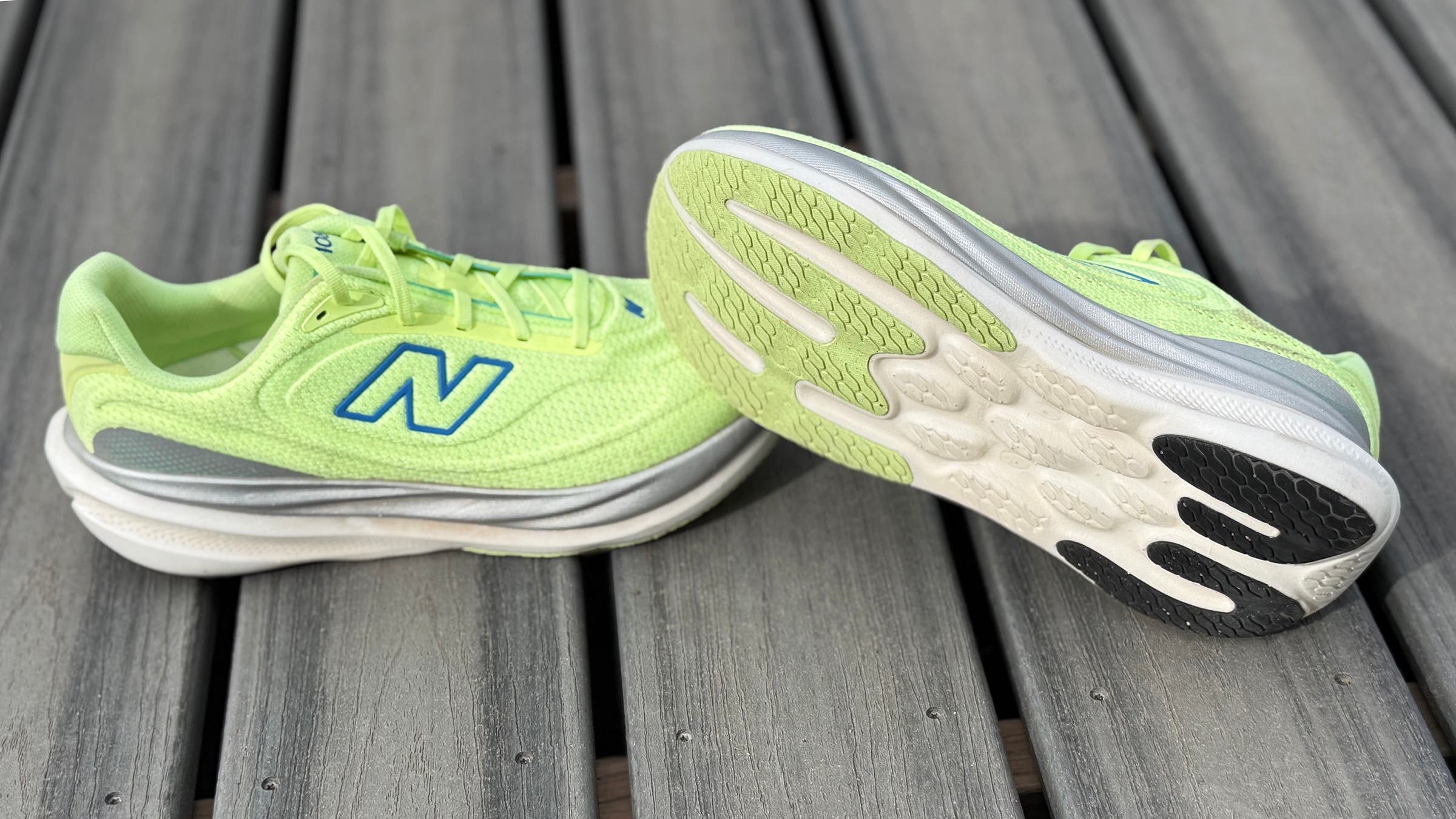
The all-new New Balance 1080v15 elevates what has been a solid, but rather boring, model to now sit among the best everyday trainers you can buy. For its 15th version, this staple neutral shoe got a completely new midsole. New Balance abandoned the previous versions’ EVA-based Fresh Foam to bring the 1080v15 into the modern era of superfoams, introducing a brand-new, supercritical TPEE and EVA-based foam they call Infinion. Testers unanimously approved, one calling the new foam “resilient, springy, and joint-protecting.”
The ride is completely different than its predecessor. The new Infnion foam compresses and bounces back more than Fresh Foam, delivering a trampoline-like ride that most testers enjoyed. Some, however, had mixed feelings about how the midsole compared to the v14. One tester described the Infinion foam as “a little squishy,” adding, “I felt like I was sinking too deep into the foam, but I bounced out well.” Despite the initial squish, others described the overall feel on the run as firmer and more stable than previous 1080s, thanks to the strong, rapid rebound. The new foam is also lighter, cutting nearly an ounce from the v14. This lighter build gives the 1080v15 a peppier feel.
The contoured, perforated upper is all new, with a little extra room in the toebox, although the end is pointed. It fits true to size, with an accommodating midfoot. The heel collar is nicely padded and well-shaped to lock your heel in place.
As a long-haul, everyday trainer, the 1080v15 delivers a smooth, reliable, springy ride that many testers said outperforms peers like the Asics Nimbus or Saucony Triumph.
Best Value
Skechers Aero Razor
Weight: 6.9 oz (men’s 9); 5.6 oz (women’s 7)
Stack Height: 36–32 mm
Drop: 4 mm
Sizing: 7.5-12, 13, 14 (men’s), 5-10, 11 (women’s)
Pros and Cons
+ Excellent value for a high-performance shoe
+ Secure, low-to-the-ground ride
+ Snappy, energetic toe-off
+ Lightweight, breathable upper construction
– Feels too firm for some
– Not as thick and bouncy as most super shoe racers
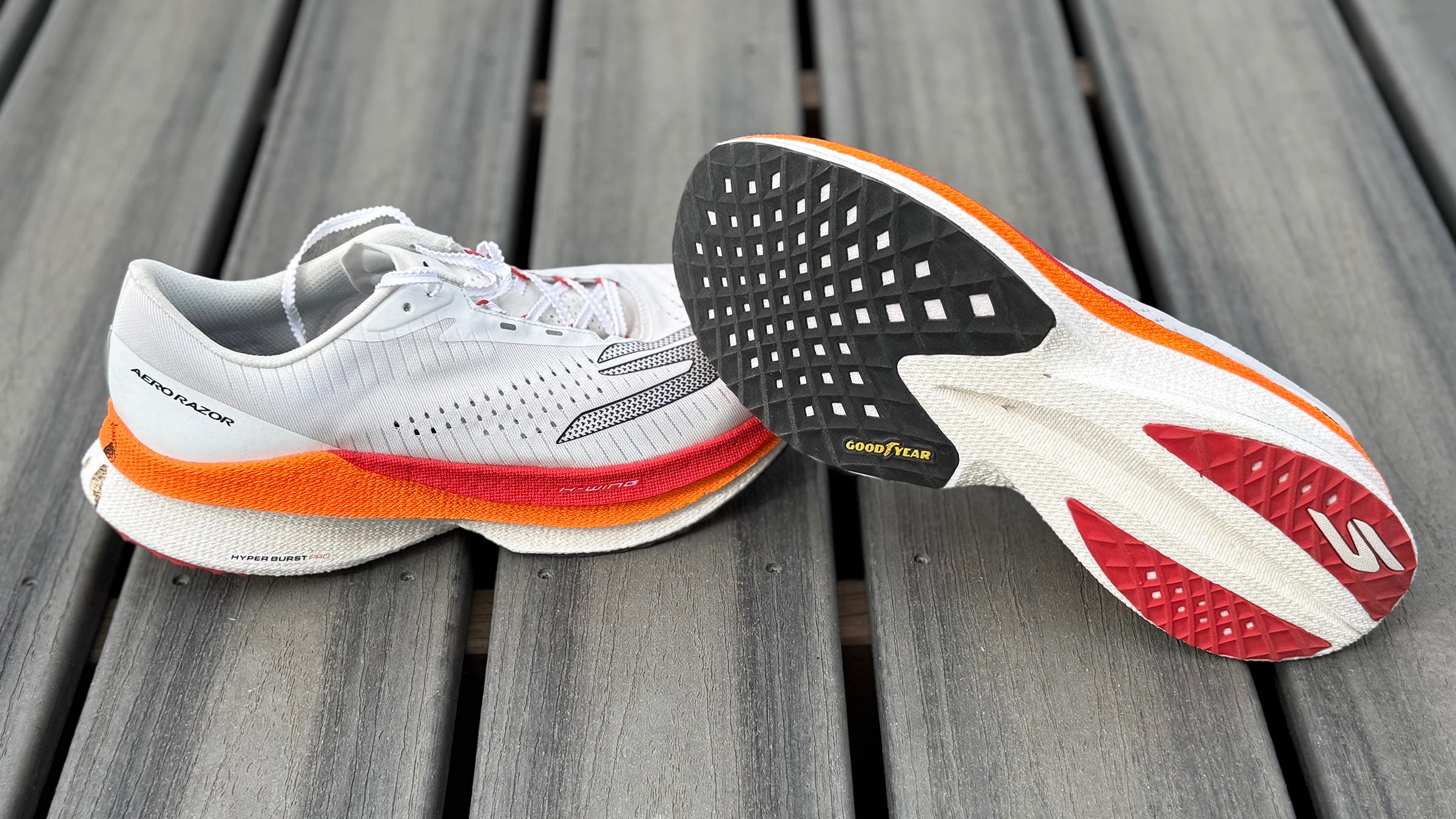
Skechers may not be on your running shoe radar, but behind all its budget shoes lies a performance running division that’s on par with any major player. One standout model that has won a loyal following is the Razor, a lightweight racing shoe that Meb Keflezighi, 2014 Boston Marathon winner, helped develop, and which, in 2019, introduced the first supercritical midsole in a training shoe.
After a couple of heavier, less-exciting versions, Skechers has relaunched the Razor with major upgrades to the midsole and upper. “It is light, fast, and has an amazing price point,” said one tester—accolades echoed across the board. The midsole is made of Skechers’ Hyper Burst Pro, an A-TPU-based foam, which has become the material of choice in super shoes for its light weight, outstanding rebound, and resilience. Testers loved the feel: “It balances protection, responsiveness, and stability,” said one.
Embedded in the midsole is a carbon-infused H-shaped wing plate that doesn’t fight your foot’s natural roll but adds snap to the toe-off. “The rocker and plate combo really encourages faster turnover and smooth running,” said one tester. At 36 millimeters under the heel, the Aero Razor sits on the lower end of today’s supershoe spectrum. This lower profile delivers a responsive, ground-connected feel, though most runners will find it better suited for shorter distances.
The upper is a lightweight, flexible, engineered mesh that both vents and secures. Add string eyelets, sawtooth laces, and light, strategic padding, and it’s by far the best-fitting, most comfortable upper we’ve tested from Skeckers. The fit runs true to size in width, with length slightly longer than normal, though it wasn’t enough to warrant sizing down.
The Skechers Aero Razor delivers lively, fun performance—and knocks it out of the park in value. Where else can you get a carbon-infused-plated, highly efficient, lightweight trainer with an industry-best foam midsole for $140?
Read our full review of the Skechers Razor Aero.
Best Cushioned Trainers
Nike Vomero Plus
Weight: 10.3 oz (men), 8.5 oz (women)
Stack Height: 45-35 mm
Drop: 10 mm
Sizing: 6-13, 14, 15 (men’s), 5-12 (women’s)
Pros and Cons
+ Highly cushioned, yet responsive
+ Well-padded, über-comfortable collar and tongue
– Loud slapping sound during running
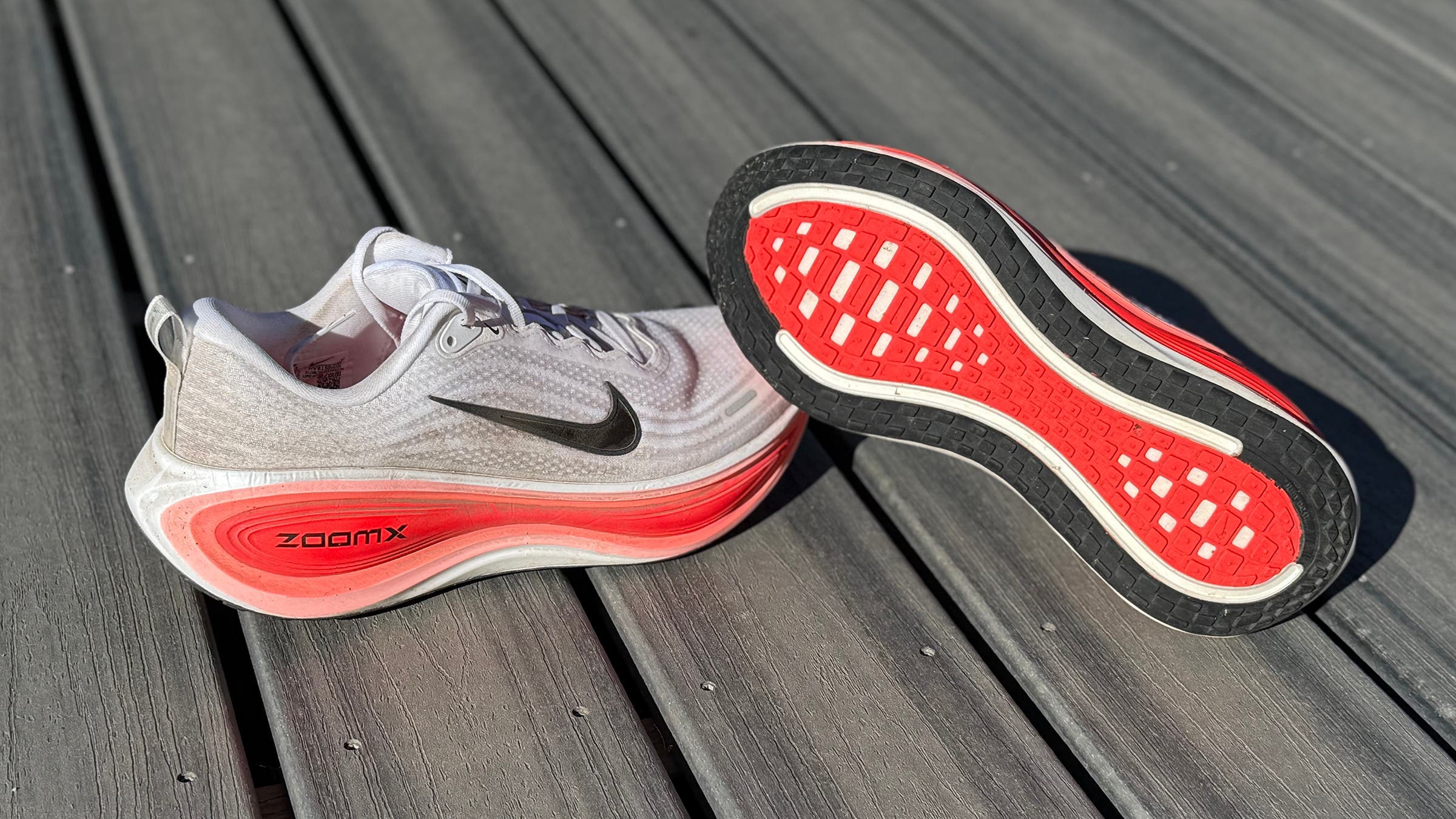
To meet the growing demand for more cushioning among road runners, Nike has expanded the perennially popular Vomero franchise into three versions: the Vomero 18, Vomero Plus, and Vomero Premium, with each new level packing in a little more cushioning than the last. Our testers found the standout of the three, in terms of performance, to be the all-new, middle-level Vomero Plus. “In a market that has gone too soft, there is a place for a springy max cushioned shoe, and the Vomero Plus hits that mark,” said one tester.
With a full midsole of TPE-based ZoomX foam underfoot, testers reported that the Vomero Plus is lighter, bouncier, and softer road running shoe than the base model Vomero 18. A thick layer (45 millimeters!) of foam underfoot assures a plush, pillow-like ride, but the shoe doesn’t weigh you down or wallow in mush like some high stack height shoes. There’s a touch of responsiveness hiding within the max-cushioned midsole. While it’s not a fast shoe or racer, it doesn’t plod either. The foam feels lively underfoot from the first contact, and quickly transitions the foot to a smooth toe-off, thanks to a rockered and slightly flexible forefoot.
The engineered mesh upper prioritizes comfort, starting with the heavily padded tongue and overstuffed heel collar, which hug the foot in plushness from the initial step-in to the last mile. One tester credited that secure hold, combined with the width of the sole and the responsive rebound of the foam, for the shoe’s surprising stability.
The only quirk? Like other ZoomX running shoes, it’s loud, with a distinct slap every time your foot hits the ground—but that was only a minor annoyance. When pitted against the best max-cushioned trainers available, the Vomero Plus takes the edge in comfort, ride, and versatility. “It is the one shoe in the test that is in heavy rotation for me, so much so that it was the only trainer I brought on vacation,” noted one tester.
Read our full Nike Vomero Plus Review.
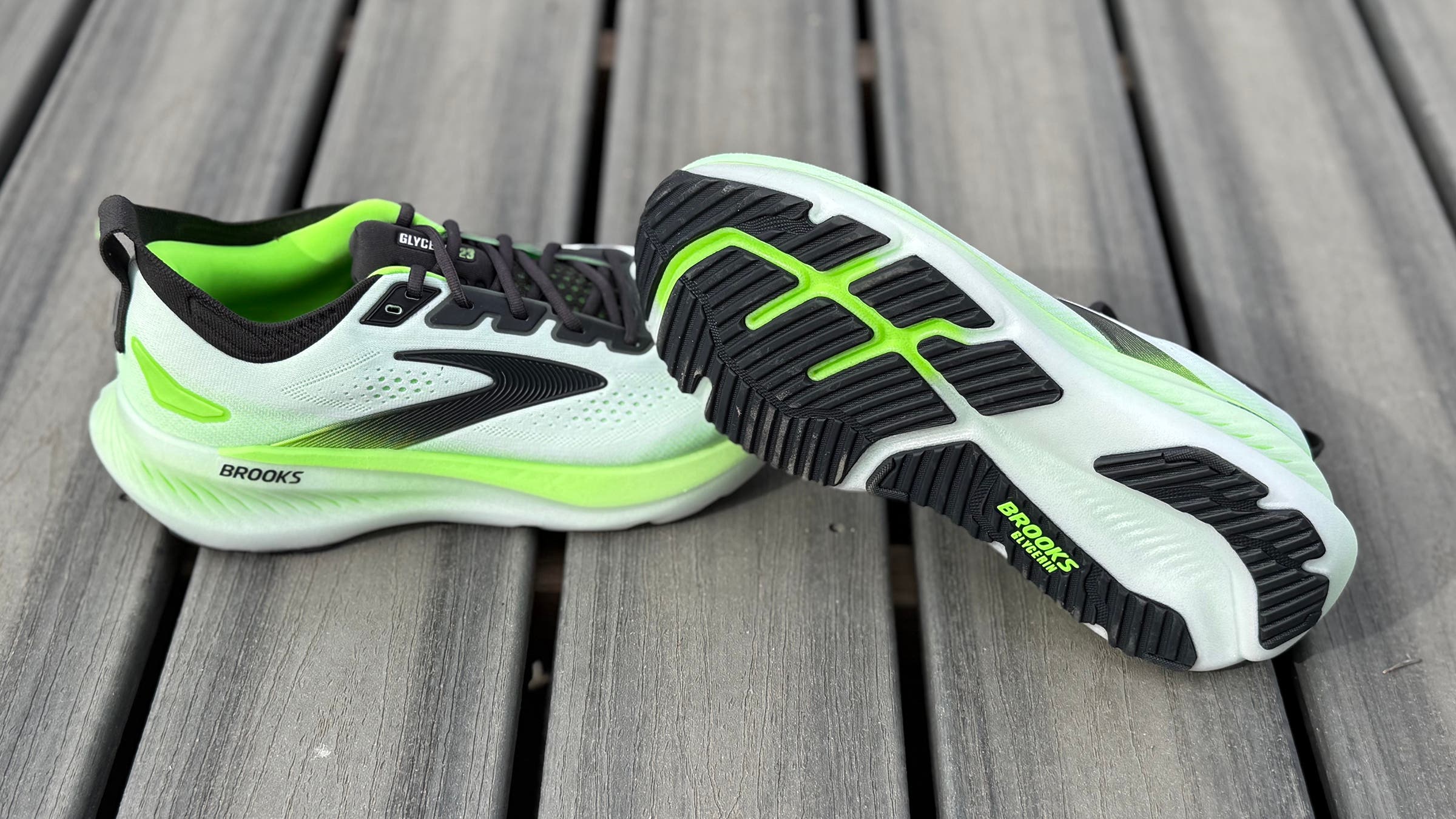
Brooks Glycerin 23
Weight: 10.6 ounces (men’s), 9.6 ounces (women’s)
Stack Height: 38-30 mm
Drop: 8 mm
Sizing: 7-13, 14, 15 (men’s), 5-12, 13 (women’s)
Pros and Cons
+ Seriously comfortable ride and fit
+ Inherently stable
– Could be more breathable
The Brooks Glycerin 23 makes our best running shoes list for its supreme comfort, balanced cushioning that’s soft without being mushy, and an inherently stable ride. Stepping into this shoe was made easy by the large heel tab that we quickly came to appreciate. We immediately felt the hug of the secure heel hold, combined with a nicely padded tongue and fit that works across foot shapes, giving us high hopes for an equally comfortable ride. We weren’t disappointed.
The nitrogen-infused foam has built-in zones tuned to varying degrees of firmness, and this shoe seems to get the balance just right. We loved the smooth transitions from the plush heel to the firmer forefoot. The responsive cushioning, without any energy-sapping mush, makes it easy to pick up the pace, offering a snappy and controlled toe-off. “I even extended my run once because the shoes felt so light and peppy that I was having too much fun to go home yet,” said a tester. “My turnover in these shoes feels light and effortless and coordinated,” said another, who noted how pleasant it was to up the tempo in them.
A wide forefoot platform gives the Glycerin 23 an inherently stable feel. Plus, the near-full rubber outsole provides a secure grip on wet and dry pavement, gravel paths, and dirt roads.
Best Lightweight Trainers
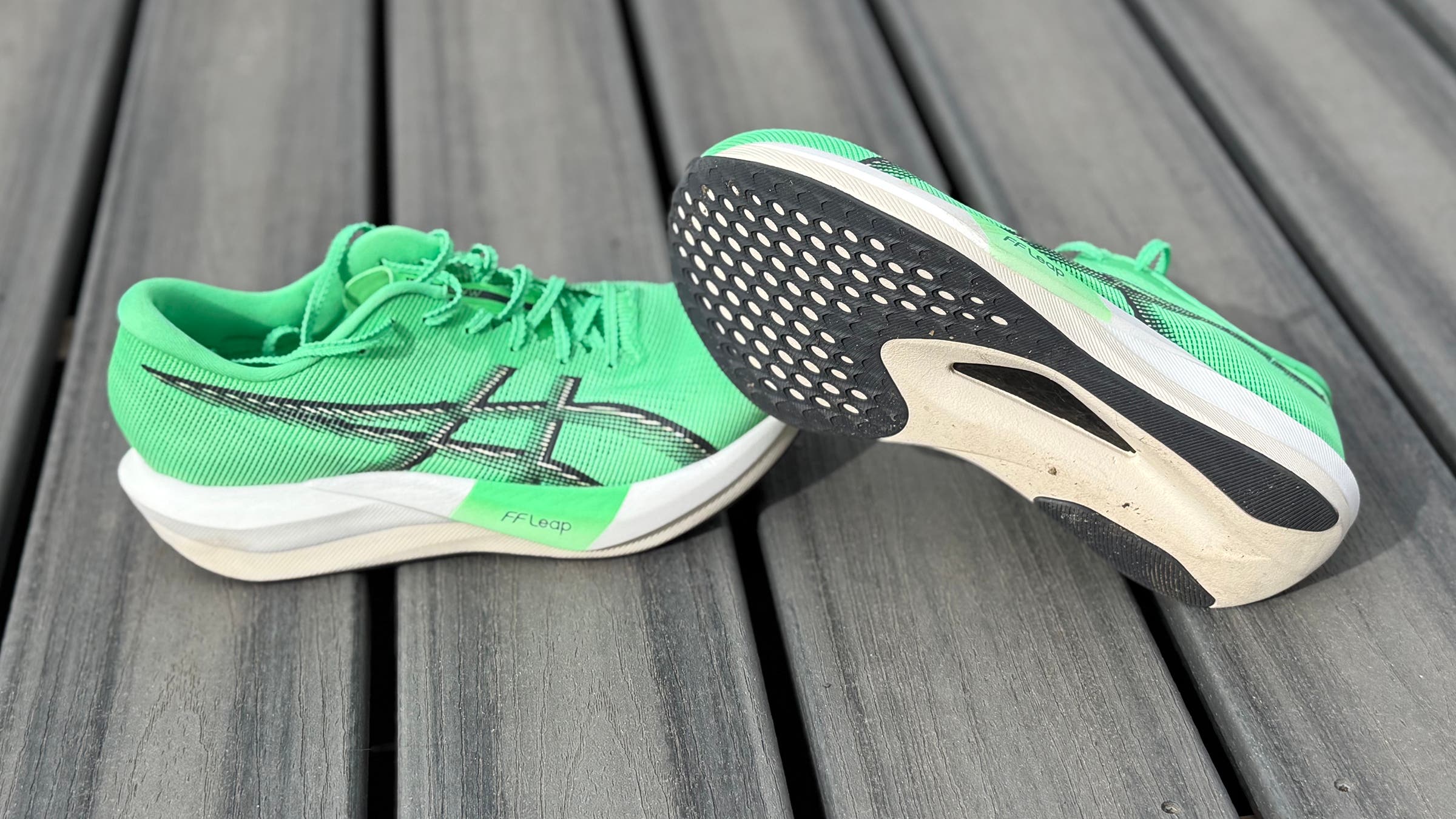
Asics Magic Speed 5
Weight: 6.9 ounces (unisex)
Stack Height: 37.5-30.5 mm
Drop: 7 mm
Sizing: M4/W5.5-M15/W16.5 (unisex)
Pros and Cons
+ Can be used as a trainer or racer
+ Incredibly lightweight
– Might feel too soft for some
The Asics Magic Speed 5 received notable updates that make it lighter, faster, and more capable as a speedy trainer or racing shoe. A new top layer of super light, super springy FF Leap (A-TPU) foam adds a level of energetic bounce that can feel a tad squirrelly—at first. But a full-length carbon-fiber plate and a denser, more stable bottom layer of FF Blast+ foam (a blend of EVA and olefin) work together to moderate the bouncy top layer for an overall balanced ride.
The stack height was reduced to 37.5–30.5 mm from the Magic Speed 4’s 43-35 mm, with the drop coming down from 8 mm to 7 mm. This lower thickness also seems to keep the energetic bounce of the FF Leap manageable. The shoe also lost roughly an ounce and a half in weight, enhancing its light, lively feel. A new outsole rubber pattern adds a feeling of control. “It gave me above-average traction,” said one tester, who wore the Magic Speed 5 on both dirt and pavement while testing.
Testers described the Magic Speed 5 as “incredibly responsive” with “great snap-back.” The combination of midsole magic, increased outsole rubber, and the lightweight, breathable, secure upper makes this shoe an ideal choice for summer speed workouts, tempo runs, and fast-finish long runs. It’s an outstanding super trainer that can cross over easily to chasing PRs.
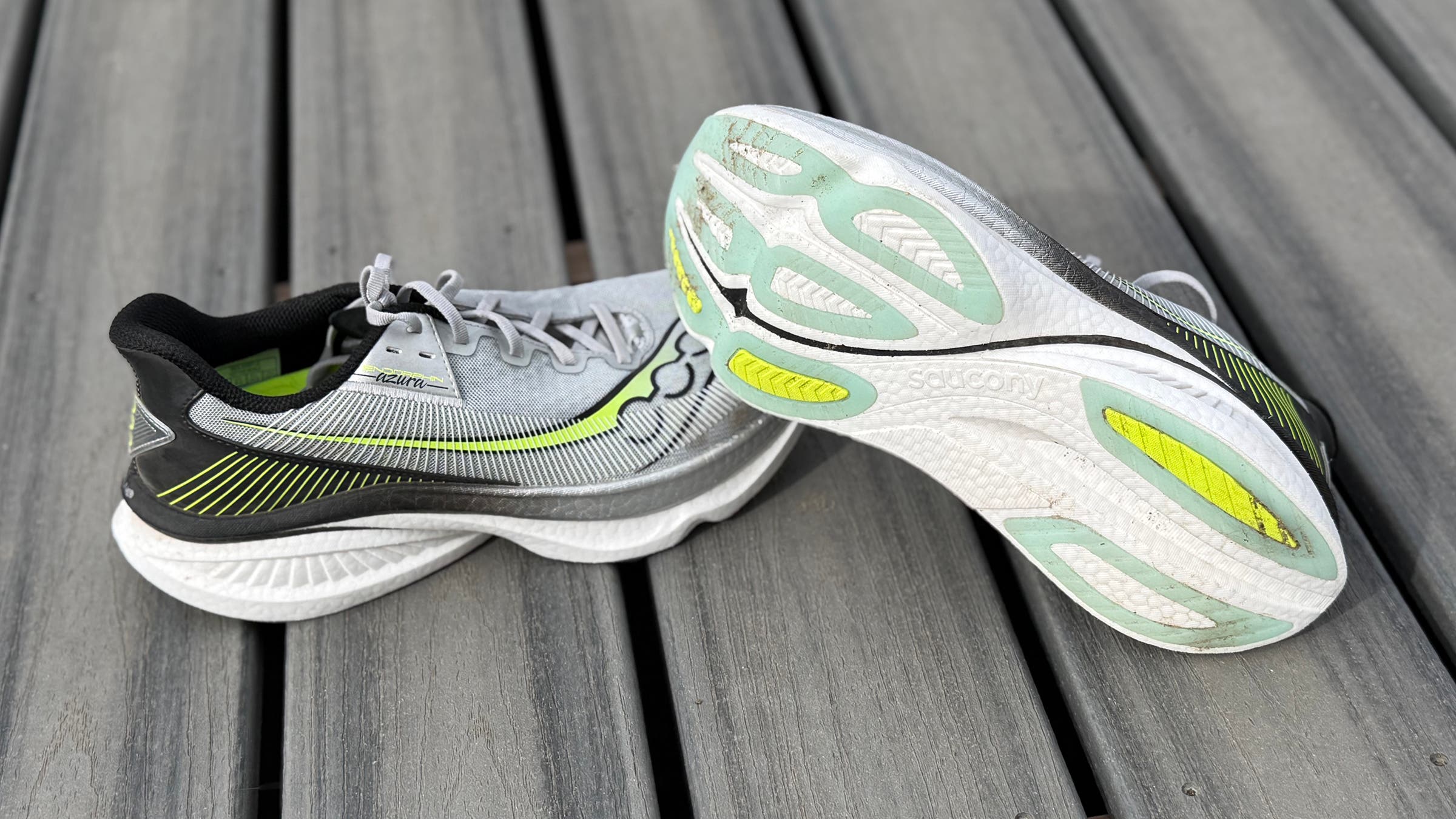
Saucony Endorphin Azura
Weight: 8.5 ounces (men’s), 7.5 ounces (women’s)
Stack Height: 40-32mm
Drop: 8mm
Sizing: 7-13, 14, 15 (men’s), 5-12 (women’s)
Pros and Cons
+ Feels speedy without a stiff plate
+ Balance of cushion and responsiveness
+ Great price for a super trainer
– Upper can feel a little stiff
The Saucony Endorphin Azura feels fast, stable, and springy. Packed with a full stack of the brand’s PWRRUN PB Foam—PEBA polymers in bead form that compress and release energy—it’s downright lively underfoot. The shoe features the same aggressive, early-stage rocker found in their elite racers, which Saucony calls Speedroll. Our testers noted that it rolls the stride forward the moment weight shifts to the ball of the foot, creating a smooth sense of forward momentum. The combination delivers a fun, energetic ride that made us feel undeniably fast.
“I thought maybe my watch was off, but I was just moving quickly and maybe even gracefully with these shoes on,” said a tester. Another said the Azuras made her feel “like a speedster.” She added, “The cushioning and support gives me confidence and makes me feel capable when I’m pushing the pace.”
The lightweight, non-plated midsole has plenty of protective cush but keeps things stable with a wide base and non-squishy responsiveness. The shoe complements a variety of strides and makes miles feel easier for everything from long runs to tempo efforts, track workouts, and even races.
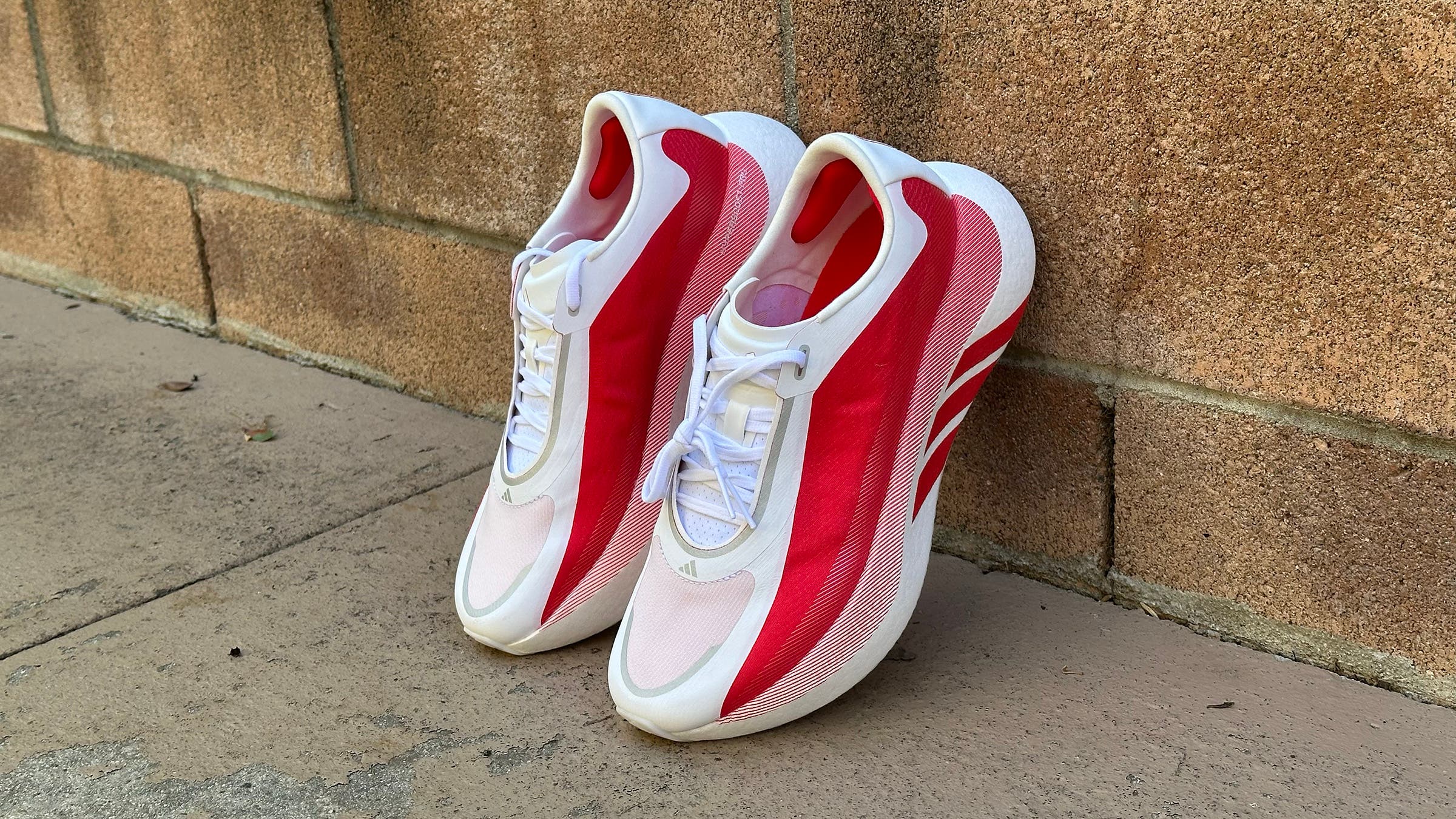
Adidas Hyperboost Edge
Weight: 9 oz (men’s 8.5, women’s 9.5)
Stack Height: 45–39 mm
Drop: 6 mm
Sizing: 5.5–18 (men’s), 5–12 (women’s)
Pros and Cons
+ Exceptionally stable for a max-cushion trainer
+ Impressively lightweight
+ Protective yet responsive underfoot feel
– Slim laces that are difficult to lock down
– Very minimal midsole flexibility
The lightweight trainer category is having a moment. New materials, foaming processes, and innovative design have allowed shoe designers to push the boundaries of cushioning to absurd heights while maintaining incredibly light weights. At 9 ounces and with 45 millimeters of cushioning under the heel, the Adidas Hyperboost Edge is a perfect example.
Look closely at the midsole and you’ll notice a resemblance to last decade’s revolutionary energy-return foam, Boost, made of hundreds of TPEE pellets. The Hyperboost Pro midsole uses Lightstrike Pro, A-TPU based foam—similar to that found in the $500 Adizero Adios Pro Evo super shoe—in pelletized form. If you’re familiar with Boost, however, expect a completely different underfoot feeling. Hyperboost is much firmer, and much more responsive and stable. There’s no plate, but the sole has little flexibility. Thanks to the long forefoot rocker, however, there’s a nice roll-through transition.
The upper is a woven, well-structured material that holds the foot securely and comfortably. Two Achilles cushion pads inside the collar prevent rubbing and lock down the heel. One knock: the thin laces put pressure along the top of some testers’ feet.
Read our full Hyperboost Edge review.
Best Natural Ride Shoes
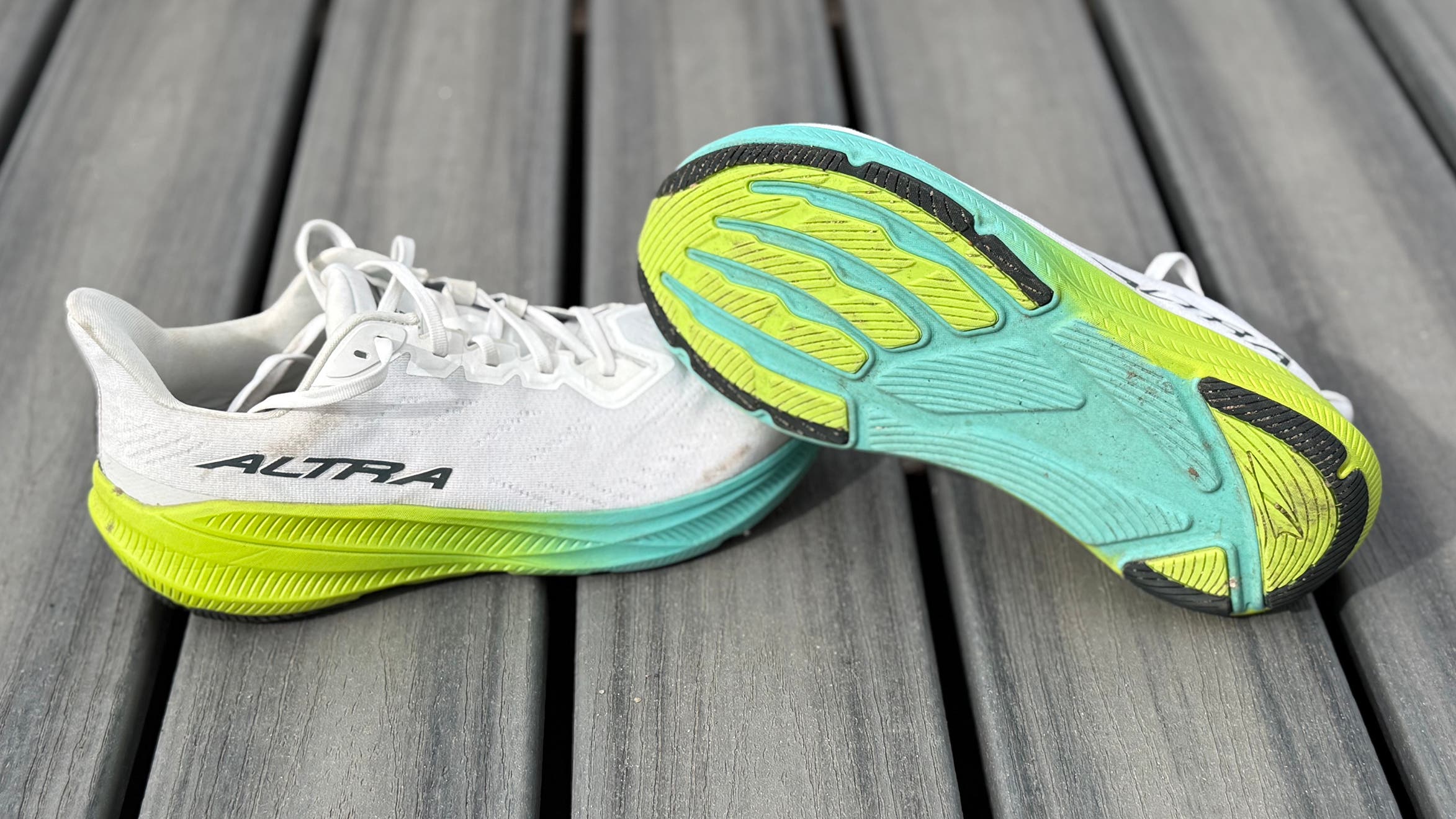
Altra Experience Flow 3
Weight: 9 oz (men), 7.5 oz (women)
Stack Height: 32–28 mm
Drop: 4 mm
Sizing: 5-13, 14, 15 (men’s), 4-12 (women’s)
Pros and Cons
+ Stable, grounded feel
+ Nimble, light, and fast for everyday trainer
– Low collar
– Thin cushioning compared to most of today’s running shoes
Since its founding in 2009, Altra has been known as the “zero-drop” running shoe company—but in 2023, it introduced a few models with a slightly raised heel. Thanks to the more mainstream ride, many of our testers who have historically shied away from the brand have found a new appreciation for the shoes’ signature wide toe box. The Flow is the everyday trainer in the new, four-millimeter-drop “Experience” line.
“The Flow runs well with good dynamics,” noted one tester, adding, “The low drop makes the shoe more runnable and efficient with less stress on your Achilles tendon.” Another tester noted that, while the shoe felt comfortable when landing on his heel, the four-millimeter drop was still low enough to encourage a lighter heel strike and more forward-balanced stride. The midsole, called EGO P35, is the same in the Flow 2. It blends 35 percent polyolefin elastomer with Altra’s proprietary EGO MAX compound, creating a lively, lightly bouncy ride.
Testers found the Experience Flow 3 had some surprising get-up-and-go for a daily trainer when they pushed the pace. “It felt fast, nimble, and efficient,” said one. At 32 millimeters under the heel, one might call it low-profile, given the trend toward ever-growing stack heights. The flexible sole, paired with a wide box, promotes a strong, sturdy toe splay, giving it a naturally stable feel.
The updated engineered mesh upper is breathable, and a padded heel collar adds comfort around the ankles. However, the collar sits relatively low, which some felt created more of a sitting-on-top sensation rather than a secure, locked-in feel inside the shoe.
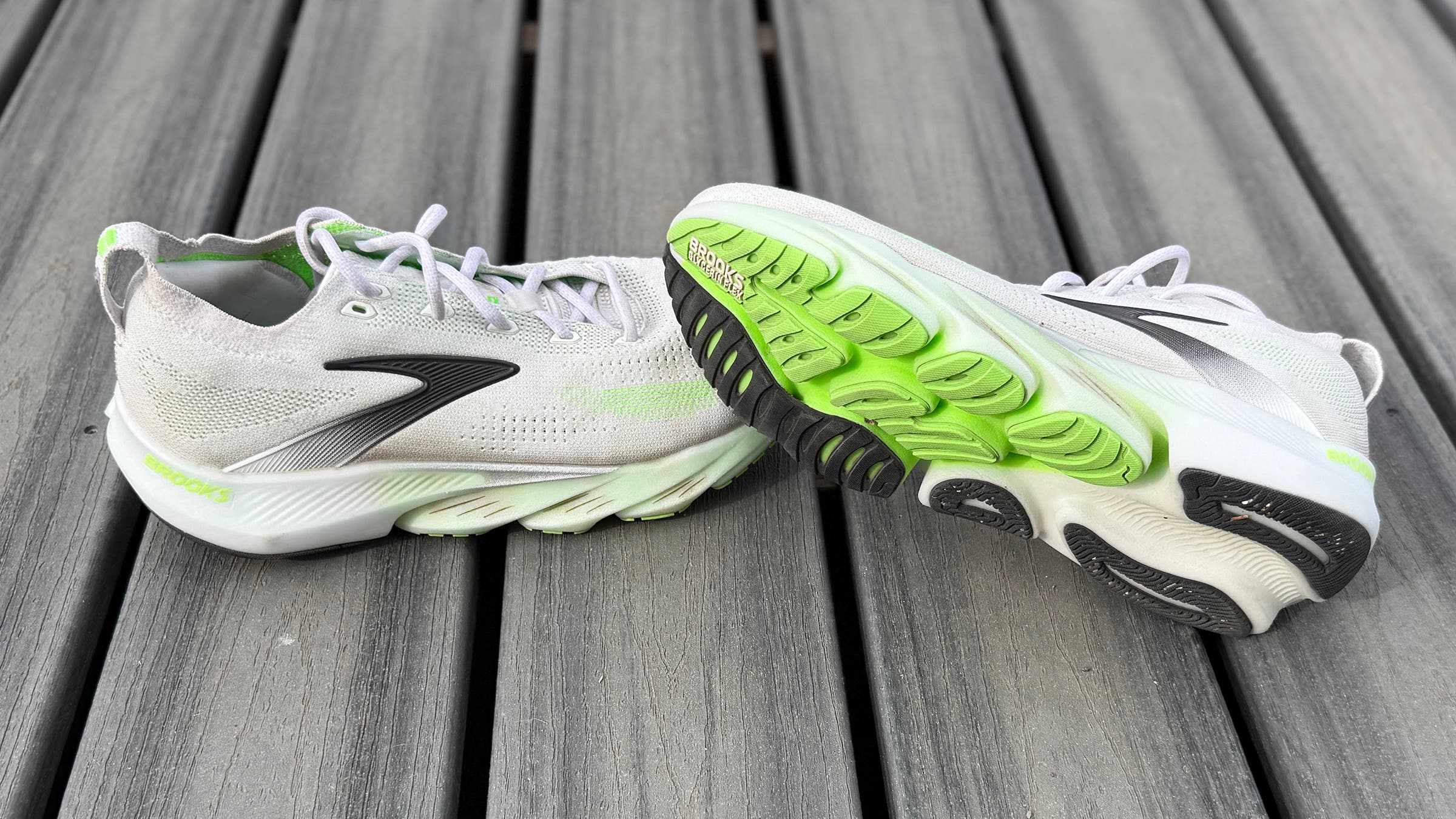
Brooks Glycerin Flex
Weight: 9.1 ounces (men’s), 8 ounces (women’s)
Stack Height: 36-30 mm
Drop: 6 mm
Sizing: 7-13, 14, 15 (men’s), 5-12 (women’s)
Pros and Cons
+ Allows natural foot flexion
+ Cushioning feels great underfoot
– Upper could be more breathable
We were big fans of the decoupled, cushy 2021 Brooks Aurora BL, and the Glycerin Flex is an evolution of that shoe that doesn’t disappoint. The sole moves with the foot exceptionally well in the Glycerin Flex, thanks to a deep groove that runs diagonally across the midfoot, allowing the heel to rotate independently of the forefoot. The rest of the sole features independent cushioning pods instead of one flat plane of contact with the ground. This furthers the feeling of the foot engaging the midsole naturally, and supports the unique foot strike and foot shape of individual runners. Adding to the shoe’s strategic support throughout the stride is a DNA Tuned foam midsole, with larger, softer cells in the heel, smaller, explosive cells in the forefoot, and a smooth transition between the two.
The soft, lightly stretchy knit upper feels almost cloth-like and holds the foot comfortably. One tester praised how well the shoe snugged his heel and midfoot as it rolled through the stride, creating a secure and stable ride. Some testers, however, felt the edges of the tongue too much and wanted a more breathable upper.
This is a fun—dare we say, freeing—shoe to run in. And one which, with its unique combination of cushion and flexibility, we think might set the stage for others to follow.
Best Stability Shoes
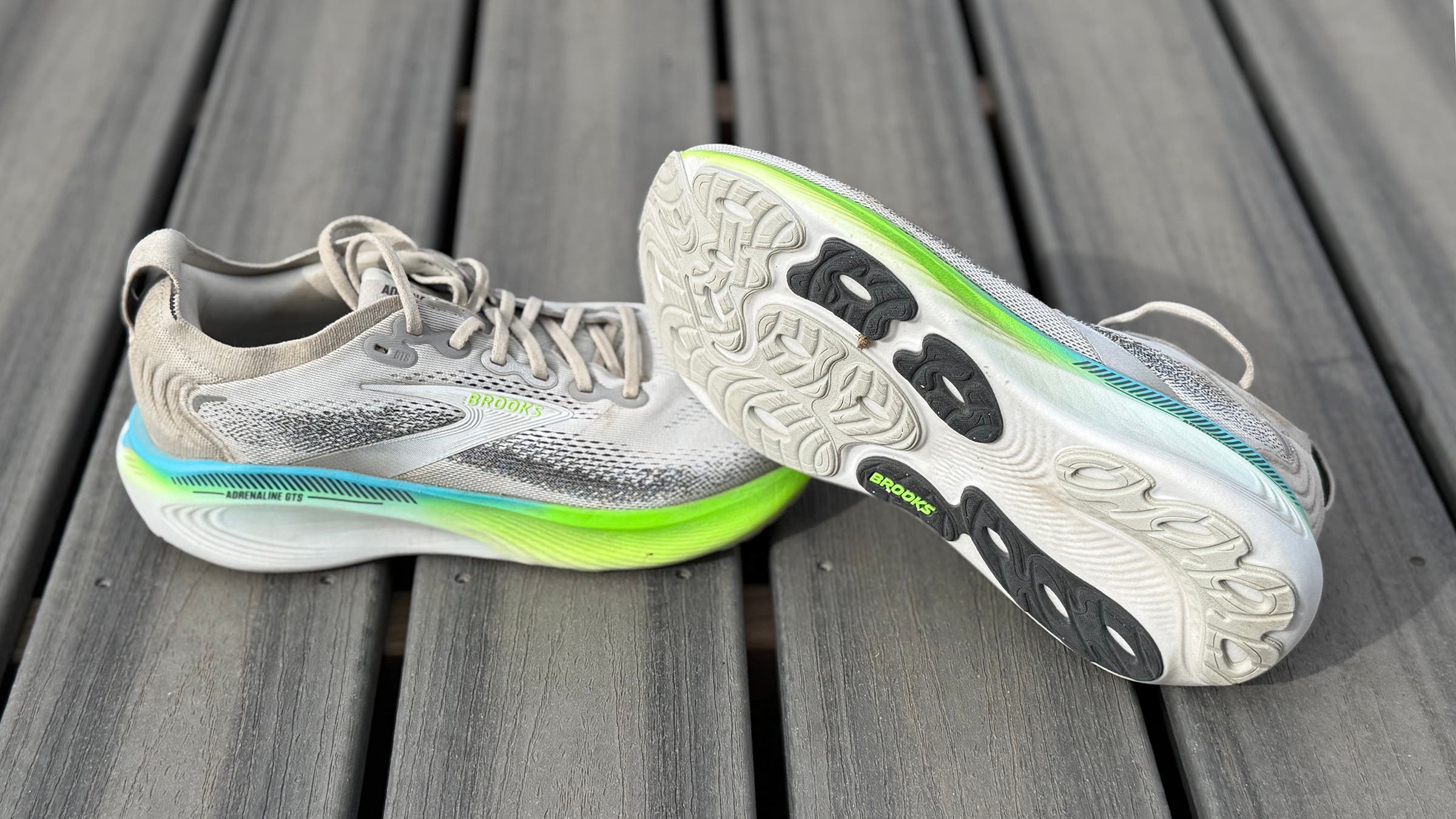
Brooks Adrenaline GTS 25
Weight: 10.6 ounces (men’s), 9.5 ounces (women’s)
Stack Height: 37-27 mm
Drop: 10 mm
Sizing: 7-13, 14, 15 (men’s), 5-12, 13 (women’s)
Pros and Cons
+ Soft cushioning for a stability shoe
+ Comfortable, plush upper
– Padded heel collar takes some getting used to
The Brooks Adrenaline GTS 25 feels more like a neutral cushioned trainer than a stability running shoe, yet it effectively guides and supports an otherwise over-rotating gait. The franchise shoe was updated with three millimeters more of Brooks’ nitrogen-infused EVA (DNA Loft v3) under the forefoot, and one millimeter more under the heel. We found the change to result in a softer, more comfortable, more balanced feel underfoot.
Stability comes from a higher-density zone of the midsole under the arch—built into the foam at the cellular level. Testers said it smoothly supported as their foot rolled inward, but didn’t feel intrusive. The plush, somewhat stretchy, engineered-mesh upper wrapped nicely around our feet while keeping our heels securely in place. “I felt it properly accommodated my forefoot, midfoot, and heel, which provided a lot of comfort and support,” said a tester.
A somewhat unique padded ring around the heel collar drew mixed reviews. Some testers found it comfortably held their heel in place; others found it “a little odd” until they got used to it. Overall, however, we love the Adrenaline GTS 23 as a reliable, comfortable, stable daily trainer—that looks good, to boot.
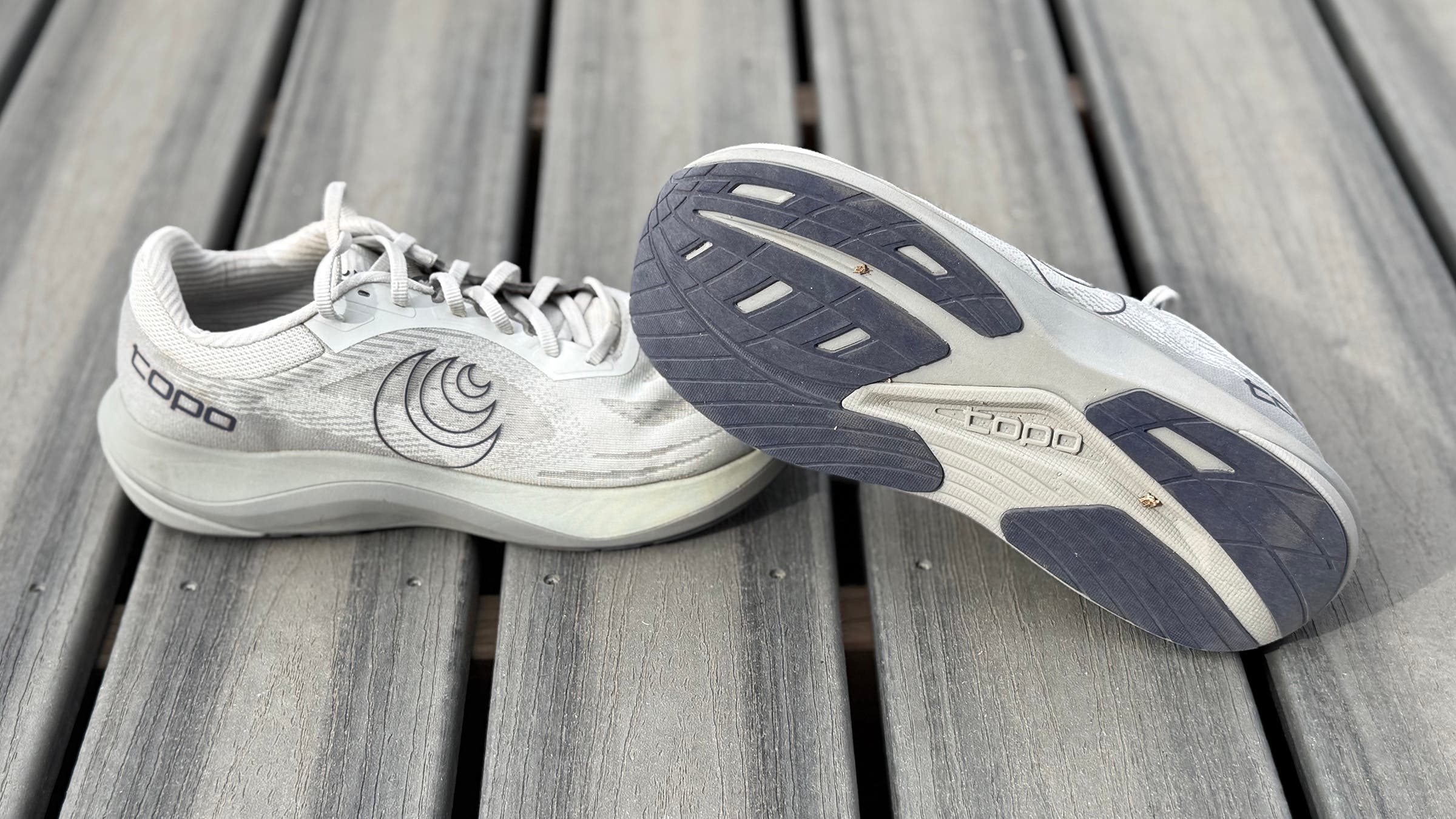
Topo Athletic Ultrafly 6
Weight: 9.6 oz (men’s), 7.5 oz (women’s)
Stack Height: 32-27 mm
Drop: 5 mm
Sizing: 7-15 (men’s), 6-12 (women’s)
Pros and Cons
+ Lightweight
+ Smooth, unobtrusive support
+ Allows natural toe splay
– Roomy forefoot fit isn’t for everyone
Combining a moderate stack height, strategic stability features, and Topo’s signature fit (a snug midfoot and significantly roomy forefoot) this cushioned trainer offers gentle stability and stride guidance while enabling natural toe splay and groundfeel. Version 6 was a major update, with two additional millimeters of foam underfoot, softer foams throughout, and redesigned stability features.
A base of denser foam under the heel and arch—provides rotational support, while a secure midfoot fit and wide stance further ground the stride. The jacquard zonal weave upper proved breathable, soft, and pliable, adding to the overall natural feel. And the softer, proprietary blend ZipFoam, while comfortably cushioning, is still thin and responsive enough to allow for engagement of the foot with every step.
One tester described the Ultrafly 6 as delivering a “smooth, comfortable, lightly responsive ride underfoot with a secure feel that the shoe is supporting my stride, without any harsh firmness, sharp transitions, or attempts to alter my foot motion.” While the UltraFly 6 accommodates a heavy heel strike, it encourages a more forward-balanced stride and full-foot engagement. Some testers found the fit too loose and the foam too firm for their liking.
Best Marathon Racing Shoes
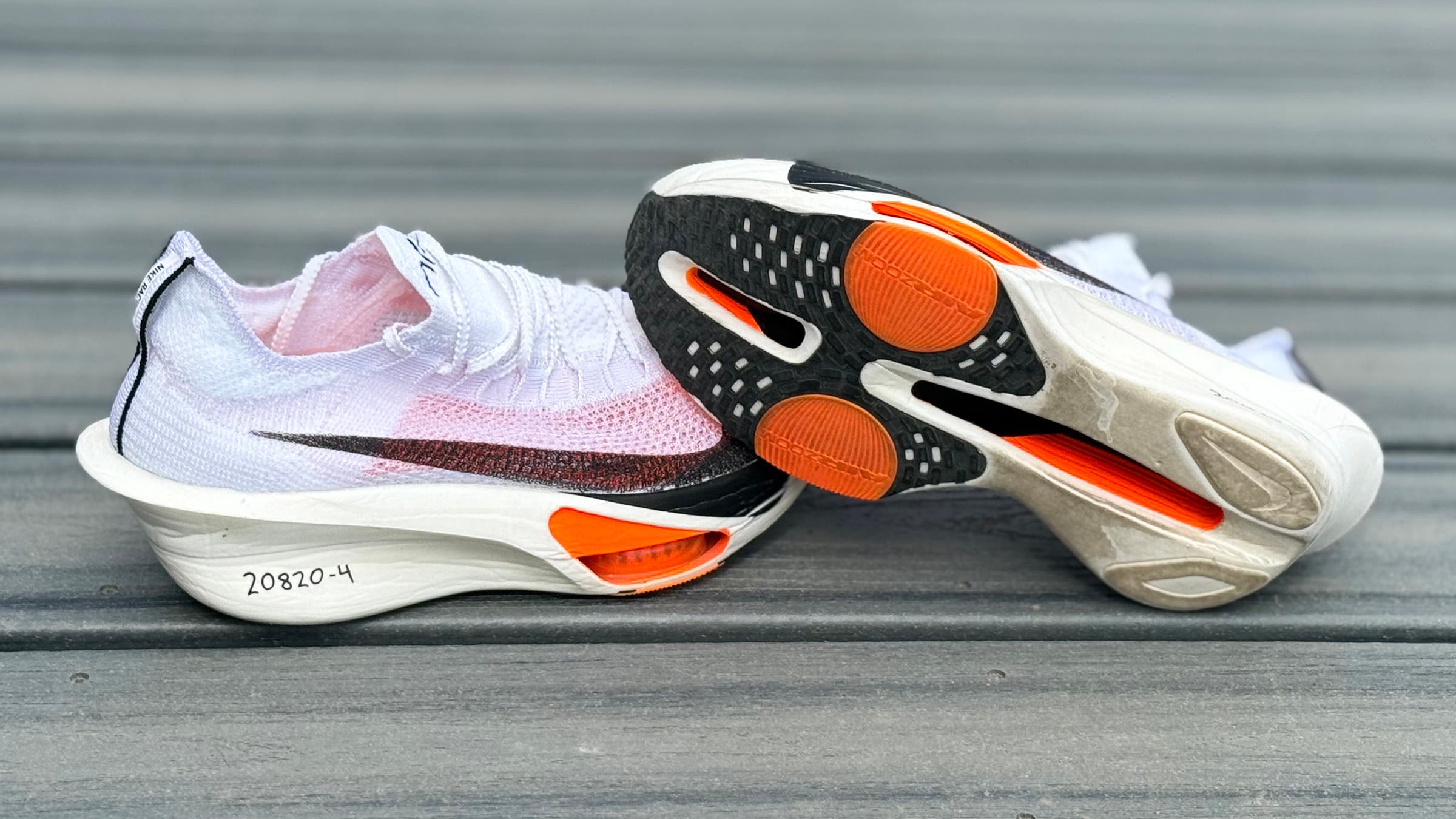
Nike Alphafly 3
Weight: 7.8 oz (men), 6.2 oz (women)
Stack Height: 40–32 mm
Drop: 8 mm
Sizing: 6-15 (men’s), 5-12 (women’s)
Pros and Cons
+ Bouncy, trampoline-like ride
+ Works for a wide range of runners
+ Lighter weight than previous versions of the AlphaFly
– Heel can feel unstable
– Can be hard to find in specific sizes
We’ve run in all three versions of the AlphaFly to date and think this third iteration is a great update. Subtle adjustments to the shoe’s geometry, including a wider footprint and carbon fiber plate, paired with repositioned Air Zoom units and strategically sculpted midsole, give the Alphafly 3 a distinctly different feel from its predecessor, which many found heavy and clunky compared to the original. This shoe again feels bouncy, fun, and fast.
Complementing the cush and rebound of ZoomX (Pebax) foam and Air Zoom units (pockets of compressed air and tensile threads) is a full-length carbon fiber plate that gives the shoe extra snap and adds a touch of appreciated stability that even the most efficient runners can benefit from when fatigued (marathon, anyone?). One of our more competitive testers praised the Alphafly 3 for its bouncy, energy-saving ride and says she’ll wear no other shoe for races longer than 10 miles. Another speedy tester noted, “Even running as fast as 5k pace, I found the Alphafly responded quickly, encouraging a fast turnover.” Some slower runners noted, however, that landing on the Alphafly’s sculpted heel can create a feeling of instability until the plate is engaged at the midfoot roll.
The upper of the Alphafly 3 is a lightweight, super-breathable mesh with an integrated tongue and thin, notched laces that pull tight and stay tied. Our feet were comfortable and secure without any pressure points on top of the ready-to-fly platform. We love that this shoe got lighter than its previous versions, which adds to its race-readiness.
Read our full Nike Alphafly 3 review and our showdown comparison of 16 super shoes.
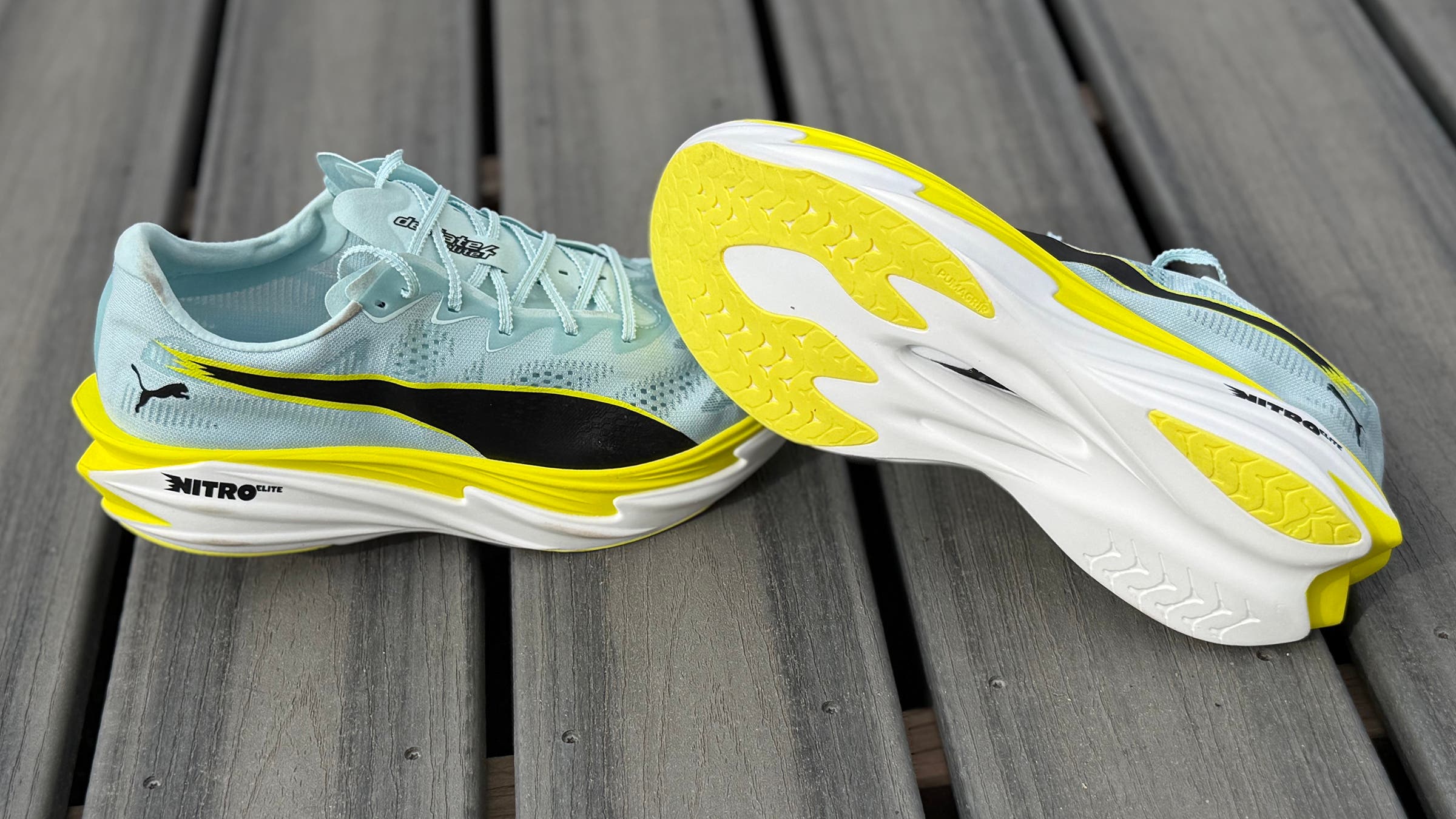
Puma Deviate Nitro Elite 4
Weight: 6 oz (unisex)
Stack Height: 40–32 mm
Drop: 8 mm
Sizing: 7-13, 14 (men’s), 5.5-11 (women’s)
Pros and Cons
+ One of the lightest super shoes
+ Stable ride
+ Nimble, streamlined design feels fast
– Very thin upper
– Foam may feel firm to some
There’s no shortage of super shoes to choose from today, with every brand releasing ever-new versions of their ultralight, hyper-bouncy, carbon-plated racer. Puma is one of the leading brands driving innovation, so it’s no surprise its latest marathon racing shoe, the Deviate Nitro Elite 4, stunned our testers.
“Perhaps one of the best shoes I have ever had,” said one of our faster testers. “I love this shoe. It is incredibly lightweight and offers excellent stability and speed.” The midsole features hyper-bouncy nitrogen-infused A-TPU—pioneered by Puma and now the industry-leading super foam—with an embedded, curved carbon plate. Unlike many supershoes, it feels bouncy while remaining stable, thanks to the relatively firm midsole and wide geometry. Underfoot is Puma’s proprietary rubber compound, PUMAGRIP, which tests as one of the grippiest outsoles, and, testers confirmed, delivered confident, powerful push-offs.
The woven upper is thin, keeping weight down, but reinforced with tape for a secure fit. The entire design is streamlined—12% lighter than its predecessor—avoiding the clunky feeling of many marathon shoes with similar stacks. “It’s a well-crafted, fast, and sleek shoe,” said one well-informed tester who believes it is, “one of the best racing flats you can get for the marathon right now.”
Best Short Distance Racing Shoes
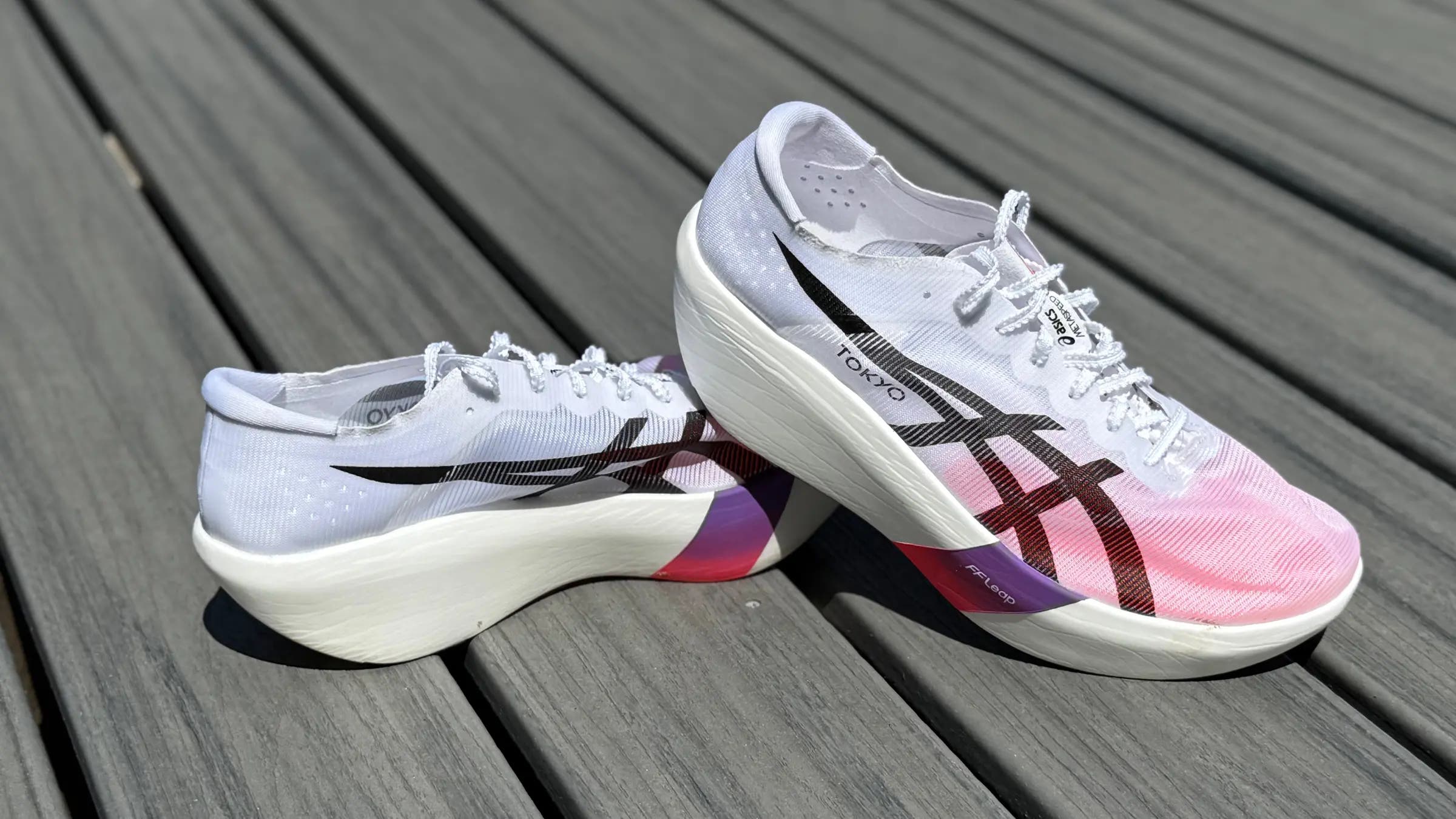
Asics Metaspeed Ray
Weight: 4.5 oz (men’s 9 and women’s 10.5)
Stack Height: 39.5–34.5 mm
Drop: 5 mm
Sizing: 3.5-13 (men’s), 5-14.5 (women’s)
Pros and Cons
+ Outstanding cushioning-to-weight ratio
+ Plush underfoot
+ Sturdy, reinforced heel cup
– Thin tongue tends to bunch
– Ride feels unstable, particularly for heel strikers
– Best suited for advanced runners only
Most carbon-fiber super shoes weigh between 6 and 8 ounces: the Asics Metaspeed Ray comes in at 4.5 ounces, making it the lightest super shoe on the market and hands-down the best cushioning-to-weight ratio you can find in a running shoe.
For the shoe’s midsole, Asics introduced a new A-TPU-based foam compound they call FF Leap (which the brand quickly incorporated into other shoes like the Superblast 3). Embedded within the midsole is a three-quarter-length carbon fiber plate that runs from the forefoot to just beneath the mid-heel.
The combination of cushioning and low weight makes the Metaspeed Ray insanely fast—if you’re speedy and light-footed enough. This is, by far, the softest midsole we’ve ever tested. At slower paces, the soft foam feels like you’re standing on a bed of marshmallows. However, the faster you run, therefore spending less time on the ground, the more controlled it feels.
The upper is a translucent, ultra-thin, Kevlar-reinforced Matryx technical mesh with little structure that feels flimsy. Once the fit is dialed in, however, it holds the foot surprisingly securely.
The Metaspeed Ray is a precision tool designed to do one thing: run fast. It undoubtedly accomplishes this, but at the expense of stability. This is not a marathon or even half marathon shoe for most runners (not even all elites). Yet, if you want a near-weightless shoe for short races like the mile or 5k, and like a super-soft, trampoline-like ride, this is your shoe.
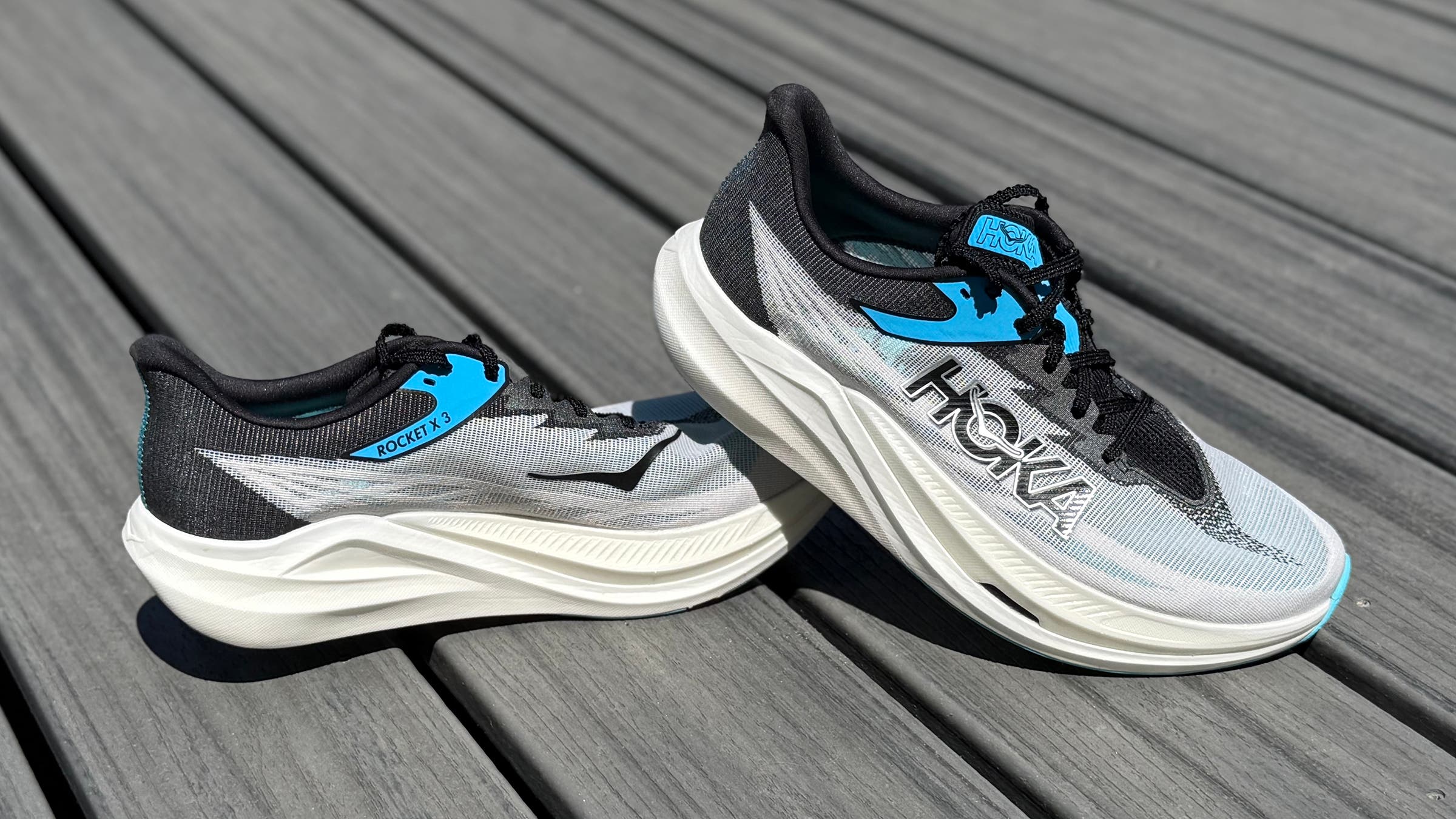
Hoka Rocket X 3
Weight: 8 ounces (unisex)
Stack Height: 42-35 mm
Drop: 7 mm
Sizing: M5/W6-M14/W15 (unisex)
Pros and Cons
+ Works for a wide range of runners
+ Integrated tongue aids a locked-in feel
– Expensive
The Hoka Rocket X 3 might be considered a super shoe for the masses, pairing dual-density PEBA foam with a new winged carbon-fiber plate for a stable, forgiving ride. Despite its massive stack height, the shoe remains impressively lightweight without feeling flimsy, thanks to a single-layer warp-knit mesh upper. (It’s also partly transparent, adding to the shoe’s speedy vibe.)
“This shoe got me through a half-marathon, running a much faster pace than I thought I would—and I didn’t even feel that beat up afterward,” said a tester who describes herself as a heel striker.
The Rocket X 3 is built on a unisex last, but even our female testers with narrow feet found the fit was “secure and comfortable.” An asymmetrical, stretchy vamp and tongue pulls snug via thin, textured laces that stay tied. That locked-in feel, plus the new sticky rubber outsole, made us feel agile and capable on corners at race pace.
How to Choose the Best Road Running Shoe for You
When choosing a road running shoe, the first step is to determine the type of running you’ll primarily be doing in them. Do you need a speedy racer, a shoe that offers comfort during long, slow jogs, or a versatile trainer that can handle various distances and paces?
Next, consider your preference for the feel of the shoe’s cushioning: do you like a soft, forgiving ride, a more energetic, bouncy sensation underfoot, or a firmer platform that provides better ground feel? With advancements in foams and technologies, many shoes today offer cushioning without compromising responsiveness or stability. However, each shoe balances these characteristics differently, providing a spectrum of options to choose from. The key to finding the perfect running shoe is choosing the one you’re most comfortable with.
Once you’ve narrowed the search to a certain type of road shoe, you need to find a pair that complements your unique body and stride. Every runner’s body, gait, speed, experience, and ride preferences are different, so every runner will interact differently with each running shoe. The shoe that your best friend or your sister-in-law loves may be uncomfortable for you and make running feel slow, sluggish, or even painful. Finding the perfect pair of road running shoes is a seriously personal affair.
The process for choosing the best running shoes is a matter of finding the models that both fit your foot and also feel best when you’re running. To determine fit and feel, there’s no substitute for trying the shoes on and running in them.
Fit: Match Your Foot Shape
When assessing fit, first pay attention to length. You need room at the end of your toes as your feet lengthen during their dynamic movements on the run. A rule of thumb is to allow a thumb’s width between your longest toe and the end of the shoe. Runners often wear a running shoe a half or full size bigger than their street shoes.
Ensure that the shape of the sole and the upper matches your foot shape. The sole should be as wide or wider than your foot for the whole length, and match the curve of your arch comfortably. The shoe should hold your foot securely over the instep, while allowing the ball of the foot and the toes to splay and flex when you roll forward onto them. Your heel shouldn’t slip when you lift it, and the arch should be able to dome and lengthen naturally. Nothing should bind or rub as you roll through the stride.
Feel: Match Your Movement Path
If the shoe fits, it’s time to take them on a short run on a treadmill, around the store, or, ideally, down the block and back. Every running shoe has a unique ride created by the type and density of foam in the midsole and the geometry of that foam: its thickness, width, heel-to-toe drop, molded sidewalls or flares, and forefoot flexibility or rocker shape (plus, in an increasing number of models, the presence of and type of embedded plate). Each of these elements interact with each other and your stride to determine how the shoe reacts on landing, how much it cushions, how stably it supports, how smoothly it transitions from landing to toe off, and how quickly and powerfully it rebounds.
The best way to choose the shoes that complement your body and stride is to find the ones that feel right on the run. Benno Nigg, the world-leading biomechanics professor who proposed this method of shoe selection, calls it the “comfort filter,” but makes clear it is far more than how plush the shoe feels when you step into it. What you want to assess is whether the shoe allows and supports the way your feet want to move, what Nigg calls your “preferred movement path.” In the right shoe, while running at your normal pace, you will touch down where you expect to land, roll smoothly and stably through the stride without noticing the shoe, feel both cushioned from and connected to the ground, and push off naturally, quickly, and powerfully. When this comes together you’ll know that you’ve found your pair.
It’s likely that several shoes will feel good on your feet. To find the most comfortable, it helps to compare them back to back, like an eye doctor will do with corrective lenses: flipping between “A” or “B,” “1” or “2.” You may also find that different shoes feel better at different paces or level of fatigue, and you may want more than one pair. In fact, research shows that wearing a variety of different shoes is one of the few proven ways to reduce injury risk as it appears to vary the stresses on your feet and joints.
What About Injury Prevention?
Running shoes have long been marketed and sold as prescriptive devices to help runners stay healthy, but there is little scientific evidence correlating shoes, or any specific shoe properties—like cushioning or pronation control—with running injuries. Medical professionals say that it is highly difficult to determine whether a runner needs a certain type of shoe, and studies have shown that prescribing shoes using traditional methods like treadmill gait analyses or wet-foot arch height tests don’t consistently reduce injuries.
Don’t assume that you need more cushioning or more stability if you have sore joints, or if you’re a heavier runner, or if you’re a beginner—evidence doesn’t support many common beliefs. The best way prevent injury is find two or three different pairs that feel right on the run, ease into using them, and vary your shoes, your running surface and your pace regularly (plus avoid rapid increases in your training load and work on improving your mechanics).
How We Test Road Running Shoes
- Number of testers: 25
- Number of shoes tested: 103
- Number of miles: 21,000+ over a year
To choose the best road running shoes, we begin by researching every brand’s upcoming offerings for the coming season. We wind up with dozens of samples of the models (52 road shoes this season, 51 last summer and fall) that are most promising—not just for us, but for 25 testers that range in age, ability, running form, geographical location, and preferred shoe types. We try to put each tester in models from within the same category (e.g., neutral, stability, carbon fiber, zero drop or uptempo) so everyone can compare apples-to-apples.
After three to six months of running in each model on paved roads, concrete multi-use paths, treadmills, sandy beach paths, dirt roads, and tracks at a variety of distances, paces, and weather conditions, our crew members report back with their assessments of fit, comfort, traction, cushioning, flexibility, stiffness, pop, what type of running the model is best used for, how the shoe compares to other models, and more. We also run in every shoe ourselves, and, combining all the tester feedback with years of personal experience, hone in on the best. This guide combines the best recent shoes with outstanding shoes still available from the past two test periods.
Meet Our Lead Testers
Lisa Jhung
Freelance journalist, editor, and author Lisa Jhung has researched, tested, and written about running shoes for the past decade and a half, much of that time for Outside and Outside Buyer’s Guides. She coordinates a fleet of female shoe testers out of Boulder, Colorado, and says her home office is a perpetual obstacle course of cardboard boxes and piles of running shoes. Lisa’s written about gear of all kinds for numerous national magazines as both an editor and freelancer, including a stint as the Shoes & Gear blogger and trail running microsite editor for Runner’s World.
A high school jumper and occasional sprinter/hurdler, she started running—really running—after walking off the collegiate volleyball team, and moved on to road and trail races of any distance, triathlons, adventure races, and mountain running. She’s happiest testing rugged trail shoes on gnarly terrain, and also loves a good neighborhood jaunt…but is almost always looking for ribbons of dirt. Lisa is the author of Running That Doesn’t Suck: How to Love Running (Even If You Think You Hate It) and Trailhead: The Dirt on All Things Trail Running.
Cory Smith
Cory’s passion for running started over 30 years ago in high school when he became the number six ranked runner in the nation at 3000 meters his senior year. After high school, he competed at Villanova University, earning two NCAA Division I Championship showings. Today, he’s determined not to let age slow him down and competes on the national master’s circuit, running a 4:12 (4:30 mile pace)) 1500 meters and 9:04 (4:52 mile pace) 3000 meters in 2021 at age 43. He prefers a hard track workout or tempo run over an easy long run any day but also appreciates a challenging trail or mountain run.
His obsession with running shoes started in 2014 when he wrote his first shoe review for Gear Institute. Since then, he’s tested and reviewed hundreds of running shoes, clothing, and gear for Outside, Runner’s World, Footwear News, and other outlets. He has a soft spot for speedy shoes over heavy trainers but loves dissecting all shoes equally and thinking like a product engineer to explain the why behind every design detail. Cory is the Founder of Run Your Personal Best, an online running coaching business, and since its inception in 2014, has coached runners’ to over 100 Boston Marathon Qualifying times.
Here’s one of Cory’s shoe-testing routes on MapMyRun:
View Route Details
Create routes or search for a route at MapMyRun.
Jonathan Beverly
Jonathan fell in love with running his freshman year of high school and quickly became fascinated with finding the perfect pair of running shoes. That quest got a boost when he became editor of Running Times in 2000 and started receiving every new model as they were released. The parade of shoes continued while he served as shoe editor for Runner’s World, then editor of PodiumRunner, and currently fitness gear editor at Outside. Having now worn nearly every running shoe created in this century—and a fair amount of those dating back to the early models of the ’70s—he’s given up on finding the one best and now relishes the wide variety of excellent options.
Once a 2:46 marathoner regularly doing 50+ mile weeks, recent injuries and his age have reduced his volume by about half and slowed his easy training pace—but he says he still enjoys an uptempo workout or two each week. Beverly is the author of the book Your Best Stride which explores how each individual’s gait—and, consequently shoe preference—is unique. He enjoys getting scientists’ take on new shoe trends and trying to describe the nuances of each shoe’s ride.
