

Published May 13, 2026 02:23PM
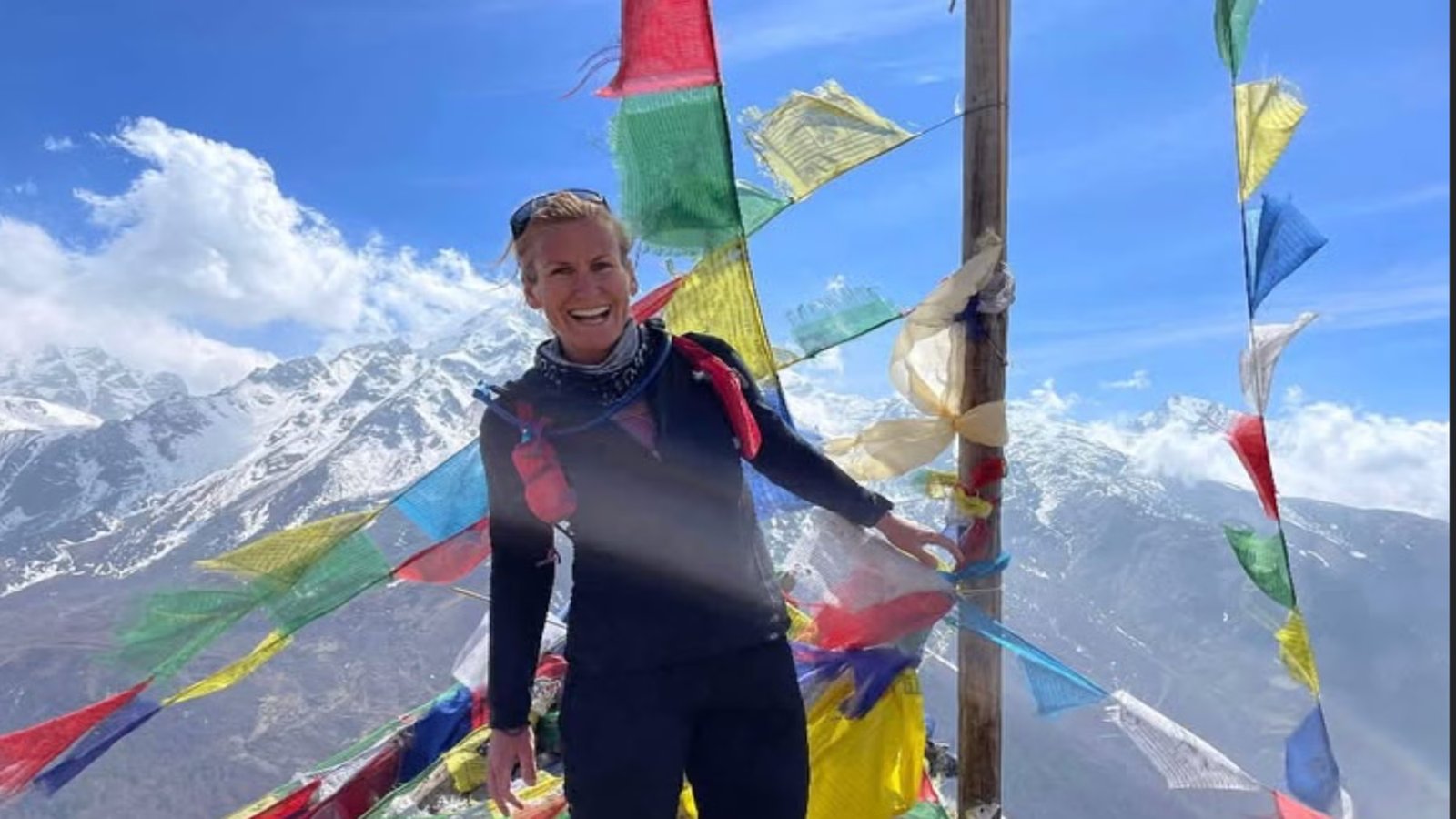
Shelley Johannesen knew how she wanted to spend her time on Earth: climbing mountains and making friends. That was the motto of the adventure guiding company she led with her partner, Dave Ashley.
It’s also what Johannsen was doing the day she died. On May 11, Johannesen was descending 27,838-foot Makalu in Nepal when she was struck and killed by an avalanche. The slide severely injured one of her climbing guides, Tawa Sherpa. Ashley, 51, who was also descending the peak, watched the ordeal unfold.
“We could see their rope just hanging there, severed,” Ashley told Outside. “I saw Tawa’s red mitten sitting on a boulder, and past that, all we could see was swirling snow and rocks. We had no idea what had happened to them.”
Ashley told Outside that the loss of Johannesen marks the devastating end of their profound romance.
“We’d both let go of what we thought other people wanted us to do and be, and looked inside ourselves to figure out what would make us happy during our short time on Earth,” Ashley said. “To find a partner like that later in life, I felt incredibly lucky. We had an absolute blast together.”
An Unforeseeable Slide
Johannesen, 53, and Ashley had summited the peak on May 9, with the support of two guides, Tawa and Phurba Sonam Sherpa. That evening, the group slept at Makalu’s Camp III at 24,600 feet. The following morning, as they descended from Makalu La, the high-altitude pass on which Camp III sits, the avalanche struck the group at around 24,000 feet.
Phunuru Sherpa, a veteran climber who coordinated the rescue response, told Outside that such a slide is unprecedented. He has led expeditions to Himalayan summits, such as Makalu and Mount Everest, for 29 years. He also served as a lead rescue coordinator during the 2015 Everest avalanches, the deadliest event in the mountain’s history. Phunuru said the avalanche on Makalu’s standard route is a complete anomaly caused by “substantial snow and extremely high winds this season.”
Phunuru Sherpa told Outside that the teams on the mountain were following proper safety protocols and that the avalanche was nearly impossible to predict.
“This year we’ve had very unusual weather patterns,” he said. “We check and cross-check three different reports and make decisions, but the weather at 26,000 feet can change within hours.”
On the night before their descent, more than 30 inches of snow fell on the mountain, followed by winds of up to 60 miles per hour. The weather created a highly unstable snowpack, piling the heavy snow into a primed to collapse.
Of the group, Tawa Sherpa had the most experience on Makalu, the world’s fifth-highest mountain, and was leading the descent with Johannesen behind him.
“They had just cleared a picket ahead of us when I looked to the left and saw a crack forming,” Ashley told Outside. “I yelled, ‘Slab!’ And boom, it came loose. No one had any time to react.”
The avalanche also hit Ashley and Phurba Sonam Sherpa, who were descending in the rear of the group of four. “It only carried us maybe ten feet,” Ashley recalled. However, the mass of snow slammed into Tawa Sherpa and Johannesen, severing the fixed line that secured them to the mountainside. The slide then carried the two down the mountain by 1,000 to 1,300 vertical feet.
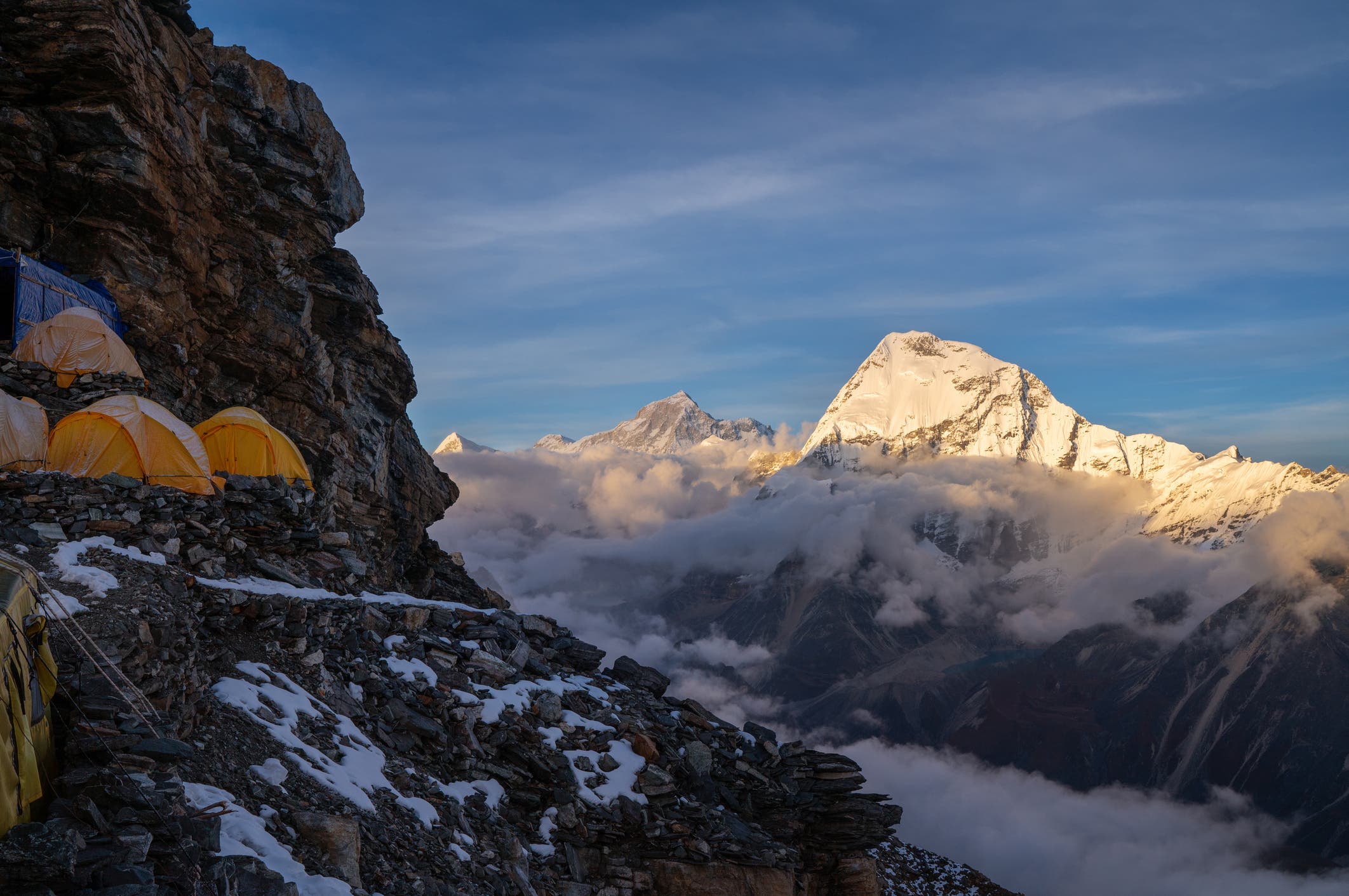
Ashley and Phurba Sonam Sherpa radioed for assistance to Camp III. Descending the avalanche-swept terrain without the fixed lines was painstakingly slow, Ashley said. They scoured the snow and ice, unsure if their companions were buried. It took them hours to finally find Johannesen and Tawa Sherpa. The two climbers weren’t buried in the slide, but they’d come to rest on a dangerous ledge. Ashley and Phurba Sonam Sherpa reached them and secured themselves with ropes and axes.
“We were about ten feet from a huge cliff, anchored in with ice axes and our harness safeties,” Ashley said. Tawa Sherpa and Johannesen weren’t moving, and Ashley couldn’t determine the extent of their injuries. But both climbers were alive, he said.
“Both appeared to be pretty severely injured, with internal injuries, but there were no apparent signs of bleeding, compound fractures, or anything like that,” Ashley explained. It was the early afternoon, and he sent an SOS to his outfitter, Expedition Himalaya.
Ashley and Phurba Sonam were faced with a tough situation. They were exhausted, low on supplies, and without supplemental oxygen. They’d used up all their bottled oxygen during the ascent, having planned a quick descent from Camp III to Camp II at 21,000 feet.
Winds were picking up, and the temperature was dropping. There were no good options to mount a rescue, Ashley said.
“Now you’re with two people who can’t walk, and you’re too high for a helicopter rescue,” Ashley said. “The sun’s going down, and if you stay there, you might die, but if you leave, they’re going to die. So what do you do?”
Ashley said he did not consider leaving the two. “I was going to stay with her until the sun came up,” he said. “She was obviously in pain, but she was still doing well. So we stayed put and tried to keep them warm, but we didn’t have a stove or a tent, so it was hard.”
Ashley wrapped himself and Johannesen in a sleeping bag and spent the night cuddling, trying to keep them both warm as her condition deteriorated. “I would occasionally lift the edge of the sleeping bag, looking to see if I could see the headlamps of any rescuers, but that would fill the bag with bitterly cold air,” he said.
A Harrowing Night at 24,000 Feet
Further down the mountain, at Camp II, an elevation of 21,000 feet, Phunuru Sherpa and his own team of climbers had received word of the emergency and were trying to mount a rescue.
“Conditions were very, very difficult, with 60-mile-per-hour winds and deep snow,” he told Outside. “I equipped four Sherpas with oxygen, water, and food, and they left camp at 6:00 P.M. to help.” But the wind speed intensified to 70 miles per hour, Phunuru said, and within two hours the rescue team turned back and retreated to Camp II.
At the site of the accident, Phurba Sonam then began descending on his own through the storm to Camp II to try and organize a rescue. He reached the camp at 9:40 P.M.
When the winds died down just before midnight, Phunuru sent two more guides, Depak Sherpa and Lama Sherpa, up to the site of the avalanche. They reached the stranded climbers at 2:45 A.M. and began providing supplemental oxygen and emergency medical care.
Johannesen’s condition worsened, and Phunuru said that she died in the early hours of the morning, around 4:00 A.M. Ashley was fading in and out of consciousness when his partner died.
“As the sun came up, I was able to see that snow was now covering her face,” Ashley recalled. “I didn’t know what was going on, and I asked Tawa for help, and he looked at her, and just looked away, and I realized then that she was dead.”
It was a tragic end to an expedition born from the couple’s shared passions. In the wake of her death, those who knew Johannesen spoke to Outside of the deeply intentional, adventurous life that had brought her to Makalu to pursue her love of adventure.
She Came Alive in the Mountains
Ashley and Johannesen operated an international trekking and climbing company, DASH Adventures, in Kamas, Utah. Ashley, who founded the company shortly before he met Johannesen in 2023, said they had both been married and divorced. She had three children—a daughter and two sons—from her first marriage. When he and Johannesen met, they were in their late forties, and each saw, in the other, a kindred spirit ready to try something new.
“We both kind of had this realization that we could keep doing these five-day-a-week jobs, we could keep trying to make more money, get promotions,” Ashley told Outside. “But both of us, independently, came to the same epiphany at the same time, that this typical life wasn’t what we wanted, that there was more out here for us.”
So Johannesen joined DASH Adventures, and the two became not just romantic and climbing partners, but business partners, too. “She helped with the trips, and we traveled around the world,” Ashley said. “We trekked, we climbed, we made our motto ‘climbing mountains and making friends.’ It was an amazing life.”
Kristin Harila is a Norwegian mountaineer who, in 2023, set the world record for the fastest ascent of the 14 highest peaks, all above 8,000 meters (26,200 feet). She met Johannesen in Nepal during a previous climb.
“She was so friendly, so kind and interesting,” Harila recalled to Outside. “She found her way to the mountains later in life, and that’s inspiring, to see that it is possible.”
Seattle-based climber Nate Douglas met Ashley and later Johannesen on climbs around the world, including Argentina’s 22,837-foot Aconcagua and 16,024-foot Puncak Jaya in Indonesia. He remembers Johannesen as a warm, vibrant presence.
“You could tell she really came alive in the mountains,” Douglas told Outside. “Not just from the physical exertion it takes to climb, but from the human bonds forged on these expeditions. She was in her element when she was pushing herself alongside others, in that beautiful, cold scenery you can only get in the alpine.”
