

A routine descent in Utah’s San Rafael Swell turned into a nightmare when a specialized anchor gave way. Miraculously, both the 33-year-old canyoneer and his canine companion walked away from the 30-foot drop.
The man was canyoneering with his wife in Buckeyes Canyon, Utah, when he and his dog fell
Published May 13, 2026 02:35PM
A man who was rappelling off a cliff inside a Utah canyon was injured in a terrifying fall when his anchor system failed. When rescuers reached the victim, they discovered he was accompanied by an unusual climbing buddy—his pet poodle strapped to his chest.
Remarkably, both the man and his furry friend survived the plunge.
The accident occurred on Saturday, May 9, around 2:30 P.M., the rescue agency Emery County Sheriff’s Office (ECSO) wrote in an incident report. Authorities have not released the name of the 33-year-old man. He was canyoneering with his wife in Buckeyes Canyon, a rugged, remote slot canyon located deep in the state’s San Rafael Swell, when he and his dog fell.
“Buckeyes is a very technical, advanced canyon, primarily due to the lack of anchor placements,” veteran local guide Christopher Hagedorn told Outside. Hagedorn is the owner of Get in the Wild, a canyoneering guiding company based in nearby Hanksville, Utah. “Often you’re able to use natural materials to build anchors, like rock cairns, trees, or bushes, but not in Buckeyes.”
According to the ECSO incident report, the man’s wife first rappelled down the cliff, which was between 20 and 30 feet high, and then waited for her husband and their dog to descend after her.
“As the patient began rappelling over the edge, the bag anchor system reportedly failed, causing him to fall backward over the cliff and land at the bottom near his wife,” the ECSO wrote.
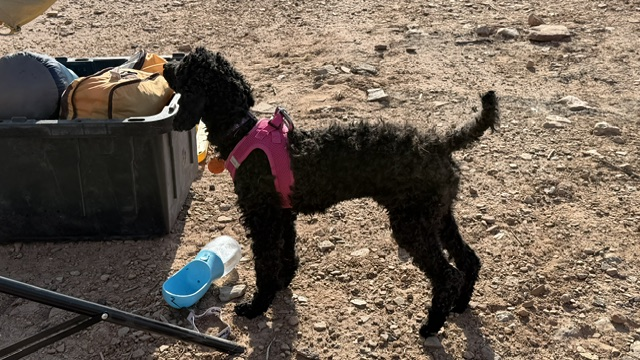
The man was wearing a helmet and a large backpack, which likely protected him from the brunt of the fall. He suffered injuries to his wrist and ankle. The poodle, which was strapped to his chest, also escaped largely unharmed, the report said.
“The dog sustained minor injuries to one of its legs, but appears to be doing well,” reported the ECSO.
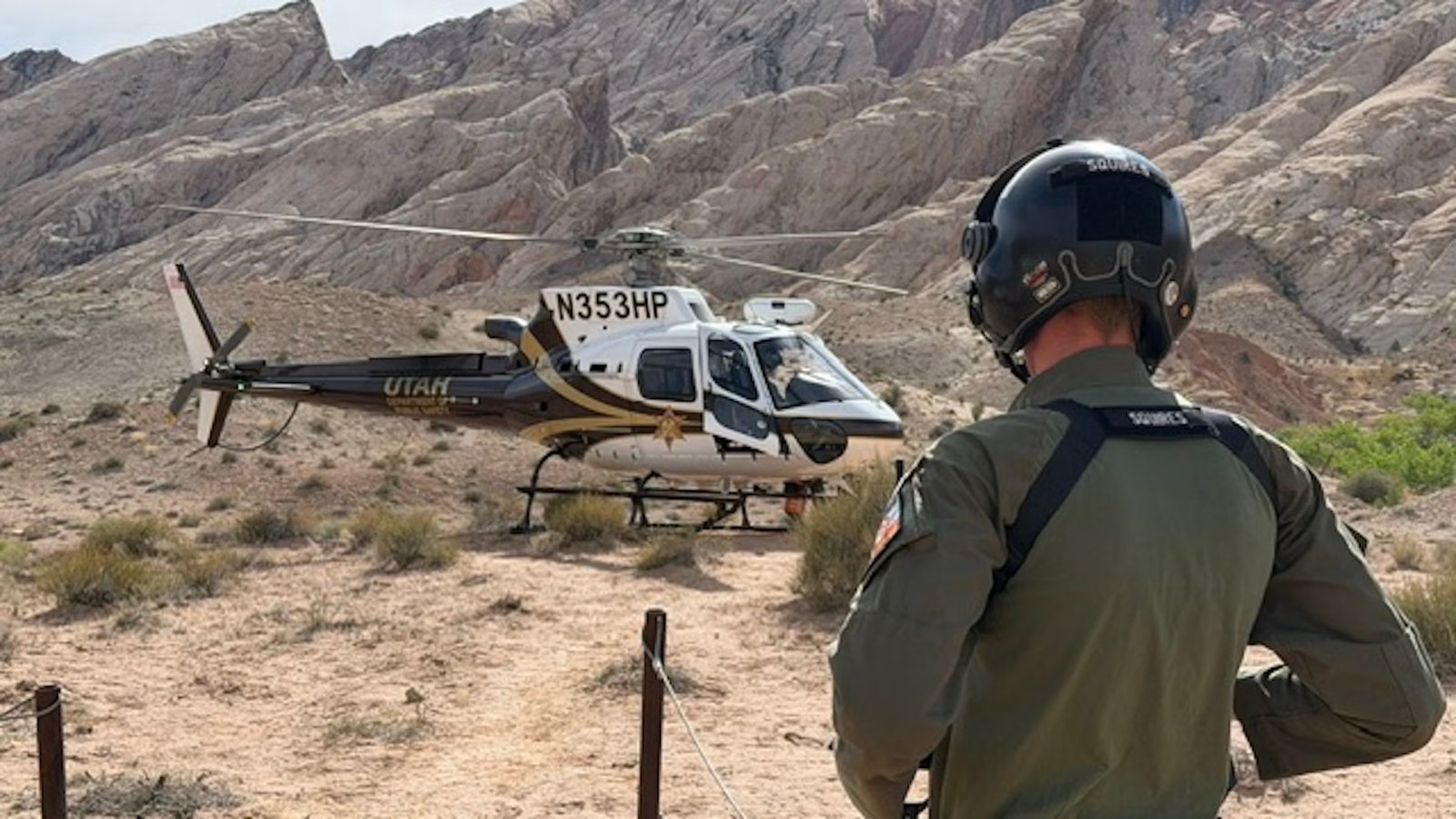
After the fall, the man and his wife called to alert another party descending the canyon ahead of them. The group provided first aid for the injured man and his dog while waiting for first responders. A helicopter from Utah’s Department of Public Safety evacuated the injured man.
The Potential Dangers of Marginal Anchors
Hagedorn said that the man used a so-called “sandtrap” or “potshot” anchor. These consist of a weighted tarp or bag, usually filled with sand or rocks, that can be pulled from below to release the weight, allowing the canyoneer to pull the empty tarp or bag down as they rappel. These anchors rely entirely on weight, friction, and exact placement to hold a climber, leaving scant room for error. Hagedorn said building an anchor like this requires precise, advanced technique.
“We refer to these as ‘marginal anchors,’” he explained. “You have to back them up with some type of redundant system.” It could be that the anchor didn’t have enough weight or sufficient friction, but authorities have not released the exact cause of failure.
As for whether it’s ideal to go canyoneering with a poodle in tow, Hagedorn declined to comment.
“There are quite a number of folks out there who enjoy bringing their dogs into canyons and rappelling with their dogs in specialized harnesses,” he said. “There are other groups who don’t like that and say it’s wrong.”
In April, Outside reported on a rash of rescues in the Utah desert. Hagedorn says this hasn’t let up.
“It’s been an incredibly busy season out here,” he said. “Search and rescue teams have a lot of work on their hands.”
