Published May 13, 2026 04:00AM
If you live in the Northeast, the months of April into May mean many things. Mets fans at the bar talking themselves into a long summer. The first cottonwood pollen, and the first round of Allegra. Dudes in shorts and parkas, committing to the non-committal nature of spring. And, reliably, at the farmer’s market: ramps.
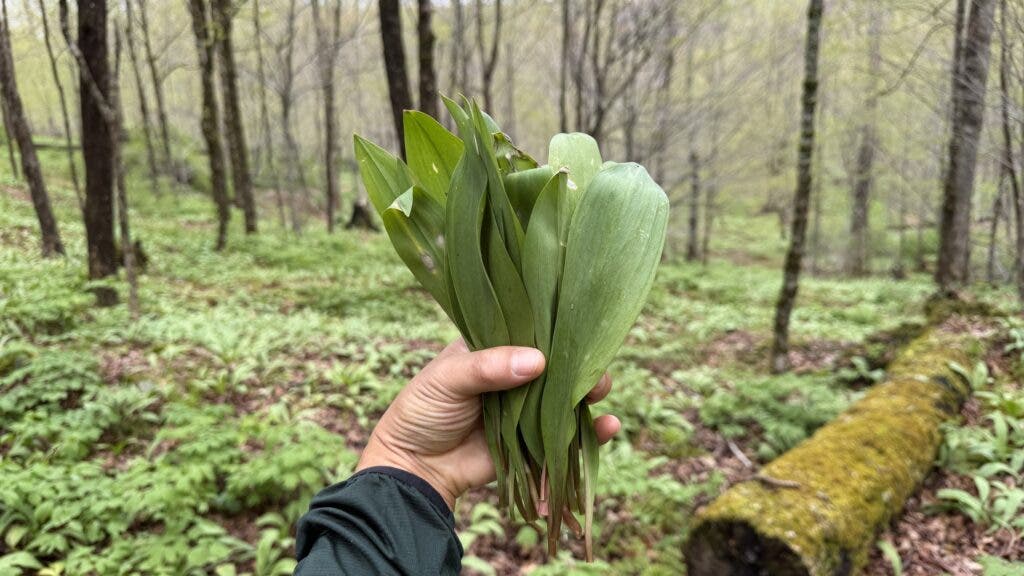
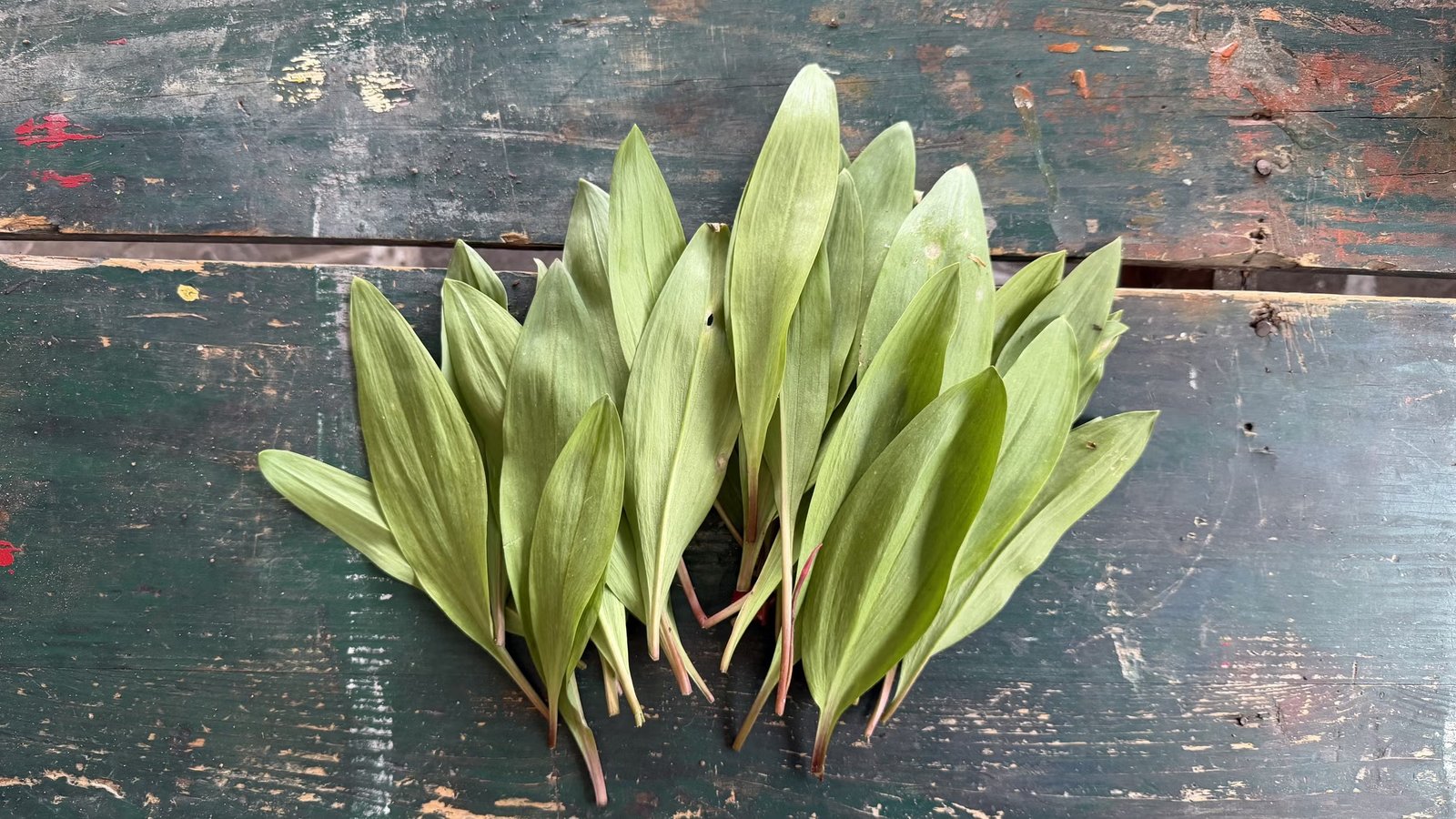
If you’ve never seen one, picture a scallion that grew up in the woods. Two broad green leaves tapering down into a slim white bulb with a faint purple blush. They have the character of garlic, onion, and forest floor. Their scent oversells them. Ramps are one of the gentler alliums. But in a dish they hit like a direct line to spring, and then, by the last day of school in June, they are gone.
They’re also one of those foraged ingredients that go from chef-darling to cliché in roughly ten minutes of their short season. Pickled ramps, ramp butter, ramp pesto, ramp cocktails, ramp on ramps on ramps. I’ll admit I’d gotten a little bored of this cycle over the years. But then again, I had never actually pulled one out of the ground. Turns out that matters.
This past weekend, I went up to the Catskills for some hiking and to check out the trout tasting menu at the DeBruce. It’s a restored 1880s inn perched above the Willowemoc Valley near Livingston Manor, about two and a half hours from where I live in New York City. Fourteen rooms, a bright dining room with a view of 600 acres running across two mountains and down to the river, and a tackle room on the ground floor with lockers for fishing rods and muddy boots. The whole place hits a perfect pitch of fanciness—comfortable and homey, with none of the over-designed pretension that creeps into a lot of upstate inns these days.
Before the trout extravaganza, I ordered a Gibson—gin, because I’m not a barbarian—and it was finished with a swirl of bright green ramp oil and a touch of brine from the jar of pickled ramps, one of which arrived speared on a pick where the cocktail onion should have been. Cold. Gorgeous. Spring in a glass.
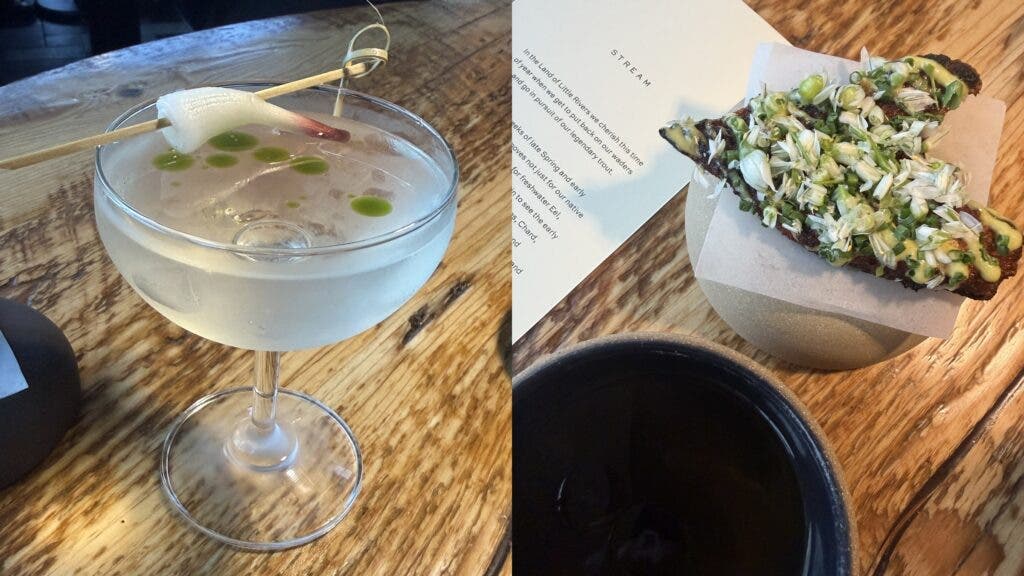
The dinner that followed was less a trout extravaganza than a hyper-local seasonal sermon. Trout came three ways—as a clear broth, a fried collar, and gently poached with, yes, ramps—but the trout was almost the supporting act. Green strawberries. Grilled fiddlehead ferns. English peas. Black turnips. Rhubarb. The whole menu was green and earthy at once, every course a snapshot of the exact week we were in. By the end of it, I felt bad for ever rolling my eyes at a ramp or stinging nettles or fiddleheads, or the whole seasonal-forage parade—Jesus, how did I get so jaded about nature handing me free things?
The server mentioned, casually, that the ramps were all over the property. The hotel kept mesh bags and small shovels in the tackle room, in case anyone wanted to take a look.
I am not a fly fisherman, which is the more obvious thing to do with an afternoon at the DeBruce—the Willowemoc runs right past the place and the surrounding waters are enmeshed in the early mythology of American fly fishing. So I grabbed a shovel instead, and I set off down a trail I’m not going to name.
People say the Northeast isn’t epic. Not in the Western sense, at least. There are no slot canyons, no thousand-foot granite. But walk a wet trail in the Catskills in early May, with the canopy still half-bare and the light coming down green through the leaves, and you start to feel the Northeast’s own magical draw. There were little creeks every 20 yards. Ferns unfurling. Moss on everything that wasn’t moving.
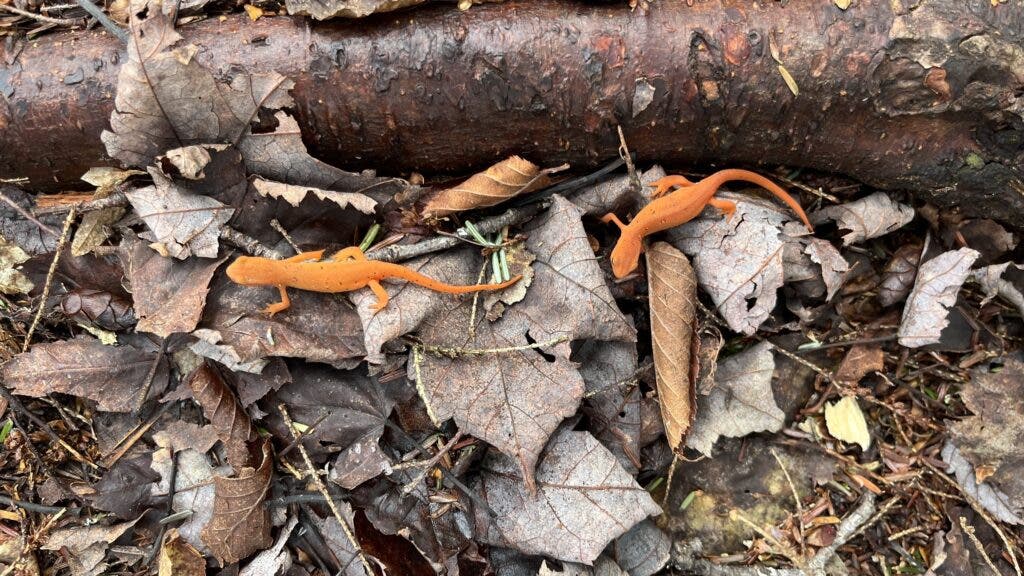
About a quarter mile in, I came across what I thought was a colony of tiny orange salamanders crossing the trail—fluorescent, almost glowing against the floor of dark leaves, walking with confident indifference to me. I looked them up later. They’re red efts, the juvenile land-stage of the Eastern newt, which has one of the weirder life cycles in the American woods. They live on land for two or three years and then they go back to the water for the rest of their lives, which can be 15. The orange is a warning—they’re toxic to predators that might find them tasty.
I found my first patch of ramps a little further on. I’d been carrying the shovel like a guy who knew what to do with a shovel, which is to say I did not. I drove it in next to a clump of bulbs, levered up a clod of cold black dirt, and got about halfway through congratulating myself when I remembered, too late, that you’re not supposed to dig them. You’re supposed to snip the leaves, leave the bulb, move on, take a little from many patches rather than a lot from one. Yanking up bulbs is how a hundred-year-old patch becomes a fifty-year-old patch becomes nothing.
I went down a YouTube hole on my phone until I had reached enough of a consensus to feel better: when a patch is small, snip the leaves. When a patch is dense, you can take a few whole plants, bulb and all. I patted the clod of dirt more or less back into place, apologized to the ramp, and walked on.
I saw fiddleheads too and left them alone. I didn’t trust myself to tell the edible ostrich fern from the ones that send you to urgent care. Humility is a good quality to have while foraging.
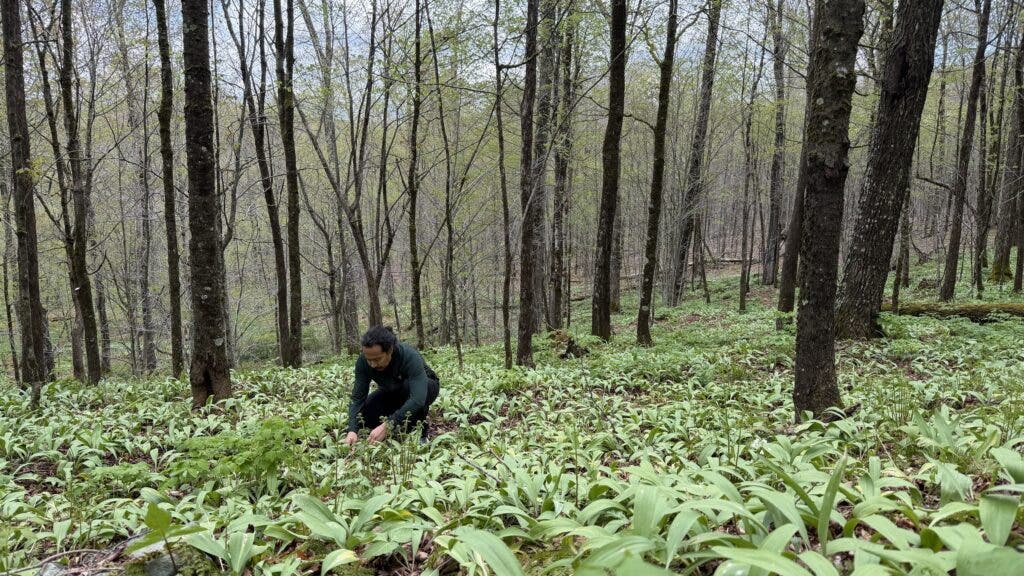
Then, around a bend, I found the grove.
A hillside, maybe a quarter acre, carpeted in ramps. Thousands of them, leaves overlapping like shingles, the whole patch giving off that quiet green smell. Ramps take seven years to mature from seed. Nobody fully understands what makes a patch thrive in one hollow and refuse another 50 yards on, which is part of why the culinary world has gotten so precious about them. The mysterious slow plant, the one we’re meant to protect like an endangered animal. It’s almost too perfect of a story.
But standing on the edge of that grove, on a rarely used trail, I was ready to bore strangers about ramps for the rest of my life. I snipped the leaves off a dozen plants—leaves only, bulb in the ground—and eventually found the trail back to the inn.
The shovel, in the end, I had not needed at all.