

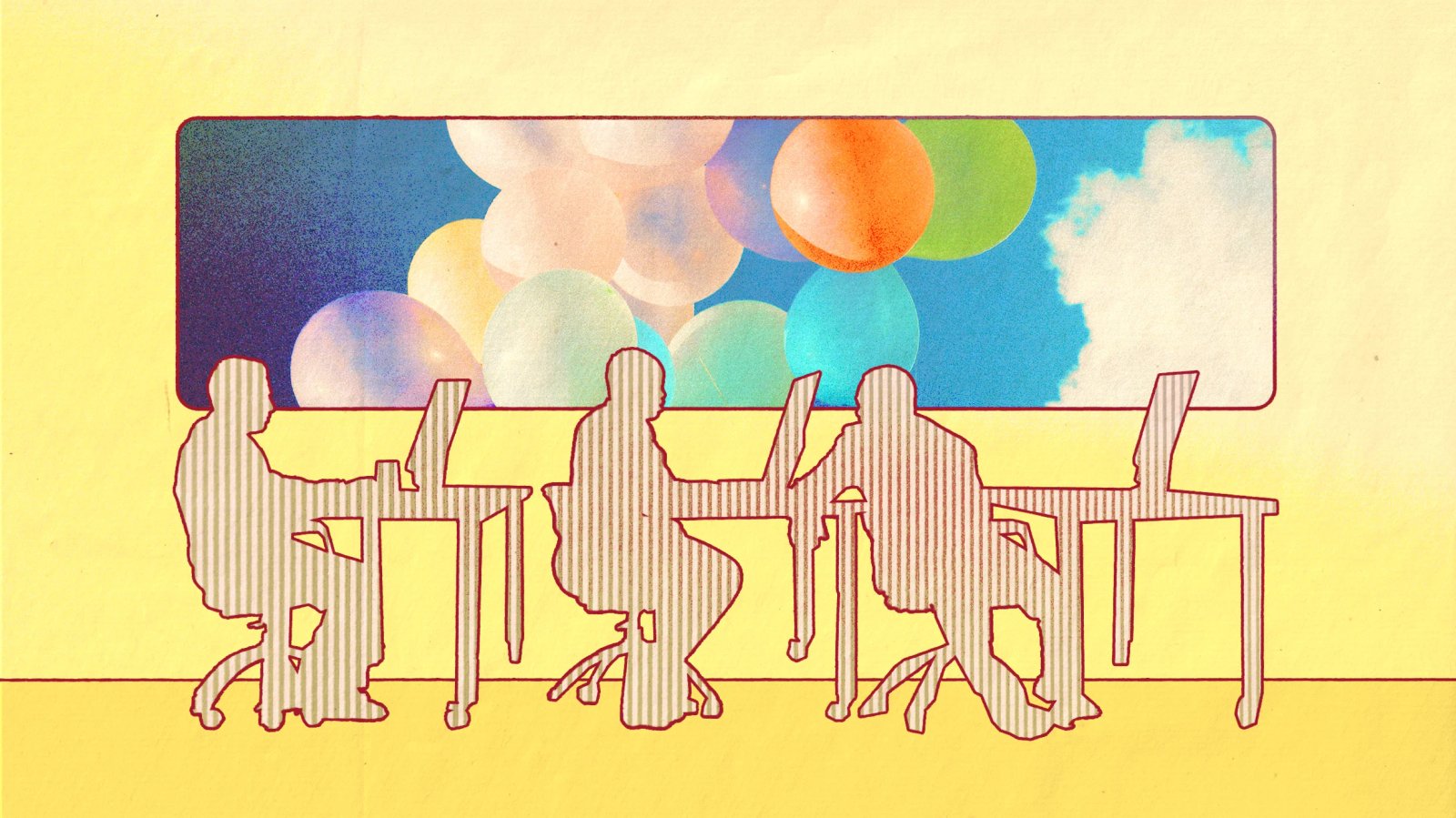
For most of human history, the idea that work should be “fun” would have seemed, at best, absurd and, at worst, offensive. Consider a Roman galley slave chained to an oar, or a medieval serf bound to land and lord, or a 19th-century textile mill worker inhaling lint in a windowless factory.
Even professions we now romanticize—such as blacksmiths, sailors, or early physicians—involved long hours, high risk, and minimal autonomy. Work was, in essence, a necessary burden: dangerous, monotonous, and rarely chosen. The notion that it should also be somewhat enjoyable would have seemed like asking for dessert during a famine.
Against that backdrop, the past century, and especially the past two decades, represent a remarkable deviation. Work, at least for a segment of the global workforce, has been reimagined not merely as tolerable but as potentially fulfilling, even pleasurable. Offices began to resemble adult playgrounds. Silicon Valley firms led the charge, offering sushi chefs, kombucha on tap, nap pods, on-site gyms, and curated social events. The rise (and at times weaponization) of “culture” as a corporate asset reframed employment as an experience, not just a transaction. Parallel to this, the expansion of employee wellness programs, flexible schedules, and remote or hybrid work blurred the boundary between professional and personal life.
Work itself also underwent a subtle rebranding. Careers were no longer simply jobs; they became vehicles for identity, purpose, and self-expression. Employees were encouraged to “bring their whole selves to work” in order to seek meaning in what they did, and to expect that their employer would facilitate personal growth. Organizations, in turn, increasingly borrowed from the logic of consumer markets: Employees became internal customers and were offered access to coaching, leadership talks, curated learning journeys, and even quasi-membership communities.
There was also, for a time, a distinctly performative ethos: the rise of the “work hard, play hard” culture. Popularized in the late 20th century and institutionalized in consulting firms, investment banks, and later tech companies, it promised intensity offset by indulgence. Long hours would be compensated with team off-sites, lavish parties, and a sense of camaraderie forged under pressure. In theory, it was a bargain. In practice, it often became asymmetrical. The “play” proved episodic, the “work” permanent. As technology dissolved temporal boundaries, the bargain eroded further. Today, for many, the culture has quietly mutated into something less balanced: work hard, then remain on call.
This trajectory would have puzzled John Maynard Keynes, who famously predicted in his 1930 essay “Economic Possibilities for our Grandchildren” that technological progress would reduce the workweek to roughly 15 hours by the turn of the millennium. He was not entirely wrong about productivity gains. What he underestimated was our capacity to convert efficiency into higher expectations rather than greater leisure. Instead of working less, we have chosen—or been nudged—to work differently, and often more.
An unsentimental reality
Yet, as with most utopian projects, the fine print matters. Beneath the surface of kombucha taps and mindfulness sessions lies a less sentimental reality. Many of these initiatives were not purely altruistic but instrumental. Making work more enjoyable can also make workers more productive, more loyal and, crucially, more available. If your office has everything you need, why leave? If your job is your identity, why switch off? The risk is not merely longer hours but a deeper form of entanglement: the emergence of what one might call the spiritual workaholic, someone who does not feel coerced but nonetheless cannot disengage.
