

Published April 30, 2026 07:10AM
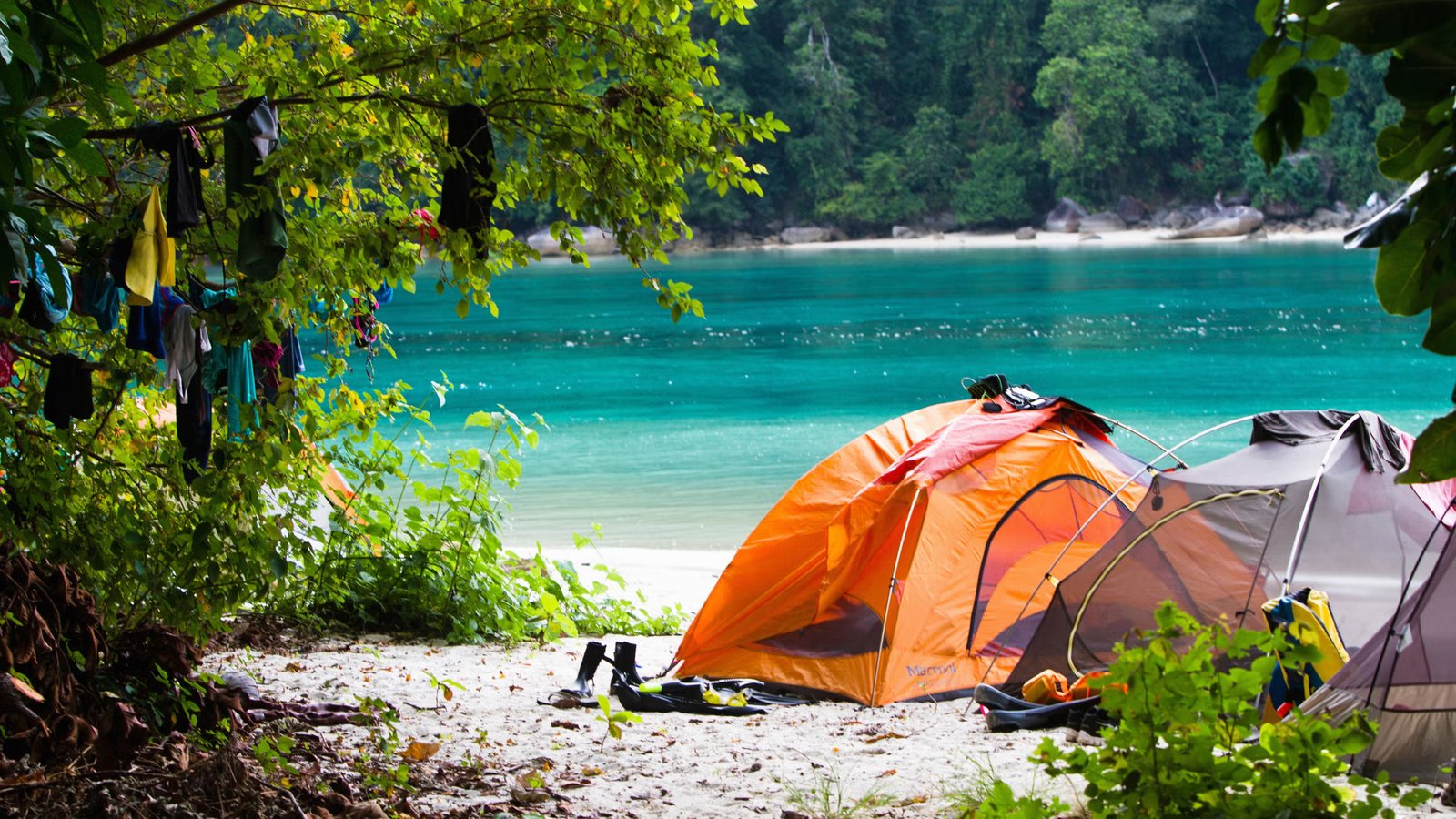
Born and raised in the Pacific Northwest, I love a weekend camping trip, especially this time of year when the air is still crisp as you unzip your tent in the morning, practically begging you to start a fire. But greater than my love for camping is my love for the sea, and I am not alone in that. Beach camping is a rising wellness trend, according to industry reporting, and for good reason.
Not only does waterside camping offer more opportunity for recreation like swimming, kayaking, and surfing, its built-in ambience, open campsites, and dark skies create a more grounded experience overall. Imagine climbing into your tent at night under a big open sky, and falling asleep to the sound of waves.
Such coveted beach camping sites are hard to find and book the closer you get to peak season (June through September), so we won’t gatekeep. Here are nine insanely beautiful places where you can camp directly on the sand.
1. Second Beach in La Push, Washington
Second Beach is one of the few easy-to-access, premier beach camping spots in Washington state; and the only on our list that provides dreamy Pacific Northwest vibes, where there’s the perfect mix of sunshine and cloudy haze. Located in La Push, WA, about 20 miles from Forks within Olympic National Park, Second Beach is situated between dramatic sea stacks that protect visitors from the wind, and features a famous arch to the north, a coveted place to camp. It’s common to see bald eagles and seals during a stay and even whales during spring migration. Those who have camped mention it’s a great spot to bring young children, as it provides good first experiences with trails, low-tide magic, and wide open spaces for safe play. Beaches close by include Rialto Beach and First Beach in La Push.
Best for: Families with young children
What to know: Campsites cannot hold more than 12 people. If a group is that large, they must set up at least a mile a part, according to the NPS. There are no pets allowed. Note that there is no outhouse, either. A pit toilet is located where the trail and beach converge. Garbage and food must be stored in bear canisters approved by the park.
When to go: It’s tough to snag a spot on the beach in the summer, but that is the best time to go, since the most reliable weather is from June to September. To stay, you need to obtain a Wilderness Camping Permit. Summer season just opened for booking, but there’s a quota, so do not delay.
2. Pismo State Beach Oceano Dunes, California’s Central Coast
Pismo State Beach runs 17 miles along the Central Coast from Pismo Beach to Grover Beach to Oceano in San Luis Obispo County and offers ample opportunity for outdoor rec. With beautiful weather year-round, Pismo is a perfect spot for camping, hiking, surfing, fishing, and bird-watching. But it’s biggest attraction? Witnessing the monarch butterfly migration (November to February). There are two camps with sites available: North Beach Campground and Oceano Campground. There are no RV hook-ups at North Beach, but the Monarch Butterfly Grove is accessible from this spot. Oceano has RV hook-ups, trails along the coastal sand dunes, and a freshwater lagoon.
Best for: Off-roaders, late night beach goers
What to know: There isn’t a limit on occupants per site, but there is on RVs. There are two allowed at each site, no larger than 36 feet, according to California State Parks, and a $10 fee for use of the dump station. Dogs are allowed, just not in the Pismo Dune Reserve. There are multiple passes accepted for entry into the park.
When to go: Reservations should be made through Reserve California or by calling Reserve California at 1-800-444-7275, and are required during peak season. You can reserve a spot up to six months in advance, but must reserve within 48 hours of the day you plan to arrive.
3. Kalalalu Beach Along the Kauaʻi’s Nā Pali Coast, Hawai’i
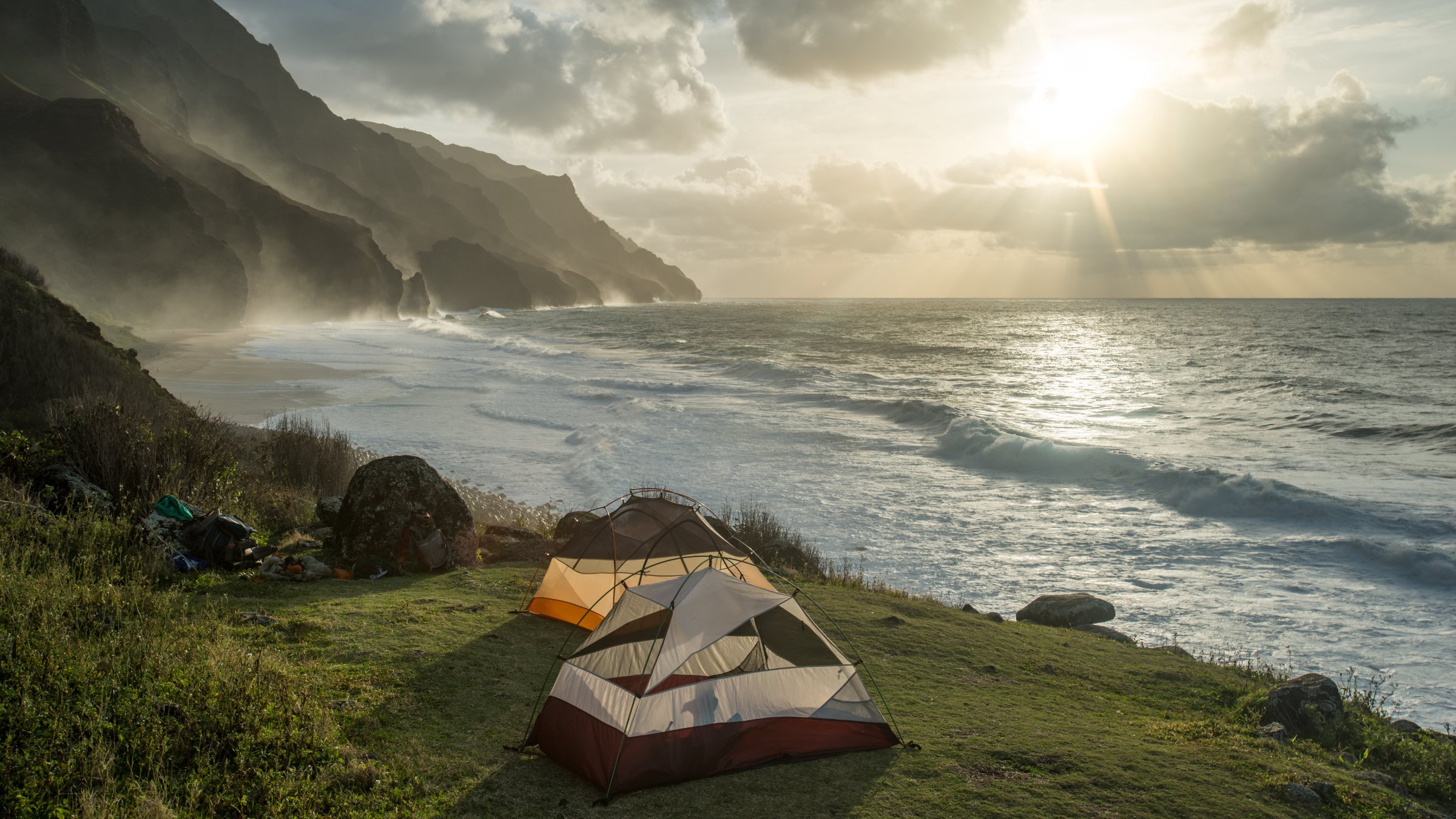
Kalalau Trail along Hawai’i’s Napali Coast is one of the most daring in the country, attracting only the most audacious hikers. The 22-mile round-trip from Ke’e Beach to Kalalau Beach is remote and rugged, but it’s also renowned, Outside previously reported. It passes through five beautiful valleys before ending at Kalalau Beach. On the way there, you’ll cut through a thick tropical forest, and it’s anything but level. As you go, you will ascend steep sea cliffs along a narrow path, so you’ll need the appropriate gear. The first 2 miles of the trail (from Hāʻena State Park to Hanakapi’ai Beach) have seen a lot of traffic, as it’s a popular day hike. But the trek from the Hanakapi’ai valley on, is for experienced hikers only, and an overnight camping permit must be obtained. It’ll all be worth it when you cross over Kalalau Stream into the valley that ends at Kalalau Beach. A waterfall will welcome you, and the sea caves just beyond it are popular camping shelters. If you don’t want to make the trek, kayaking and boating options are available.
Best for: experienced hikers (see our report on the dangers of hiking in Hawai’i here)
What to know: State Parks issued a limited number of permits for camping. The permits (that include four people) can only be purchased in person 8 A.M. to 11 A.M. Tuesday through Thursday at the Kauaʻi State Parks Office, up to 30 days in advance. During peak season (May 15 to September 7), up to 80 campers are allowed to occupy the beach. There are campsites available beneath trees that provide shade, and campsites directly on the sand. The State Parks office urges nonresidents to avoid swimming in the ocean and playing near the cliffs though, as the sea conditions are unpredictable and there is risk of rocks falling.
When to go: September is the quietest month at Kalalau Beach and listed as the best when it comes to weather and predictable seas. November to March see the most intense storms that can cause flooding in the campground.
4. Padre Island National Seashore Along the Texas Gulf Coast
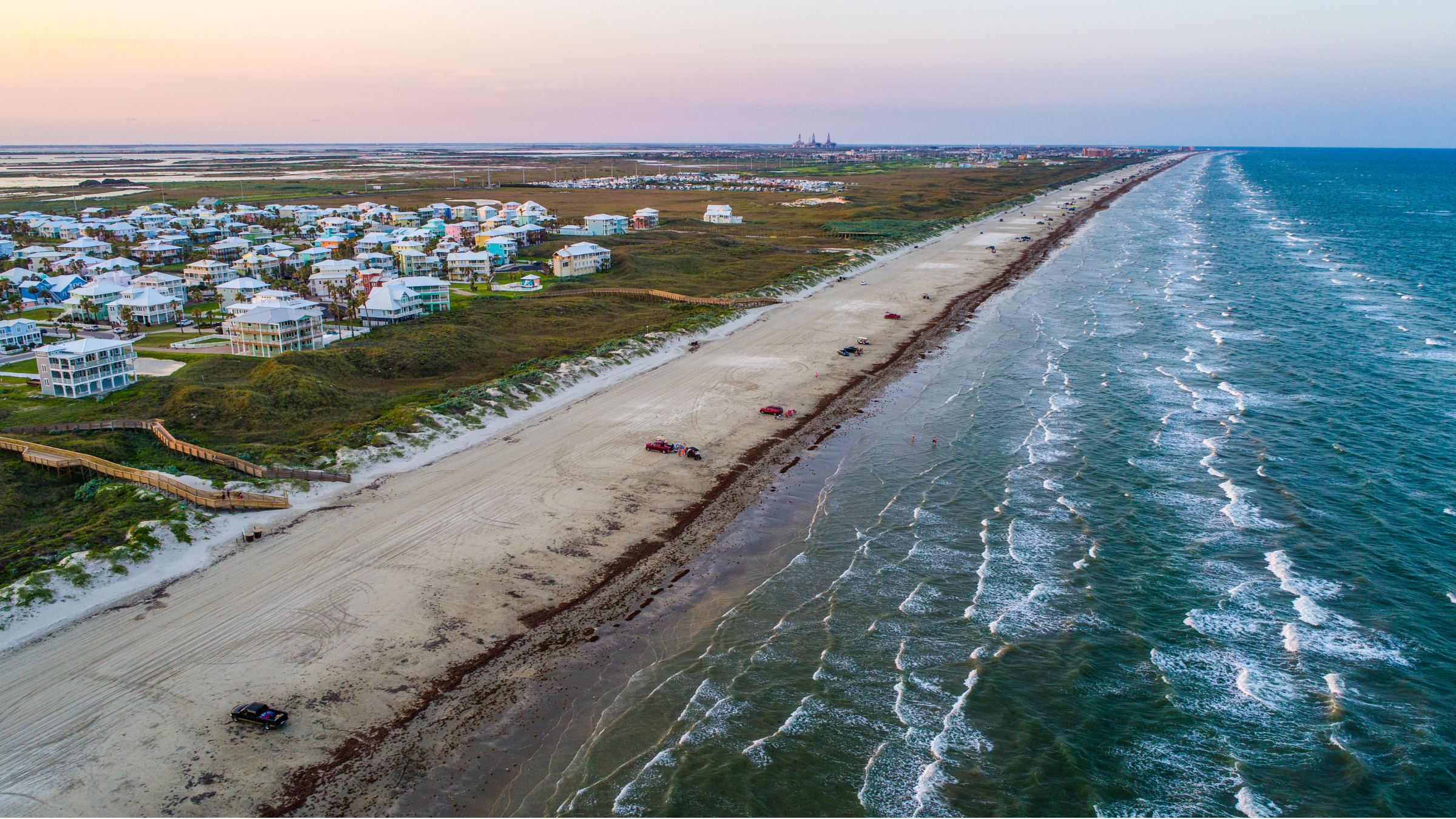
Padre Island National Seashore along the Texas Gulf Coast, closest to Corpus Christi, is 70 miles of protected coastline, and one of the few hypersaline lagoon environments left in the world. This special lagoon is the ideal habitat for migrating birds, 380 species, to be exact, and the most endangered sea turtle species in the world—the Kemp’s ridley sea turtle. There are three spots for primitive beach camping along this national seashore: North Beach, South Beach, and Yarborough Pass. Just a short walk from the beach are two additional overnight sites: Malaquite Campground and Bird Island Campground. You can watch the waves from both.
Best for: Off-roaders, late night beach fire groups
What to know: There are no required reservations at Padre. All sites (both primitive and developed) are first come, first served. But permits are required at some sites. To camp at Malaquite Campground or Bird Island Basin Campground, you must fill out a camping permit and pay your camping fee at the self-registration kiosk at the entrance. To camp on North Beach, South Beach, or Yarborough Pass, all you need is a standard or annual park entrance pass. Note that travelers may not stay more than 14 consecutive nights.
When to go: According to those who have gone, October to May is the best time to visit Padre Island. The temperatures are more manageable and the crowds grow thin. Visit sometime in summer if you’d like to catch the hatching of the seas turtles though, and March to May or August to October is you’d like to catch one of the bird migrations.
5. Dry Tortugas National Park in the Florida Keys
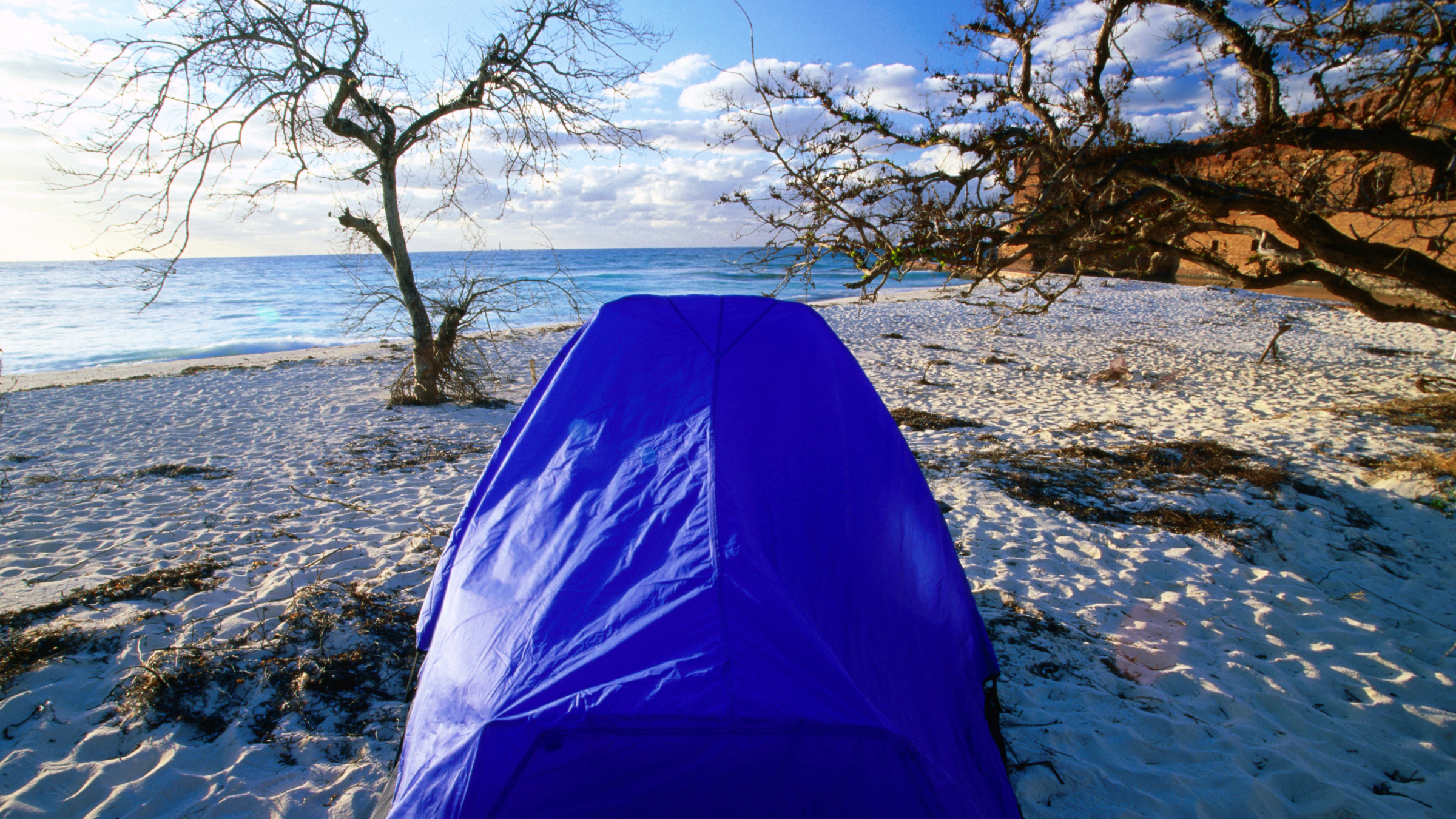
Dry Tortugas National Park is a remote ocean wilderness only reachable after traveling 70 miles by boat or plane on or over open sea. The park is settled at the end of the Florida Keys closest to Cuba and is home to historical wonders and a bucket list travel destination for nature lovers. Camping on the island is extremely limited and transportation sells out months in advance, but with good planning, Dry Tortugas is a once-in-a-lifetime snorkeling experience surrounded by white sand and privy to otherworldly sunsets and stars.
Best for: extreme snorkelers, those who like seclusion
What to know: Dry Tortugas beach sites hold up to six people, or three 2-person tents. There is one primitive site a short walk from the public dock that does not come with tables, a grill, and storage. Reservations aren’t required for the 6-person sites, but large groups of 10 or more have to reserve space within the park. All sites have access to composting toilets located in the campground.
When to go: February to April is the best range to camp, as the seas are calmer and the weather is cooler.
6. Cape Lookout National Seashore, North Carolina’s Crystal Coast
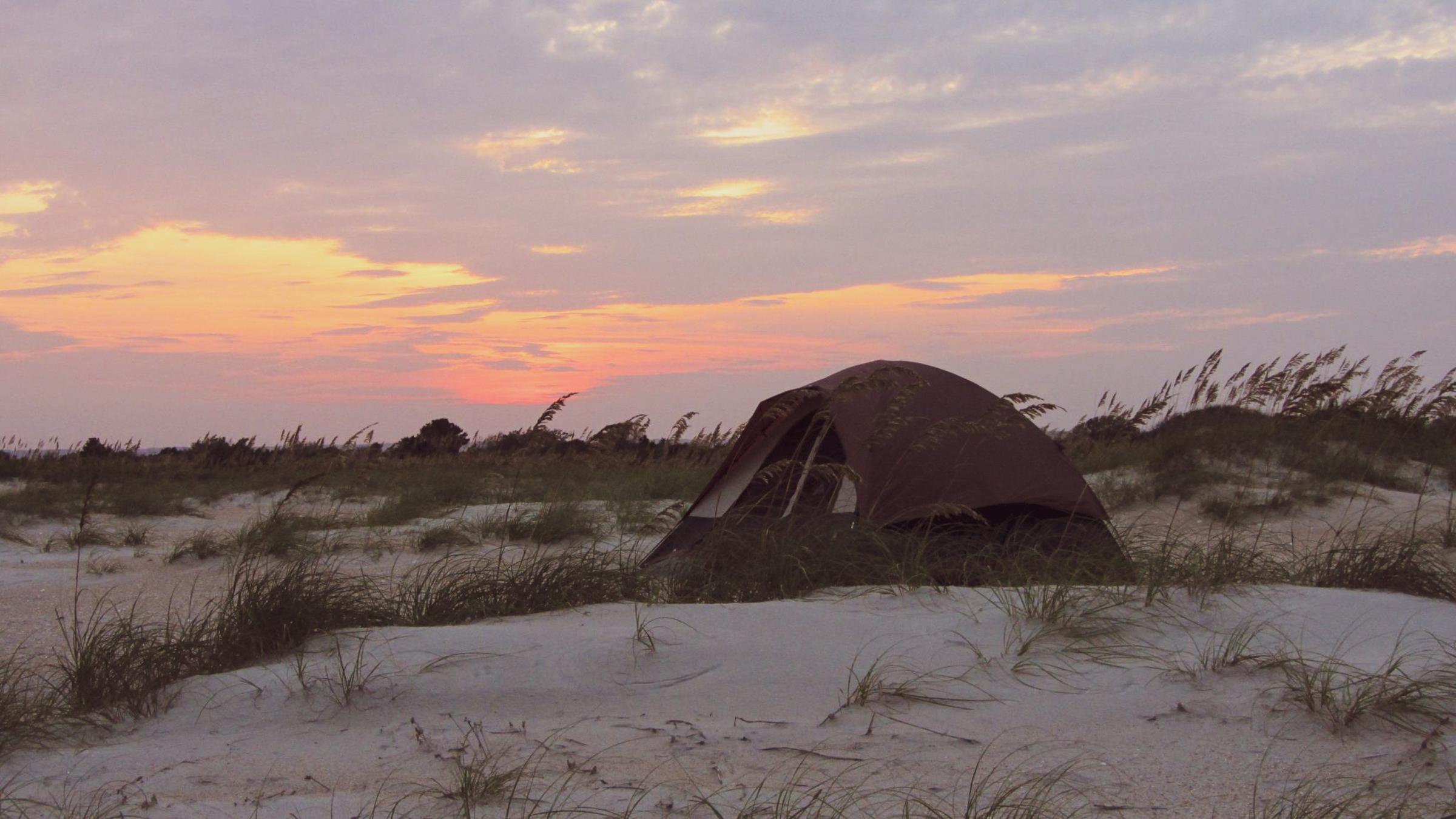
Cape Lookout, a set of islands near Carteret County, is part of a 56-mile stretch of National Seashore along North Carolina’s Crystal Coast. Similar to Dry Tortugas, Cape is only accessible by boat. Unlike Dry Tortugas, that distance is only three miles. Swimming, surfing, fishing, clamming, crabbing and evening campfires are popular things to do while in Cape, but so is exploring lighthouses and historic villages (like Portsmouth), and watching a feral herd of “banker ponies” running free. There are around 100 free-roaming ponies there, according to the NPS.
Best for: Stargazers (Cape Lookout is an International Dark Sky Park)
When to go: The best time to visit Cape Lookout is April through May or September through October, when the temperatures are gentler and the bug population has dropped off.
7. Assateague Island National Seashore, Maryland
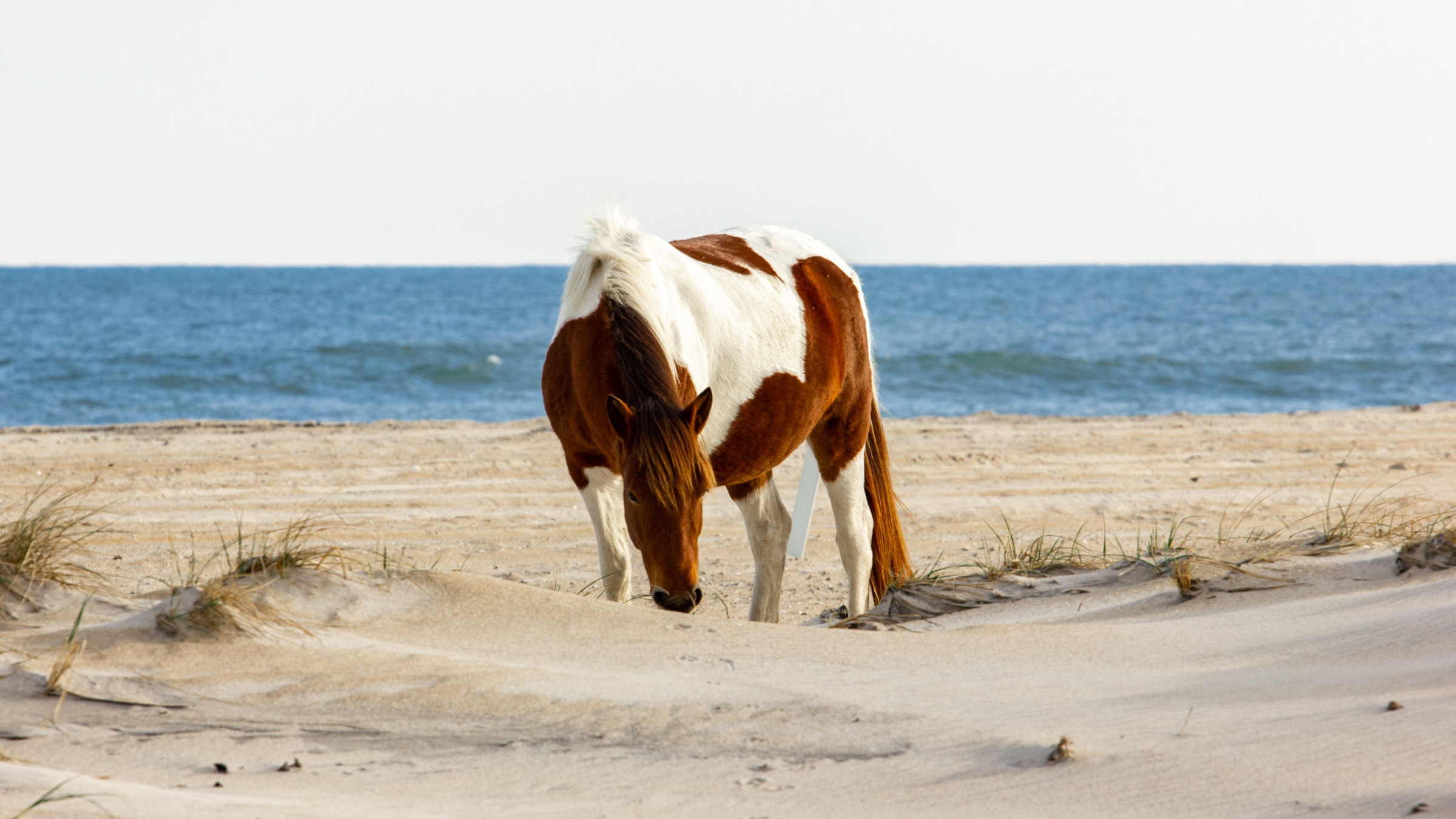
Beach camping at Assateague Island National Seashore is only available on the Maryland side of the island and is famous for its wild ponies. Many of Assateague visitors are horse lovers, so much so, that the island created Horse Camp, two sites available from October 16 to April 14 that accommodate up to six people and six horses (BYOH). The fee for the horse sites is $80 per night and can be reserved up to six months in advance. Crabbing, fishing, swimming, hiking, and even hunting, are among the things to do on the island. You can explore the pretty sandy beaches of Assateague, its salt marshes, maritime forests and coastal bays, if you plan ahead.
Best for: horse lovers, photographers
What to know: Assateague has oceanside tent, trailer, and RV sites (no hook-ups). All must be reserved via Recreation.gov from March to November and are $40 a night for six people. There are a few sites available through the winter months on first come, first serve basis. And group sites available for parties over six. There are some backcountry sites available that you can backpack or paddle to. There are chemical toilets, cold showers, and drinking water on the island. The island habitat can be harsh for those who are unprepared though. So, the NPS advises visitors to bring firewood (locally purchased), sunscreen, insect repellent, screen tents, and long tent stakes to keep your camp stable in the case of heavy winds.
When to go: According to visitors and officials on the island, the best month to visit is September, when the sun, water and bug population are just right. For birdwatchers, winter is ideal. For horse lovers: May.
8. Race Point Beach Campground in Cape Cod National Seashore
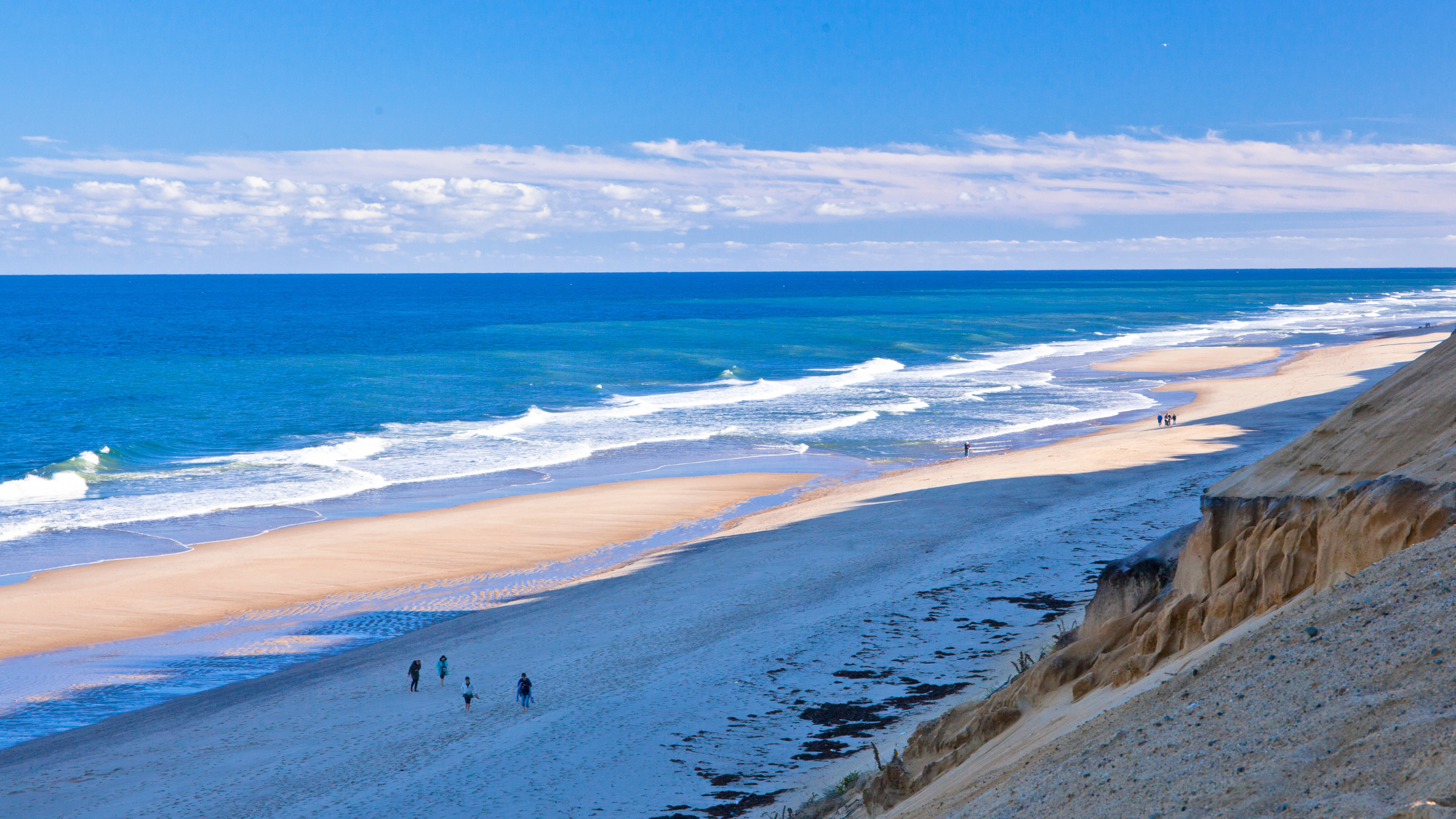
Race Point Beach Campground in Cape Cod National Seashore is located in Provincetown, Massachusetts and is exclusively available for self-contained, 4WD vehicles, specifically SCVs. The NPS definition of these vehicles are that they must have self-contained water or a chemical toilet, and permanently installed gray and black water holding tanks with a minimum 3 three-day holding capacity. Cape Cod itself is a large peninsula 60 miles wide that stretches into the Atlantic Ocean. According to the NPS, this National Seashore site has seen over 3,000 shipwrecks in its history, due to its ever-changing sandbars, and has 45,000 acres of rich marine life living its estuarine waters. Alongside camping, there are trails, historical lighthouses, and homesteads to explore.
Best for: Off roaders and active beachgoers
What to know: Camping at Race Point Beach requires a special off-roading permit, and all vehicles must be inspected before their stay. The ORV permit office opens in early April and closes in November, but there is limited access season during the off season for fishing or wildlife study. The sites themselves are first come, first served, with the cap set at 100 vehicles per night. All SCVs must obtain a dump pass.
When to go: Off-roading is most popular in summer when the party vibes roll in, but September through October offers smaller crowds and better weather.
9. Apostle Islands National Seashore in Bayfield Peninsula, Wisconsin
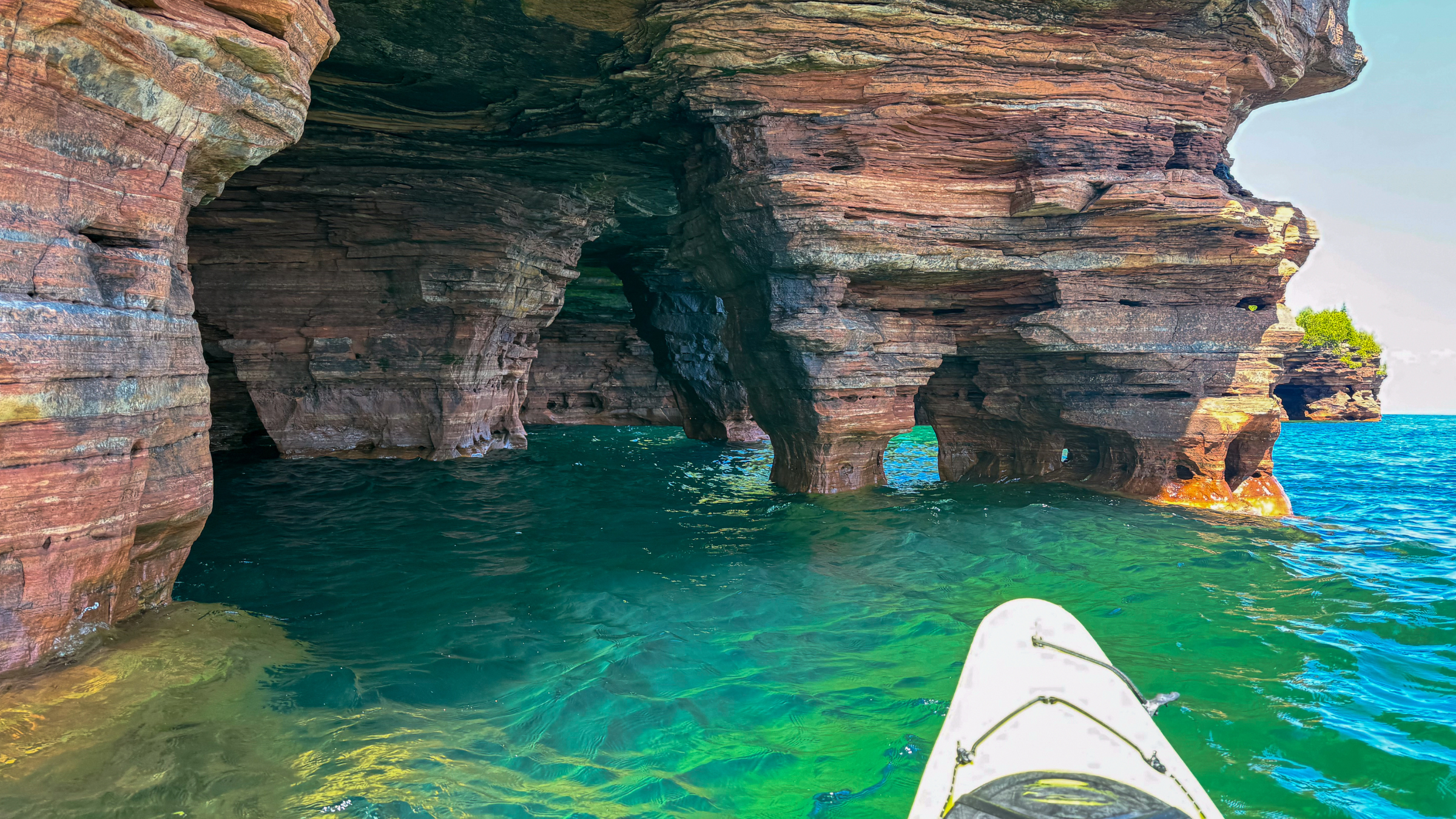
Apostle Islands National Lakeshore, located at the northern tip of the Bayfield Peninsula along Lake Superior in Wisconsin, is the ancestral homeland of the Objibwe people, with sandstones nearly a billion years old. This coveted destination spot has 21 islands of magical sea caves highly sought-after by avid kayakers. There are no guided tours provided on the island, but there are kayak outfitters permitted to offer full and half-day trips. There are routes mapped out according to skill level and equipment available to rent. There have been kayaker deaths in the caves, so monitoring the weather and reviewing safety tips on the NPS site, is recommended.
Best for: Kayakers
What to know: There are camping sites on 18 of the 21 islands, and you can only access the mainland campsite by kayak or a 6-mile hike on Lakeshore Trail from Meyers Beach. There is no drive up camping on any of the islands. The islands are only accessible by sea kayak, motor boat, sail boat, shuttle service, or water taxi. Once you arrive, there are three types of campgrounds: individual campsites, primitive camping zones, and group campsites. Individual campsites are $15 a night for up to seven people, with basic amenities. Primitive camping zones aren’t structured sites. They are in the backcountry with no amenities, for groups up to five. For $30 a night you can reserve a group camping site available on five of the islands for up to 21 people. To make camping reservations and obtain permit info, visit Recreation.gov. Please note that you can only book within a 30 day window of when you want to start your trip. You can view the layout of the island with info on where the sites are and what to know about bringing your own boat, at the NPS site.
When to go: The best time to visit Apostle Islands National Lakeshore is through the summer months for prime swimming and kayaking. Late summer to early fall may see more desirable temps, but the weather won’t be as easy to predict for kayakers.
