

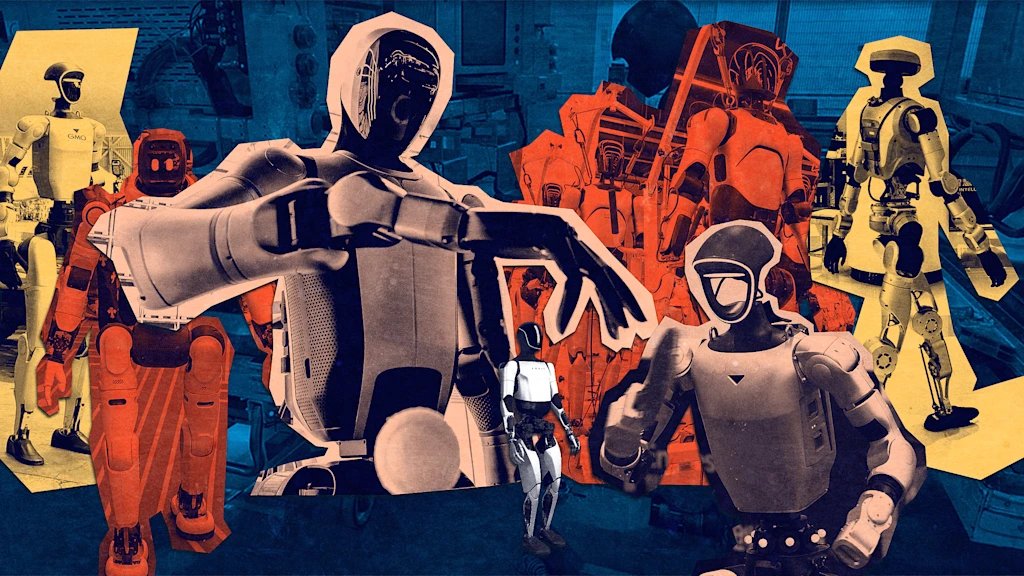
In December 2025, the biggest battery maker in the world, CATL, started what it calls the world’s first large-scale deployment of robots in its Luoyang, China factory. Last week, the State Grid Corporation of China began its $1 billion 2026 plan to deploy a humanoid army to maintain its grid autonomously. And just a few days ago, at the other side of the East China Sea, Japan Airlines announced the beginning of a test program of humanoids to carry luggage at airports.
While we listen to Elon Musk tell us how magical and civilization-changing Tesla’s Optimus robots are, Asian countries are light-years ahead of us, deploying humanoids to do their bidding in real-life scenarios.
There are two main reasons humanoids are happening much faster in Asia than in the U.S. or Europe. One of the reasons is purely economic: China is always looking at cost optimization.
For years, industrial robotics has been a main driver in the country’s quest to reduce manufacturing prices and times. China’s dark factories, where fully automated robots churn out devices with the lights off because they don’t need them, are famous.
“China is by far the world’s largest robotics market in 2024. It represents 54% of global deployments. The latest figures show that 295,000 industrial robots have been installed in the country, the highest annual total on record,” says the International Federation of Robotics in its World Robotics 2025 Report.
So humanoids—bipeds or wheeled—are the logical next step. This is especially true as AI models begin to understand the world, and companies realize that a huge market awaits for general and specialized tasks that only human-like robots can properly do.
The other reason is demographic: Japan’s population is quickly getting older, while in China, fewer people want to do hard and dangerous work like maintaining power grids.
