

Published May 12, 2026 03:05AM
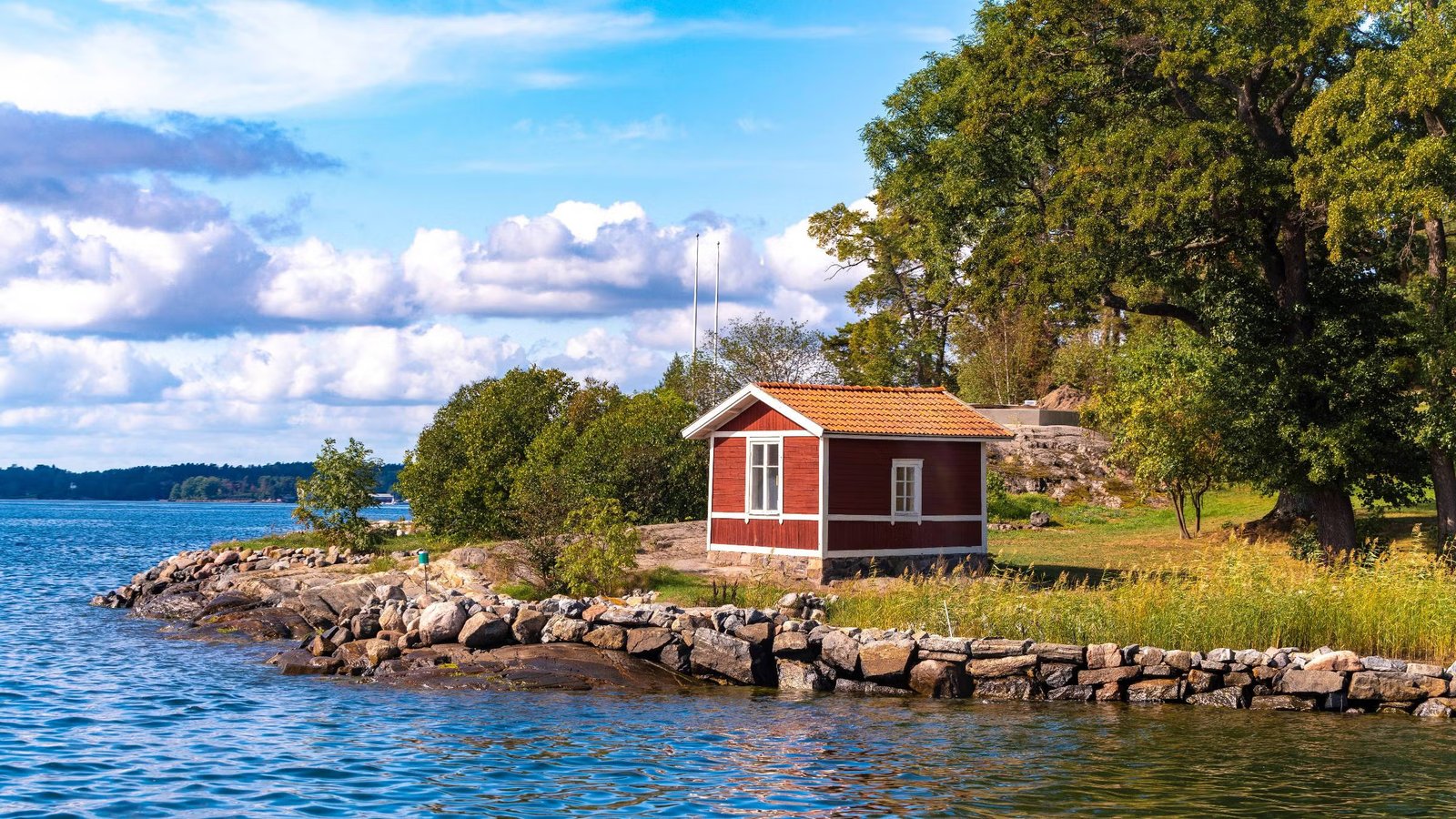
Sweden has a secret that even many of its residents don’t know. Hidden throughout the countryside, there are more than 200 cabins and cottages where you can stay for a night for free. These dwellings range from primitive forest huts in sun-dappled glades to quintessentially Scandi-designed 19th-century cottages—think red-painted timber, wool rugs, and walls etched with botanical designs. Formerly used as logging cabins, hunting lodges, or summer retreats, they are now preserved as cultural monuments to a simpler way of life. With some newer ones recently purpose-built to encourage people to spend more time outdoors, they’re all available to anyone on a first-come, first-served basis.
Before two Swedes, writer Kjell Vowles and photographer Moa Karlberg, compiled the first comprehensive guide to many of them in their book Stuglandet or “the Country of Cabins,” (currently only available in Swedish), there was no formal compilation of their histories or whereabouts.
“Quite a few of them were places that had been abandoned or donated to local organizations, which then decided to keep them open for visitors,” Vowles tells Outside about the uninhabited cabins. “Often these [dwellings] were in quite remote places and had never been modernized,” he adds.
Some are owned and maintained by the regional County Administrative Board, Länsstyrelsen, while others belong to local history societies, sports organizations, or private citizens. Some are kept exactly as they were left by their last residents. “Moa and I spent a lot of time on the phone, calling different societies and Googling, trying to follow any lead that we got about where these places could be,” says Vowles.
Erika Åhlund, a nurse based in the coastal city of Hudiksvall, Sweden, bought the guide when it was first released in 2017 and made a hobby of visiting as many cabins as she could find with her partner. To date, they’ve stayed at more than 50 cabins, some more than once.
“There is often a story behind a cabin,” Åhlund tells Outside. “There can be newspaper clippings or carvings in the walls. One of the cabins we visited, in the Saint Anna archipelago, was a gift to the current Swedish king for his fiftieth birthday. [Now] ordinary people are allowed to stay there for free.”
Allemansrätten, or Sweden’s right of public access, is an inherent part of the nation’s culture, after all. “It allows everyone to freely explore nature, whether hiking, picking berries, swimming, or pitching a tent in the countryside,” explains Josefin Haraldsson of Visit Sweden, the country’s official tourism board. The idea is simple: everyone should have access to the outdoors and share responsibility for respecting and preserving the landscape.
The cabins can’t be booked in advance, which means there’s no guarantee you’ll have the place to yourself. You simply show up and stay, or negotiate with whoever might have arrived before you to share the space.
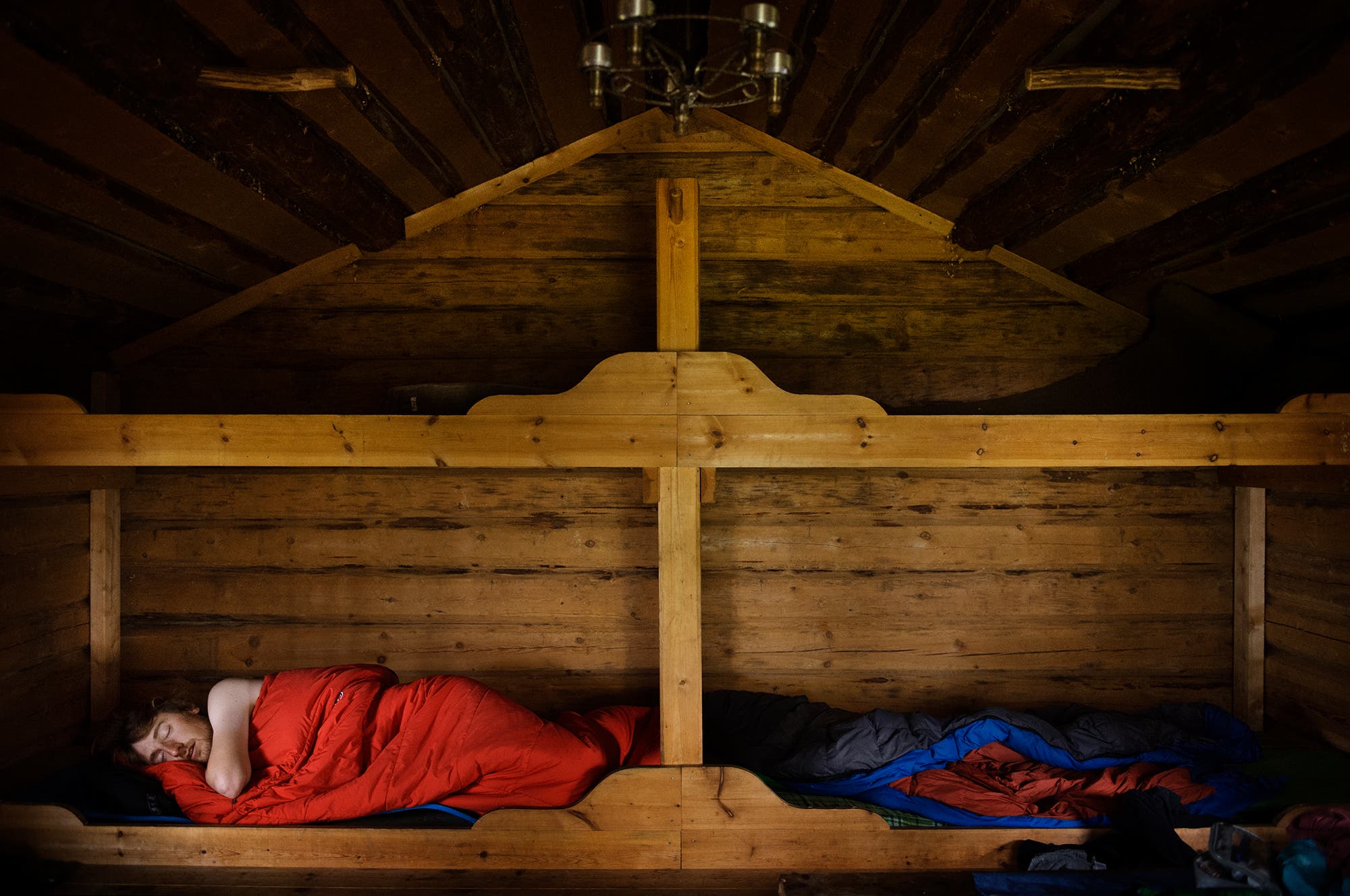
This is why the “one night only rule” applies: so everyone has a chance to experience nature this way. Amenities can vary from scant to cozy. Some, for instance, provide beds, fireplaces, and firewood. Most don’t have running water. You are always expected to bring your own food, sleeping bag, and clean up after yourself, taking your trash with you when you leave. No matter the level of rusticity, each cabin will give you inside access to Sweden’s natural and cultural history. And they won’t cost a thing.
Here are some of the best places to find free cabins across Sweden.
Blommastugan (The Flower Cottage), Kalmar, Götaland
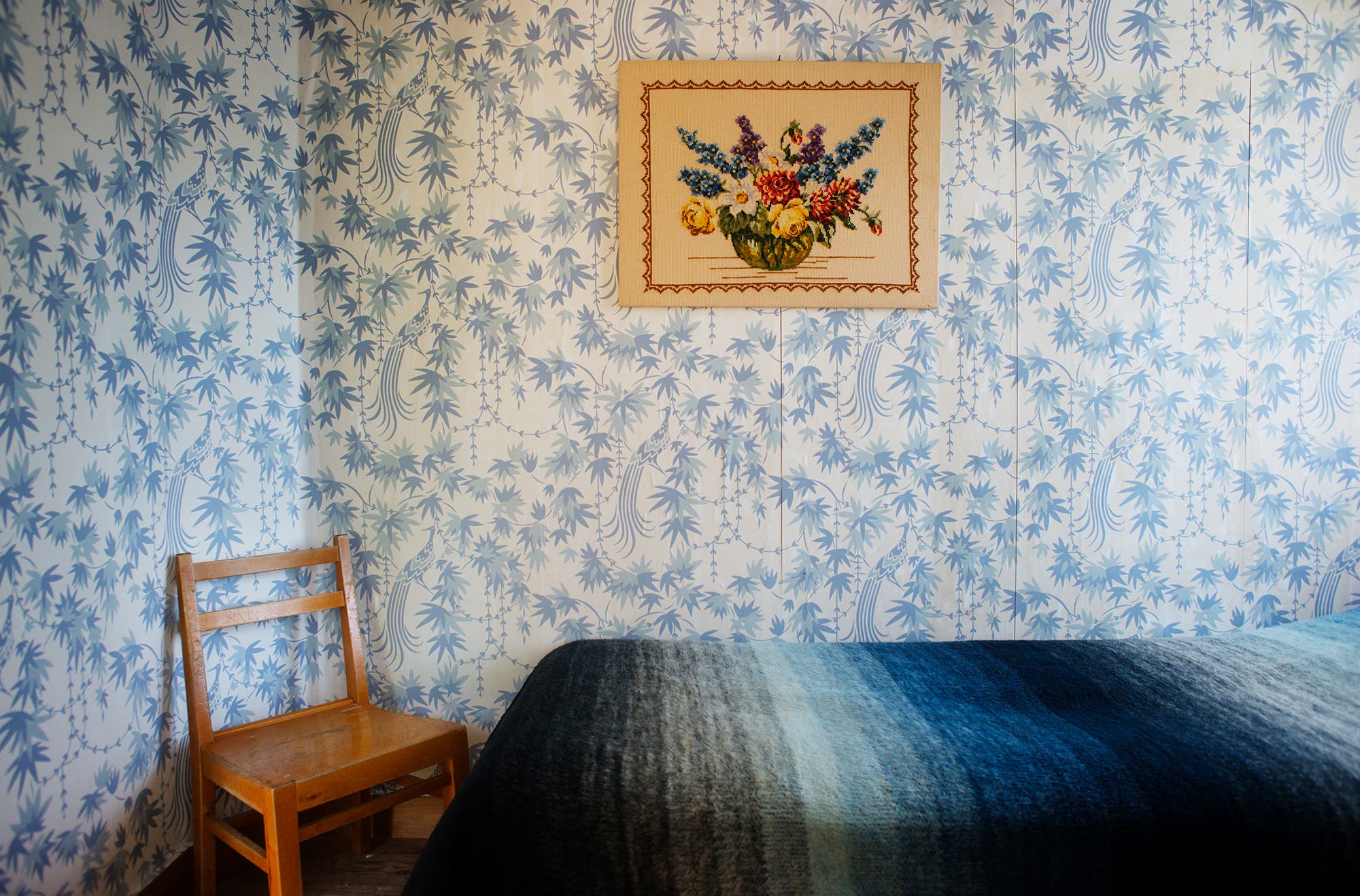
In Kalmar County, in the Götaland region of southern Sweden, this simple red timber hut located off several popular hiking trails, is a favorite among visitors. Named for Anders Blomma, the boatman it once belonged to, the house was relocated from its original location in the late 19th century to its current spot in the forest. A young couple took it over in the early 1900s, living with their sons, one of whom stayed until his death in 1987, after which it was taken over by the local historic society of the nearby village of Gullabo. A complete renovation followed, and the group continues to care for it voluntarily. Its welcoming interior features colorful patterned wallpaper, white lace curtains, a large fireplace and propane stove, two sofas and beds, a dining table with chairs, and a selection of crockery, all of which feel very much like a home. “The books are still there, the bedding and clothes and textiles,” details Vowles, “everything has been kept, but everything is also very well maintained.”
How to Stay: Located between Degerhyltan and Törnemåla in Torsås municipality in Kalmar county, this historic cabin is open in spring, summer, and autumn. A key hangs to the left of the door. It sleeps two with an outhouse and can be found along the Gullaboleden cycling and hiking trail which starts and ends in Gullabo. From the bus stop in Torsås, it is about a 5-km (3.1-mile) walk.
Skuleskogen National Park, Västernorrland, Norrland
There are seven overnight cabins in Skuleskogen National Park on Sweden’s UNESCO-listed High Coast. Famed for its ancient pine forests and rugged coastline, the national park is also home to some of the country’s most striking landscapes, including Slåttdalsskrevan crevice, a more than 650-foot-long and nearly 100-foot-high slash through Slåttdalsberget mountain. Open year-round, the cabins can get very busy during the summer months as they provide welcome accommodation to those traversing the long-distance Höga Kusten Trail. Managed by the Västernorrland County Administrative Board, which provides firewood, these are simple accommodations equipped with a table, chairs, a wood burner, and mattresses. Despite the lack of kitchen items or a stove, they offer a truly immersive experience of High Coast nature, from its tall mountains and deep caves to the vast views of the Baltic Sea.
How to Stay: Search “overnight cabins” on the Skuleskogen National Park’s interactive map for a detailed list of where to find them and additional info like the number of beds and amenities for each.
Bastedalen, Western Götaland, Götaland
Roughly two hours from Gothenburg, near the Herå River, this renovated mountain cottage in Heråmaden Nature Reserve’s pristine woodland has been used as a shelter by outdoor enthusiasts for more than 60 years. According to the Western Götaland County Administrative board which has cared for it since the land became protected in 2014, the cabin’s origins date back to the 17th century. Though its last inhabitants were a family who left in 1946, one 18th-century resident named Bryngel Persson was said to practice witchcraft. Before the county took over, it was looked after by a man living nearby who invested his own resources to keep it open, cutting grass and cleaning regularly for decades. “He used to go out there on weekends doing whatever renovations or repairs were needed,” Vowles tells Outside. “He put a lot of work into it.” The current tidy conditions of its bed, two bunks, dining table and chairs, colorful crockery, and walls adorned with children’s drawings are a testament to his care.
How to Stay: This Google Map link takes you to the exact location of this historic cabin with photos and visitor reviews. Managed by the Western Götaland County Administrative Board, it can be found just off a trail with a well onsite for drinking water. As with all of the cabins, space is available on a first-come, first-served basis.
Hjortronbergsmossen, Örebro, Svealand
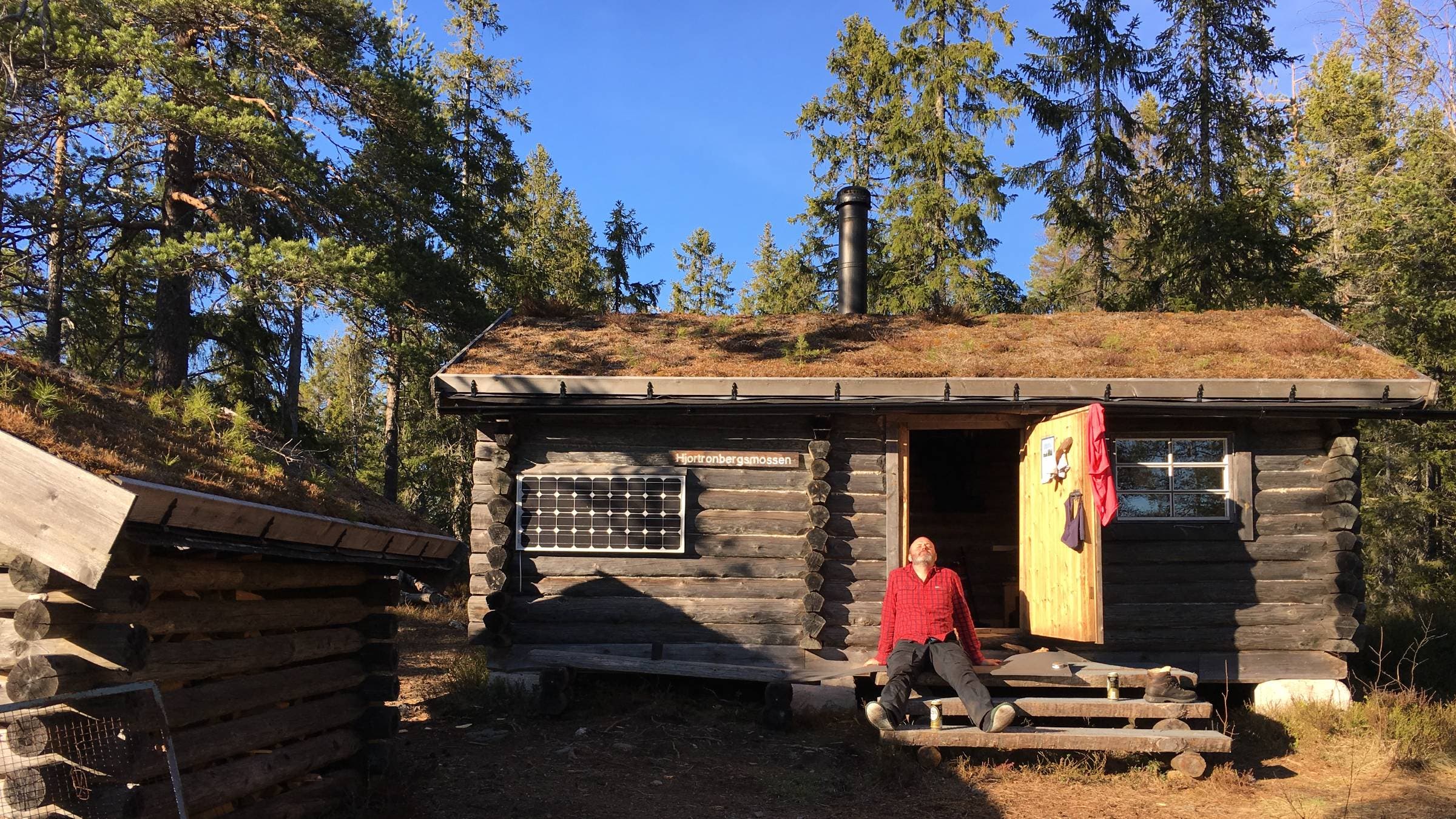
Named for the vibrant amber cloudberries that grow nearby in summer, this log cabin in high-altitude wilderness is often cited among the best overnight experiences in the country. Situated in central Sweden, north of the town of Kopparberg in the old-growth forest and bogland of Djupdalshöjden Nature Reserve, it offers four beds and two bunks, plus a range of kitchenware, free firewood, and electricity from solar panels on the roof. Built to encourage access to nature and maintained by the local municipality, this cabin is only reachable on foot. Surrounded by gnarled trees shaped by long, harsh winters—most of which are over a century old—its location is known for silence, abundant wildlife, 17th and 18th-century coal mining remains, and ample opportunities for foraging berries and mushrooms in season.
How to Stay: The Clouberry cabin features four beds and two benches, sleeping between six and eight people comfortably. This interactive map provides additional info on how to find it within the Djupdalshöjden Nature Reserve. In the summer months, this site is particularly popular, so be prepared to share space with others.
Björnlandets National Park, Västerbotten, Norrland
Deep in Åsele Sami country, Björnlandet National Park contains one of Sweden’s most important and ancient forests, part of the world’s great taiga, or boreal forest. Tomas Staafjord, park manager and wilderness ranger, led the project to build some of Björnlandets’ hiking trails and two free overnight cabins. Each is designed in ways traditional to the area, with the forest’s history in mind. “One has mosses and grass on the roof,” Staafjord tells Outside,” we also used timber from the same kinds of trees that are found in the National Park.” Overseen by the Västerbotten County Administrative Board, it’s Staafjord who cares for them with regular maintenance and stocking of firewood, candles, and other basic amenities like toilet paper. “It’s an opportunity to live like people did in another time, preparing the wood, making a fire, taking care of the oil lamp,” he shares. “To do that in a forest where the trees are up to 500 years old is a special feeling.”
How to Stay: Each cabin in the park has space for six people with pillows and blankets. Angsjökojan cabin is located along the Angsjöleden and Guldbäcksleden hiking trails near Lake Angsjöleden. From the Angsjö entrance, it’s roughly half a mile to the cabin. The Svärmorskojan hut is located along the Svärmors Trail near a small lake, just under four miles from the Angsjö entrance. More info can be found on the National Park’s website.
What to Know Before You Go
Many cottages can be reached by public transportation, followed by short hikes. However, it’s essential to do your research before setting off. A great place to start is the websites of local authorities like regional tourism boards or Länsstyrelsen, the County Administrative Board, for the area you’re visiting. “Most people know English,” says Vowles. “So, you can also always email the local tourist board, and they can hopefully help you.”
Naturkartan, the Nature Map, is another useful resource, providing locations of overnight shelters with important details about accessibility and amenities onsite.
In the event that a cabin is full, especially in the summer months, be prepared to share space with others or to seek alternate shelter. You may want to bring your own tent just in case, or to have a backup plan for other paid camp sites or accommodation near your preferred destination.
Andrea Bussell is a writer and ex-New Yorker based in the mountains of the Scottish Highlands. She’s also lived in Stockholm, a place she can’t get enough of, and wrote about how Sweden’s nature-centric lifestyle is proven to be good for your health.
