

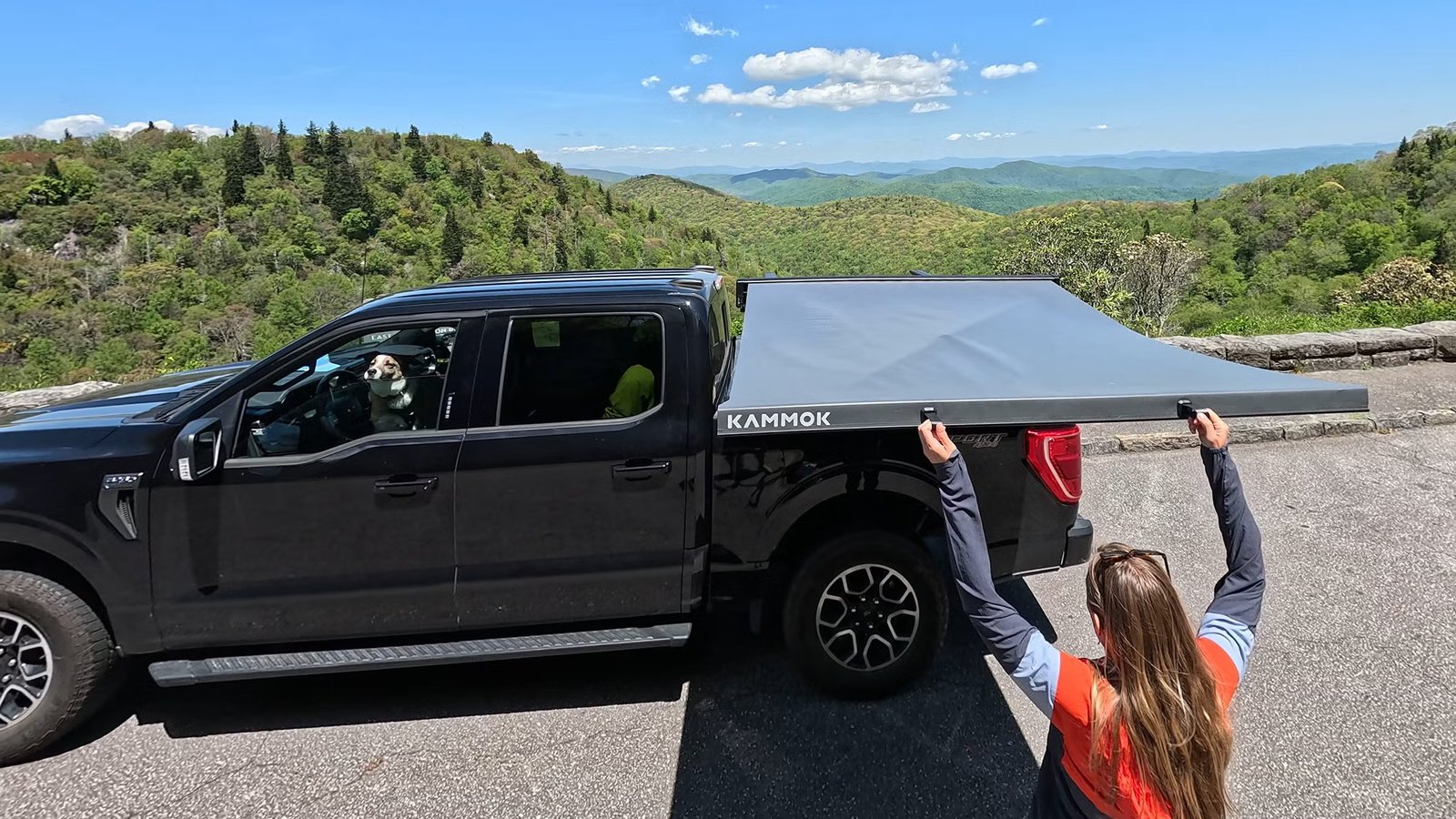
The Kammok Crosswing is a retractable awning for cars and trucks that deploys in five seconds flat—no poles, no guy lines, no excuses not to use it.
The Kammok Crosswing deploys in five seconds flat—no poles, no guy lines, no fuss. (Photo: Graham Averill)
Published May 15, 2026 06:00AM
You could make an argument that attaching an awning to your car is unnecessary, bordering on ridiculous. I’ve made that argument myself. It’s like attaching a covered porch to your car or truck. Why would anyone need that? At least, that used to be my stance on car awnings, but let it be known from here on out that I am 100 percent pro-awning—as long as it’s the right one. I’m talking about the Kammok Crosswing, which is the most user-friendly awning I’ve ever used.
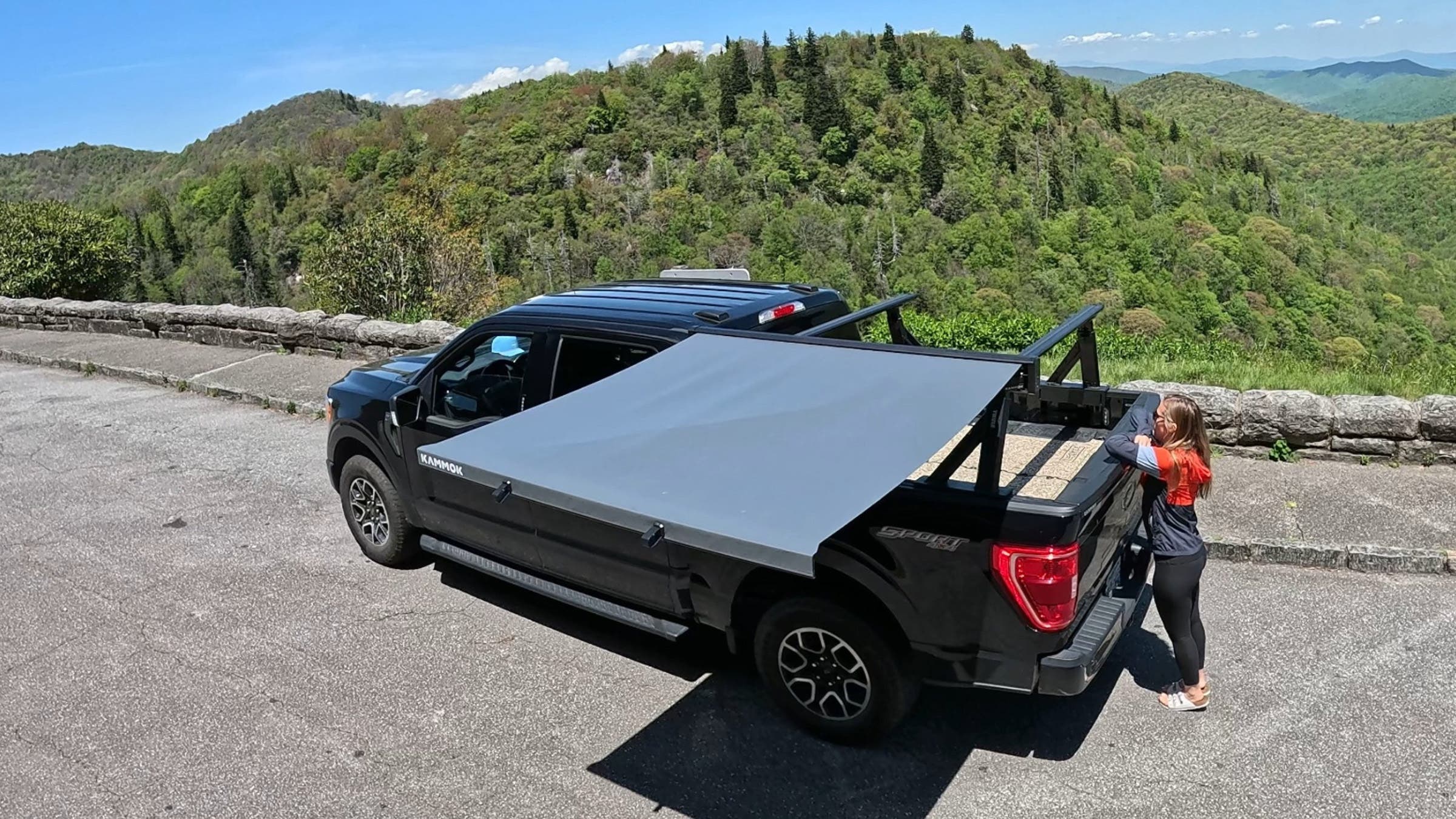
Kammok Crosswing Car Awning
Available lengths: 5’, 7’
Weight: 38 lbs
Pros and Cons
+ Fast and easy to deploy
+ No poles or guylines required
+ Extends to multiple lengths (3′, 4.9′, 6.5′)
– Awning crossbars rattle in transit
– Pricy
What Makes This Car Awning Different
I’ve had awnings on a couple of different vehicles, and the ability to throw shade on the fly is genuinely enticing. It’s hot and sunny, you want to hang by your vehicle after a long hike or bike ride, and some shade would be awesome. But the truth is, most awnings don’t set up on the fly. They take time—covers you have to unzip and remove, support poles you have to erect, guy lines that need to be staked down. It’s not like you’re erecting a barn from scratch, but setting up a typical awning takes about as long as pitching a tent. Call it several minutes. And then you have to reverse the process when you’re done. Even though I had awnings on my trucks in the past, the process was just difficult enough to keep me from using them in a lot of situations. Parked for several hours? Sure, I’d go through the trouble. Having a beer after a bike ride? Why bother. I’ll just bake in the sun.
Kammok’s Crosswing takes an innovative approach to design that eliminates all of that hassle. The Crosswing is almost automatic, and sets up in five seconds or less. I’ve had it mounted on the side of my truck for the last two weeks, using it to cast shade after day hikes, during lulls in my daughter’s track meets, and after the occasional round of golf when I just wanted to sit still and have a cold beverage. Unlike other awnings I’ve tried, I’ve found the Crosswing so easy to deploy that it’s become my go-to for impromptu breaks from the sun.
The Crosswing comes in two lengths, seven feet and five feet. I went with the five-foot because I have a short-bed truck, and it provides enough shade for lounging or cooking off the side of my vehicle. I also think the shorter length is more versatile—I have it mounted on the driver’s side right now, but I’m toying with the idea of mounting it on the back of the truck so I can pull it over the tailgate, since I spend so much time back there. A seven-foot awning would be too long for that.
What I Love About This Retractable Car Awning
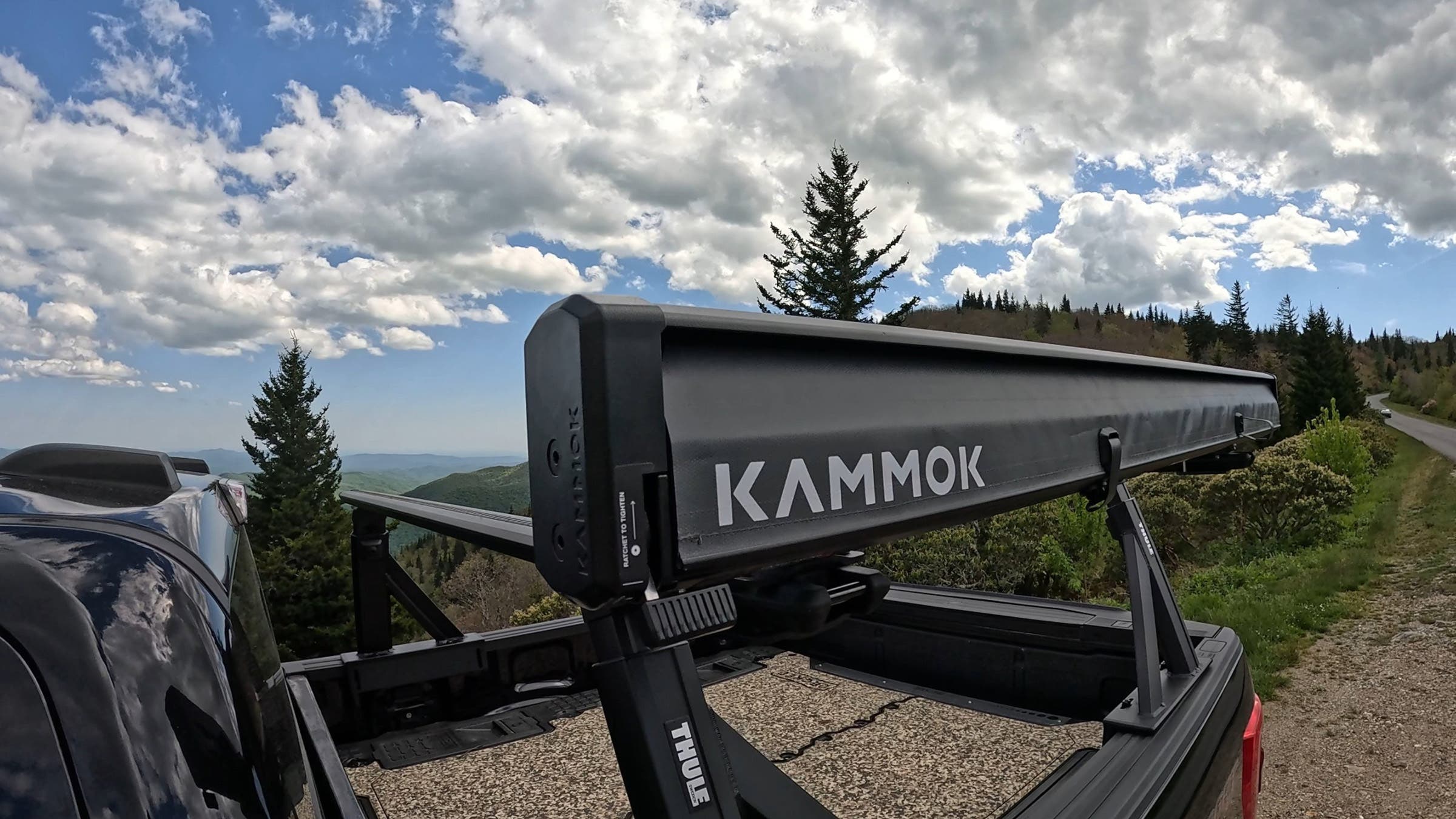
Speed is the main benefit. There’s no outer shell to unzip and remove—just unlock the clasp and pull the awning out to the size you want. The fabric deploys to three different lengths—3 feet, 5 feet, and 6.5 feet—so you can dial in coverage if you’re in a tight spot. Once the awning clicks into place, crank the small ratchet on the side to tension the fabric. No poles, no guy lines required under normal conditions; Kammok says the aluminum cross bars on the underside are strong enough to handle wind gusts up to 25 mph, though I haven’t tested it anywhere close to that. They do sell support kits for heavier winds. I’ve had the Crosswing up in rain and winds around 5 mph and I’ve been impressed with how the freestanding system holds up.
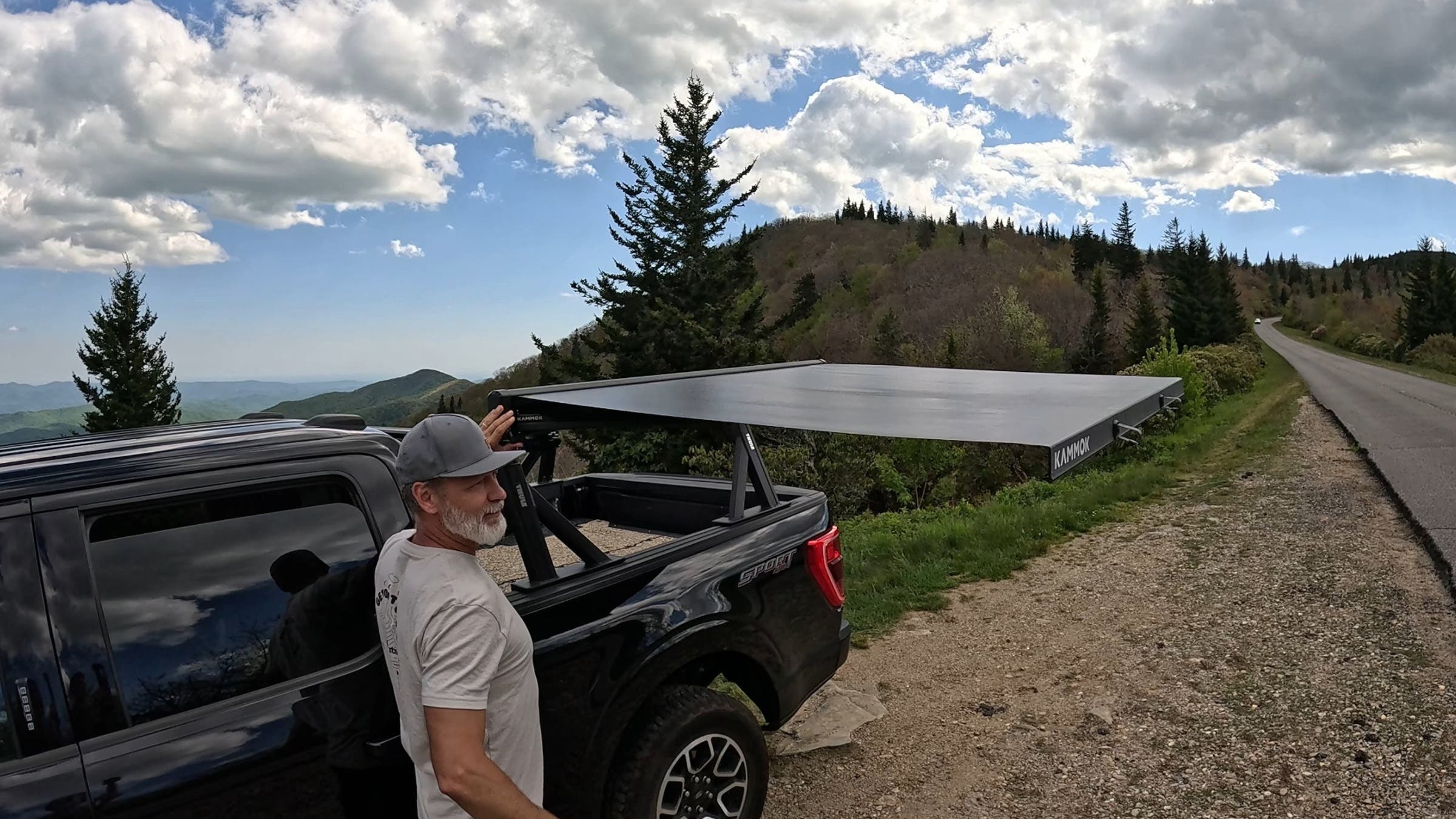
Putting it away is just as easy—reverse the process and lock it in place. I’m always watching my fuel efficiency these days, and I pay close attention every time I add something to the truck. Two weeks in with the awning mounted and I haven’t lost anything at the tank.
What I Don’t Love About the Kammok Crosswing
My complaints are minor. The biggest one: the cross bars inside the awning rattle on bumpy roads. I don’t notice it with the windows up, but roll them down and you can hear it. You also have to pull both sides of the awning evenly when deploying it—if you don’t, the cross bars get off kilter and you end up with too much slack on one side.
If you decide to get a Crosswing, pay close attention to the shape and size of your rack’s bars, because you might need specific mounting plates. The Crosswing comes with options for racks with T-slots as well as plates that fit over aero bars and round bars. I have the Thule XScape, and the T-slots aren’t standard size, so the included T-slot hardware didn’t do me any good. The mounting plates would have fit perfectly around my old truck rack, but the XScape has unusually wide bars—I was able to make it work, but just barely. If you have standard-sized bars, it won’t be an issue.
And it has to be said: the Crosswing isn’t cheap. It’s almost twice the price of most similar-sized awnings on the market (Topoak’s 180-degree awning is $549; Yakima’s OverNOut, which requires poles, is $449). But the system is leaps and bounds above the competition—and if you’re like me, you’ll use it twice as often as any awning you’ve owned before. So the price-per-use works out the same, right?
