

Elon Musk
Kathleen Sheffer For Forbes
Just hours ago, Elon Musk suffered a nasty loss in court — one that put an end to his $150 billion lawsuit against OpenAI. A jury said he waited too long to sue the AI behemoth and its cofounder and CEO Sam Altman, and the judge accepted that verdict, tossing Musk’s claims that OpenAI’s leaders had improperly converted a charity he helped fund into a for-profit business.
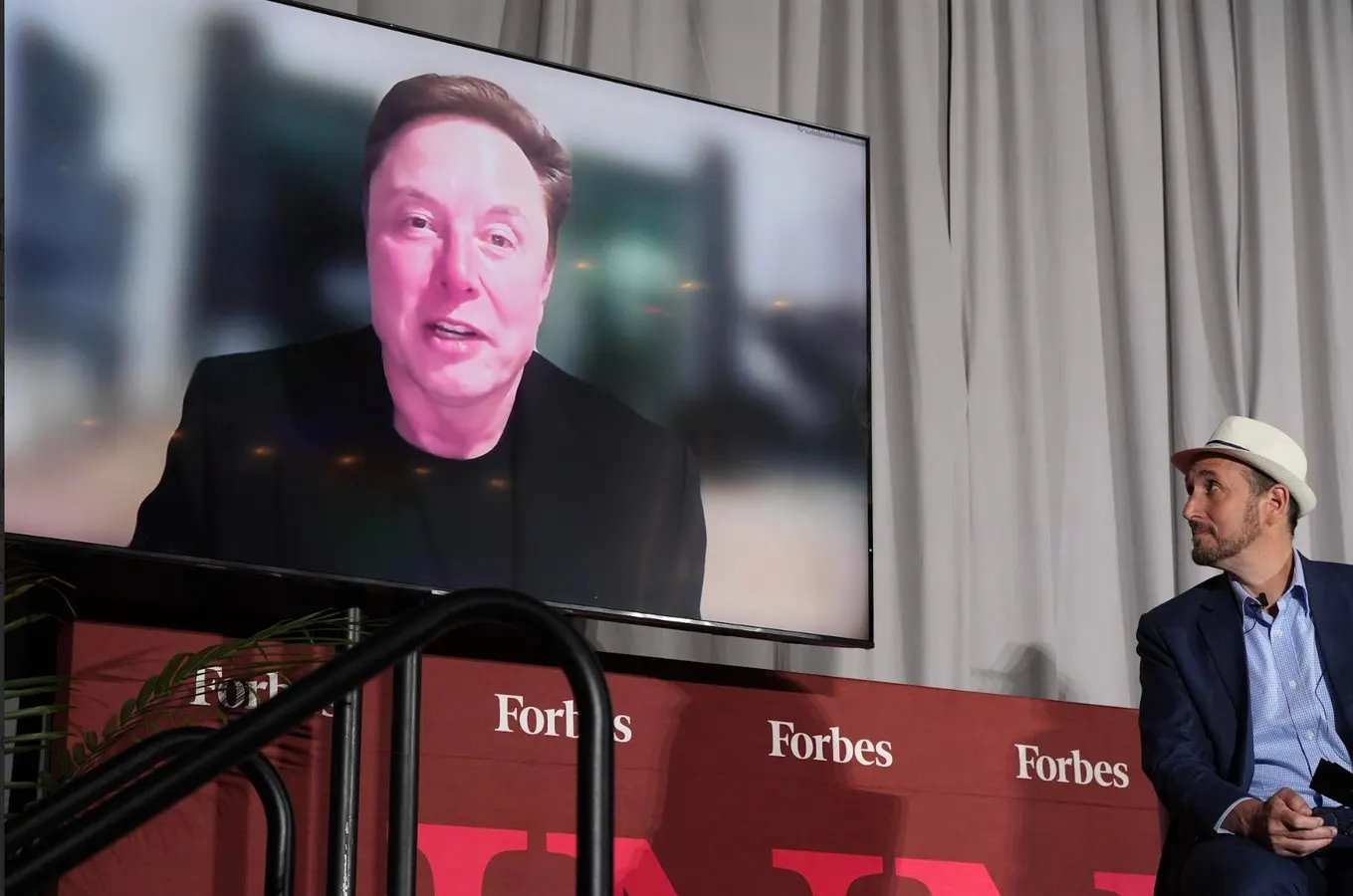
“I think this is a dangerous precedent to set,” Musk told Forbes chief content officer Randall Lane at the Forbes Innovation 250 celebration dinner in Palo Alto, his first interview since the verdict was handed down. “It means if somebody can take a nonprofit and convert it to a for-profit, that undermines all charitable giving in America.”
The trial still did its damage. Three weeks of testimony put Musk, his xAI venture, Altman and OpenAI in the same bright, unflattering light, with all the messy founder-history and billionaire grievance culture that implies. The jury didn’t have to decide who was right about “the mission.” It only had to decide whether Musk was on time. He wasn’t.
Musk’s response has been to attack “the terrible activist Oakland judge” in a now deleted X post to “they got away with it.” In another more staid post, he argued the court never evaluated the merits of the case and accused Altman and Greg Brockman, co-founder and president of OpenAI, of enriching themselves by “stealing a charity,” framing his planned Ninth Circuit appeal as a moral crusade to stop a precedent that would invite philanthropic looting. That’s his characterization — not a finding by the judge or the jury — and it’s doing what it’s designed to do: move the fight back onto Musk’s preferred terrain, where he can litigate by declaration.
The lawsuit, first filed in 2024, corralled a who’s who of Silicon Valley elite, including Musk, Altman, OpenAI President Greg Brockman and Microsoft CEO Satya Nadella. Throughout the proceedings, the trial laid bare the inner workings of one of the world’s most powerful AI companies, including the events around Altman’s brief ouster in 2023. The case also dug into OpenAI’s beginnings and Musk’s $38 million in funding. “Without me, OpenAI wouldn’t exist,” Musk said on the stand, adding, “I was a fool” to give the fledgling startup money.
Musk was also asked about SpaceX. On Wednesday, SpaceX is expected to file for the biggest IPO of all time, a massive offering which seeks to raise as much as $75 billion at a valuation of more than $2 trillion. Shares, which will trade on NASDAQ under the ticker SPCX, bundle SpaceX’s space and Starlink satellite operations with Musk’s AI startup, xAI, which the space and defense company acquired in February. He declined to comment on the IPO.
Kathleen Sheffer For Forbes
Musk also made predictions about the advancement of AI and robotics in the next half-decade. “In five years, digital intelligence will exceed the sum of all human intelligence. In five years, there might be at least 100 million humanoid robots, but maybe a billion,” he said. “I predict the economy is probably twice its current size in five, maybe six, years. In five to seven years, you’re going to hit a doubling period, in plus or minus a few years, you’ll see giant changes.”
Asked who his favorite entrepreneurs are, his first answer is obvious: Nikola Tesla, namesake of the electric car company he leads. Pressed further, he name checked Nvidia founder Jensen Huang. Musk also noted the rate of development in AI research is a “headspinner.” “When I go to sleep, there’s an AI breakthrough, when I go to lunch there’s an a breakthrough,” he said. “It’s pretty obvious we’ll have AI that’s vastly smarter than humans and in some way it already is,” he continued, adding “I hope it’s nice to us.”
When Lane asked Musk to talk about big ideas he hadn’t had the chance to yet work on, Musk encouraged other entrepreneurs to look into boring tunnels for transportation, and creating new synthetic medicines using new RNA technologies. After thinking for a moment, he added that there was an opportunity in electric aircraft. “I encourage other people to start tunnel companies,” he said. “There’s a lot of opportunity in tunnels. It’s quite hard work building these things.”
Musk doesn’t think of himself through the lens of how his companies will be written about in history books. “I don’t really get up and say, what shall I innovate today,” he said. “It really just is building the technologies necessary to extend life beyond earth.” And what does Musk want to be remembered for in 250 years? “He played a useful role in the advancement of civilization.”
This is a developing story…
