

Opinions expressed by Entrepreneur contributors are their own.
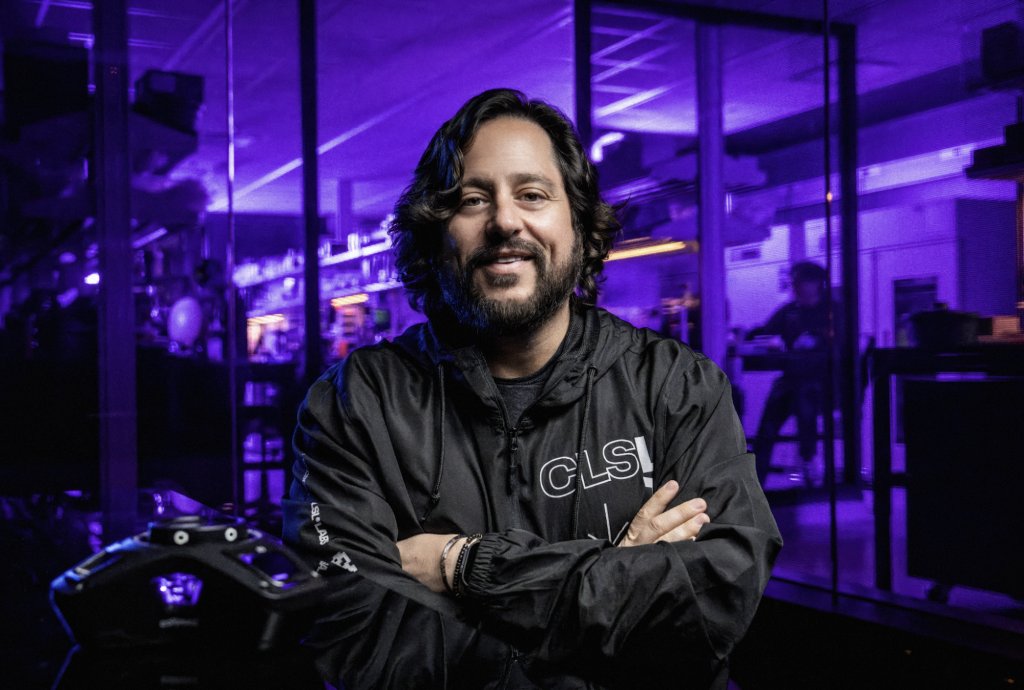
Colossal founder Ben Lamm and the broader Colossal team have announced a major breakthrough for the development of artificial eggs designed to help restore extinct bird species through a completely re-imagined and engineered egg system.
For the company that brought back dire wolves in 2025, this latest achievement marks its eighth major scientific milestone in the past year. Combined with the pace of innovation emerging from Colossal and its spinout companies, it raises a compelling question: What is this team doing differently from everyone else?
“Every new scalable system for de-extinction is ultimately a biology problem wrapped in an engineering problem. The artificial egg is a perfect example,” said Lamm. “Restoring species like the South Island Giant Moa isn’t just about reconstructing ancient genomes and editing PGCs. It requires building an entirely new incubation system where no surrogate exists and scales in ways that ordinary biology simply doesn’t. At Colossal, we didn’t just replicate the egg — we re-engineered it from first principles to create something more scalable and controllable.”
Photo Credit: Colossal
Lamm credits this multidisciplinary approach to science as the secret to what makes Colossal and all of his projects successful: “We are bringing together biology, materials science, and engineering to solve one of nature’s most elegant systems.” In today’s case, the creation of an artificial egg for avian reproduction. That may seem unimportant until you learn that more than 5,200 different species of birds, which is just shy of half the world’s total, are known or suspected to have declining populations.”
An artificial egg can help course correct those avian numbers and will also support Colossal’s core de-extinction efforts, including bringing back New Zealand’s South Island Giant Moa (Dinornis robustus). That bird presents an incubation challenge unlike any other species in Colossal’s portfolio because moa eggs are estimated to have been approximately 80 times the volume of a chicken egg and roughly eight times the volume of an emu egg, placing them entirely beyond the capacity of any available avian surrogate. This means that there is no living bird large enough to serve as a host. And without a host, there could be no future offspring. A size-scaled artificial egg was the best route to development for this species, making the platform essential for the next step in the moa program.
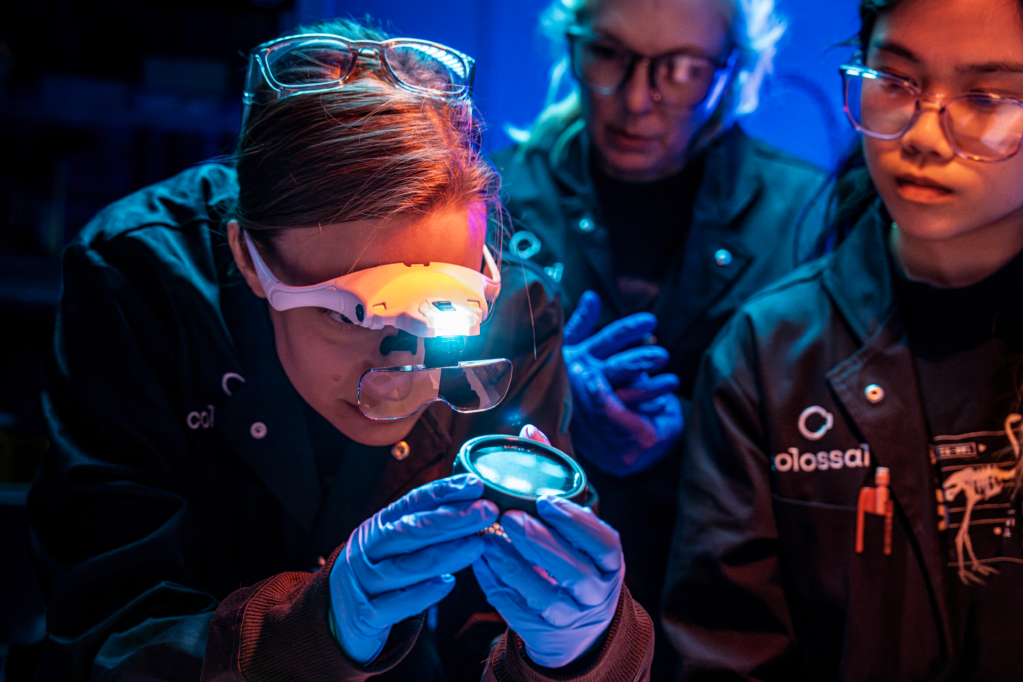
Photo Credit: Colossal
To create the device, Colossal’s scientists built an egg that could gestate a Moa and then work backward from there.
“I believe that if we solve the hardest challenge first, a number of other promising outcomes come from that,” Lamm said. “In this case, we built this system to solve a specific de-extinction biological scale problem. The platform we created has implications well beyond de-extinction. Any field that needs precise, scalable access to developing avian embryos now has a tool that didn’t exist before, which has a wide variety of applications, including human health.”
This Colossal launched innovation can save animal species, help its various de-extinction efforts, but also supports a market that is much bigger than it seems. The platform introduces true scalability for avian mass production, enabling standardized deployment across species and production volumes, and creating a controllable, industry-ready framework for biological research that has not previously been possible. That includes the $283 billion monoclonal antibody market which has been seeking alternative, effective and lower cost solutions for years.”
Colossal founder Ben Lamm and the broader Colossal team have announced a major breakthrough for the development of artificial eggs designed to help restore extinct bird species through a completely re-imagined and engineered egg system.
For the company that brought back dire wolves in 2025, this latest achievement marks its eighth major scientific milestone in the past year. Combined with the pace of innovation emerging from Colossal and its spinout companies, it raises a compelling question: What is this team doing differently from everyone else?
“Every new scalable system for de-extinction is ultimately a biology problem wrapped in an engineering problem. The artificial egg is a perfect example,” said Lamm. “Restoring species like the South Island Giant Moa isn’t just about reconstructing ancient genomes and editing PGCs. It requires building an entirely new incubation system where no surrogate exists and scales in ways that ordinary biology simply doesn’t. At Colossal, we didn’t just replicate the egg — we re-engineered it from first principles to create something more scalable and controllable.”
