

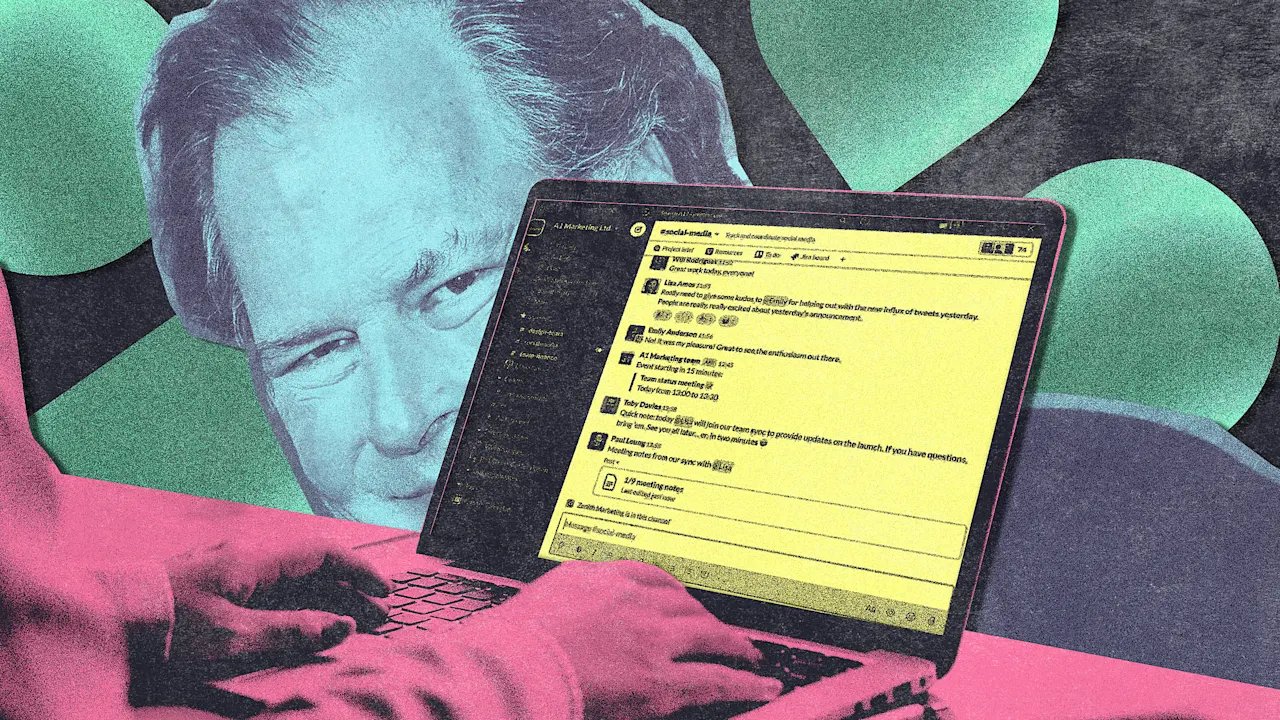
AI wears many hats at work, whether it’s a brainstorm partner, mentor, or doing the actual work itself. However, it’s time to add a new one to the list: spy. In a recent episode of the “All-In” podcast, Salesforce CEO, Marc Benioff, said he was using AI to analyze employee slack messages to understand what they’re complaining about. (Salesforce acquired Slack in 2021.)
“Because you run your company on Slack, all your DMs, all your channels, we’re reading that now through the AI and we can tell you more about your business than you know,” Benioff explained. “Slackbot is reading stuff that, you know, nobody knew what was happening. I’m using that myself.”
Benioff says, because the platform leverages AI, he can find out just about anything he wants about his own company by prompting it with questions. “So, when I’m on Slackbot, I can ask it any question about my company,” Benioff said, giving the examples of: “What are my top five deals? What are my employees upset about? What are the top three things I need to focus on?”
Fast Company reached out to Salesforce but did not hear back by the time of publication. However, a Salesforce representative told Business Insider, Benioff “was referring to public, companywide Slack channels–not private employee messages or conversations.” And according to Slack, “Slack’s AI features only use Slack data that members have access to at the time of request and won’t display or use data from private channels or direct messages (DMs) they aren’t a part of.”
While employees might be startled to find out that their bosses are popping into their conversations on Slack by using AI, it’s not rare. Microsoft uses its Co-Pilot digital assistant to scan company data across platforms, while Google uses Gemini. According to 2024 reporting from CNBC, major companies like Walmart, Delta, T-Mobile, Chevron, and Starbucks are using software from Aware, an AI firm that analyzes employee messages.
Monitoring has certainly reached new heights. In 2025 research from StandOutCV found that employees are being monitored widely and not just on messaging platforms like Slack or Gmail. Over three-quarters (78%) of monitoring tools take “productivity” screenshots of employees’ screens based on the employers’ request and over a third (34%) of tools track employees’ locations. A different report from 2026 found around 74% of companies use some kind of digital tracking tools to find out what employees are up to.
But while employers clearly feel that there are meaningful impacts to monitoring employees so closely, most employees don’t feel the same way. One 2023 survey found that over 56% of employees feel anxious about being watched, while 43% said it is a violation of trust. Still, the trend isn’t slowing down. Market Research Future projects employee monitoring will more than double, becoming a $15.98 billion industry by 2035.
Amba Kak, executive director of the AI Now Institute at New York University, previously told CNBC that the rise in message monitoring is concerning, and not just because of what employees might say, but because of how doing so infringes on their rights. “It results in a chilling effect on what people are saying in the workplace,” Kak said. “These are as much worker rights issues as they are privacy issues.”
