

Published May 20, 2026 03:49AM
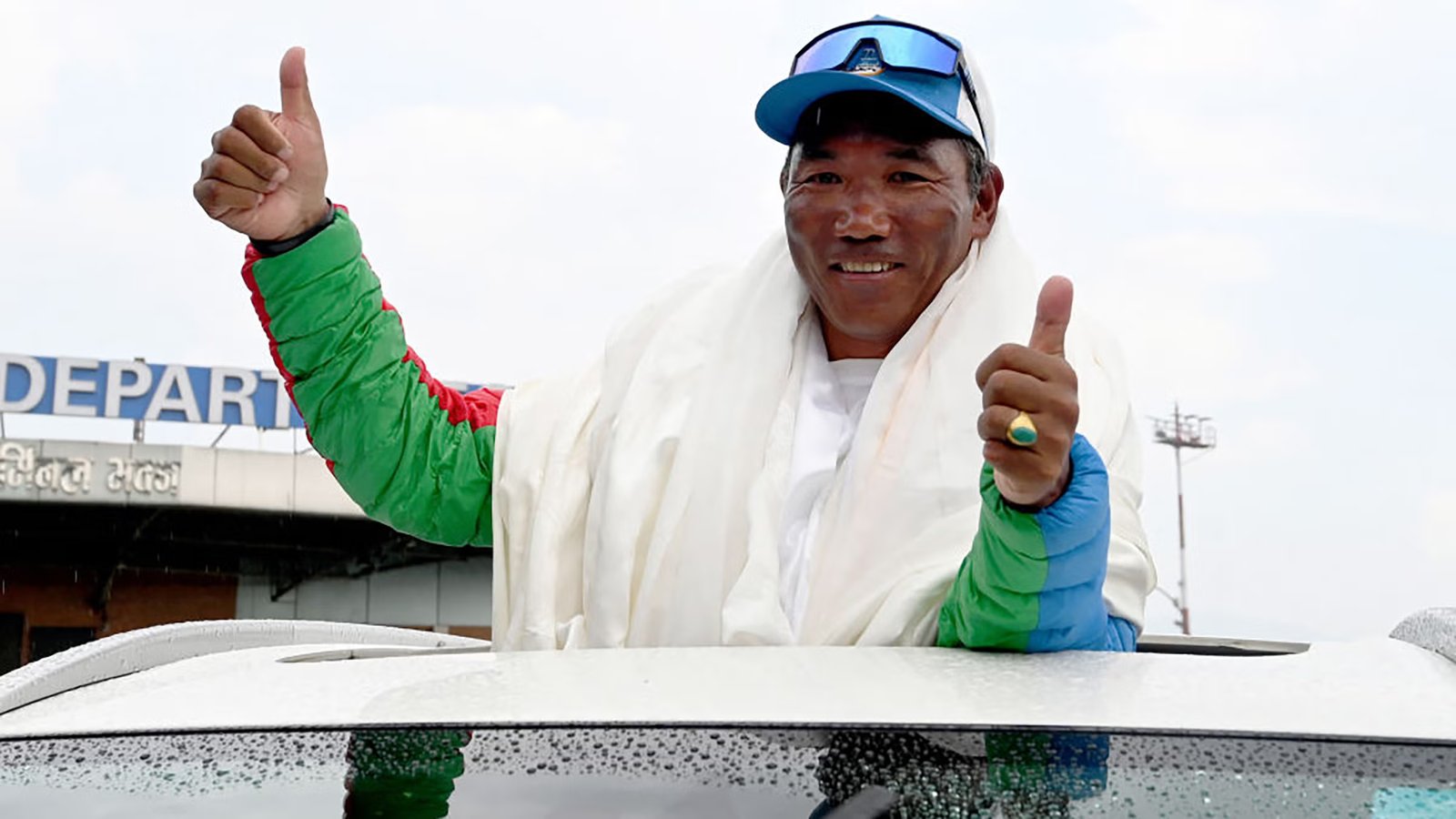
On May 17, 56-year-old Kami Rita Sherpa reached the summit of Mount Everest for the 32nd time, once again breaking his own record for the most trips by anyone to the top of the world. The accomplishment generated headlines across world. Nepal’s Prime Minister Balendra Shah posted a lengthy statement on social media congratulating Kami Rita and Nepal’s other record-setting climber, Lakpa “Mountain Queen” Sherpa, who now has the most women’s summits at 11.
Throughout the spring climbing season, Kami Rita was a fixture at the Seven Summit Treks coffee shop at Everest Base Camp as he prepared for his ascent. He guides clients for the Nepali outfitter. I caught up with him there, just days before he began his ascent.
Kama Rita discussed a wide range of Everest topics, from the sacred goddess who protects the mountain to how the Nepal Government can better manage tourism, plus his vision for Everest’s future.
This interview was translated from Nepali and edited for clarity.
OUTSIDE: You’ve climbed Everest more times than anyone in history. Why do you keep coming back?
Kami Rita Sherpa: Foreigners ask me to guide them, so I do it for Nepal’s tourism. I’d rather be retired, honestly. But so many people ask and expect something from me, and I don’t want to seem too good for them.
That sounds more like an obligation than a passion.
When people ask me to do something, it’s not right to say no. I don’t want to be the type of person who says I can’t or won’t. If you don’t face challenges, you’ll never achieve anything. The most important thing is to prioritize others, to focus on what other people want. That’s why I keep guiding.
You’re arguably Nepal’s most famous climber. Do you see yourself as an ambassador for the country or for Everest?
I’m nothing like an ambassador. I don’t climb Everest for myself or for my name. I continue to climb for my Sherpa community, for my Nepali community, and for my country. So many people only know Nepal because of Mount Everest, so my work can help more people recognize Nepal. I also want to highlight how our mountains generate enormous income for the country.
From hotels to airlines and helicopters, porters and rickshaw drivers, truck drivers and more, we all depend upon income from tourism. If you look at it this way, you can see that Everest feeds us all.
Did you ever imagine you would achieve this record?
I grew up in Thamo, a remote village here in the Khumbu. I only studied until third grade, in a school that Edmund Hillary built. He would come to our village sometimes, and I would see him and think that I, too, would climb Mount Everest one day. I didn’t think I’d climb it this many times as I have, though. Hillary inspired me, and God has blessed me to reach the top as many times as I have.
How do you relate to Everest on a spiritual level?
For us, Mount Everest is not the only sacred mountain in the world—we believe that every mountain is sacred. Every mountain has a goddess, or a devi, that protects it. When we climb Everest, we worship the devis Miyolangsama and Khumbila. To perform the rituals properly, we need a monk from this valley. That’s why we ask the lamas to come up from the village of Pangboche.
When we go to Manaslu, we need lamas from the local village of Samagaun, because the goddesses there are different. The locals know how to worship each goddess. It’s not something everyone knows.
I don’t think of the Himalayas as mountains. They are devi, or goddesses. These goddesses have provided so much for us. They have empowered us to make money, to send our children to school, and to wear good clothing. It’s our obligation to respect them and ask their forgiveness for our greed when we climb them.
That’s a striking way to put it—asking forgiveness for your own greed.
Mount Everest is more important than our own mother and father. It gives us wealth and fame. But we have to respect and worship it. That’s the deal.
You started climbing Everest in the early nineties. How much has it changed?
My first summit was in 1994. Back then, 70 foreign climbers in Base Camp was a huge season. This year, there are almost 500 climbers on the mountain. The growth really started around 2003 or 2004. Now it’s fashionable to climb Everest, and climbing all 14 peaks above 8,000 meters is a trend. There’s a competition for people to earn their name in the mountains, or to do something special, and it’s driving enormous numbers here.
Does all this competition in a place you consider sacred bother you?
It isn’t great. It’s not respectful to the devi. People come here and say, “I’ll do this, I’ll do that.” This record-chasing is really something the government should control. But they haven’t. And I think they should.
The government doesn’t understand the importance of Mount Everest. They’re only interested in the royalties from selling permits. They don’t understand tourism, and they don’t know what it means. We need a tourism minister with a tourism background. We need a minister who has worked in the field and understands the reality here.
I think the government should limit the number of permits for Everest. Look at China. The Everest industry there was built on what they learned from Nepal, and they capped permits at 100 climbers. This year, they issued no permits.
Our government should be pursuing quality tourism, not quantity. Having 400 or 500 climbers on the mountain who spend $25 a day doesn’t provide value. All it does is pollute the environment. Increase the royalties, direct a percentage to cleaning the mountain, and you have continuous revenue and continuous work. It’s not complicated.
What’s your least favorite part of the climb?
In the mountains, we don’t have favorites or least favorites. Every hour, the route changes as the route collapses and avalanches come. The route we take to the summit is often different from the route we take down. That’s how mountains are.
You’re 56. How many more times will you climb Everest?
I have a commitment to guide for two more years. After that, we’ll see. As long as my body can manage, I’ll keep climbing.
What do you think the Mount Everest climbing scene will look like in a decade?
In ten years, we won’t have sherpas willing to carry loads through the icefall. This generation is focused on going abroad: to Australia, Japan, and all over the world. Families are having fewer children now, too. They want their kids to be safe, to do less dangerous work. There used to be more sherpas from the Khumbu valley than anywhere else. Now they’re less than a quarter of the workforce.
In my generation, we would carry oxygen from Camp II to Camp IV without using any ourselves. Now, young sherpas want to be on oxygen from Camp II and still struggle with the loads. When I was growing up, we split rocks and collected firewood. We worked hard to survive, and that made us stronger on the mountain.
This generation can read, write, and speak English, but they leave their loads in the middle of the trail. Technology will fill some of the gap with more helicopters and more drones. I believe that solutions always emerge when they’re needed. But it won’t be the same.
What’s your advice for climbers who want to come and climb Mount Everest?
First, start with smaller mountains. Maybe climb some 3,000 to 4,000-meter peaks in your home country, then work up to 5,000, 6,000, or 7,000-meter peaks in Nepal. Let your body adapt to altitude gradually, and come here with knowledge and experience before you climb.
If you arrive without any preparation, you disrespect the mountain you’re trying to climb, you disrespect the devi. We see it here continually. People come to Everest unprepared, and then we rescue them.
If you’ve taken the time to work your way up, your body will be ready. If you haven’t, the mountain will tell you.
